Lip Balm Reapplication: How to Break the Dry-Lip Cycle
Dry, cracked or uncomfortable lips can make you reach for lip balm several times throughout the day. You apply a layer, your lips feel smoother for a while, and then the dryness returns. Before long, applying lip balm becomes an almost automatic habit.
This raises an important question: Why do your lips keep feeling dry even when you apply lip balm regularly?
The answer is not always that you need a stronger moisturizer or a more expensive lip treatment.
Persistent lip dryness can result from environmental conditions, lip licking, irritating ingredients, insufficient barrier protection or an underlying skin condition.
In some cases, the lip balm itself may be contributing to the problem.
Understanding how lip balms work—and when to reapply them—can help you build a simpler routine that supports healthier, more comfortable lips.
This guide explains the dry-lip cycle, the difference between moisturizing and protecting lips, and practical ways to avoid unnecessary product use.
1. Why Do Lips Become Dry So Easily?
The skin covering your lips is different from the skin on many other parts of your body.
The visible pink or reddish portion of the lips, called the vermilion, has a relatively thin protective surface and lacks the same sebaceous gland coverage found on much of the surrounding facial skin.
Sebaceous glands produce sebum, which contributes to the skin’s natural protective lipid layer.
Because the lips have fewer of these protective resources, they are particularly vulnerable to environmental dryness.
Several factors can contribute to chapped lips.
Low Humidity
Dry air increases the tendency for moisture to escape from exposed tissues.
This is especially relevant during winter, in desert climates and in heavily air-conditioned environments.
Wind and Outdoor Exposure
Wind can increase evaporation and contribute to dryness.
Prolonged outdoor exposure may leave the lips feeling tight, especially when combined with sun exposure.
Lip Licking
Saliva temporarily wets the lips, but repeated licking can worsen dryness and irritation.
This is one of the most important causes of a recurring dry-lip cycle.
Irritating Lip Products
Certain fragrances, flavourings and cosmetic ingredients can irritate susceptible individuals.
A product that feels cooling or tingling is not necessarily improving lip health.
Skin Conditions and Other Causes
Persistent lip inflammation can also be associated with contact dermatitis, eczema, infections and other conditions.
Not every case of dry lips can be resolved with cosmetic lip balm.
2. What Is the Dry-Lip Cycle?
The dry-lip cycle describes a pattern in which temporary relief is followed by recurring dryness, leading to repeated licking or product application.
How the cycle can develop
Lips feel dry or tight
Lips are repeatedly licked or exposed to an irritating product
Temporary relief followed by more irritation or moisture loss
Lips feel dry again
This cycle is illustrative; frequent balm use itself does not necessarily cause dryness.
It is important to distinguish between two situations.
Situation A: You use a gentle lip balm frequently because your environment is dry.
This can be perfectly reasonable.
Situation B: You repeatedly apply a lip product that causes burning, irritation or an urge to lick your lips.
In this case, continued use may worsen discomfort.
Lip balm is not inherently addictive. Using a suitable product frequently does not automatically make your lips dependent on it.
The more useful question is whether the product is addressing the cause of dryness.
3. How Does Lip Balm Actually Work?
Lip balms can contain several categories of ingredients that help improve comfort.
These include occlusives, emollients and humectants.
Occlusives: Limiting Moisture Loss
Occlusive ingredients help form a protective layer that reduces water loss.
Examples include:
- Petrolatum.
- Mineral oil.
- Certain waxes.
- Dimethicone.
- Lanolin, in people who tolerate it.
Petrolatum-based products are often useful for very dry lips because they provide substantial occlusive protection.
However, some people experience contact allergy to lanolin or other ingredients, so individual tolerance matters.
Emollients: Improving Softness
Emollients help smooth and soften the lip surface.
Examples include certain plant oils, fatty alcohols and lipid-based ingredients.
They can improve the feel of rough lips and make a balm easier to spread.
Humectants: Supporting Hydration
Some lip products contain humectants such as glycerin or hyaluronic acid.
These ingredients attract and interact with water.
However, a lip product containing humectants alone may not provide sufficient protection against moisture loss.
A formulation combining hydrating and barrier-supportive ingredients may be more useful.
4. How Often Should You Reapply Lip Balm?
There is no universal rule that everyone must apply lip balm every two hours, five times daily or at another fixed interval.
For a regular, non-SPF lip moisturizer, reapplication can be based on your comfort and environmental exposure.
You may find it useful to apply lip balm:
- When your lips begin to feel dry.
- After eating or drinking if the product has been removed.
- After washing your face.
- Before prolonged exposure to cold or windy weather.
- Before bedtime if your lips tend to become dry overnight.
The key is to use an appropriate product rather than forcing yourself to follow an arbitrary schedule.
Can You Apply Lip Balm Too Often?
A bland, well-tolerated lip balm can generally be reapplied as needed.
Frequent application is not automatically harmful.
However, repeatedly applying a balm containing irritating ingredients may perpetuate symptoms.
If you feel the need to reapply every few minutes, investigate whether something in the routine is causing ongoing irritation.
Also remember that medicated lip products may have specific frequency limits. Follow their label or prescription directions.
5. Regular Lip Balm vs SPF Lip Balm: Different Reapplication Needs
Not all lip balms serve the same purpose.
A regular moisturizing balm primarily supports comfort and helps limit moisture loss.
An SPF lip balm provides sun protection when applied in an adequate amount and used according to its instructions.
| Feature | Regular lip balm | SPF lip balm |
|---|---|---|
| Primary purpose | Comfort and moisture retention | UV protection, often with moisturizing benefits |
| Best use | When lips feel dry | During daylight UV exposure |
| Reapplication | Based on comfort and product directions | According to sun-protection directions |
| After eating or drinking | Reapply if needed | Reapply when coverage has been removed |
| Bedtime use | Often useful | Usually unnecessary for UV protection |
| Main consideration | Ingredient tolerance | Adequate coverage and reapplication |
Why Lip SPF Matters
Lips can experience ultraviolet damage just like other exposed skin.
For daytime outdoor use, choose a broad-spectrum lip product with SPF 30 or higher where available.
Reapply regularly during prolonged exposure, typically around every two hours, and after eating, drinking or wiping the lips if the product has been removed.
During outdoor activities, combine lip SPF with appropriate shade and other sun-protective measures.
An ordinary lip balm without SPF should not be assumed to provide meaningful ultraviolet protection.
6. Why Some Lip Balms Make Your Lips Feel Drier
A lip product can feel pleasant initially while still being poorly suited to sensitive lips.
Some ingredients may trigger contact irritation or allergy.
Potentially problematic ingredients for susceptible people include:
- Fragrances.
- Strong flavourings.
- Menthol.
- Camphor.
- Certain essential oils.
- Some botanical extracts.
- Specific preservatives or cosmetic additives.
These ingredients are not universally harmful.
Many people tolerate them without difficulty.
However, if your lips repeatedly burn, itch or become red after using a particular balm, the formulation deserves closer attention.
Does Tingling Mean a Lip Balm Is Working?
No.
Cooling, warming and tingling sensations are not reliable indicators of hydration or barrier repair.
They can result from ingredients that stimulate sensory receptors.
Persistent stinging or burning may indicate irritation.
A lip balm should generally make uncomfortable lips feel more comfortable—not require you to tolerate irritation as proof of effectiveness.
7. The Lip-Licking Habit: A Common Hidden Cause
Lip licking is particularly important because it can create a self-reinforcing pattern.
When lips feel dry, licking them provides immediate moisture.
However, saliva evaporates relatively quickly.
Repeated exposure to saliva can irritate the lip surface and surrounding skin.
The result may be increasing dryness, redness and discomfort.
How to Reduce Lip Licking
- Notice when you lick your lips.
- Apply a gentle, fragrance-free protective balm when needed.
- Avoid picking at loose skin.
- Keep an appropriate balm available during dry weather.
- Address nasal congestion or mouth breathing if these contribute to dryness.
If your lips or the surrounding skin remain inflamed despite these measures, seek professional assessment.
The solution is not simply to keep applying larger amounts of lip balm.
8. Should You Exfoliate Dry or Flaky Lips?
Lip scrubs are popular because they can temporarily remove visible flakes and make the lips feel smoother.
However, exfoliation is not always beneficial.
When lips are already cracked, inflamed or sensitive, vigorous scrubbing can worsen discomfort.
Sugar scrubs, toothbrush rubbing and other mechanical methods may remove fragile surface skin before it has recovered.
A Better Approach for Chapped Lips
If your lips are dry or peeling:
- Stop picking at loose skin.
- Avoid harsh exfoliating products.
- Apply a bland protective lip balm.
- Protect your lips from wind and sun.
- Allow irritated skin time to recover.
There is no requirement to exfoliate lips as part of an ordinary skincare routine.
If flaking persists or appears unusual, consider whether an underlying condition requires assessment.
9. A Simple Morning and Evening Lip-Care Routine
An effective lip-care routine does not need several different products.
Morning lip-care routine
- Gently cleanse the surrounding face without scrubbing the lips.
- Use a plain moisturizing balm if your lips feel dry.
- Before outdoor UV exposure, apply a suitable broad-spectrum SPF lip balm.
- Reapply sun protection as directed, particularly after eating or drinking.
Evening lip-care routine
- Gently remove lipstick or other lip makeup with an appropriate remover.
- Avoid rubbing away flaky skin.
- Apply a plain protective balm or ointment.
- Leave the product undisturbed rather than repeatedly licking your lips.
This simple approach may be enough for everyday dryness.
You do not necessarily need a separate lip serum, exfoliating scrub, overnight mask and daytime balm.
Choose additional products only when they serve a clear purpose.
10. Lip Balm vs Overnight Lip Mask
Overnight lip masks are often marketed as more intensive treatments.
They may have thicker textures or contain additional emollient and occlusive ingredients.
However, the term lip mask does not guarantee that a product is more effective than a regular lip balm.
A simple petrolatum-based ointment may provide substantial moisture-retaining protection.
When an Overnight Lip Mask May Be Useful
An overnight lip mask may suit someone who:
- Prefers a thicker texture.
- Wants a product that remains noticeable on the lips.
- Experiences nighttime dryness.
- Enjoys a richer lip-care formula.
When Ordinary Lip Balm May Be Enough
A standard lip balm may be sufficient if it:
- Feels comfortable.
- Does not cause irritation.
- Provides lasting moisture retention.
- Meets your everyday needs.
The ingredient formulation matters more than the product name.
11. Does Drinking More Water Fix Chapped Lips?
Adequate hydration is important for overall health.
Dehydration can contribute to dry mouth and other symptoms, and in some circumstances may affect lip comfort.
However, drinking extra water does not automatically cure chapped lips caused by wind exposure, lip licking or contact dermatitis.
If you are already adequately hydrated, drinking additional water may not solve a local skin-barrier problem.
For ordinary chapping, external barrier protection and avoiding irritating habits are often more directly relevant.
Persistent excessive thirst, dry mouth or other systemic symptoms should be evaluated appropriately.
12. How Weather Changes Lip Balm Needs
Environmental conditions can influence how frequently you need lip protection.
Cold, Windy Weather
Cold air and wind can contribute to lip dryness.
A protective balm applied before outdoor exposure may improve comfort.
Hot, Dry Weather
Hot weather does not necessarily mean humid weather.
In dry climates, low humidity can increase moisture loss.
Regular use of a suitable occlusive balm may be helpful.
Humid Weather
Lips can still become dry in humid conditions because of lip licking, irritants or other causes.
Humidity alone does not eliminate the need for appropriate care.
Air-Conditioned Environments
Air-conditioned rooms may have relatively dry indoor air.
If you notice recurring dryness while working or sleeping indoors, consider environmental conditions alongside your lip-care products.
13. Choosing a Lip Balm That Offers Better Value
A higher price does not automatically mean better protection against dryness.
For many people, a simple formula with well-tolerated moisturizing and occlusive ingredients may be sufficient.
Consider the following factors.
| Buying factor | Why it matters |
|---|---|
| Ingredient simplicity | May be useful for irritation-prone lips |
| Occlusive ingredients | Help limit moisture loss |
| Fragrance and flavouring | Potential irritants for some users |
| SPF protection | Important during outdoor UV exposure |
| Packaging | Influences hygiene and convenience |
| Texture | Affects comfort and willingness to reapply |
| Price per gram | Helps compare actual product value |
| Product directions | Determines appropriate use and frequency |
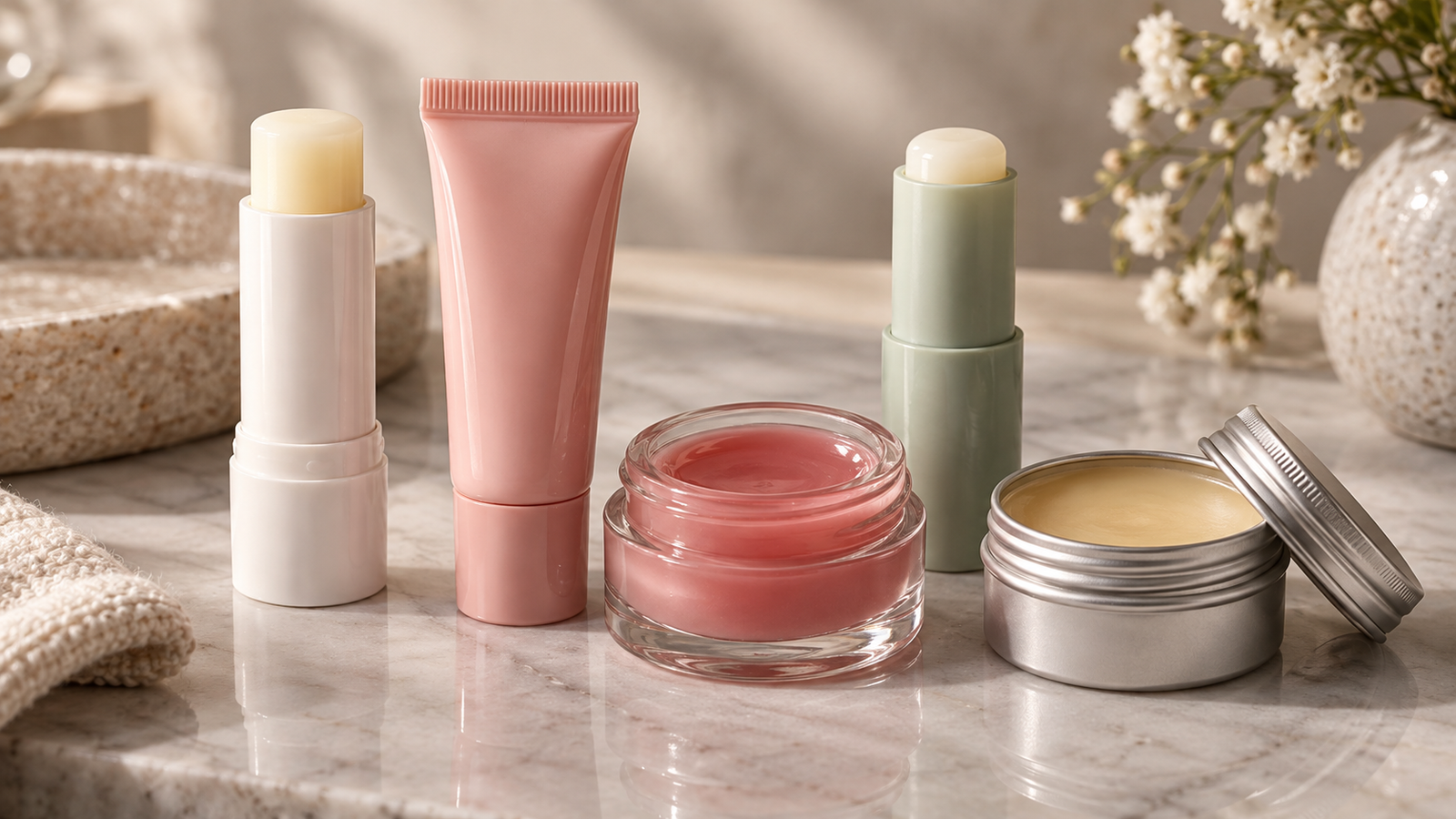
Stick vs Tube vs Pot
Lip balm sticks are portable and convenient for direct application.
Squeeze tubes allow controlled dispensing and can be useful for thicker formulations.
Lip balm pots may offer good value and allow easy application, but require clean fingers or an applicator to avoid introducing contaminants.
None of these formats is universally better.
Choose the packaging that supports hygienic, consistent use.
For product comparisons, read Physical Glow’s Top 5 Lip Balms in India guide, which covers different lip-care formats and intended uses.
14. Common Lip Balm Mistakes That Prolong Dryness
Repeatedly Licking Your Lips
Saliva provides brief wetness but can worsen irritation.
Try to replace the habit with an appropriate protective balm.
Using Products That Burn or Sting
Persistent tingling is not proof that a balm is effective.
Stop using products that repeatedly cause discomfort.
Picking Flaky Skin
Removing loose skin aggressively can worsen cracking and delay recovery.
Allow the skin to settle while using gentle protective care.
Applying Only a Very Thin Layer During Dry Weather
The product should provide reasonable coverage according to its instructions.
You do not need excessive quantities, but barely touching the lips with a balm may not provide the comfort you want.
Using Non-SPF Balm as Sun Protection
Ordinary lip balms do not necessarily provide UV protection.
Choose an appropriately labeled SPF product for daytime exposure.
Changing Lip Products Too Frequently
Repeatedly trying new flavoured or fragranced products can make it harder to identify the cause of irritation.
A consistent, simple routine may be easier to evaluate.
15. When Dry Lips Need Medical Attention
Most ordinary chapping improves with gentle care and protection.
However, certain symptoms should not be managed indefinitely with cosmetic products alone.
Seek medical advice if you experience:
- Persistent cracking despite gentle care.
- Painful splits at the corners of the mouth.
- Significant swelling or redness.
- Recurrent blisters or sores.
- Bleeding or crusting that does not improve.
- A persistent rough, scaly or discolored patch, particularly on the lower lip.
- Symptoms that repeatedly return after using a particular product.
Cracks at the corners of the mouth can sometimes represent angular cheilitis, which may have several causes.
Persistent lip inflammation may reflect irritant or allergic contact cheilitis.
Long-term sun exposure can also contribute to lip damage requiring clinical assessment.
A dermatologist or other qualified healthcare professional can help distinguish these conditions from ordinary dry lips.
Frequently Asked Questions
Can lip balm make your lips dependent on it?
There is no good evidence that ordinary, well-tolerated lip balm creates physical dependence. Frequent use may simply reflect persistent dryness, environmental exposure or habitual application.
How many times a day should I apply lip balm?
For a regular moisturizing balm, apply as needed for comfort and according to product instructions. SPF lip balms require reapplication according to sun-protection guidance.
Why do my lips become dry soon after applying lip balm?
Possible causes include an unsuitable formulation, insufficient moisture retention, repeated lip licking, environmental exposure or an underlying lip condition.
Is petroleum jelly good for dry lips?
Plain petrolatum is an effective occlusive ingredient that helps reduce moisture loss and can be useful for dry, chapped lips.
Should I exfoliate my lips every day?
No. Daily exfoliation is unnecessary and may irritate fragile or already chapped lips.
Is an overnight lip mask better than lip balm?
Not automatically. A richer lip mask may be comfortable, but a simple balm or ointment may provide similar moisture-retaining benefits depending on the formulation.
Should I use SPF lip balm indoors?
The need depends on UV exposure, including proximity to windows and time spent outdoors. SPF is especially important when your lips are exposed to sunlight.
Can flavoured lip balm cause dryness?
Certain flavourings and fragrances may cause irritation or allergic reactions in susceptible people. If symptoms follow a particular product, stop using it and consider a simpler formula.
How long should chapped lips take to improve?
Mild chapping may improve within several days of avoiding irritants and using suitable protection. Persistent or worsening symptoms should be assessed by a healthcare professional.
Final Verdict: Break the Cycle by Addressing the Cause
Frequent lip balm application is not inherently harmful, and there is no reason to avoid reapplying a gentle product when your lips genuinely need protection.
However, repeatedly applying more product without understanding the cause of dryness may not resolve the problem.
The most effective approach is to identify irritating ingredients and habits, use a suitable protective lip balm, avoid excessive exfoliation and protect your lips from environmental exposure.
During the day, choose SPF lip care when sun protection is needed. At night, a simple, fragrance-free balm or ointment may be sufficient.
If dryness persists despite these changes, seek medical advice rather than continuously adding new lip treatments.
Healthy lip care is about consistent protection and comfort—not the number of times you apply balm.
Physical Glow Editorial Note: This article provides general educational information and is not a substitute for medical diagnosis or treatment. Persistent lip inflammation, painful cracking, bleeding or non-healing lesions should be evaluated by a qualified healthcare professional.