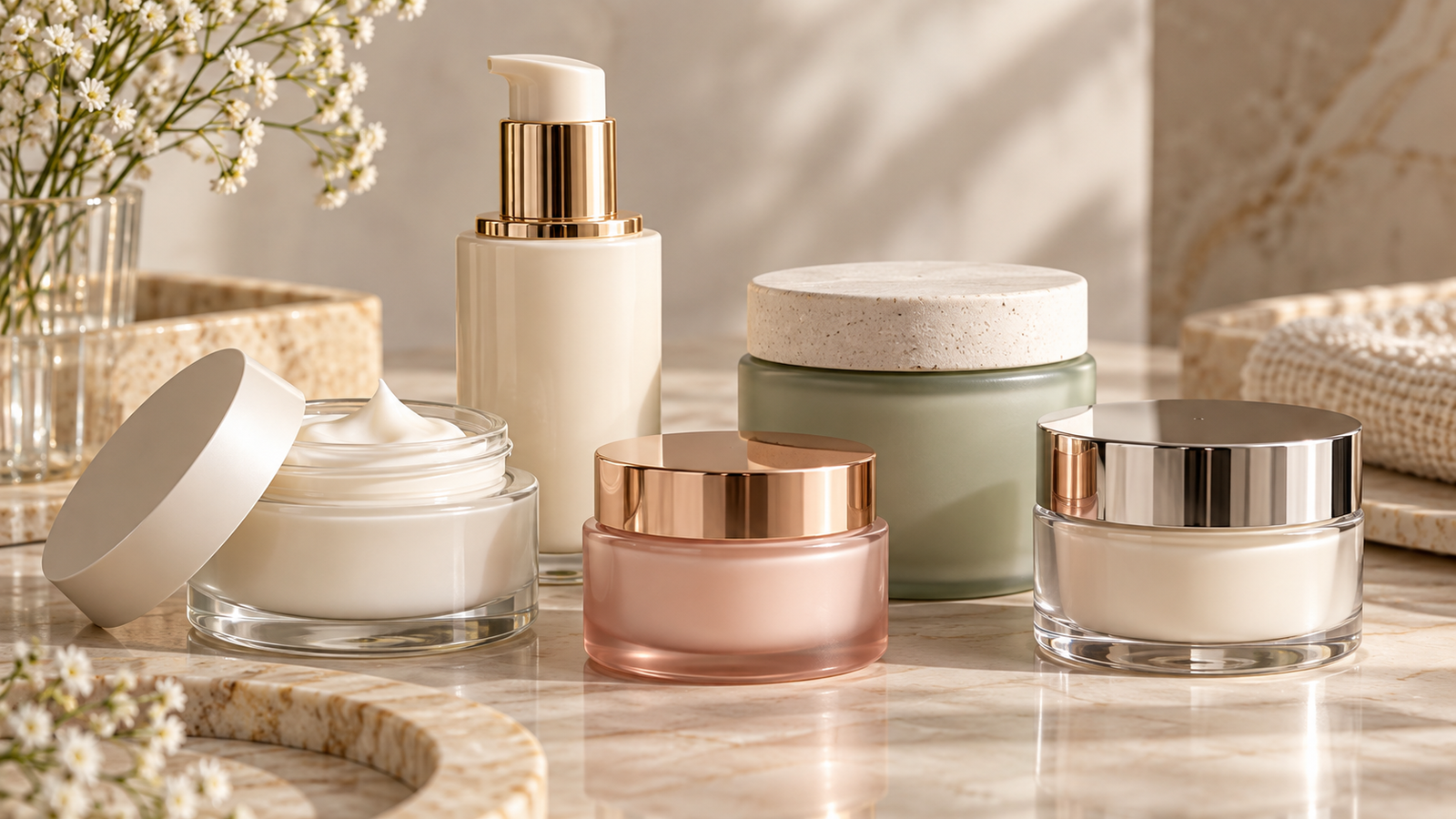
Moisturizer Texture in Humid vs Dry Weather: Adjusting Your Routine
A moisturizer that feels perfect during winter may suddenly feel heavy, sticky or uncomfortable when summer arrives. Similarly, a lightweight gel moisturizer that works beautifully during humid weather may leave your skin feeling tight when the air becomes dry.
This happens because skin hydration depends not only on the moisturizer you use, but also on your skin type, the surrounding environment and the condition of your skin barrier.
India’s varied climate makes this particularly relevant. Hot and humid conditions in Mumbai or Chennai can feel very different from the dry summer heat of Rajasthan or the cooler winter months in North India.
However, changing seasons does not necessarily mean you need an entirely new skincare routine.
Sometimes, adjusting moisturizer texture, application quantity or the way you layer products is enough.
This guide explains how gel, lotion and cream moisturizers differ, how humidity affects the skin and how to adjust your routine without buying unnecessary products.
1. Why Weather Changes How Your Moisturizer Feels
The skin’s outermost layer, called the stratum corneum, helps maintain hydration and limit excessive water loss.
A healthy skin barrier contains a combination of skin cells and lipids that help regulate moisture movement.
Environmental conditions can influence how this barrier performs.
During Humid Weather
Humidity refers to the amount of water vapour present in the air.
In humid conditions, the surrounding air contains more moisture than it does under otherwise comparable dry conditions.
This may reduce the environmental gradient that drives water evaporation from the skin.
However, humidity does not automatically mean your skin is adequately hydrated.
Hot and humid weather can also increase sweating and make heavier skincare products feel uncomfortable.
Common experiences include:
- Increased facial shine.
- Sticky or greasy-feeling skincare.
- Makeup slipping during the day.
- Discomfort from multiple heavy layers.
- A preference for lighter textures.
These changes do not necessarily indicate that you should stop moisturizing.
During Dry Weather
Low humidity can increase the gradient that encourages water loss from the skin, particularly when the skin barrier is already compromised.
Cold weather, indoor heating and prolonged exposure to dry air can contribute to discomfort.
You may notice:
- Tightness after cleansing.
- Rough or flaky patches.
- Increased sensitivity.
- Dull-looking skin.
- Dryness around the cheeks, nose or mouth.
- A greater need for richer moisturizers.
Importantly, dryness is not restricted to winter.
Hot desert conditions and air-conditioned environments can also contribute to dry-feeling skin.
The goal is to adjust your skincare according to how your skin responds—not simply according to the calendar.
2. Gel vs Lotion vs Cream: Understanding Moisturizer Textures
Moisturizers are commonly available as gels, lotions, creams and ointments.
These categories are useful starting points, but they are not rigid guarantees of how a formula performs.
A well-formulated gel-cream can be more moisturizing than a poorly formulated lotion, for example.
Gel Moisturizers
Gel moisturizers generally have a lightweight, water-rich feel.
They often spread easily and leave relatively little residue.
Typical ingredients may include:
- Glycerin.
- Hyaluronic acid.
- Panthenol.
- Other humectants.
- Lightweight emollients.
Some gels also contain silicones or other ingredients that improve slip and help reduce moisture loss.
Often suitable for: People who prefer a lightweight finish, particularly during humid weather.
Potential limitation: Some gel formulas may not provide enough lasting comfort for very dry skin.
Lotion Moisturizers
Lotions are typically emulsions combining water-based and oil-based ingredients.
They are often more fluid than creams.
Lotions may contain humectants, emollients and ingredients that help limit water loss.
Often suitable for: Normal or combination skin, and people who want a balance between lightweight application and moisture retention.
Potential limitation: Some lotions may feel insufficient during periods of significant dryness.
Cream Moisturizers
Creams are generally thicker emulsions that often contain a greater proportion of emollient or occlusive ingredients than lightweight lotions.
They may contain:
- Ceramides.
- Glycerin.
- Fatty alcohols.
- Squalane.
- Dimethicone.
- Petrolatum or other occlusive ingredients.
Not every cream contains all of these ingredients.
Often suitable for: Dry skin, cold weather and routines requiring additional barrier support.
Potential limitation: Rich formulas can feel heavy in humid conditions, especially when layered over multiple serums and sunscreen.
Ointments and Balms
Ointments and balms tend to be more occlusive.
They may be useful for particularly dry areas, although they can feel greasy and are not always comfortable for full-face daytime application.
They are often better suited to targeted use, depending on the formulation.
3. Comparing Moisturizer Textures
| Feature | Gel | Lotion | Cream | Balm or ointment |
|---|---|---|---|---|
| Typical feel | Lightweight | Light to medium | Richer | Heavy or protective |
| Absorption feel | Often quick | Usually comfortable | Varies | May remain noticeable |
| Humid-weather comfort | Often good | Often good | Depends on formula | May feel heavy |
| Dry-weather comfort | Depends on formula | Moderate | Often good | Useful for targeted dryness |
| Oily-skin preference | Common | Common | Formula-dependent | Less commonly preferred |
| Main advantage | Lightweight hydration | Versatility | Comfort and moisture retention | Stronger occlusive effect |
The table describes common characteristics, not absolute rules.
Ingredient composition matters more than marketing labels.
4. What Actually Makes a Moisturizer Effective?
A moisturizer’s performance depends on its formulation and the role of its ingredients.
Three ingredient categories are particularly relevant.
Humectants: Helping Attract and Retain Water
Humectants interact with water and help improve hydration within the skin’s outer layers.
Common examples include:
- Glycerin.
- Hyaluronic acid.
- Urea.
- Panthenol.
- Sodium PCA.
Humectants appear in gels, lotions and creams.
They do not necessarily provide enough moisture retention when used alone in a very dry environment.
Emollients: Improving Skin Smoothness
Emollients help soften the skin and improve its surface feel.
Examples include:
- Squalane.
- Certain plant oils.
- Fatty alcohols.
- Various skin-conditioning lipids.
They can help reduce the sensation of roughness and support a smoother skin surface.
Occlusives: Reducing Water Loss
Occlusive ingredients create a barrier that helps limit evaporation from the skin.
Examples include:
- Petrolatum.
- Mineral oil.
- Dimethicone.
- Certain waxes and lipid-rich ingredients.
Some are lighter in texture than others.
A well-formulated moisturizer often combines humectants, emollients and occlusives.
During dry weather, the balance between these ingredient categories may matter more than simply choosing the thickest available cream.
5. How to Adjust Your Moisturizer During Humid Weather
Hot, humid weather frequently makes people want to reduce the number of skincare layers.
This is reasonable if the routine has become uncomfortable.
However, completely removing moisturizer may not be necessary.
Choose a Comfortable Texture
If your usual cream feels sticky, consider trying a lightweight lotion or gel-cream.
Look for a product that provides enough hydration without leaving excessive residue.
Reduce Unnecessary Layers
A morning routine containing toner, hydrating serum, essence, rich moisturizer, sunscreen and primer may feel excessive in humid conditions.
Some of these products may duplicate each other’s functions.
You may be able to simplify your routine to:
Example humid-weather morning routine
- Gentle cleanser
- Lightweight moisturizer, if needed
- Broad-spectrum sunscreen, SPF 30 or higher
A moisturizing sunscreen may provide enough comfort for some people without a separate moisturizer.
However, sunscreen must still be applied in an adequate amount.
Do not reduce sunscreen application to achieve a lighter finish.
Pay Attention to Sweat and Oiliness
Sweating does not mean that your skin is fully hydrated.
Similarly, oily skin can still experience dehydration or irritation.
Choose skincare based on comfort and barrier needs rather than assuming that visible shine eliminates the need for moisturizing.
6. How to Adjust Your Moisturizer During Dry Weather
Dry weather often requires a different approach.
When your skin feels tight after cleansing or develops flaky areas, your usual moisturizer may not be providing sufficient comfort.
Switch to a More Protective Formula
If a gel moisturizer feels insufficient, consider a lotion or cream containing additional emollient and occlusive ingredients.
A ceramide-containing cream may be useful when skin-barrier support is a priority.
However, ceramides are not mandatory for every moisturizer to be effective.
Apply Moisturizer After Cleansing
For many moisturizing products, applying them while the skin is slightly damp can help improve hydration and comfort.
Follow the manufacturer’s instructions.
Avoid leaving the skin dripping wet if this prevents the product from spreading evenly.
Avoid Over-Cleansing
Strong cleansers, very hot water and repeated washing can contribute to dryness.
Choose a gentle cleanser and avoid unnecessary friction.
Consider Targeted Moisturizing
You may not need a heavy cream over the entire face.
For example, someone with an oily T-zone and dry cheeks might use a lightweight moisturizer generally and an additional richer layer on dry areas.
This approach can be more comfortable than applying a thick cream everywhere.
7. Humidity Is Not the Same as Temperature
Humidity and temperature are often discussed together, but they are different environmental measurements.
A location can be:
- Hot and humid.
- Hot and dry.
- Cool and humid.
- Cold and dry.
Each environment can influence the way skincare feels.
Hot and Humid Conditions
You may prefer lighter products because heat and sweat make rich textures uncomfortable.
Hot and Dry Conditions
Even though temperatures are high, low humidity can contribute to dry-feeling skin.
A gel alone may not provide sufficient comfort.
Cold and Dry Conditions
Richer moisturizers may become more useful, especially when indoor heating further reduces relative humidity.
Cool and Humid Conditions
A lightweight or medium-texture moisturizer may still be appropriate.
There is no rule that cooler temperatures automatically require heavy cream.
8. Moisturizer Choices for Different Skin Types
Oily Skin
Oily skin produces more sebum, but sebum production and hydration are not the same thing.
A lightweight gel or lotion may be comfortable in humid weather.
During dry conditions, some people with oily skin may prefer a slightly more moisturizing gel-cream or lotion.
Avoid assuming that oily skin requires no moisturizer.
Dry Skin
Dry skin may benefit from richer moisturizing formulas year-round.
During humid weather, a medium-texture cream may feel more comfortable than a very heavy ointment.
During dry weather, additional emollient and occlusive support may be helpful.
Combination Skin
Combination skin often has different needs across facial areas.
You can use a lightweight moisturizer across the face and add a richer product to dry areas if necessary.
Using two moisturizers is optional, not a requirement.
Sensitive Skin
Sensitive skin may react to fragrances, exfoliating acids or particular formulation ingredients.
Choose products that your skin tolerates well.
Changing textures frequently is not necessarily helpful if your current moisturizer is already comfortable.
Acne-Prone Skin
Look for products that suit your skin and do not noticeably worsen your acne.
Labels such as non-comedogenic can be useful shopping indicators, but they do not guarantee that a product will never cause breakouts.
People using acne treatments such as retinoids or benzoyl peroxide may need additional moisturizing support because these treatments can cause dryness.
9. How Air Conditioning Affects Your Skincare Routine
Air conditioning can make an indoor space feel comfortable while also reducing moisture in the air.
This is particularly relevant for people who spend long periods in offices, bedrooms or other air-conditioned environments.
You might live in a humid city but still experience dry skin after spending many hours indoors.
Possible signs include:
- Tightness around the cheeks.
- Dry lips.
- Increased skin discomfort.
- Flakiness after cleansing.
If this occurs, consider whether your moisturizer is sufficient for your indoor environment.
A slightly richer formulation or additional moisturizing on dry areas may help.
A humidifier can sometimes be useful in genuinely dry indoor air, but it should be used only when appropriate, with humidity monitored and the device cleaned correctly.
Excessive indoor humidity can encourage mold and other problems.
10. Should You Change Moisturizer Every Season?
Not necessarily.
If your moisturizer remains comfortable and your skin is doing well, there may be no reason to replace it.
Seasonal adjustments make more sense when your skin shows clear changes.
Consider changing the routine when:
- Your skin develops persistent tightness.
- Your usual moisturizer feels excessively greasy.
- Makeup repeatedly separates over skincare.
- Dry patches become more noticeable.
- You need frequent additional moisturizing.
- Your routine becomes uncomfortable in the prevailing weather.
You may only need to change the quantity or timing of application.
For example, a cream that feels too rich during the day might work comfortably as an evening moisturizer.
Using a product differently can be more economical than buying a new product for every season.
11. Can You Use a Gel and Cream Together?
Yes, if both products are suitable for your skin and layering them improves comfort.
For example, a lightweight hydrating gel may be followed by a cream that contains additional emollient or occlusive ingredients.
However, this combination is not automatically better than using one well-formulated moisturizer.
Using both can increase:
- Product consumption.
- Sticky residue.
- Layering time.
- The likelihood of cosmetic pilling with certain formulas.
If your skin feels comfortable with one product, additional layers may provide little practical benefit.
For very dry skin, layering may sometimes be useful, but the formulation and skin response should guide the decision.
12. How Moisturizer Texture Affects Sunscreen and Makeup
Moisturizer does not function in isolation.
For daytime use, it usually sits beneath sunscreen and potentially makeup.
A moisturizer that feels comfortable on bare skin might behave differently when several products are layered over it.
Heavy Cream Under Sunscreen
Some rich creams leave a substantial surface film.
When a sunscreen or foundation is applied immediately afterward, the combination may feel greasy or cause pilling.
Lightweight Gel Under Sunscreen
A gel may create a lighter base, but certain gel polymers can also interact with sunscreen formulations.
Therefore, a gel is not automatically more makeup-compatible.
Practical Layering Advice
- Use only the moisturizer needed for comfort.
- Allow the product to settle according to its directions.
- Apply sunscreen generously and evenly.
- Avoid excessive rubbing when applying makeup.
- Change one product at a time if pilling occurs.
Never mix sunscreen directly into moisturizer to create a lighter texture unless the manufacturer specifically instructs it.
Doing so can interfere with the sunscreen’s tested formulation and result in inadequate coverage.
13. Common Moisturizer Mistakes During Weather Changes
Choosing Gel Only Because It Is Summer
Summer conditions can be dry as well as humid.
A lightweight gel may not be sufficient for everyone.
Assuming Thick Cream Is Always Better in Winter
Thicker does not necessarily mean more effective.
A well-formulated medium-texture lotion may provide sufficient hydration for some people.
Skipping Moisturizer Because Your Face Is Oily
Oiliness and skin hydration are different characteristics.
A lightweight moisturizer may still be useful.
Using Too Many Hydrating Products
Several serums and toners do not necessarily provide better results than one suitable moisturizer.
Excessive layering can make the routine sticky and expensive.
Changing Several Products Simultaneously
If you replace your cleanser, serum and moisturizer at the same time, it becomes difficult to identify which change causes a reaction.
Introduce products gradually.
Ignoring Irritation
Persistent redness, burning or cracking should not be treated as an ordinary seasonal inconvenience.
Stop products that cause irritation and seek dermatological advice for significant or persistent symptoms.
14. How to Choose the Right Moisturizer Without Overspending
Before buying a new moisturizer for a particular season, evaluate what your current product is missing.
| Your concern | Practical adjustment |
|---|---|
| Cream feels sticky in humid weather | Try a lighter lotion or gel-cream |
| Gel feels insufficient in dry weather | Consider a richer lotion or cream |
| Dry cheeks but oily forehead | Add richer moisturizing only to dry areas |
| Makeup pills over moisturizer | Reduce unnecessary layering and test compatibility |
| Skin feels tight after cleansing | Review cleanser gentleness and moisturizer suitability |
| Skin feels comfortable year-round | Continue using the existing moisturizer |
Compare Price Per Quantity
Moisturizer packaging can vary substantially in size.
When comparing products, calculate the approximate cost per 50 g or 100 ml, where appropriate.
However, do not rely solely on package size.
A cheaper product may be poor value if it irritates your skin or provides insufficient comfort.
Look Beyond Marketing Claims
Terms such as water gel, barrier repair, 24-hour hydration and intense moisture can describe different product characteristics.
Review the formulation, intended skin type, ingredient information and your own experience rather than relying only on promotional wording.
For a product-focused comparison, explore Physical Glow’s Top 5 Face Moisturisers in India guide. It examines moisturizer options with different textures and intended uses.
15. A Practical Seasonal Moisturizer Decision Guide
Find a suitable starting textureCurrent weather conditionsHumid or stickyDry air or air-conditioned conditionsYour skin typeOilyCombination or normalDry
Suggested starting point
Try a lightweight lotion or gel-cream, with additional moisturizing on dry areas if necessary.
This is general guidance, not an individual skin diagnosis. Formulation and tolerance matter more than texture labels.
Frequently Asked Questions
Is gel moisturizer better for humid weather?
Gel moisturizers often feel lighter and may be more comfortable in humid conditions. However, suitability depends on the formula and your skin’s needs.
Should I use cream moisturizer in winter?
A richer cream may help if your skin becomes dry or tight in winter. If your existing moisturizer continues to work well, switching is unnecessary.
Can oily skin become dehydrated in dry weather?
Yes. Sebum production and skin hydration are different processes. Oily skin can still feel dehydrated or irritated.
Does humidity naturally moisturize the skin?
Humidity influences the surrounding moisture environment, but it does not replace a suitable skincare routine. Skin hydration also depends on barrier function and formulation.
Can I use the same moisturizer all year?
Yes. If your skin remains comfortable throughout the year, there is no requirement to change moisturizers seasonally.
Is hyaluronic acid enough for dry skin?
Hyaluronic acid can help attract and retain water, but a complete moisturizer with suitable emollient and occlusive ingredients may provide better comfort for very dry skin.
Should moisturizer go before or after sunscreen?
For most morning skincare routines, moisturizer is applied before sunscreen. Sunscreen is generally the final skincare step before makeup.
Can I mix gel and cream moisturizers?
Layering compatible products can be appropriate, but mixing two finished formulas together is usually unnecessary. Applying them separately gives you more control.
Final Verdict: Adjust the Texture, Not Your Entire Routine
Changing weather conditions can influence how your skin feels and how comfortably moisturizer sits on the face.
Humid weather often makes lightweight gels and lotions appealing, while dry weather may increase the usefulness of richer creams containing emollient and occlusive ingredients.
However, there is no universal rule that gel belongs in summer and cream belongs in winter.
Your skin type, barrier condition, indoor environment and product formulation all matter.
Start by observing how your skin responds. If your current moisturizer remains comfortable and effective, keep using it.
If your skin becomes dry, sticky or uncomfortable, make a targeted adjustment rather than replacing your entire routine.
Consistent, uncomplicated skincare is generally more practical—and often more economical—than changing products simply because the season changes.
Physical Glow Editorial Note: This article provides general skincare information and does not replace professional medical advice. People experiencing persistent dryness, eczema, irritation or other skin conditions should consult a qualified dermatologist.