How to Choose the Right Skipping Rope for Your Height and Workout
A skipping rope looks like a simple piece of fitness equipment, but small differences in length, cable material, handle design and weight can make a major difference to how easy it feels to use.
A rope that is too long can feel slow and repeatedly hit the floor. A rope that is too short may catch your feet or force you to jump higher than necessary.
The right skipping rope should match:
- your height
- your experience level
- your workout style
- the surface you train on
- how much speed or feedback you want from the rope
This guide explains how to choose a skipping rope that feels easier to control and better suited to your training.
Why Rope Length Matters
Length is one of the most important factors in choosing a skipping rope.
If the rope is too long:
- it may slap the floor excessively
- rotations can feel slow
- timing becomes harder
- your arms may move too far away from your body
If the rope is too short:
- it may catch your toes
- you may jump too high
- your shoulders may tense
- your technique can become inefficient
An adjustable rope is often the easiest choice because you can shorten it gradually until the rotation feels natural.
How to Check Skipping Rope Length
A common starting method is:
- Stand on the middle of the rope with one foot.
- Pull both handles upward alongside your body.
- Check where the handles or rope ends reach.
- Adjust according to your height, experience and the manufacturer’s guidance.
For beginners, a slightly longer rope can sometimes be easier to control because it provides more margin for error.
More experienced users often prefer a shorter rope because it rotates faster and stays closer to the body.
Do not rely on one universal measurement alone. Rope design, handle length and technique also affect the ideal setup.
Adjustable vs Fixed-Length Skipping Ropes
Adjustable Rope
An adjustable rope allows the cable to be shortened.
Advantages include:
- easier fit for different heights
- useful for beginners
- can be shared between users
- easier to fine-tune as technique improves
For most home users, adjustability is practical.
Fixed-Length Rope
Fixed ropes can work well when the size is already correct.
They may appeal to users who:
- know their preferred rope length
- do not need to share the rope
- want a simple setup
The disadvantage is that an incorrect length may be difficult or impossible to fix.
The Main Types of Skipping Rope
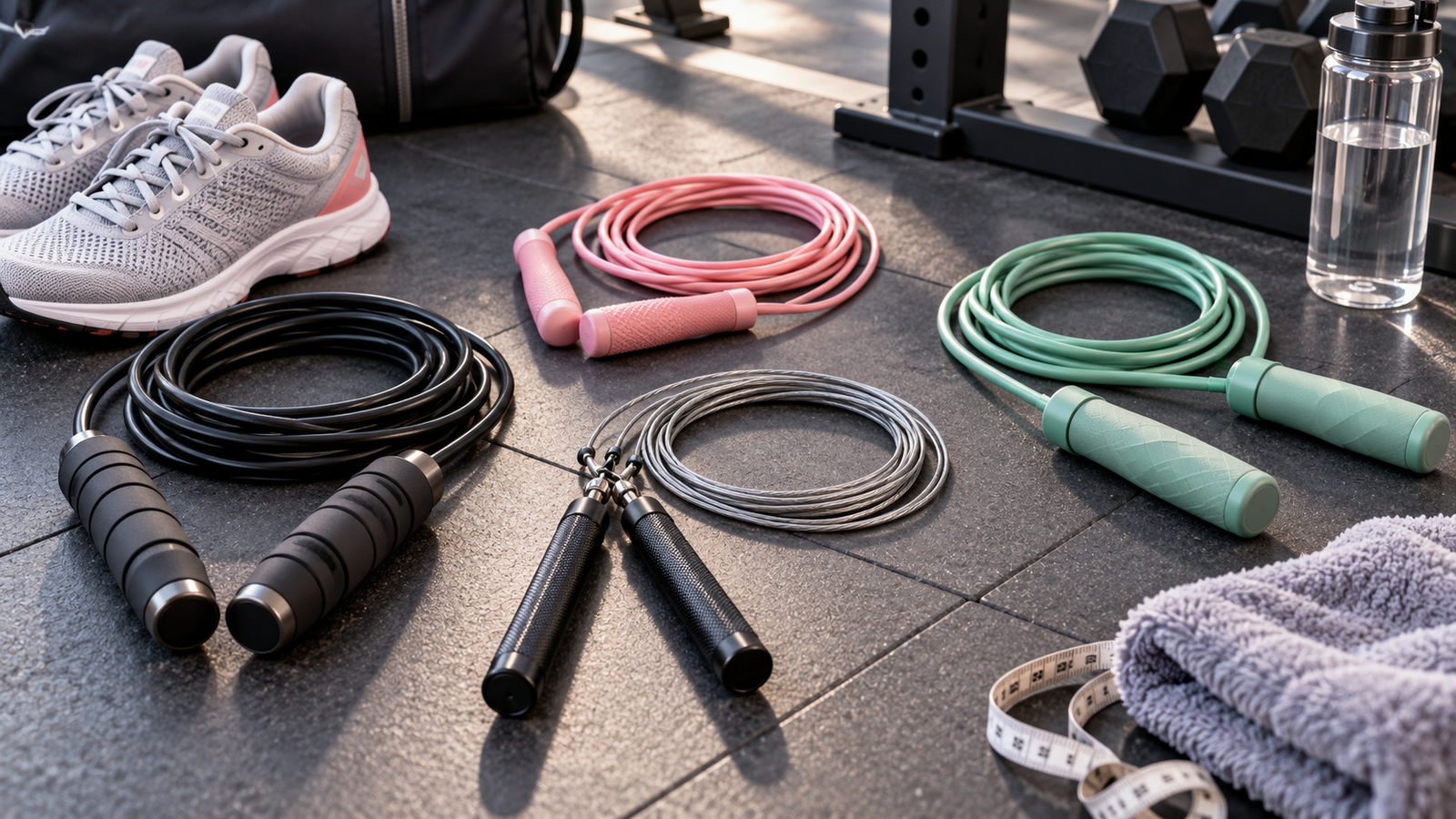
Different ropes are designed for different types of training.
PVC Skipping Rope
PVC ropes are common and versatile.
They are often:
- lightweight
- affordable
- easy to control
- suitable for general cardio
They can work well for:
- beginners
- home workouts
- basic footwork
- moderate-speed skipping
PVC ropes are often a good starting point because they provide enough feedback without being excessively heavy.
Speed Rope
Speed ropes usually use a thin cable designed for fast rotation.
They are commonly used for:
- faster skipping
- double-unders
- conditioning workouts
- CrossFit-style training
Advantages:
- rapid rotation
- low air resistance
- efficient for advanced skills
Disadvantages:
- less forgiving for beginners
- thin cables can sting if they hit the skin
- some cables wear quickly on rough surfaces
A speed rope is not automatically better just because it rotates faster.
Weighted Skipping Rope
Weighted ropes add resistance through:
- heavier cable
- weighted handles
- both
They can create a stronger upper-body and conditioning challenge.
However, they also require more effort to rotate.
Weighted ropes may be useful for:
- experienced users
- conditioning
- strength-endurance work
Beginners usually benefit more from developing rhythm and technique before adding substantial weight.
Beaded Rope
Beaded ropes use plastic segments around a cord.
They often provide:
- noticeable feedback
- controlled rotation
- durable floor contact
- easier rhythm learning
They are frequently used for:
- freestyle
- skill development
- beginners
- coordination training
The extra feedback can make timing easier to understand.
Leather Rope
Leather ropes have a more traditional feel.
They can provide smooth rotation but may require more maintenance and are less common than PVC or cable ropes for modern home fitness.
Which Rope Is Best for Beginners?
Beginners should prioritise control over speed.
A good beginner rope usually has:
- adjustable length
- moderate cable thickness
- comfortable handles
- enough weight to feel the rope rotating
- simple bearings or rotation mechanism
PVC or beaded ropes are often easier starting points than ultra-light speed cables.
Avoid choosing a specialised competition rope before you have developed basic timing.
Which Rope Is Best for Cardio?
For general cardio, look for:
- comfortable handles
- adjustable length
- consistent rotation
- moderate rope weight
You do not need an extreme speed rope for an effective cardio workout.
The best rope is one you can use consistently without fighting the equipment.
Which Rope Is Best for Double-Unders?
Double-unders require the rope to pass under the feet twice during one jump.
A speed rope is usually more appropriate because:
- the cable rotates quickly
- the system has lower resistance
- the handles are designed for fast wrist movement
However, beginners should first develop:
- single-under rhythm
- relaxed wrist rotation
- efficient jump height
- consistent timing
Changing to a faster rope does not compensate for poor technique.
Which Rope Is Best for Weight Loss Workouts?
There is no special “weight-loss rope.”
Fat loss depends primarily on overall energy balance, diet, activity and consistency.
Skipping can contribute to calorie expenditure because it can be a vigorous cardiovascular activity.
For this purpose, choose a rope you can use comfortably and consistently.
You do not need:
- the heaviest rope
- the fastest rope
- the most expensive rope
A controllable rope used regularly is more useful.
How Handle Design Affects Skipping
Handles influence comfort and control.
Important factors include:
- length
- diameter
- grip texture
- material
- weight
- bearing system
Short Handles
Shorter handles can feel compact and controlled.
They are common on speed ropes.
Longer Handles
Longer handles may help with:
- freestyle movements
- beginners who want more leverage
- certain trick-based skipping styles
Foam Handles
Foam can feel soft and comfortable.
However, foam may absorb sweat and wear faster depending on quality.
Plastic Handles
Plastic handles are lightweight and easy to clean.
Grip texture becomes important because smooth plastic can become slippery.
Aluminium Handles
Aluminium handles usually feel more solid and durable.
They may also add weight compared with plastic.
Some users prefer the premium, rigid feel.
Bearings and Rope Rotation
Some skipping ropes use:
- basic swivel systems
- ball bearings
- rotating joints
A smoother system can reduce cable twisting and make rotations more consistent.
This becomes more important at higher speeds.
For basic cardio, an elaborate bearing system is not essential.
How Heavy Should a Skipping Rope Be?
The ideal weight depends on experience and training style.
Lightweight Rope
Advantages:
- faster rotation
- less arm fatigue
- useful for speed work
Disadvantages:
- harder for beginners to feel in motion
- less feedback
Moderate-Weight Rope
Advantages:
- easier rhythm feedback
- versatile
- good for general fitness
This is often a sensible starting point.
Heavy Rope
Advantages:
- greater resistance
- more upper-body involvement
Disadvantages:
- more fatigue
- requires stronger technique
- can stress shoulders and wrists if overused
Choose rope weight according to your training goal rather than assuming heavier is better.
How Your Height Affects Rope Choice
Taller users generally need longer cables.
Shorter users need shorter settings.
This is why adjustable ropes are useful.
However, height is only a starting point.
Your ideal rope length also depends on:
- arm position
- jumping technique
- experience
- preferred rope speed
As technique improves, many users shorten the rope slightly.
Signs Your Rope Is Too Long
Your rope may be too long if:
- it repeatedly slaps the floor far in front of you
- rotation feels slow
- your hands move wide away from your hips
- the rope forms a large loop
- timing feels delayed
Try shortening it gradually.
Make small adjustments rather than removing a large amount at once.
Signs Your Rope Is Too Short
Your rope may be too short if:
- it catches your toes frequently
- you need to jump unusually high
- your hands rise toward your chest
- you feel forced to bend your knees excessively
- the cable barely clears your head
Increase the length if the rope design allows it.
Where Should Your Hands Be While Skipping?
For basic skipping, keep your hands relatively close to the body.
Your elbows should generally remain relaxed.
Rotation should come mainly from:
- wrists
- small forearm movement
rather than large circles with the shoulders.
Holding the arms very wide effectively shortens the rope and makes rotation less efficient.
How High Should You Jump?
For basic skipping, you only need enough height for the rope to pass under your feet.
Jumping unnecessarily high can:
- waste energy
- disrupt rhythm
- increase landing impact
- slow the cadence
Keep jumps light and controlled.
Which Surface Is Best for Skipping?
Surface affects both the rope and your body.
Good surfaces may include:
- wooden gym flooring
- rubber flooring
- exercise mats designed for skipping
- smooth indoor flooring with adequate grip
Very rough concrete can wear down some ropes quickly.
Very soft surfaces can make rotation feel slow or unstable.
Avoid slippery surfaces.
Skipping on Concrete
Concrete is hard and can accelerate cable wear.
If you regularly skip outdoors on concrete:
- check whether the rope is designed for outdoor use
- inspect the cable frequently
- consider using a suitable exercise mat
The harder surface may also feel less comfortable for some people.
Skipping on a Mat
A suitable mat can:
- protect flooring
- reduce rope wear
- reduce noise
- provide a more consistent training area
Do not use an excessively thick or soft mat because the rope may catch or sink into it.
Footwear for Skipping
Wear shoes that provide:
- secure fit
- appropriate cushioning
- good grip
- stable landing
Avoid loose footwear.
Your shoe choice should suit your comfort, surface and training intensity.
How to Start Skipping as a Beginner
Start with short intervals.
For example:
- Skip for 20–30 seconds.
- Rest.
- Repeat for several rounds.
- Gradually increase duration as your technique improves.
The exact progression depends on fitness level.
Do not force long sessions while your technique is still inconsistent.
Basic Skipping Technique
Focus on:
- upright posture
- relaxed shoulders
- hands near the hips
- wrist-driven rotation
- soft landings
- small jumps
- steady breathing
Try to land lightly on the forefoot or midfoot rather than crashing heavily into the floor.
Beginner Mistakes
Jumping Too High
You only need enough clearance for the rope.
Using the Arms Too Much
Large arm circles waste energy.
Use the wrists more.
Looking at the Rope
Keep your gaze forward rather than looking down continuously.
Holding the Handles Too Tightly
Excess grip creates unnecessary tension.
Starting Too Fast
Build rhythm before speed.
Using a Rope That Is Too Short
This can make learning unnecessarily difficult.
How to Improve Your Rhythm
Rhythm matters more than raw speed.
Try:
- consistent single jumps
- counting repetitions
- listening to the rope contact the floor
- maintaining a steady cadence
Once you can skip comfortably, introduce variations.
Skipping Rope for HIIT
Skipping works well in interval training.
A simple structure could involve alternating:
- short high-effort skipping periods
- recovery periods
Intensity should match your fitness level.
Do not choose a heavier or faster rope simply because the workout is labelled HIIT.
Technique still matters.
Skipping Rope for Warm-Ups
Skipping can be used as part of a warm-up because it raises heart rate and body temperature.
Keep the intensity moderate.
A warm-up should prepare you for training rather than exhaust you before the main workout.
Skipping Rope for Boxing Training
Boxers commonly use skipping for:
- rhythm
- conditioning
- coordination
- footwork
A lightweight or moderate rope often works well.
Boxing-style skipping may include:
- alternating feet
- boxer step
- lateral movement
You do not need a specialised branded boxing rope to start.
How to Progress Your Skipping Workouts
Progress one variable at a time.
You can increase:
- total duration
- interval length
- cadence
- skill complexity
Avoid increasing everything simultaneously.
Progression should remain manageable.
When to Consider a Speed Rope
Consider one when:
- basic skipping feels easy
- your rhythm is consistent
- you want double-unders
- speed training is part of your goal
A speed rope is more specialised than a general fitness rope.
When to Consider a Weighted Rope
A weighted rope may make sense when:
- your basic technique is solid
- you want more resistance
- upper-body conditioning is part of the goal
- you can maintain controlled movement
Start conservatively.
Heavier ropes increase fatigue quickly.
How to Maintain a Skipping Rope
Basic maintenance can extend rope life.
After workouts:
- wipe sweat from handles
- untwist the rope
- avoid tightly bending the cable
- store it loosely
- inspect wear points
Avoid wrapping a cable tightly around the handles if it creates permanent kinks.
Signs the Rope Needs Replacing
Consider replacement if:
- cable coating is severely worn
- internal wire is exposed
- handles crack
- bearings fail
- adjustment mechanism no longer locks
- rope repeatedly twists because of damage
A damaged rope can become unpredictable during use.
Common Buying Mistakes
Choosing Only by Price
A very cheap rope can still work, but check adjustability, cable quality and handle comfort.
Buying an Advanced Speed Rope as a Beginner
Ultra-light cables can make learning harder.
Ignoring Length Adjustment
A good rope still performs poorly if it does not fit your height.
Choosing Heavy Handles for Basic Cardio
Extra handle weight may create unnecessary fatigue.
Ignoring Training Surface
Outdoor concrete may damage some cables quickly.
Assuming More Features Mean Better Performance
Counters, digital displays and attachments are optional.
The core requirements are correct length, smooth rotation and comfortable grip.
Digital Skipping Ropes and Counters
Some ropes include:
- repetition counters
- timers
- calorie estimates
These features can be convenient but are not necessary for effective training.
Calorie estimates should be treated as approximations rather than exact measurements.
A simple rope can provide the same fundamental exercise.
Cordless Skipping Ropes
Cordless ropes use weighted balls attached to short cords instead of a full rope.
They may be useful when:
- ceiling height is limited
- indoor space is very small
- you are learning hand rhythm
However, they do not fully reproduce the timing and coordination of a real rope passing under the feet.
How to Choose a Rope for Small Spaces
For indoor training:
- check ceiling height
- check side clearance
- use an adjustable rope
- avoid overly long cables
You need space both above and around the body.
Simple Buying Checklist
Before buying, ask:
Is the length adjustable?
Especially important for beginners.
Is the cable suitable for my workout?
PVC for general fitness, cable for speed, heavier rope for resistance.
Are the handles comfortable?
You should be able to hold them without slipping.
Where will I use it?
Indoor flooring and outdoor concrete create different wear conditions.
What is my current skill level?
Choose control before speed.
Do I need special features?
Most people do not need digital counters or complex accessories.
Skipping Rope Type by Goal
| Goal | Rope type to consider |
|---|---|
| Beginner cardio | Adjustable PVC rope |
| General fitness | PVC or moderate-weight rope |
| Speed training | Speed cable rope |
| Double-unders | Speed rope |
| Freestyle | Beaded rope |
| Extra resistance | Weighted rope |
| Indoor small space | Compact adjustable rope |
| Technique practice | Rope with clear rotational feedback |
Is Skipping Suitable for Everyone?
Skipping is a repetitive impact activity.
People with certain joint, balance or medical concerns may need to modify or avoid it.
If you have:
- persistent knee pain
- ankle pain
- recent injury
- significant balance problems
- medical restrictions on high-impact exercise
seek appropriate professional advice before adding high-volume skipping.
Pain is not a normal progression target.
Frequently Asked Questions
How long should my skipping rope be?
Use the manufacturer’s sizing guidance and adjust based on your height and technique. Beginners often benefit from a slightly longer rope.
Is a weighted skipping rope better?
Not universally. Weighted ropes provide more resistance but are more tiring and may not be appropriate for beginners.
Is a speed rope good for beginners?
It can be used, but PVC or beaded ropes often provide more feedback and are easier for learning basic rhythm.
Can skipping help with fitness?
Yes. Skipping can provide vigorous cardiovascular exercise and improve coordination when used consistently.
How long should beginners skip?
Start with short intervals and build gradually according to technique, fitness and recovery.
Why does the rope keep hitting my feet?
The rope may be too short, your timing may be inconsistent, or you may be rotating from the arms rather than the wrists.
Should the rope hit the floor?
A light contact with the floor in front of the feet is normal. Excessive slapping often indicates the rope is too long.
Can I skip every day?
Frequency depends on training volume, experience, recovery and joint tolerance. Beginners usually benefit from building gradually rather than immediately training at high volume every day.
Final Takeaway
The best skipping rope is not necessarily the fastest, heaviest or most expensive one.
For most beginners, prioritise:
- adjustable length
- comfortable handles
- moderate cable weight
- consistent rotation
- a rope you can easily feel and control
Choose a PVC or beaded rope for general fitness and skill development.
Choose a speed rope when fast rotations and double-unders become a specific training goal.
Choose a weighted rope only when you already have good technique and deliberately want more resistance.
Most importantly, set the rope to the correct length and build your technique gradually. A properly fitted basic rope is usually more useful than an advanced rope that does not suit your height or experience.
If you are comparing specific options, continue to our Top 5 Skipping Ropes in India guide, where we compare adjustable, PVC and aluminium-handle ropes for different cardio and home-workout needs.