Foam Roller Density and Texture: Choosing a Comfortable Starting Point
Foam rollers are among the most popular accessories for home workouts, mobility routines and post-exercise recovery. They are affordable, portable and available in several different shapes, sizes and materials.
However, choosing a foam roller can be confusing.
Some rollers are soft and smooth, while others are firm, textured or designed with raised ridges. You may also find high-density foam rollers, hollow-core rollers and compact massage rollers advertised for deeper pressure.
This raises an important question: Does a harder, more textured foam roller actually work better?
Not necessarily.
The pressure you experience depends on the roller’s firmness, surface design, your body position and how much weight you place on it.
A firm textured roller may feel intense, but greater discomfort does not automatically produce better flexibility, faster recovery or improved muscle function.
For beginners, selecting a comfortable roller and learning controlled techniques is usually more useful than choosing the hardest option available.
This guide explains foam roller density, texture, size, material differences and practical safety considerations so you can choose a suitable starting point.
1. What Is a Foam Roller?
A foam roller is a cylindrical exercise accessory used to apply pressure to soft tissues through controlled body movement.
Most foam rollers consist of a solid or hollow cylinder covered with cushioning material.
During use, you position the roller beneath a muscle group and gradually move over it or maintain gentle pressure on a selected area.
This practice is commonly called self-myofascial release.
Foam rolling is frequently included in:
- Warm-up routines.
- Post-workout cooldowns.
- General mobility exercises.
- Recreational stretching routines.
- Muscle relaxation activities.
- Fitness and physiotherapy programs.
However, foam rolling should not be treated as a guaranteed method for breaking up scar tissue, permanently releasing muscle knots or correcting structural problems.
Its observed effects may involve changes in sensation, tolerance to movement and other neuromuscular responses.
The exact mechanisms are still being studied.
2. What Does Foam Roller Density Mean?
Foam roller density generally refers to how much material is contained within a given volume.
In consumer fitness products, however, manufacturers often use terms such as low density, medium density and high density to describe how firm a roller feels.
Technically, material density and mechanical hardness are not identical properties.
Two foam materials can have different hardness characteristics even when their densities are similar.
For buyers, the practical question is usually how much the roller compresses when pressure is applied.
Soft foam rollers
Soft rollers compress relatively easily.
They generally produce a gentler sensation because more of the surface can deform under your weight.
They may be suitable for people who:
- Are new to foam rolling.
- Prefer lighter pressure.
- Find firm rollers uncomfortable.
- Want to learn basic positioning and control.
Hospital for Special Surgery recommends that beginners consider softer, smooth rollers because they usually feel less intense.
Medium-firmness rollers
Medium rollers provide more support while retaining some cushioning.
They may suit people who want a balance between comfort and pressure.
For general home use, a medium roller can be a practical option when a very soft model feels unstable or compresses excessively.
Firm or high-density rollers
Firm rollers resist compression and can create greater localized pressure when used in the same position.
They are often selected by experienced users who prefer a more intense sensation.
However, a harder roller is not automatically more effective.
If a roller creates excessive discomfort, causes you to tense your muscles or prevents controlled movement, it may not be appropriate for your current needs.
3. Soft vs Medium vs Firm Foam Rollers
Understanding the differences can make purchasing easier.
| Feature | Soft roller | Medium roller | Firm roller |
|---|---|---|---|
| Compression under pressure | Greater | Moderate | Lower |
| Typical sensation | Gentle | Moderate | More intense |
| Beginner suitability | Often good | Often good | Depends on tolerance |
| Pressure concentration | Generally lower | Moderate | Can be higher |
| Comfort on sensitive muscles | Often preferable | Individual | May be uncomfortable |
| Shape retention | Depends on quality | Depends on quality | Often resists compression |
| Best selection factor | Comfort | Versatility | Individual preference and control |
These are general tendencies. Actual performance varies with materials, diameter, construction and body weight.
Which density should beginners choose?
A soft or medium-firmness roller with a smooth surface is a sensible starting point.
You can increase the applied pressure gradually by changing your body position rather than immediately purchasing a harder roller.
The ideal starting roller should allow you to stay relaxed, breathe normally and maintain control throughout the movement.
4. Does Foam Roller Color Indicate Density?
Some manufacturers use different colors to identify roller firmness.
For example, a brand may sell white, blue and black rollers representing different density categories.
However, there is no universal foam roller color standard.
A black roller from one manufacturer may have a different firmness from a black roller made by another company.
What should you check instead?
Look for:
- Manufacturer-defined firmness.
- Material type.
- Solid or hollow construction.
- Roller dimensions.
- Maximum supported load, if specified.
- Product-specific usage instructions.
- Warranty and durability information.
Do not select a foam roller solely because its color appears to indicate a particular density.
5. Smooth vs Textured Foam Rollers: What Is the Difference?
Surface texture is another important feature.
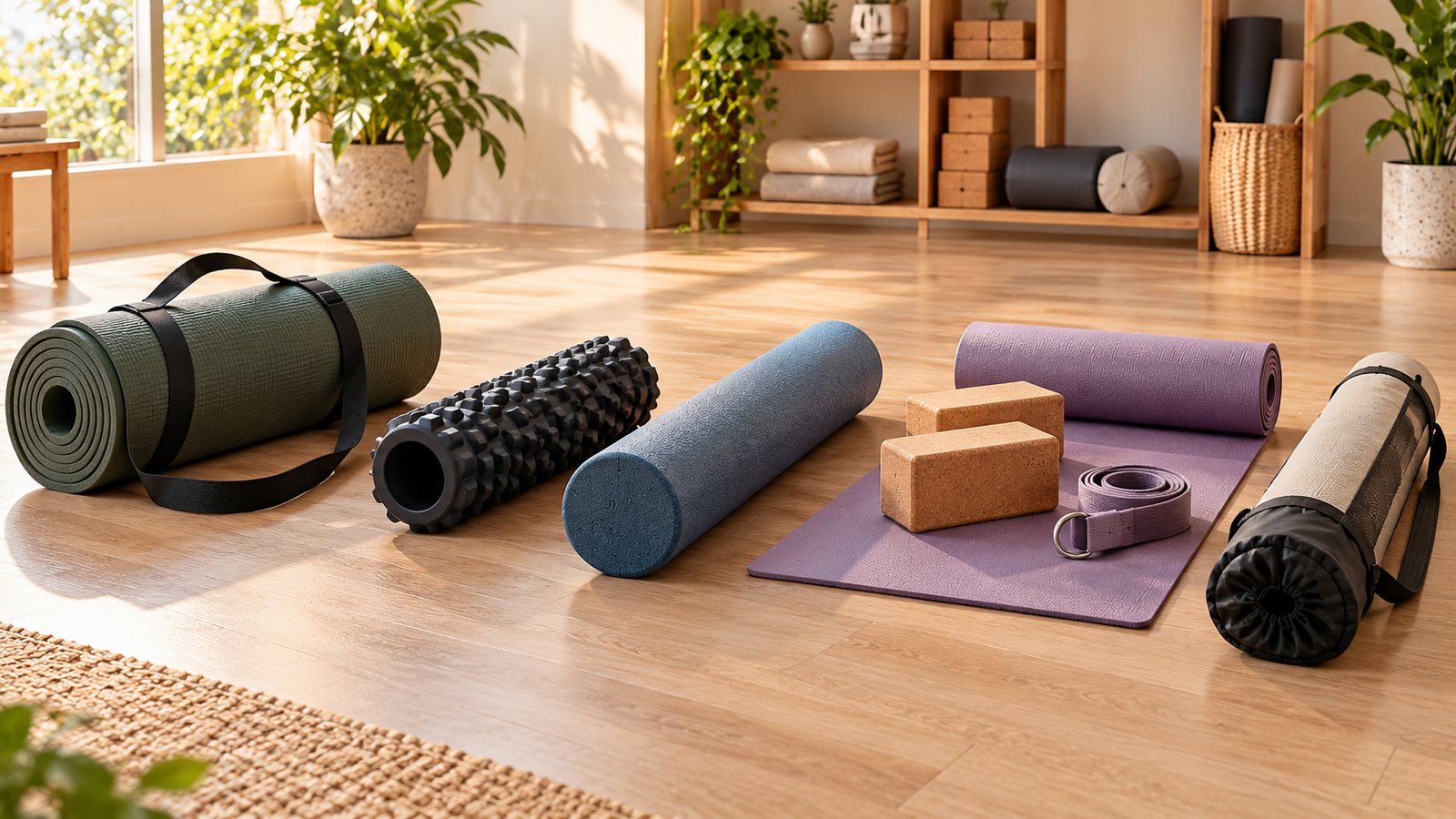
Foam rollers are commonly available with smooth, ridged or raised-grid surfaces.
These designs influence how pressure is distributed.
Smooth foam rollers
A smooth roller has a relatively even exterior.
Its surface distributes contact over a broader area, depending on the foam firmness and body position.
Potential advantages include:
- More uniform contact.
- A less concentrated pressure sensation.
- Simple cleaning.
- Easier familiarization for beginners.
- Comfortable rolling across larger muscle groups.
Smooth rollers are commonly used for calves, thighs and other large muscle areas.
Textured foam rollers
Textured rollers feature raised patterns, grooves or ridges.
Some have shallow grid patterns, while others contain more prominent raised sections.
These features can concentrate pressure over smaller contact areas.
The sensation may be more intense than that of a smooth roller with similar overall firmness.
However, it would be misleading to conclude that textured rollers necessarily penetrate deeper into muscle tissue or produce better recovery.
The evidence does not establish that more aggressive surface designs are universally superior.
Smooth vs textured comparison
| Consideration | Smooth roller | Textured roller |
|---|---|---|
| Surface | Even | Raised patterns or ridges |
| Pressure sensation | Usually more uniform | May feel more concentrated |
| Beginner comfort | Often preferable | Depends on texture |
| Best for | General rolling and learning technique | Users who tolerate and prefer localized pressure |
| Cleaning | Often straightforward | Grooves may require additional cleaning |
| Recovery advantage | Not universally established | Not universally established |
Choose texture based on comfort and control, not claims that an uncomfortable roller must be more effective.
6. Does a Textured Foam Roller Provide a Deeper Massage?
The term deep-tissue massage is frequently used in foam roller marketing.
However, a raised texture does not automatically mean pressure reaches deeper anatomical structures or produces superior clinical outcomes.
The actual pressure transmitted to tissue depends on:
- Roller stiffness.
- Raised surface geometry.
- Body weight.
- Supporting position.
- Contact area.
- Tissue characteristics.
- Movement speed.
A textured roller can feel more intense because pressure is concentrated around raised surfaces.
But increased intensity is not equivalent to proven effectiveness.
A 2024 systematic review examining foam rolling and pressure pain thresholds found no consistent effect on local pressure pain sensitivity compared with control conditions.
This does not mean foam rolling cannot feel relaxing.
It means subjective sensations and marketing terminology should not be confused with established physiological benefits.
7. Does Foam Rolling Improve Flexibility?
Research suggests foam rolling can temporarily improve range of motion in some circumstances.
However, the magnitude and duration of the effects vary.
A 2024 systematic review involving 38 studies and 1,134 participants compared foam rolling and stretching with other warm-up activities.
The researchers found no significant advantage for foam rolling or stretching over other warm-up interventions in the measured acute flexibility and stiffness outcomes.
Another 2024 systematic review found that regular foam rolling and static stretching could both improve range of motion over time, with no clear overall difference between the two methods. Some shorter-duration analyses favored stretching.
What does this mean?
Foam rolling may be a useful mobility option, but it is not essential for everyone.
Walking, dynamic movements and conventional stretching may also support mobility preparation.
The most appropriate warm-up depends on the activity you plan to perform.
Can foam rolling replace stretching?
Sometimes it may serve a similar purpose within a routine, but the methods are not identical.
A balanced mobility program may include several movement approaches.
Choose the activities that suit your goals rather than assuming a foam roller is mandatory.
8. Does Foam Rolling Help Post-Workout Soreness?
Delayed-onset muscle soreness, commonly called DOMS, can develop after unfamiliar or demanding exercise.
It often becomes noticeable several hours after training.
Some studies suggest foam rolling may modestly reduce perceived post-exercise soreness.
A 2024 systematic review and meta-analysis found beneficial effects on exercise-induced muscle soreness in some of the included studies.
However, the evidence should not be interpreted as proof that foam rolling dramatically accelerates biological muscle repair.
What foam rolling may help with
- Temporary muscle comfort.
- Perceived relaxation.
- Short-term movement tolerance.
- Some aspects of perceived post-exercise soreness.
What it cannot guarantee
- Prevention of all muscle soreness.
- Faster recovery after every workout.
- Repair of muscle tears.
- Treatment of significant injuries.
- Elimination of the need for rest.
Recovery also depends on sleep, training demands, nutrition and overall health.
A foam roller is one optional recovery accessory, not a replacement for those fundamentals.
9. Foam Roller Length: Short vs Long Rollers
Foam rollers come in different lengths.
Common consumer formats include compact rollers around 30 cm, medium models around 45 cm and longer rollers around 90 cm.
Exact sizes vary by manufacturer.
Short foam rollers
Compact rollers are easier to store and transport.
They can be useful for selected muscle groups and smaller exercise spaces.
However, they may provide less lateral support for some movements.
Medium-length rollers
Medium models offer a compromise between portability and usable surface length.
They can be practical for general lower-body rolling.
Long foam rollers
Long rollers provide a larger contact surface.
They may be convenient for certain upper-back positioning and other exercises requiring additional support.
Hospital for Special Surgery suggests longer rollers may be useful when beginners are learning because they offer greater stability in some positions.
Length comparison
| Roller length | Potential benefit | Limitation |
|---|---|---|
| Approximately 30 cm | Compact and portable | Less support for wide positioning |
| Approximately 45 cm | Balanced size | Not ideal for every exercise |
| Approximately 90 cm | Greater support and versatility | Requires more storage space |
The best length depends on your body dimensions and intended exercises.
10. Does Foam Roller Diameter Matter?
Yes.
A foam roller’s diameter changes the height of the support surface and can influence how a movement feels.
A typical full-size roller may have a diameter around 13–15 cm, although smaller and larger designs exist.
Larger-diameter rollers
These position the body farther from the floor and may feel stable for some exercises.
However, they can be more difficult to control in certain positions.
Smaller-diameter rollers
Smaller rollers position the body closer to the floor.
Their smaller contact geometry may produce a more concentrated sensation in some uses.
Which diameter should beginners choose?
A conventional full-size roller is a practical starting point.
Avoid selecting an unusually small or highly specialized roller until you understand the movement and pressure you prefer.
11. Solid Foam vs Hollow-Core Foam Rollers
Foam rollers also differ in construction.
Solid foam rollers
These are made primarily from a continuous foam body.
Their firmness depends on the material and manufacturing process.
They may feel relatively uniform across the surface.
Hollow-core rollers
These generally have a rigid inner cylinder covered by a foam or cushioning layer.
Some include textured exteriors.
The rigid inner structure can make the roller feel relatively firm.
However, not every hollow-core roller feels the same.
Which construction is better?
Neither is universally superior.
Consider:
- Comfort.
- Resistance to deformation.
- Surface texture.
- Weight.
- Storage.
- Durability.
- Manufacturer specifications.
A solid foam roller can be entirely adequate for general mobility routines.
A hollow-core roller may be preferable for users who specifically want its construction and feel.
12. How Much Pressure Should You Apply?
This is one of the most important questions for beginners.
Some people believe foam rolling should be painful to work effectively.
That is a mistake.
You do not need intense pain to benefit from a foam rolling routine.
Pressure should remain tolerable and controllable.
Mild tenderness may occur over sensitive muscles, but sharp, shooting or escalating pain is a reason to stop.
How to reduce pressure
Use your arms or other supporting body parts to carry more of your weight.
For example, when rolling the calf, keeping the opposite foot on the floor can reduce the pressure applied to the roller.
How to increase pressure gradually
You may change your supporting position to place more weight on the roller, provided the movement remains controlled and comfortable.
Do not increase pressure simply to match someone else’s routine.
Signs of excessive pressure
Stop or reduce pressure if you notice:
- Sharp pain.
- Numbness or tingling.
- Uncontrolled muscle guarding.
- Significant bruising.
- Worsening pain.
- Unusual swelling.
- Difficulty controlling your body position.
Pressure preference varies between individuals.
13. How Long Should You Foam Roll Each Muscle?
There is no universally proven duration that works best for every person, muscle group or training goal.
Some recreational exercise guides suggest spending approximately 30–60 seconds on an area.
However, this should be considered a practical starting range rather than a medically established requirement.
Beginner approach
Start with a short period of gentle rolling.
For example, try 20–30 seconds on a comfortable muscle area while maintaining controlled movement.
Pause and assess how you feel.
There is no need to continue when you experience increasing discomfort.
Should you roll for several minutes?
Longer sessions are not automatically more beneficial.
The ideal duration depends on the objective, movement and individual response.
Avoid prolonged intense pressure over one sensitive location.
14. How Fast Should You Move the Roller?
Foam rolling generally involves slow, controlled movement.
Moving rapidly back and forth makes it more difficult to regulate pressure and identify discomfort.
A simple approach is to move gradually across the intended muscle area.
Why slower movement may help
- Easier pressure control.
- Better awareness of uncomfortable spots.
- Reduced momentum.
- Easier positioning.
- Less chance of uncontrolled slipping.
However, there is no universal rolling speed established as optimal for every use.
The goal is controlled pressure, not moving the roller as quickly as possible.
15. Beginner Foam Rolling: Calves
The calf muscles are a common starting area because it is relatively easy to regulate body weight using your hands and opposite leg.
How to begin
- Sit on a stable exercise mat.
- Extend one leg comfortably.
- Place the roller beneath the fleshy part of the calf.
- Keep the opposite foot on the floor for support.
- Support your body with your hands.
- Move gently over a small section of calf muscle.
- Avoid direct pressure over the ankle or knee joint.
- Stop if you experience sharp pain or unusual symptoms.
Do not roll over a suspected injury.
If you have unexplained calf swelling, warmth, redness or pain, do not massage the area; seek prompt medical assessment because these can be symptoms of a blood clot.
16. Beginner Foam Rolling: Front of Thighs
The quadriceps are the muscles at the front of your thighs.
They are frequently targeted during foam rolling.
How to begin
- Position yourself face down with the roller beneath one or both thighs.
- Support your upper body with your forearms.
- Maintain comfortable control of your trunk.
- Move slowly over the muscular area.
- Avoid direct pressure over the kneecaps and hip bones.
- Stop if you develop pain beyond ordinary mild tenderness.
This position can be demanding for people with limited upper-body strength or certain shoulder conditions.
Use another approach or professional guidance if you cannot maintain control.
17. Beginner Foam Rolling: Gluteal Muscles
The gluteal muscles are located around the buttocks and hips.
Rolling this region may feel different from rolling the calves because body weight distribution is harder to control.
General approach
Sit gently on a stable roller and support yourself using your hands and feet.
Shift a manageable amount of weight toward the intended gluteal area.
Move slowly and avoid aggressive pressure near bony structures.
If the position causes shooting pain, tingling or discomfort radiating down the leg, stop.
Do not use foam rolling to self-treat unexplained sciatic symptoms or significant hip pain without professional guidance.
18. Should You Foam Roll Your Lower Back?
Directly rolling the lumbar spine is generally discouraged in beginner foam rolling guidance.
The lower back contains bony spinal structures and may be more vulnerable to poorly controlled direct pressure.
Cleveland Clinic and Hospital for Special Surgery advise users to avoid rolling directly over bones and joints.
What about upper-back rolling?
Some exercise professionals use foam rollers for selected thoracic mobility exercises.
However, technique and body positioning matter.
A long smooth roller may provide additional stability for some movements.
Avoid rolling directly over your neck or applying uncontrolled pressure to the spine.
What if you have back pain?
Foam rolling should not be used as a substitute for evaluating persistent or significant back pain.
Seek appropriate medical assessment if you experience severe pain, weakness, numbness or other concerning neurological symptoms.
19. When Should You Avoid Foam Rolling?
Foam rolling is generally used by healthy individuals as a form of self-massage, but certain conditions require caution.
An international expert consensus study identified fractures and open wounds as contraindications.
The experts also highlighted concerns involving local tissue inflammation, deep vein thrombosis, bone infection and myositis ossificans.
Avoid rolling directly over
- Open wounds.
- Suspected or known fractures.
- Acutely injured tissue.
- Areas with suspected blood clots.
- Severely bruised areas.
- Painful, inflamed or infected tissue without medical guidance.
- Joints or prominent bones.
Seek professional advice first if you have
- A recent surgery.
- Significant musculoskeletal injury.
- Circulatory or clotting problems.
- Unexplained swelling.
- Osteoporosis or a condition affecting bone strength.
- Neurological symptoms.
- A medically prescribed rehabilitation program.
If you are pregnant, consult your healthcare professional before trying unfamiliar foam rolling techniques.
The appropriate precautions depend on your health and the area being treated.
20. Foam Roller vs Yoga Mat: Do You Need Both?
Yoga mats and foam rollers are often sold together in home workout starter kits.
However, they serve different purposes.
Yoga mat
A yoga mat provides cushioning and grip for floor-based exercise.
It may support activities such as stretching, yoga, bodyweight training and certain mobility exercises.
Foam roller
A foam roller provides a raised surface for controlled pressure and selected mobility movements.
It is not a substitute for a full exercise mat.
Do beginners need both?
Not necessarily.
If your main goal is performing floor exercises comfortably, a suitable mat may be more important.
If you want to experiment with self-massage or foam rolling, a roller may be a useful optional addition.
You can begin with one accessory and expand your setup when you have a clear reason.
21. How to Choose Your First Foam Roller
Before purchasing, identify what you want the roller to do.
For general beginner use, the following characteristics are worth considering.
1. Comfortable firmness
Choose a roller that provides tolerable pressure.
Do not assume high density is automatically superior.
2. Smooth surface
A smooth roller is generally a practical starting point.
Raised textures can be explored later if desired.
3. Appropriate length
A medium or long roller may provide greater versatility, depending on the exercises.
4. Stable construction
The roller should maintain its intended shape during normal use.
Inspect manufacturer weight limits and material quality where available.
5. Easy cleaning
A simple, washable surface can be convenient for regular use.
6. Adequate storage space
Choose dimensions that fit your home without creating unnecessary clutter.
7. Clear manufacturer instructions
Look for practical safety information, material details and appropriate usage guidance.
Beginner selection checklist
| Buying question | Practical recommendation |
|---|---|
| Soft or firm? | Begin soft to medium |
| Smooth or textured? | Smooth is often easier to tolerate |
| Short or long? | Choose based on exercise and storage needs |
| Solid or hollow? | Either can work if comfortable |
| Expensive or affordable? | Prioritize fit and quality over price |
| Highest density? | Not necessary for beginners |
| More texture? | Not automatically more effective |
22. Common Foam Rolling Mistakes
Mistake 1: Choosing the hardest roller immediately
A very firm roller can make learning difficult.
Begin with tolerable pressure.
Mistake 2: Believing that pain means effectiveness
Greater discomfort is not proof of better results.
Mistake 3: Rolling directly over joints
Keep the roller on appropriate muscle areas rather than bony joints.
Mistake 4: Using rapid, uncontrolled movements
Slow down and maintain body control.
Mistake 5: Applying full body weight immediately
Use supporting limbs to regulate pressure.
Mistake 6: Ignoring warning symptoms
Sharp pain, numbness, tingling or swelling should not be dismissed.
Mistake 7: Treating foam rolling as a cure for injuries
Foam rolling does not replace diagnosis, rehabilitation or medical treatment.
Mistake 8: Assuming textured rollers are scientifically superior
More concentrated pressure does not automatically produce better outcomes.
Mistake 9: Replacing your entire warm-up with foam rolling
Other warm-up activities can also help prepare your body for exercise.
Mistake 10: Purchasing too many recovery accessories
A basic roller may be sufficient for your needs.
More equipment does not guarantee better recovery.
23. How to Clean and Maintain a Foam Roller
Foam rollers accumulate sweat, skin oils and dust during regular use.
Cleaning methods depend on the material.
Basic cleaning
If permitted by the manufacturer:
- Wipe the exterior with a damp cloth.
- Use a small amount of mild cleaning solution when appropriate.
- Remove any cleaning residue.
- Allow the roller to dry thoroughly.
- Store it in a clean, dry location.
Avoid soaking hollow or porous foam rollers unless the manufacturer specifically permits it.
Storage
Keep the roller away from conditions that could damage the material.
Avoid prolonged exposure to excessive heat or direct sunlight when prohibited by the manufacturer’s guidance.
Do not store heavy equipment on top of a soft roller if this causes permanent deformation.
When should you replace a foam roller?
Consider replacement when you notice:
- Significant cracking.
- A damaged hollow core.
- Loose or separating foam layers.
- Major permanent deformation.
- Structural instability.
- Other damage affecting safe use.
There is no universal foam roller replacement interval.
Its lifespan depends on construction, usage and storage conditions.
24. Frequently Asked Questions
Is a high-density foam roller better?
Not automatically. High-density rollers often feel firmer, but greater firmness does not guarantee better flexibility, recovery or comfort.
What foam roller is best for beginners?
A soft or medium-firmness roller with a smooth surface is generally a practical starting point.
Are textured foam rollers more effective?
Current evidence does not establish that textured rollers are universally more effective than smooth rollers.
What is the difference between a soft and hard foam roller?
A softer roller compresses more easily and usually provides a gentler sensation. A harder roller resists compression and may create more concentrated pressure.
Does foam roller color indicate hardness?
Not reliably across brands. Manufacturers may use different color-coding systems.
How long should I foam roll?
There is no universally optimal duration. Short, controlled sessions are a sensible starting point, with duration adjusted to comfort and the exercise instructions.
Can I foam roll every day?
Some healthy individuals may tolerate frequent gentle rolling, but frequency should depend on pressure, symptoms and personal needs. Avoid repeatedly irritating the same area.
Should I foam roll before or after a workout?
Either may be appropriate. Foam rolling is sometimes used during warm-ups or cooldowns, but it is not an essential part of every routine.
Can foam rolling prevent muscle soreness?
Some research suggests modest reductions in perceived post-exercise soreness, but foam rolling cannot guarantee prevention.
Does foam rolling improve flexibility?
It can improve range of motion in some circumstances, but research does not show a consistent advantage over other warm-up methods.
Is foam rolling supposed to hurt?
No. Mild tenderness can occur, but intense or sharp pain is not required and should not be ignored.
Can foam rolling remove muscle knots permanently?
There is insufficient evidence to claim that foam rolling physically eliminates muscle knots or permanently changes fascial structures.
Should I roll my lower back?
Direct rolling over the lower spine is generally discouraged. Choose safe, appropriate muscle areas and seek professional guidance for back pain.
Which foam roller length should I buy?
A medium or long roller may provide versatility and stability, while compact rollers are easier to carry and store. Choose according to your intended use.
Are hollow-core rollers better than solid foam rollers?
Neither is universally better. Comfort, construction, firmness and durability matter more than the presence of a hollow core alone.
Can foam rolling help with injury recovery?
It should not be used as a substitute for appropriate injury assessment or rehabilitation. Consult a healthcare professional before rolling injured tissues.
25. Final Takeaway
Foam roller density, texture and dimensions influence how a roller feels, but they do not independently determine its effectiveness.
For most beginners, a smooth, soft-to-medium foam roller is a sensible starting point.
Start with gentle pressure, keep movements controlled and avoid direct pressure on joints, bones and injured areas.
A harder or textured roller may suit personal preferences, but it is not automatically a superior recovery tool.
Research suggests foam rolling can improve short-term movement tolerance and may modestly reduce exercise-related soreness, although it is not consistently better than other warm-up or mobility methods.
The best foam roller is one you can use comfortably, safely and consistently—not necessarily the hardest, most expensive or most aggressively textured product available.
References and Further Reading
- Hospital for Special Surgery — Foam Roller Exercises for the Whole Body
- Cleveland Clinic — Should You Try Foam Rolling?
- Warneke et al. (2024) — Foam Rolling and Stretching Compared With Other Warm-Up Interventions
- Konrad et al. (2024) — Static Stretch Training Versus Foam Rolling Training
- Habscheid et al. (2024) — Effects of Foam Rolling on Pain Sensitivity
- Expert Consensus on Contraindications and Cautions of Foam Rolling
- REI — How to Choose Foam Rollers
Editorial note: This article provides general fitness education and does not constitute personalized medical or rehabilitation advice. Foam rollers mentioned are discussed by category rather than through independent product testing. Individuals with injuries, medical conditions or unexplained pain should seek appropriate professional guidance.