BP Monitor Memory and Irregular Pulse Symbols: What to Record
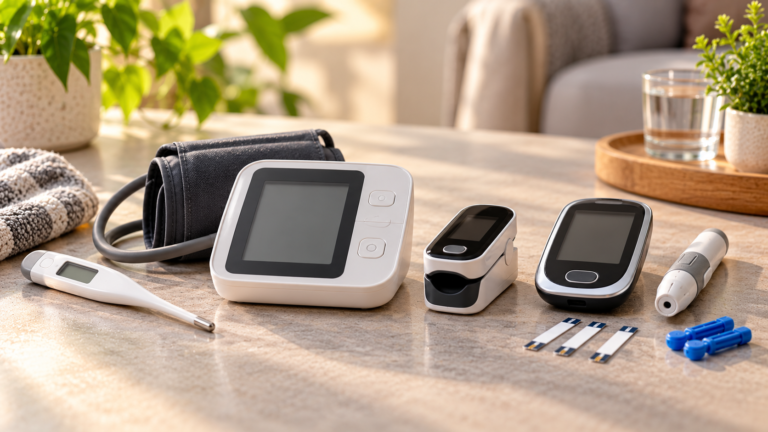
Home blood pressure monitors have become increasingly common in Indian households. Modern digital devices can measure blood pressure, display pulse rate, store previous readings and sometimes identify an irregular heartbeat during measurement.
Many monitors also include symbols for body movement, incorrect cuff placement, average readings, Bluetooth connectivity and blood pressure levels.
These features can make home monitoring more convenient, but they can also create confusion.
For example, what does it mean when a heart-shaped symbol appears after measuring your blood pressure? Should you worry if the irregular heartbeat indicator appears once? And does a blood pressure monitor’s memory show your average blood pressure or simply previous measurements?
The most important thing to understand is that a home blood pressure monitor provides useful measurement information, but its symbols do not independently establish a medical diagnosis.
An irregular heartbeat warning does not automatically mean atrial fibrillation, and one unusually high blood pressure reading does not necessarily establish chronic hypertension.
This guide explains common blood pressure monitor symbols, how memory functions work, what readings to record and when professional medical assessment is important.
1. What Does a Digital Blood Pressure Monitor Measure?
A digital blood pressure monitor generally displays three main measurements.
Systolic blood pressure (SYS)
Systolic pressure is the pressure within your arteries when your heart contracts.
It is displayed as the upper blood pressure number.
For example, in a reading of 120/80 mmHg, the systolic pressure is 120 mmHg.
Diastolic blood pressure (DIA)
Diastolic pressure is the pressure within your arteries when the heart relaxes between beats.
It is the lower number.
In a reading of 120/80 mmHg, the diastolic pressure is 80 mmHg.
Pulse rate (PUL)
The pulse rate is generally displayed in beats per minute, or BPM.
It represents the number of detected pulse beats per minute during the measurement.
Pulse rate and blood pressure are different measurements.
A person can have a relatively normal pulse rate and elevated blood pressure, or a faster pulse with a blood pressure reading that is not elevated.
Do not use pulse rate alone to decide whether your blood pressure is normal.
2. Understanding Common Blood Pressure Monitor Display Symbols
Modern digital monitors may display several icons.
The exact symbols and their meanings depend on the manufacturer and model.
| Display symbol | Common meaning | What to do |
|---|---|---|
| SYS | Systolic blood pressure | Record the upper reading |
| DIA | Diastolic blood pressure | Record the lower reading |
| PUL or heart rate | Pulse rate | Record BPM |
| Flashing heart | Pulse detection during measurement | Usually normal device operation |
| Irregular heartbeat icon | Irregular pulse timing detected | Record occurrence; follow device guidance |
| Movement icon | Movement detected during measurement | Repeat correctly if instructed |
| Cuff-fit indicator | Assesses cuff positioning or tightness | Adjust cuff according to instructions |
| M or memory symbol | Stored readings | Review previous measurements |
| AVG | Average reading | Check which readings are included |
| User 1 / User 2 | Selected memory profile | Confirm the correct user |
| Battery symbol | Low or depleted battery | Replace or recharge as directed |
| Bluetooth or connection icon | Data transfer status | Confirm successful synchronization |
| HIGH or colored indicator | Device-specific blood pressure alert | Review measurement and consult guidance |
These descriptions are general.
For example, some OMRON devices show a blinking heartbeat symbol during measurement, while a different symbol indicates irregular heartbeat detection.
Other brands may use distinct icons.
Always refer to the instruction manual for your exact device.
3. What Does the Irregular Heartbeat Symbol Mean?
Many automatic blood pressure monitors use an oscillometric measurement system.
As the cuff inflates and deflates, the device analyzes pressure fluctuations associated with the pulse.
Some monitors also evaluate differences in the timing of detected pulse beats.
When the device identifies an irregular pattern according to its internal detection criteria, it may display an irregular heartbeat symbol.
How some OMRON monitors detect irregularity
OMRON explains that certain monitors identify an irregular heartbeat when the detected rhythm differs by approximately 25% from the average rhythm during measurement.
On relevant models, an irregular heartbeat indicator appears when qualifying irregularities are detected multiple times during a measurement.
However, the exact algorithm and display behavior vary by device.
What the symbol tells you
The monitor detected irregular pulse timing while measuring blood pressure.
What it does not tell you
The symbol does not independently establish:
- Atrial fibrillation.
- A specific cardiac arrhythmia.
- The cause of irregularity.
- Whether the condition is dangerous.
- Whether medication is required.
An irregular heartbeat indicator is a screening or alert feature, not a replacement for clinical evaluation.
4. Does the Irregular Heartbeat Symbol Mean Atrial Fibrillation?
Not necessarily.
Atrial fibrillation, often abbreviated as AF or AFib, is a heart rhythm disorder involving irregular electrical activity in the upper chambers of the heart.
It can produce an irregular pulse.
However, not every irregular pulse is caused by atrial fibrillation.
Other possible explanations include:
- Premature heartbeats.
- Other heart rhythm variations.
- Movement during measurement.
- Measurement artifacts.
- Improper cuff placement.
- Device-specific detection limitations.
An irregular pulse indicator on an ordinary blood pressure monitor cannot reliably distinguish all these possibilities.
How is atrial fibrillation diagnosed?
Healthcare professionals commonly use an electrocardiogram (ECG or EKG) to evaluate the heart’s electrical activity.
Sometimes additional monitoring is needed because rhythm abnormalities may occur intermittently.
The American Heart Association notes that clinicians may use ambulatory heart rhythm monitors when a brief ECG does not capture intermittent abnormalities.
If your monitor repeatedly displays an irregular heartbeat symbol, arrange medical assessment rather than trying to diagnose the rhythm yourself.
5. What Should You Do When an Irregular Heartbeat Symbol Appears?
Your response should depend on the reading, whether the symbol reappears and whether you have symptoms.
If the symbol appears once and you feel well
Check whether the measurement was performed correctly.
Consider whether you moved, talked or changed your arm position.
Review the manufacturer’s instructions.
If they recommend repeating the reading, rest quietly and repeat it using the proper technique.
Record both the original result and any repeat result.
Do not repeatedly measure every few seconds in an attempt to force a normal result.
If the symbol appears repeatedly
Record the readings and contact a healthcare professional.
Repeated irregular pulse alerts may justify clinical evaluation, even when you feel well.
If you have concerning symptoms
Seek urgent medical attention for symptoms such as persistent palpitations accompanied by dizziness, faintness or significant breathlessness.
If you experience chest pain, severe difficulty breathing, fainting, stroke-like symptoms or other signs of a medical emergency, seek emergency help immediately.
In India, 112 is the national integrated emergency number.
Do not wait for your home monitor to display a particular symbol before seeking help for serious symptoms.
6. Heartbeat Symbol vs Irregular Heartbeat Symbol
A common source of confusion is the difference between a normal heartbeat symbol and an irregular heartbeat warning.
Some digital monitors display a flashing heart icon while the device detects pulses.
This can be normal operation.
The irregular heartbeat warning may be a different icon that remains visible after the reading.
Why the distinction matters
A flashing heart during cuff deflation does not automatically indicate a rhythm problem.
Similarly, an irregular heartbeat warning is not necessarily represented by a flashing icon on every monitor.
Check the manufacturer’s symbol chart.
Do not infer a medical condition from an unfamiliar icon without confirming what that icon represents.
7. What Does the Movement Error Symbol Mean?
Movement can interfere with automatic blood pressure measurement.
Common movements include:
- Talking.
- Moving your arm.
- Adjusting your seated position.
- Holding a phone.
- Crossing or uncrossing your legs.
- Tensing your muscles.
- Moving the cuff during inflation.
Some monitors display a body movement indicator when movement is detected.
What should you do?
Follow the device’s instructions.
For certain OMRON models, the manual advises removing the cuff, resting for approximately two to three minutes, then measuring again while remaining still.
This interval is manufacturer-specific.
If your monitor produces a reading despite movement, record any questionable result separately instead of treating it as fully reliable.
Repeated movement warnings may indicate that the measurement technique needs improvement.
8. What Does a Cuff-Wrap Indicator Mean?
Some upper-arm blood pressure monitors assess whether the cuff appears to be wrapped correctly.
The monitor may display:
- An OK symbol.
- A cuff icon.
- A colored indicator.
- A loose-cuff warning.
- Another device-specific symbol.
An incorrectly sized or positioned cuff can affect blood pressure accuracy.
How to improve cuff placement
Use the cuff size appropriate for your arm circumference.
Position it on bare skin, not over clothing.
Place it according to the manufacturer’s instructions, usually above the elbow crease for standard upper-arm cuffs.
Keep the arm supported at approximately heart level.
The cuff should fit securely without being excessively tight before inflation.
A cuff-wrap indicator does not guarantee perfect accuracy, but it can help identify certain placement problems.
9. What Is the Memory Function on a BP Monitor?
Many digital blood pressure monitors store previous readings internally.
This allows users to review measurements without manually recording every result immediately.
Depending on the model, memory may store:
- Systolic pressure.
- Diastolic pressure.
- Pulse rate.
- Date and time.
- Measurement sequence.
- Selected user profile.
- Certain warning indicators.
Some monitors also calculate averages.
Why memory is useful
Blood pressure changes throughout the day.
One measurement represents the pressure at a particular moment.
Stored readings provide a longer-term record that may help clinicians understand patterns.
For example, readings taken across several mornings and evenings can be more informative than one isolated measurement.
However, the memory feature is only useful when the readings are correctly associated with the person and measurement conditions.
10. What Does the M Symbol Mean?
On many monitors, the letter M indicates the memory function.
Pressing the memory button may display previously stored measurements.
Some devices show a memory number before displaying the corresponding blood pressure and pulse values.
For example:
- M1 may indicate the most recently stored measurement.
- M2 may indicate the preceding measurement.
- Additional numbers may indicate earlier measurements.
This is only an example.
Memory order and numbering differ between products.
Important distinction
A memory number is not your blood pressure result.
If the screen briefly displays 12 before showing 124/78, the number 12 may represent a stored entry rather than a pulse or blood pressure measurement.
Refer to your specific manual.
11. What Does AVG Mean on a BP Monitor?
AVG generally indicates an average measurement.
However, different monitors calculate averages using different groups of stored readings.
For example, some OMRON devices display an average based on the last three measurements taken within a specified period.
Other devices may offer:
- Recent-reading averages.
- Morning averages.
- Evening averages.
- Multiple-day averages.
- User-specific averages.
Why averages are useful
Blood pressure naturally fluctuates.
Averaging appropriately collected measurements can help reduce the influence of isolated variation.
Why average symbols require caution
An average displayed by the monitor may not match the average your doctor wants to review.
For example, an average of three recent readings is different from a seven-day home blood pressure average.
Always check which measurements the device includes before interpreting its displayed average.
12. Why User Profiles Matter
Some blood pressure monitors support two or more memory profiles.
These may be labeled:
- User 1 and User 2.
- A and B.
- Person icons.
- Another model-specific designation.
Each profile is intended to keep measurements associated with the correct person.
Common mistake
Two family members share one monitor but record their readings under the same memory profile.
The device may then calculate averages using measurements from different people.
This makes the stored history difficult to interpret.
How to prevent this
Confirm the selected user profile before every measurement.
If several people share the device, explain the profile-selection procedure to everyone using it.
For devices with only one memory profile, maintain separate written or digital records for each person.
13. Why Date and Time Settings Are Important
A monitor with an incorrect date or time can create a confusing measurement history.
For example, a reading taken in October may be stored under a different month if the clock was not set after replacing batteries.
Correct timing matters because blood pressure can vary with daily activities, sleep, medication timing and other factors.
Before beginning regular monitoring
Check:
- Current date.
- Current time.
- AM/PM or 24-hour display.
- Correct user profile.
- Battery condition.
- Bluetooth synchronization, if applicable.
If a monitor loses its settings after a battery change, restore them before collecting new readings.
Do not assume that every device automatically synchronizes its clock.
14. How Many Blood Pressure Readings Should You Take?
The appropriate schedule depends on why you are monitoring your blood pressure.
For routine home monitoring, clinicians often recommend taking two readings approximately one minute apart.
The American Heart Association recommends recording both measurements.
The 2025–2026 Indian Guidelines on Hypertension also describe a structured approach involving morning and evening measurements.
Example clinical monitoring schedule
| Time | Measurement |
|---|---|
| Morning | First reading |
| One to two minutes later | Second reading |
| Evening | First reading |
| One to two minutes later | Second reading |
This provides four readings per day.
The Indian guidance describes monitoring over seven consecutive days, with the first day’s readings excluded when calculating the recommended average.
However, different clinical protocols may use slightly different schedules or averaging methods.
Follow the schedule recommended by your own healthcare professional rather than assuming everyone needs daily blood pressure measurements indefinitely.
15. How to Measure Blood Pressure Correctly at Home
Good measurement technique is essential.
Even a high-quality monitor can produce misleading results when used incorrectly.
Step 1: Prepare before measurement
For approximately 30 minutes beforehand, avoid smoking, caffeine and exercise.
Empty your bladder if needed.
Step 2: Sit comfortably
Use a chair with back support.
Keep your feet flat on the floor.
Avoid crossing your legs.
Step 3: Rest quietly
Rest for at least five minutes before measuring.
Do not talk, text or use your phone during this period.
Step 4: Position your arm
Keep your arm supported at approximately heart level.
Use a suitable upper-arm cuff on bare skin.
Step 5: Take the reading
Remain still and silent.
Allow the monitor to complete the measurement.
Step 6: Record the result
Write down systolic pressure, diastolic pressure and pulse rate.
Note any irregular heartbeat or movement warning.
Step 7: Take a second reading
If following a standard home-monitoring protocol, wait approximately one minute and repeat the measurement.
Record both results.
Do not select only the lower reading because it looks more reassuring.
16. Upper-Arm vs Wrist BP Monitors: Does the Technique Differ?
Yes.
Upper-arm monitors and wrist monitors both measure blood pressure, but their positioning requirements differ.
Upper-arm monitors
These are generally preferred for routine home blood pressure monitoring when an appropriately validated model and correct cuff size are available.
The upper arm should be supported at heart level.
Wrist monitors
Wrist monitors require particularly careful positioning.
The wrist must generally be held at heart level during measurement.
If the wrist is substantially higher or lower than the heart, the reading may be inaccurate.
Some wrist monitors include positioning guidance.
Which should you choose?
The American Heart Association generally recommends validated upper-arm cuff monitors for routine home monitoring.
Wrist monitors may be useful in selected circumstances, but correct positioning and validation remain important.
If you use a wrist device because an upper-arm cuff is unsuitable, discuss its accuracy and technique with your clinician.
Do not assume that an upper-arm and wrist monitor will always give identical readings.
17. What Should You Record in a Blood Pressure Diary?
A useful blood pressure record contains more than just the upper and lower numbers.
At minimum, consider recording:
- Date.
- Time.
- Systolic pressure.
- Diastolic pressure.
- Pulse rate.
- Irregular heartbeat indicator, if displayed.
- Measurement error or movement warning, if displayed.
- Relevant symptoms.
- Notes about unusual measurement conditions.
Example blood pressure log
The following values are entirely illustrative.
| Date | Time | BP (mmHg) | Pulse | Irregular symbol | Notes |
|---|---|---|---|---|---|
| 23 Oct | 7:30 AM | 126/82 | 76 | No | Seated after rest |
| 23 Oct | 7:32 AM | 123/80 | 73 | No | Second reading |
| 23 Oct | 8:45 PM | 131/84 | 79 | Yes | No symptoms reported |
| 23 Oct | 8:48 PM | 127/81 | 75 | No | Repeat after rest |
These example values do not establish a diagnosis.
The purpose of the record is to show how individual readings and warning indicators can be documented.
Should you record symptoms?
Yes.
A symptom note can help a healthcare professional understand the circumstances surrounding a reading.
For example:
- Palpitations.
- Dizziness.
- Headache.
- Unusual breathlessness.
- Feeling faint.
- No symptoms.
Do not assume the blood pressure reading explains every symptom.
18. How to Calculate Average Blood Pressure
Suppose you have three illustrative systolic readings:
126, 122 and 125 mmHg.
Their average is:
(126 + 122 + 125) ÷ 3 = 124.3 mmHg.
Now consider three diastolic readings:
82, 80 and 81 mmHg.
Their average is:
(82 + 80 + 81) ÷ 3 = 81 mmHg.
The resulting average would be approximately 124/81 mmHg.
Important considerations
Systolic and diastolic pressures are averaged separately.
Use the readings collected under the recommended measurement protocol.
Do not mix readings from different people.
Do not combine measurements from very different conditions without accounting for the circumstances.
When your clinician recommends a seven-day monitoring schedule, follow their instructions for including or excluding particular days.
19. What Is the Difference Between Home and Clinic Blood Pressure?
Blood pressure readings taken at home may differ from measurements obtained in a clinic.
Several factors can contribute.
White-coat effect
Some people have higher blood pressure readings in medical settings than outside them.
This may occur because of anxiety or other situational factors.
Masked hypertension
Other people may have apparently acceptable clinic readings but elevated blood pressure outside the clinic.
Measurement technique
Differences in cuff size, posture and resting time can affect readings.
Timing
Blood pressure varies throughout the day.
A morning home reading is not necessarily directly comparable with an afternoon clinic measurement.
Why home monitoring helps
Structured home monitoring may provide additional information about blood pressure patterns.
The Indian Guidelines on Hypertension discuss its use in identifying white-coat and masked hypertension.
However, home blood pressure monitoring does not replace clinical assessment.
20. What Do High Blood Pressure Indicators Mean?
Some monitors display a HIGH symbol or colored indicator when a reading exceeds a manufacturer-defined threshold.
For example, certain OMRON models use a home blood pressure threshold around 135/85 mmHg.
Other devices may use different indicators or settings.
Why thresholds can differ
Blood pressure classification depends on:
- The guideline being used.
- Whether the reading was taken at home or in a clinic.
- The patient’s circumstances.
- The purpose of monitoring.
For example, the American Heart Association uses 130/80 mmHg as a threshold for Stage 1 hypertension in its adult blood pressure classification.
The Indian 2025–2026 guidance discusses a home-monitoring threshold above 135/85 mmHg.
These figures serve different guideline and measurement contexts.
Do not interpret a HIGH symbol as a complete diagnosis or use it to change medication without medical advice.
Discuss repeated elevated readings with your healthcare professional.
21. When Is a Blood Pressure Reading an Emergency?
A single high reading should be interpreted in context, but extremely elevated blood pressure or serious symptoms require prompt attention.
The American Heart Association advises that a reading above 180 mmHg systolic and/or 120 mmHg diastolic requires particular caution.
If your reading is above 180/120 mmHg and you have no concerning symptoms
Wait at least one minute and repeat the reading.
If it remains severely elevated, contact a healthcare professional as soon as possible.
Do not attempt to rapidly lower the reading by taking extra prescribed medication unless a clinician has specifically instructed you to do so.
If you have emergency symptoms
Severely elevated blood pressure accompanied by chest pain, breathlessness, neurological weakness, difficulty speaking, vision changes or other signs of organ injury can represent a medical emergency.
Seek emergency medical help immediately.
In India, dial 112.
Do not delay emergency care to take repeated measurements.
Serious symptoms such as stroke signs or significant chest pain warrant emergency assessment even when the monitor reading is not extremely high.
What if you are pregnant?
Blood pressure concerns during pregnancy require separate clinical guidance, and lower readings than the severe threshold discussed above may still require urgent assessment.
Contact your maternity care team promptly for elevated readings or concerning symptoms such as severe headache, visual disturbance or upper abdominal pain.
22. Can an Irregular Pulse Affect Blood Pressure Accuracy?
Yes, certain irregular heart rhythms can affect the accuracy of automatic blood pressure measurements.
Oscillometric devices estimate blood pressure from pressure changes detected in the cuff.
Irregular pulse timing can complicate that estimation.
The impact varies depending on the rhythm and device.
Some monitors may still provide readings, while others may display an error or fail to calculate a result.
What should you do?
If irregular heartbeat alerts appear repeatedly, bring the monitor and recorded measurements to your healthcare professional.
They may compare readings against an appropriate clinical measurement method or recommend heart rhythm evaluation.
Do not assume that a number displayed during an irregular rhythm is always completely accurate.
Likewise, do not assume it is automatically wrong.
Clinical assessment can help determine whether additional monitoring is needed.
23. Is Bluetooth Blood Pressure Monitoring Better?
Bluetooth-enabled blood pressure monitors can transfer measurements to compatible mobile applications.
Potential advantages include:
- Easier storage of previous readings.
- Date and time organization.
- Viewing trends.
- Exporting records for appointments.
- Sharing information with a healthcare professional.
However, Bluetooth connectivity does not by itself make a monitor more accurate.
Accuracy depends on the measurement system, device validation, cuff fit and correct technique.
Common synchronization problems
Readings may fail to transfer if:
- Bluetooth is disabled.
- The device is not paired correctly.
- The application is outdated or incompatible.
- The phone is outside the supported range.
- The wrong user profile is selected.
- The monitor’s date and time are incorrect.
Always verify that the transferred readings match the device’s display and are associated with the correct user.
What about privacy?
Blood pressure records are personal health information.
Review the application’s privacy settings, account protection and sharing permissions before synchronizing or exporting records.
24. Can You Use One Blood Pressure Monitor for the Whole Family?
A single monitor can sometimes be shared among several adults, provided it is used according to the manufacturer’s directions.
However, several checks are important.
Correct cuff size
Different family members may require different cuff sizes.
Using an unsuitable cuff can affect measurement accuracy.
Correct memory profile
Ensure each person uses their designated profile.
Cleanliness
Follow the manufacturer’s cuff-cleaning instructions.
Suitable population
A monitor intended for adult use should not automatically be used for children.
Pediatric blood pressure measurement has different considerations and may require specially validated devices and cuffs.
Similarly, people with certain medical conditions may need specific equipment or clinician guidance.
Record identification
If the monitor has limited memory profiles, use separate written records to prevent confusion.
25. How to Choose a Reliable Home Blood Pressure Monitor
A useful monitor should provide accurate measurements and clear instructions.
Before buying, consider the following.
| Feature | Why it matters |
|---|---|
| Independent validation | Supports confidence in measurement accuracy |
| Correct cuff size | Essential for reliable readings |
| Upper-arm measurement | Generally preferred for routine adult home monitoring |
| Clear display | Makes readings easier to interpret |
| Memory function | Helps track previous measurements |
| Date and time storage | Supports accurate monitoring history |
| Multiple user profiles | Useful for shared household devices |
| Irregular pulse indicator | May alert to detected rhythm irregularities |
| Movement detection | Can identify some measurement problems |
| Battery or power system | Affects convenience and reliability |
| Service support | Useful for maintenance and troubleshooting |
The American Heart Association recommends choosing a validated automatic upper-arm blood pressure monitor and confirming appropriate cuff fit.
A monitor’s brand popularity or number of advertised features does not independently guarantee accuracy.
26. Common Home BP Monitoring Mistakes
Mistake 1: Recording only the lowest reading
Selecting only favorable measurements can create a misleading record.
Record the readings requested by your clinician.
Mistake 2: Measuring immediately after exercise
Recent exercise can influence blood pressure.
Follow appropriate preparation guidance.
Mistake 3: Talking during measurement
Talking and movement can affect results.
Remain quiet and still.
Mistake 4: Using the wrong cuff size
An unsuitable cuff can produce inaccurate measurements.
Mistake 5: Ignoring repeated irregular heartbeat alerts
Persistent irregularity warnings deserve medical review.
Mistake 6: Treating a single irregular symbol as a diagnosis
The symbol alone cannot identify atrial fibrillation or another specific condition.
Mistake 7: Mixing family members’ readings
Incorrect memory profiles can make averages misleading.
Mistake 8: Using wrist monitors at the wrong height
Wrist position is especially important for accurate measurement.
Mistake 9: Changing medication because of one reading
Medication changes should be discussed with the prescribing healthcare professional.
Mistake 10: Checking blood pressure excessively out of anxiety
Repeated measurements outside an appropriate plan may create unnecessary concern.
Use a monitoring schedule suited to your clinical needs.
27. What Should You Take to Your Doctor?
A useful blood pressure monitoring record can help make your medical appointment more productive.
Bring:
- Your blood pressure monitor, if requested.
- The device’s model information.
- A written or exported measurement log.
- Several days of morning and evening readings if prescribed.
- Notes about recurring irregular heartbeat symbols.
- Relevant symptoms.
- Your current medication list.
- Information about unusual measurement circumstances.
Your clinician may check whether your monitor is functioning appropriately and compare its results against a clinical measurement.
This can help identify measurement problems before treatment decisions are made.
28. Frequently Asked Questions
What does the heart symbol mean on an OMRON BP monitor?
It depends on the exact icon and model. A flashing heart may simply indicate pulse detection during measurement, while a separate irregular heartbeat icon can indicate irregular pulse timing. Consult your device manual.
Does an irregular heartbeat symbol mean I have a heart disease?
Not necessarily. The symbol indicates that the monitor detected an irregular pulse pattern. It cannot independently diagnose a particular heart condition.
Should I worry if the irregular heartbeat symbol appears once?
One occurrence does not automatically establish a serious problem. Follow the manufacturer’s repeat-measurement instructions, record the result and seek medical advice if the indicator recurs or you have symptoms.
What if the irregular heartbeat symbol appears every day?
Arrange assessment by a healthcare professional. Repeated alerts may require examination and potentially an ECG or additional rhythm monitoring.
Can movement cause an irregular heartbeat warning?
Yes, measurement artifacts or movement can affect some devices. However, repeated warnings should not simply be dismissed as movement without appropriate evaluation.
What does M mean on my blood pressure monitor?
M commonly indicates stored memory readings. The exact operation depends on the model.
What does AVG mean?
AVG usually indicates an average calculated from stored measurements. Check which readings are included.
Does a blood pressure monitor save readings automatically?
Many models do, but not all. Storage capacity and saving behavior vary.
Can two people use the same blood pressure monitor?
Often, yes, if the device is suitable for both and the correct cuff and user profile are used. Maintain separate records when necessary.
How many times should I check blood pressure daily?
The appropriate frequency depends on your medical circumstances. A structured monitoring plan may involve two readings in the morning and two in the evening for several days, but follow your healthcare professional’s instructions.
How long should I rest before checking blood pressure?
The American Heart Association recommends at least five minutes of quiet seated rest before measurement.
Is a wrist blood pressure monitor accurate?
Some validated wrist monitors can provide useful measurements when positioned correctly. Upper-arm monitors are generally preferred for routine home monitoring.
What if my monitor shows different numbers each time?
Blood pressure naturally varies. Measurement technique, timing and other factors also influence readings. Record appropriately collected measurements and discuss unusual patterns with your clinician.
Can a blood pressure monitor detect atrial fibrillation?
Some specialized devices have AF-detection features, but an ordinary irregular heartbeat symbol should not be interpreted as a definitive AF diagnosis. Clinical confirmation may require an ECG.
Is a pulse oximeter the same as a BP monitor?
No. A pulse oximeter estimates blood oxygen saturation and pulse rate. A blood pressure monitor measures arterial pressure and usually displays pulse rate. They serve different purposes.
Can I stop blood pressure medication if my home readings improve?
Do not stop or change prescribed medication without guidance from your healthcare professional.
29. Final Takeaway
Modern home blood pressure monitors provide more than systolic and diastolic readings.
Memory storage, averages, pulse displays, movement warnings and irregular heartbeat indicators can help users and healthcare professionals understand measurement patterns.
However, these features must be interpreted correctly.
An irregular heartbeat symbol is an alert, not a diagnosis. A memory average is only as useful as the readings included in it. And an accurate measurement depends on proper cuff size, posture, rest and technique.
Record your blood pressure, pulse rate, measurement time and relevant warning indicators.
Avoid relying on a single reading, and do not change medication based solely on a home-monitor display.
Repeated irregular heartbeat alerts, persistently elevated blood pressure or concerning symptoms deserve professional medical assessment.
The purpose of home blood pressure monitoring is to provide useful information for better clinical decisions—not to replace your doctor.
References and Further Reading
- American Heart Association — Home Blood Pressure Monitoring
- American Heart Association — Understanding Blood Pressure Readings
- American Heart Association — How Is Atrial Fibrillation Diagnosed?
- Indian Guidelines on Hypertension 2025–2026 — Journal of the Association of Physicians of India
- OMRON Healthcare — HEM-7143T1 Blood Pressure Monitor Features
- American Heart Association — When to Seek Emergency Help for High Blood Pressure
- Government of India — Emergency Response Support System 112
Medical disclaimer: This article provides general health education. It is not a medical diagnosis, personalized treatment recommendation or substitute for professional healthcare. Monitor indicators and detection criteria vary by model. Always follow your device’s instructions and consult a qualified healthcare professional about abnormal readings, recurring rhythm alerts or concerning symptoms.