Toner Pads Explained: Exfoliating vs Calming vs Hydrating Pads
Toner pads look similar on the outside, but they can serve very different purposes. Some are designed to exfoliate, some focus on calming ingredients, and others mainly provide hydration. The pad itself may also vary in texture, thickness and how much liquid it holds.
This means “toner pad” is a product format, not a single skincare function.
The most useful way to choose one is to start with what you want the product to do, then look at the ingredients, pad texture and recommended frequency of use.
This guide explains the main types of toner pads, how they differ and where they fit into a skincare routine.
What Are Toner Pads?
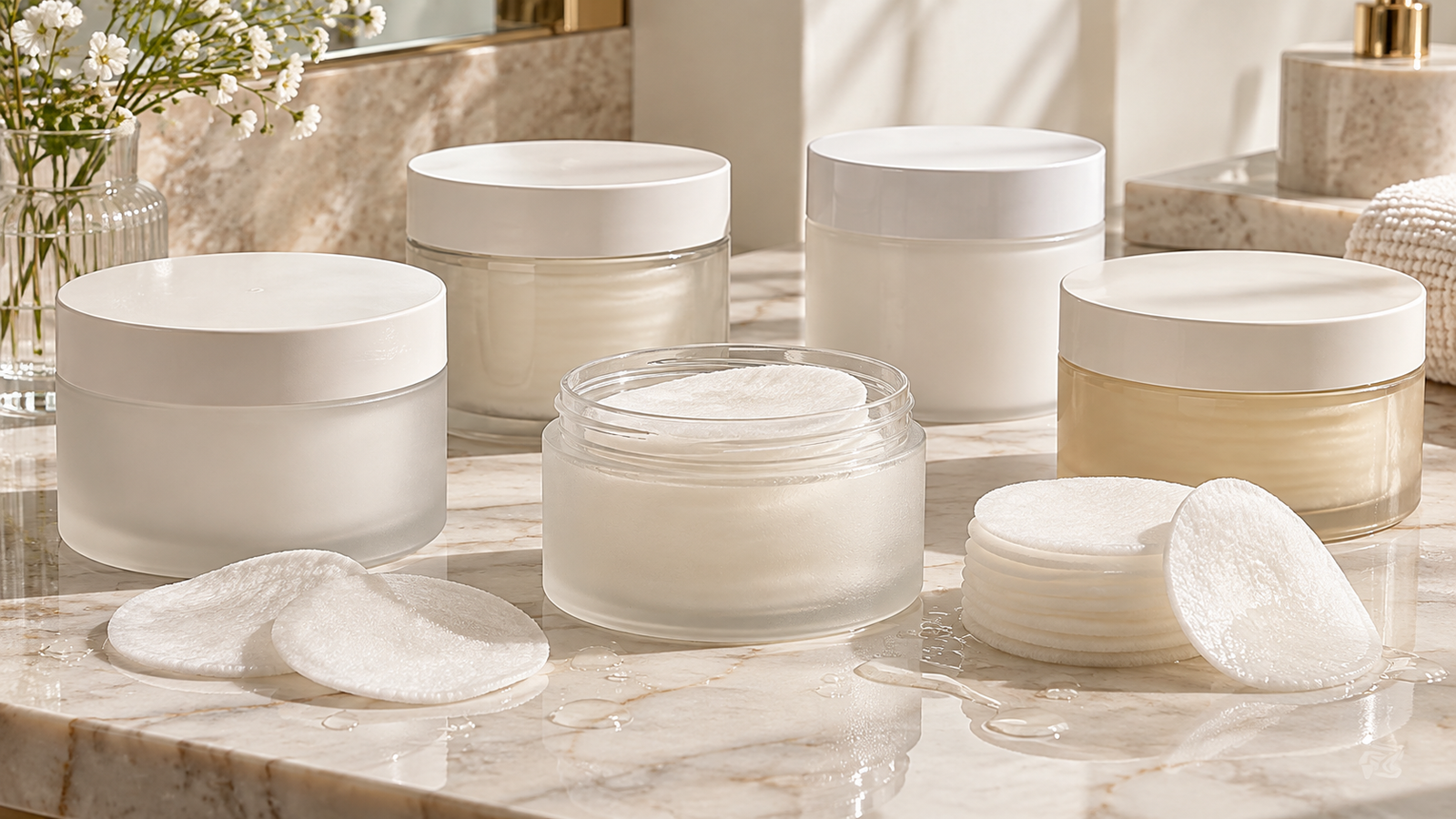
Toner pads are pre-soaked discs or pads stored in a jar with a liquid skincare formula.
Instead of pouring toner onto your hands or a cotton pad, the product comes ready to use.
Depending on the formula, toner pads may be designed to:
- Exfoliate
- Hydrate
- Calm the skin
- Support blemish-prone routines
- Brighten the appearance of uneven tone
- Provide a convenient first leave-on step after cleansing
Exfoliating vs Calming vs Hydrating Toner Pads
| Type | Main Goal | Common Ingredients | Typical Use |
|---|---|---|---|
| Exfoliating pads | Improve surface texture and help with clogged pores | AHA, BHA, PHA, salicylic acid | Several times per week or as directed |
| Calming pads | Reduce the feeling of irritation and support comfort | Centella, panthenol, allantoin, soothing extracts | Can often be used more regularly |
| Hydrating pads | Add water-binding ingredients to the skin | Glycerin, hyaluronic acid, betaine | Often suitable for frequent use |
| Brightening pads | Support a more even-looking tone | Niacinamide, vitamin derivatives, botanical extracts | Depends on the full formula |
What Are Exfoliating Toner Pads?
Exfoliating toner pads contain ingredients designed to loosen or remove some of the dead skin cells from the surface.
Some formulas also target oil inside pores.
Common exfoliating ingredients include:
- Salicylic acid
- Glycolic acid
- Lactic acid
- PHA ingredients
The pad can create both chemical exfoliation from the formula and mild physical friction from wiping.
Because of that combination, aggressive rubbing is unnecessary.
What Are BHA Toner Pads?
BHA usually refers to beta-hydroxy acid, most commonly salicylic acid in skincare.
Salicylic acid is oil-soluble and is widely used in products for oily and blemish-prone skin.
BHA pads may be useful for users concerned about:
- Oily skin
- Clogged-looking pores
- Blackheads
- Uneven surface texture
However, more frequent use is not automatically better.
Overuse can lead to dryness or irritation.
What Are AHA Toner Pads?
AHA ingredients such as glycolic or lactic acid mainly work at the skin surface.
They may be used in routines focused on:
- Dull-looking skin
- Uneven surface texture
- Roughness
- Post-blemish marks
AHA products can increase sensitivity to sunlight, so daytime sun protection is important.
What Are Calming Toner Pads?
Calming pads focus less on exfoliation and more on hydration and comfort.
They may include ingredients such as:
- Centella asiatica
- Panthenol
- Allantoin
- Beta-glucan
- Soothing botanical extracts
These products can be useful when you want the convenience of a pre-soaked pad without adding another strong exfoliating step.
What Are Hydrating Toner Pads?
Hydrating toner pads are essentially a convenient delivery system for a hydrating liquid.
They commonly contain humectants such as:
- Glycerin
- Hyaluronic acid
- Betaine
- Panthenol
These ingredients help retain water in the outer layers of the skin.
Hydrating pads generally make more sense when your goal is comfort and moisture rather than exfoliation.
What Are Brightening Toner Pads?
Brightening toner pads often include ingredients such as niacinamide or botanical extracts intended to support a more even-looking complexion.
Some also combine brightening ingredients with exfoliating acids.
That combination can be useful, but it also makes the product potentially more active than a simple hydrating pad.
Always look at the full ingredient profile rather than relying on the word “brightening.”
Does Pad Texture Matter?
Yes.
Some toner pads are completely smooth, while others have two different surfaces.
Smooth side
A smooth side is generally designed for gentle application and hydration.
Textured side
A textured side may provide slightly more physical wiping action.
That does not mean you should scrub.
When the formula already contains exfoliating acids, aggressive rubbing can create unnecessary irritation.
How to Use Toner Pads
A simple routine looks like this:
- Cleanse the face.
- Remove one pad using clean fingers or the included tweezers if provided.
- Gently sweep it across the skin.
- Avoid aggressive rubbing.
- Keep away from the immediate eye area unless the product is specifically suitable there.
- Allow the remaining liquid to absorb.
- Continue with serum, moisturizer and other routine steps.
Do You Need to Rinse Toner Pads Off?
Most leave-on toner pads are not intended to be rinsed away.
The formula remains on the skin just like a conventional toner or exfoliating liquid.
However, always check the specific instructions because product designs can differ.
Should Toner Pads Be Used Before or After Serum?
They are generally used after cleansing and before serum.
A typical routine could be:
- Cleanser
- Toner pad
- Serum
- Moisturizer
- Sunscreen during the day
This order is not a strict scientific rule, but it usually follows product texture from lighter to richer.
Can You Use Toner Pads Every Day?
It depends on the formula.
A gentle hydrating or calming pad may be suitable for regular use.
An exfoliating pad containing acids may require less frequent application.
If you experience:
- Stinging
- Persistent redness
- Flaking
- Tightness
- Increased sensitivity
reduce the frequency or stop using the product.
Can You Use Toner Pads Twice a Day?
Some hydrating formulas may be suitable for morning and evening use.
Exfoliating pads generally do not need to be used that frequently unless the specific formula and instructions support it.
More frequent exfoliation does not automatically produce faster results.
Can Oily Skin Use Toner Pads?
Yes.
Oily skin may particularly benefit from pads containing salicylic acid or lightweight hydrating ingredients.
However, removing too much surface oil can make the skin feel tight and irritated.
A toner pad does not need to leave the face feeling completely oil-free to be useful.
Toner Pads for Dry Skin
Dry skin should be cautious with strong exfoliating formulas.
Hydrating pads may be more appropriate if the main goal is comfort.
If an exfoliating pad is used, lower frequency and a supportive moisturizer can help reduce excessive dryness.
Toner Pads for Sensitive Skin
Sensitive skin may tolerate simple calming or hydrating formulas better than strongly exfoliating pads.
Look carefully at:
- Acid concentration
- Fragrance
- Alcohol content
- Essential oils
- Added botanical extracts
More ingredients do not necessarily make a product gentler.
Toner Pads for Acne-Prone Skin
Acne-prone skin can use toner pads, but the correct type depends on the routine.
A salicylic-acid pad may help support a routine for clogged pores, while a calming pad may be useful when stronger acne treatments are already creating dryness.
The mistake to avoid is stacking several exfoliating products at the same time.
Can You Use Toner Pads With Retinol?
You can use toner pads in a routine that also contains retinoids, but caution is needed if the pads themselves are exfoliating.
Combining retinoids and strong exfoliating acids on the same night may increase irritation.
A calming or hydrating pad generally creates less concern than an acid-based exfoliating pad.
Can You Use Toner Pads With Vitamin C?
It depends on the formula.
A hydrating toner pad can usually fit easily before a vitamin C serum.
If the pad contains a strong acid, combining multiple active products may feel irritating for some users.
There is no need to maximise the number of active ingredients used in one routine.
Can You Use Toner Pads With Niacinamide?
Yes.
Niacinamide is commonly combined with many skincare ingredients and may even be included directly in some toner pads.
Again, the overall routine matters more than the presence of one ingredient.
Toner Pads vs Liquid Toner
| Feature | Toner Pads | Liquid Toner |
|---|---|---|
| Application | Pre-soaked pad | Hands or separate cotton pad |
| Convenience | Very convenient | Requires dispensing |
| Physical wiping | Built into application | Optional |
| Packaging | Jar | Bottle |
| Waste | One pad per use | Can be lower when applied by hand |
| Travel | Jar can be bulky | Travel bottles available |
Are Toner Pads Better Than Toner?
No.
They are simply a different delivery format.
The formula matters more than whether the liquid comes pre-soaked into a pad.
Some people prefer pads because they are convenient and controlled.
Others prefer liquid toners because there is less disposable material and they can apply the product directly with their hands.
Can Toner Pads Replace Exfoliating Serum?
Sometimes, if the pads contain exfoliating acids at an appropriate level.
There is usually no need to use an acid toner pad and another strong exfoliating serum simply because both are available.
Choose one exfoliating step that fits your routine and tolerance.
Can Toner Pads Be Used as a Mini Face Mask?
Some users place several hydrating pads on selected areas of the face for a few minutes as a targeted hydrating treatment.
This makes the most sense with gentle hydrating or calming pads.
Do not leave strong exfoliating pads sitting against the skin for extended periods unless the manufacturer specifically recommends that use.
Should You Wipe or Pat With a Toner Pad?
For most products, a light sweeping motion is enough.
There is no need to press hard.
After wiping, you can gently pat any remaining essence into the skin with clean hands.
Do Toner Pads Shrink Pores?
No skincare product can permanently change the physical size of pores.
Some products can make pores appear less noticeable by reducing surface oil, clearing debris or improving surrounding skin texture.
Be cautious with claims that promise permanent pore shrinking.
Can Toner Pads Remove Blackheads?
Salicylic-acid pads may support a routine aimed at clogged pores and blackheads over time.
They do not mechanically extract blackheads in one application.
Consistency and appropriate use matter more than aggressive wiping.
Do Toner Pads Help With Dark Spots?
Some products contain ingredients such as niacinamide or exfoliating acids that may support a routine for uneven-looking tone.
However, visible pigmentation usually changes gradually.
Daily sun protection is also important when dealing with post-blemish marks or uneven tone.
How Many Toner Pads Should You Use?
One pad is normally enough for the entire face.
Using several pads does not automatically provide a stronger skincare effect.
Additional pads may be useful only when the product is specifically being used as a short hydrating mask or when one pad is too small for the intended application.
Should Toner Pads Be Stored in the Refrigerator?
Usually not necessary.
Store them according to the manufacturer’s instructions, typically in a cool, dry location away from direct sunlight.
Refrigeration may create a cooling sensation but does not automatically improve the formula.
How to Keep Toner Pads From Drying Out
Always close the jar tightly after use.
Leaving the lid open allows the liquid inside to evaporate.
Also avoid storing the jar on its side unless the packaging is designed to prevent leakage.
Do You Need Tweezers for Toner Pads?
Some jars include small tweezers to reduce direct hand contact with the remaining pads.
They are useful but not essential if you handle the product with clean hands.
If tweezers are provided, keep them clean and store them according to the packaging design.
Common Toner Pad Mistakes
Scrubbing with the textured side
Physical friction is not a substitute for better exfoliation.
Using acid pads too frequently
Over-exfoliation can create dryness and sensitivity.
Combining several exfoliants
An acid pad, exfoliating serum and scrub in the same routine may be unnecessarily aggressive.
Ignoring sunscreen
Sun protection is particularly important when using exfoliating ingredients.
Choosing based only on pad count
A jar with more pads is not better value if the formula does not suit your skin.
How to Choose Toner Pads
Start by deciding your primary goal.
If you want exfoliation
Look for a clearly labelled AHA, BHA or PHA product and pay attention to recommended frequency.
If you want help with oily or clogged-looking pores
A salicylic-acid-focused pad may be worth considering.
If you want hydration
Look for humectants such as glycerin, hyaluronic acid or panthenol.
If your skin feels irritated
A simple calming pad may make more sense than another exfoliating step.
If uneven tone is your main concern
Consider formulas containing niacinamide or other brightening ingredients while maintaining consistent sunscreen use.
For specific options, see our Top 5 Toner Pads in India.
Frequently Asked Questions
Are toner pads necessary?
No. They are a convenient skincare format, not an essential step. You can build an effective routine without them.
Can I use toner pads instead of washing my face?
No. Toner pads are leave-on skincare products and should not normally replace proper cleansing.
Should I use toner pads in the morning or at night?
Either can work depending on the formula. Strong exfoliating pads may be easier to manage in an evening routine, while hydrating pads can fit morning or evening use.
Can I use exfoliating toner pads every day?
Not automatically. Frequency depends on acid strength, formulation and your skin’s tolerance.
Do I need moisturizer after toner pads?
In most routines, yes. Toner pads usually provide a light treatment or hydration step rather than replacing moisturizer.
Can sensitive skin use toner pads?
Yes, but gentle hydrating or calming formulas are generally easier to introduce than strong exfoliating pads.
Final Takeaway
Toner pads are best understood as a delivery format rather than a single type of skincare treatment.
Exfoliating pads use acids to support texture and pore-focused routines. Calming pads prioritise comfort. Hydrating pads deliver water-binding ingredients, while brightening formulas may include ingredients such as niacinamide.
The right choice depends on what your routine actually needs.
Use exfoliating pads conservatively, avoid aggressive wiping and do not stack multiple strong exfoliants just because they are available.
If your skin already feels dry or irritated, a gentler hydrating or calming formula may make more sense than another active treatment.
Physical Glow publishes educational beauty, fitness and wellness content. This article is for general informational purposes and is not a substitute for diagnosis or treatment from a qualified dermatologist or healthcare professional.