Manual vs Electric Scalp Massager: Which Type Should You Choose?
Scalp massagers are simple tools designed to make scalp massage easier, but manual and electric versions offer very different experiences. A manual massager gives you direct control over pressure, speed and placement. An electric model adds motorised movement and may feel more relaxing with less hand effort.
Neither type is automatically better. The right choice depends on whether you want quick shampoo-time use, longer dry-scalp massage, stronger pressure, easier handling or more consistent movement.
This guide compares manual and electric scalp massagers, explains what each type does well, where they can feel uncomfortable and what to look for before buying one.
Manual vs Electric Scalp Massager at a Glance
| Feature | Manual Scalp Massager | Electric Scalp Massager |
|---|---|---|
| Power source | None | Battery or rechargeable |
| Pressure control | Fully controlled by hand | Depends on motor and speed settings |
| Shower use | Often simple and convenient | Only if designed for water exposure |
| Effort required | More hand movement | Less manual effort |
| Cleaning | Usually easier | Can require more care |
| Price | Usually lower | Usually higher |
| Portability | Excellent | More bulky |
What Is a Scalp Massager?
A scalp massager is a handheld tool designed to move across the scalp while applying light mechanical pressure.
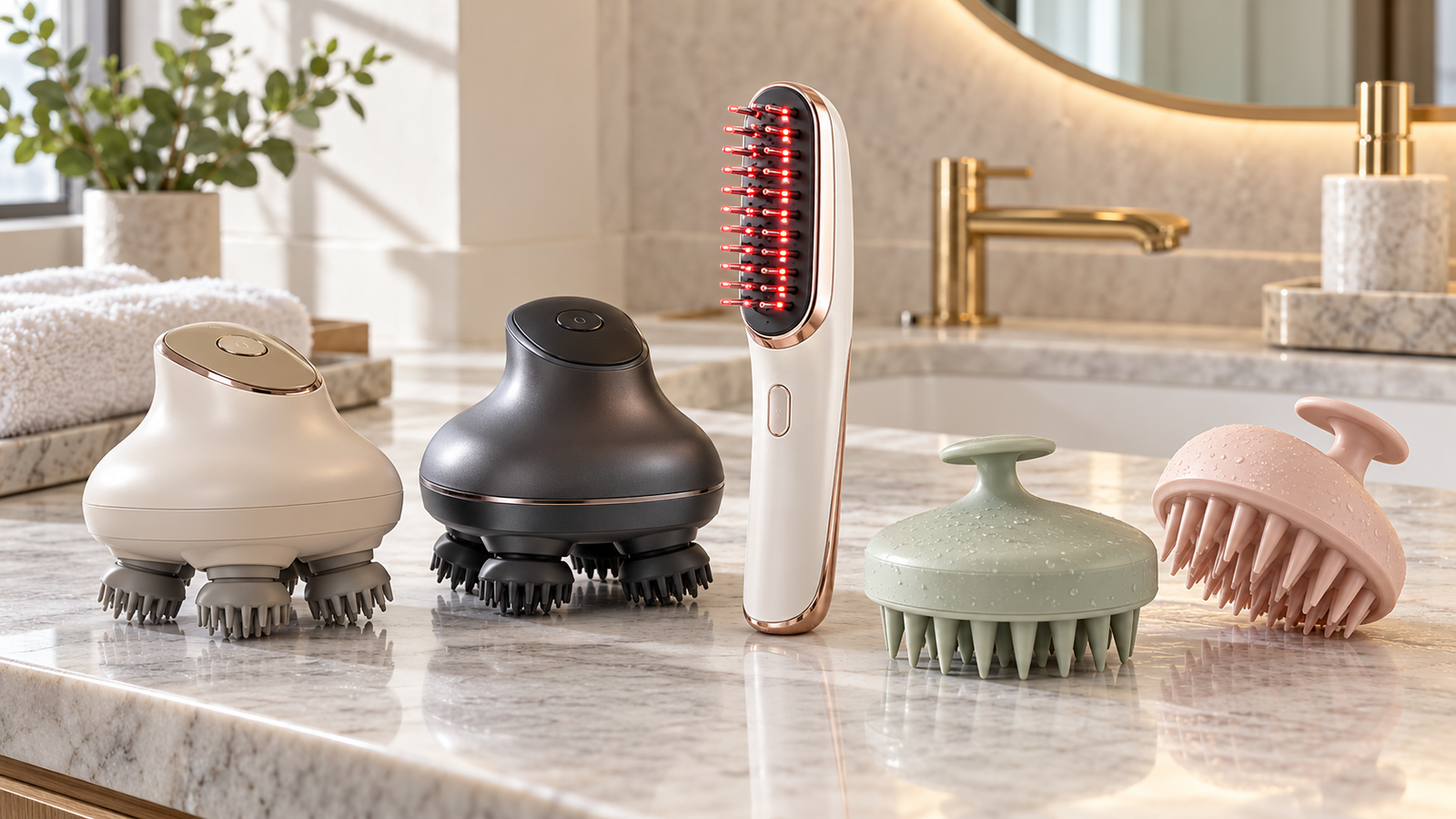
Common designs include:
- Silicone shampoo brushes
- Soft-spiked handheld massagers
- Wire-style head massagers
- Rechargeable rotating massagers
- Electric kneading devices
Some are intended mainly for use during shampooing, while others are designed for dry scalp massage.
What Does a Scalp Massager Actually Do?
The basic function is mechanical massage.
Depending on the design, it can help:
- Distribute shampoo through the scalp
- Loosen some surface buildup
- Make scalp cleansing feel more thorough
- Provide a relaxing massage sensation
- Reduce the need to scratch with fingernails
It should not be treated as a medical device or as a guaranteed treatment for hair loss.
What Is a Manual Scalp Massager?
A manual scalp massager has no motor.
You create the movement by moving the tool across the scalp with your hand.
The most common version is a compact brush with flexible silicone teeth.
Advantages of Manual Scalp Massagers
Better pressure control
You decide exactly how firmly the tool presses against the scalp.
This can be useful if your scalp is sensitive or if different areas tolerate different pressure.
Simple shower use
Most silicone manual massagers are easy to use while shampooing because there are no electronics to protect.
No charging
There are no batteries, cables or charging docks.
Easy to clean
A simple silicone design can usually be rinsed and dried after use.
Low cost
Manual scalp massagers are generally much less expensive than powered models.
Disadvantages of Manual Scalp Massagers
The main disadvantages are:
- You need to create all the movement yourself.
- Your hand or wrist may fatigue during longer massage sessions.
- Pressure may become inconsistent.
- Technique depends entirely on the user.
For a quick shampoo routine, these limitations may not matter much.
What Is an Electric Scalp Massager?
An electric scalp massager uses a motor to create rotating, kneading or oscillating movement.
Many models use several soft massage heads that move in coordinated patterns.
Some provide:
- Multiple speed settings
- Forward and reverse movement
- Removable massage heads
- Rechargeable batteries
- Water-resistant construction
Advantages of Electric Scalp Massagers
Less hand effort
The motor creates the movement, so you mainly guide the device around the scalp.
Consistent motion
The massage pattern remains relatively consistent throughout the session.
Useful for longer sessions
If you enjoy several minutes of scalp massage, an electric model can be easier on the hands.
Multiple settings
Some devices let you choose lower or higher speed depending on comfort.
Disadvantages of Electric Scalp Massagers
Potential disadvantages include:
- Higher price
- Charging requirements
- More components to clean
- Greater weight
- More storage space
- Possible hair tangling with poorly designed heads
You also need to check whether the device is actually intended for wet use before bringing it into the shower.
Which Type Is Better for Shampooing?
A manual silicone scalp brush is usually the simpler option for shampooing.
You can use it directly on wet hair and control the pressure easily.
An electric model can also be used during washing if it is explicitly designed and rated for wet use.
Never assume an electrical device is waterproof because it looks sealed.
How to Use a Manual Scalp Massager While Shampooing
- Wet the hair thoroughly.
- Apply shampoo to the scalp.
- Use your fingers first to distribute the shampoo.
- Place the massager against the scalp.
- Use small controlled movements.
- Work section by section.
- Avoid dragging the tool aggressively through long hair.
- Rinse the scalp and massager thoroughly.
Should You Move a Scalp Massager in Circles?
Small circular movements can work, but large aggressive circles may tangle long hair.
For longer hair, it is often better to:
- Place the massager against one area
- Use a small movement
- Lift the tool
- Move it to another section
This reduces the chance of wrapping hair around the teeth.
Can You Use a Scalp Massager on Dry Hair?
Yes, depending on the design.
A manual or electric massager can be used on a dry scalp for relaxation, provided it moves through the hair without pulling.
Start gently and avoid forcing the tool through tangles.
Which Type Is Better for Dry Scalp Massage?
An electric model may be more comfortable for longer dry massage sessions because it provides continuous movement with less effort.
A manual model gives more precise pressure control and may be better if your scalp is sensitive.
Can Scalp Massagers Remove Dandruff?
A scalp massager may help loosen some surface flakes during shampooing, but it does not treat the underlying cause of dandruff.
Dandruff can involve factors such as:
- Scalp oil
- Yeast activity
- Skin-cell turnover
- Irritation
Appropriate anti-dandruff treatment may still be necessary.
Can You Use a Scalp Massager With Anti-Dandruff Shampoo?
Yes, provided the scalp is not irritated and you use gentle pressure.
The tool can help distribute shampoo through the scalp.
However, scrubbing harder does not make medicated shampoo work better.
Follow the shampoo’s contact-time instructions.
Can Scalp Massagers Help With Product Buildup?
They may help loosen some surface residue during cleansing.
However, they do not replace proper shampooing.
If you regularly use:
- Dry shampoo
- Styling wax
- Hair spray
- Heavy oils
a suitable cleansing routine remains important.
Do Scalp Massagers Help Hair Growth?
Scalp massagers should not be marketed as guaranteed hair-growth devices.
Massage may temporarily increase local blood flow and can make scalp care more pleasant, but hair growth is influenced by many factors, including:
- Genetics
- Hormones
- Nutrition
- Age
- Health conditions
- Scalp disorders
A massager cannot address all of these factors.
Can Scalp Massage Stop Hair Loss?
No.
A scalp massager is not a treatment for androgenetic hair loss, alopecia areata or other causes of significant shedding.
If you notice persistent thinning, bald patches or unusually heavy shedding, professional evaluation is more appropriate than relying on massage tools.
Can Scalp Massagers Damage Hair?
They can if used aggressively.
Problems are more likely when you:
- Press too hard
- Drag the tool through tangles
- Use stiff or sharp teeth
- Massage for too long
- Use the tool on an inflamed scalp
The goal is gentle scalp movement, not vigorous scraping.
Can Scalp Massagers Cause Hair Breakage?
Hair breakage is possible if strands become caught around the teeth or moving heads.
This is particularly relevant for:
- Long hair
- Curly hair
- Fragile or chemically treated hair
- Hair that tangles easily
Sectioning the hair and using smaller movements can reduce the risk.
Manual Scalp Massager for Long Hair
For long hair, look for:
- Flexible teeth
- Enough spacing between teeth
- A comfortable grip
- A design that does not catch strands easily
Avoid vigorously rotating the tool through the entire hair length.
Electric Scalp Massager for Long Hair
Electric models require extra attention to head design.
The moving nodes should massage the scalp without trapping hair around rotating components.
Read the manufacturer’s instructions regarding long hair before use.
Scalp Massager for Curly Hair
Curly hair can tangle if the tool is moved in large circles.
Instead:
- Work in sections.
- Keep the tool close to the scalp.
- Use short movements.
- Lift before moving to the next section.
This lets you massage the scalp without unnecessarily disturbing the curl pattern.
Scalp Massager for Sensitive Scalp
A soft manual silicone brush is often easier to control.
Look for:
- Flexible rounded tips
- Low stiffness
- A comfortable palm grip
If even gentle pressure causes pain or burning, stop using the tool.
Can You Use a Scalp Massager Every Day?
Gentle use may be comfortable for some people, but daily vigorous massage is unnecessary.
Frequency should depend on:
- Scalp sensitivity
- Hair-washing schedule
- Pressure used
- Whether irritation develops
If the scalp becomes sore or red, reduce frequency.
How Long Should You Massage the Scalp?
There is no requirement for a long session.
A few minutes can be enough for shampoo distribution or relaxation.
Longer is not automatically better.
What Pressure Should You Use?
Pressure should feel comfortable.
You should not experience:
- Sharp pain
- Burning
- Scratching
- Persistent tenderness
If your scalp feels sore after every use, reduce pressure or choose a softer tool.
Can You Use a Scalp Massager With Hair Oil?
Yes, provided the tool is compatible with oil and easy to clean afterward.
Massage can help distribute oil across the scalp, but using more oil does not mean better scalp health.
Heavy oil residue should still be cleansed appropriately.
Can You Use a Scalp Massager With Serum?
It depends on the serum instructions.
A gentle massage may help distribute a cosmetic scalp serum, but vigorous rubbing is not necessary.
If the product contains active medication or specific application instructions, follow those directions instead.
Can You Use a Scalp Massager After Applying Minoxidil?
If you use a medicated scalp treatment such as minoxidil, follow its application instructions rather than automatically massaging with a tool.
A massager could move the medication away from the intended area or increase irritation.
Ask an appropriate healthcare professional if you are unsure how to combine a tool with medicated treatment.
How to Use an Electric Scalp Massager
- Detangle the hair first.
- Select the lowest comfortable speed.
- Place the massage heads against the scalp.
- Let the motor create the movement.
- Guide the device slowly from section to section.
- Do not force it into the scalp.
- Stop if hair begins wrapping around the heads.
Should You Press Down on an Electric Massager?
Only lightly.
The motor is already creating mechanical movement.
Pressing excessively can make the device uncomfortable and may overload the moving heads.
Electric Scalp Massager Speed Settings
Multiple speeds can be useful because pressure preference varies.
A slower setting may work better for:
- Sensitive scalp
- First-time users
- Longer hair
A faster setting does not necessarily provide a better massage.
What Does Forward and Reverse Rotation Do?
Some electric models can reverse the direction of the massage heads.
This changes the kneading pattern and may help the device feel less repetitive.
It is a comfort feature rather than evidence of greater scalp benefit.
Does Waterproofing Matter?
Yes, if you plan to use an electric massager in the shower.
Look for a clearly stated water-resistance or waterproof rating and follow the manufacturer’s limitations.
Do not assume that “washable heads” means the entire device can be submerged.
Can You Charge an Electric Scalp Massager in the Bathroom?
Charging should follow the manufacturer’s electrical-safety instructions.
Keep charging equipment away from water and wet surfaces.
Do not charge the device while using it in the shower.
Manual vs Electric Scalp Massager for Travel
A manual massager is usually easier to travel with because it is:
- Smaller
- Lighter
- Not dependent on a charger
- Simple to clean
An electric massager is better suited to users who value the powered massage experience enough to carry the extra size.
Manual vs Electric for Relaxation
An electric model generally offers the more hands-off experience.
You can guide it around the scalp while the motor provides consistent kneading.
A manual brush requires active hand movement but gives you finer control over exactly where and how much pressure is applied.
Manual vs Electric for Shampooing
| Feature | Manual | Electric |
|---|---|---|
| Easy wet use | Usually yes | Only if appropriately rated |
| Pressure control | Excellent | Moderate |
| Hand effort | Higher | Lower |
| Cleaning | Usually simple | More components |
| Cost | Lower | Higher |
How to Clean a Manual Scalp Massager
After shampoo use:
- Rinse away shampoo and hair.
- Wash the teeth and base with clean water.
- Shake away excess water.
- Allow the tool to dry thoroughly.
Do not leave a wet massager permanently sealed inside a damp shower area if it can be dried elsewhere.
How to Clean an Electric Scalp Massager
Follow the manufacturer’s cleaning instructions.
If the massage heads are removable:
- Remove trapped hair.
- Wash the heads if permitted.
- Dry them thoroughly.
- Keep charging contacts dry.
Do not immerse the main motor unit unless the device is explicitly designed for submersion.
How Often Should You Clean a Scalp Massager?
A massager used with shampoo should be rinsed after every use.
Oil, dead skin, product residue and hair can collect around the teeth or massage heads.
A deeper clean can be performed periodically according to the materials and manufacturer’s guidance.
When Should You Not Use a Scalp Massager?
Avoid massage over areas with:
- Open wounds
- Active bleeding
- Severe inflammation
- Painful infection
- Recent scalp surgery
If you have a diagnosed scalp condition, ask your dermatologist whether mechanical massage is appropriate.
Common Scalp Massager Mistakes
Scrubbing too hard
The scalp does not need aggressive scraping to become clean.
Using large circular movements on long hair
This can create unnecessary tangling.
Buying stiff, sharp teeth
Firm pressure is different from uncomfortable scratching.
Using an electric device in water without checking its rating
Electrical safety should always come first.
Expecting hair regrowth
A scalp massager is a grooming and massage tool, not a guaranteed hair-loss treatment.
Not cleaning the tool
Oil, shampoo and hair can accumulate between the teeth or moving heads.
How to Choose a Manual Scalp Massager
Look for:
- Soft or medium-flexible silicone teeth
- Rounded tips
- Comfortable grip
- Easy-clean construction
- Appropriate spacing for your hair density
How to Choose an Electric Scalp Massager
Consider:
- Massage-head design
- Number of speed settings
- Forward and reverse movement
- Battery life
- Charging method
- Water-resistance rating
- Device weight
- Ease of cleaning
- Whether replacement heads are available
For specific current options, see our Top 5 Scalp Massagers in India.
Which Type Should You Choose?
Choose a manual scalp massager if you:
- Mainly want to use it while shampooing
- Want full pressure control
- Prefer something inexpensive
- Want easy cleaning
- Need a compact travel-friendly tool
Choose an electric scalp massager if you:
- Prefer longer relaxation-focused massage
- Want less hand effort
- Like consistent kneading motion
- Want multiple speed settings
- Do not mind charging and cleaning a more complex device
Frequently Asked Questions
Are electric scalp massagers better than manual ones?
Not necessarily. Electric models provide powered movement and require less hand effort, while manual massagers offer better pressure control, easier shower use and lower cost.
Can a scalp massager be used every time I shampoo?
Yes, if your scalp tolerates it and you use gentle pressure. There is no need to scrub aggressively.
Do scalp massagers help hair grow faster?
They should not be expected to produce guaranteed hair growth. Hair growth depends on many biological factors that massage alone cannot control.
Can scalp massagers make hair fall out?
Aggressive use can tangle or break hair. Gentle use with an appropriately designed tool should minimise this risk.
Can I use an electric scalp massager in the shower?
Only if the manufacturer specifically states that the device is suitable for shower or wet use.
Which scalp massager is best for long hair?
Look for flexible, widely spaced massage points and use small movements to minimise tangling. With electric models, pay particular attention to whether the rotating heads are designed for long hair.
Should I use a scalp massager on wet or dry hair?
Both can work depending on the tool. Manual silicone brushes are commonly used during shampooing, while many electric models can be used on dry hair and some are also designed for wet use.
Final Takeaway
Manual and electric scalp massagers perform the same basic job in different ways.
A manual brush is simple, inexpensive, easy to clean and particularly useful during shampooing. An electric massager provides consistent powered movement and can make longer relaxation-focused sessions easier.
Neither option needs to be used aggressively. Gentle pressure and controlled movement are more important than scratching harder or using the fastest motor setting.
If you are comparing specific models, see our Top 5 Scalp Massagers in India guide for the current manual and electric options shortlisted by Physical Glow.
The best choice is the one that matches how you will actually use it: a simple silicone brush for shower cleansing, or a powered model when convenience and longer massage sessions matter more.
Physical Glow publishes educational beauty, fitness and wellness content. This article is for general informational purposes. Scalp massagers are not a substitute for medical evaluation or treatment for persistent hair loss, scalp inflammation or other scalp disorders.