How to Choose the Right Treadmill for Home Workouts
A treadmill can be one of the most practical pieces of cardio equipment for a home gym because it allows you to:
- walk;
- jog;
- run;
- train with incline;
- exercise regardless of weather;
- control speed precisely;
- build structured cardio sessions.
But treadmills also vary enormously in:
- size;
- motor capability;
- running-surface dimensions;
- cushioning;
- incline range;
- stability;
- noise;
- folding design;
- smart features;
- durability.
That means choosing a treadmill should not begin with:
“Which model has the biggest screen?”
or:
“Which treadmill has the highest top speed?”
A better approach is:
decide how you will actually use it → match the treadmill to your walking or running needs → make sure it fits your body and available space → evaluate build quality and safety → then compare convenience and smart features
The right treadmill is not necessarily the most powerful or expensive model.
It is the one that allows you to exercise comfortably, consistently and safely for the type of training you actually plan to do.
Start With How You Plan to Use the Treadmill
The most important question is:
Will you mainly walk, jog or run?
These activities place very different demands on a treadmill.
A compact walking treadmill may be excellent for:
- 30-minute walks;
- daily step goals;
- light home cardio.
But the same machine may be unsuitable for:
- regular running;
- sprint intervals;
- heavier users;
- long training sessions.
Similarly, buying a large performance treadmill for gentle walking may be unnecessary.
Treadmill for Walking
If your primary goal is walking, prioritize:
- stable deck;
- comfortable belt width;
- low starting speed;
- easy controls;
- useful incline;
- quiet operation.
You generally do not need:
- extremely high top speed;
- performance-oriented motor;
- extra-long running deck.
A well-built entry-level or mid-range treadmill may be enough.
Treadmill for Brisk Walking
Brisk walking places more demand on the treadmill than casual walking but still much less than running.
Useful features include:
- motorized incline;
- good cushioning;
- stable handrails;
- comfortable belt size.
Incline walking can make a walking workout considerably more challenging without requiring you to run.
Treadmill for Jogging
Regular jogging requires more:
- motor capacity;
- belt length;
- stability;
- cushioning.
A treadmill designed only for walking may:
- overheat;
- feel unstable;
- have too short a belt.
If you expect to jog several times per week, choose a model explicitly designed for:
- jogging;
- running.
Treadmill for Running
Running creates:
- greater impact;
- higher belt speed;
- longer stride;
- greater mechanical demand.
A running treadmill should generally provide:
- longer running deck;
- adequate belt width;
- stable frame;
- stronger continuous motor capability;
- good cushioning;
- reliable cooling and durability.
Regular runners should focus much more on core mechanical quality than:
- built-in speakers;
- display size;
- decorative features.
Treadmill for Sprinting
Sprint training places substantial stress on:
- motor;
- belt;
- deck;
- frame.
If you plan to perform fast intervals, verify:
- maximum speed;
- acceleration;
- deck length;
- stability;
- manufacturer-approved use.
A treadmill capable of reaching a high top speed is not automatically a good sprint treadmill if it:
- accelerates slowly;
- shakes;
- has a short belt.
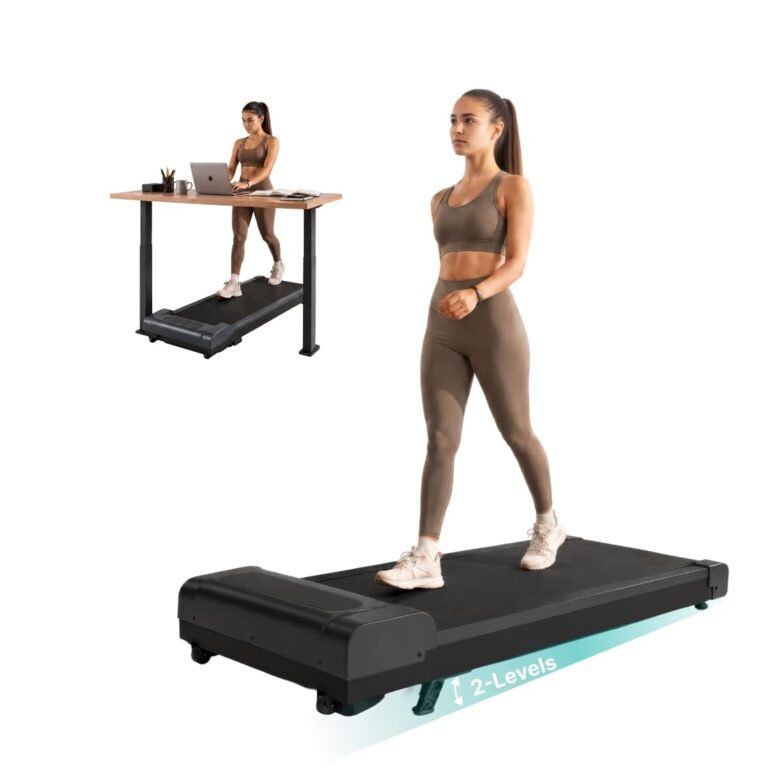
Walking Pad vs Treadmill
Walking pads have become popular because they are:
- compact;
- relatively light;
- easy to store.
They may work well for:
- light walking;
- increasing daily steps;
- walking while working.
But they are not equivalent to full treadmills.
When a Walking Pad Makes Sense
Consider one if:
- you live in a small space;
- your goal is mainly low-speed walking;
- you want something easy to move;
- you plan to use it under a standing desk.
When a Walking Pad Is Not Enough
A full treadmill is usually better if you want:
- jogging;
- running;
- meaningful incline training;
- stronger handrails;
- higher stability;
- longer sessions at higher speeds.
Always check the manufacturer’s intended use.
Do not run on a walking-only device simply because the belt moves quickly enough.
Manual vs Motorized Treadmills
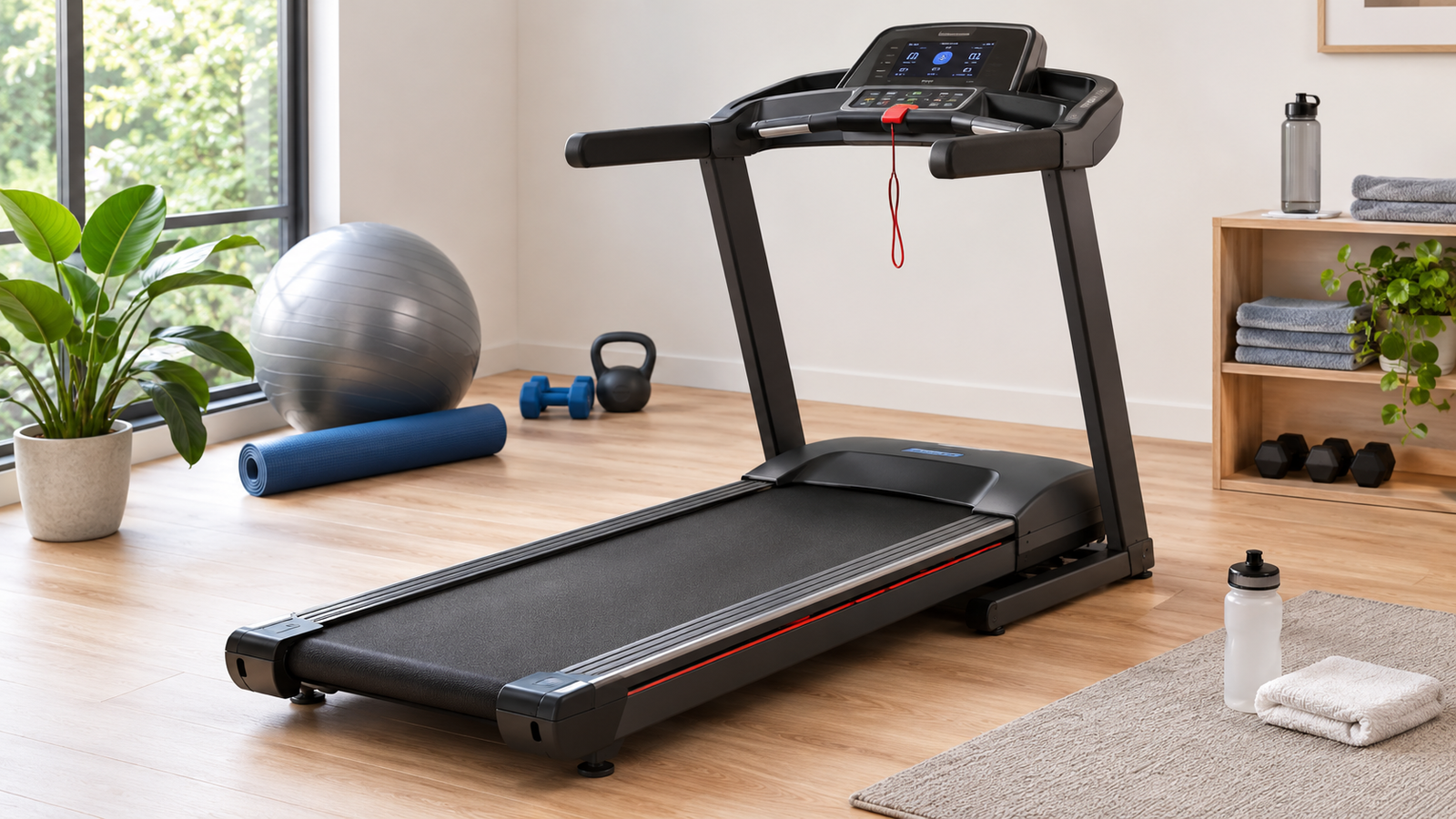
Most home treadmills are motorized.
But manual models also exist.
Motorized Treadmill
The belt is driven by an electric motor.
Advantages:
- precise speed control;
- easier walking/running;
- programmable workouts;
- motorized incline on many models.
This is the most practical choice for most users.
Manual Treadmill
The user moves the belt through walking or running.
Advantages:
- no electricity;
- simpler mechanics.
But conventional flat manual treadmills can feel:
- awkward;
- harder to start.
Curved manual treadmills offer a more sophisticated version of self-powered running but can be:
- expensive;
- demanding;
- unsuitable for some beginners.
What Does Treadmill Motor Power Mean?
Motor specifications can be confusing.
Manufacturers may advertise:
- horsepower;
- peak horsepower;
- continuous horsepower.
The most meaningful number is usually the power the motor can sustain during normal use rather than a brief peak output.
Peak Horsepower vs Continuous Power
Peak Horsepower
Represents a maximum short-term output.
It may look impressive in marketing.
Continuous-Duty Rating
Better reflects sustained treadmill operation.
For frequent jogging or running, sustained performance matters much more than a large peak number.
How Much Motor Power Do You Need?
There is no universal number because performance also depends on:
- treadmill design;
- user weight;
- speed;
- incline;
- manufacturer engineering.
As a broad buying principle:
Walking
Usually requires less motor capacity.
Jogging
Requires more.
Running
Requires considerably more sustained capability.
Instead of comparing horsepower alone, also check whether the manufacturer explicitly rates the treadmill for:
- walking;
- jogging;
- running.
User Weight and Motor Demand
A heavier user places greater demand on:
- motor;
- belt;
- deck;
- frame.
If you are near the machine’s maximum user-weight rating, choose a stronger treadmill with additional capacity.
Operating continuously at the absolute maximum limit is generally less desirable than having a reasonable safety and durability margin.
User Weight Capacity
Every treadmill should specify a maximum user-weight rating.
Treat this as a genuine engineering limit.
Do not choose a treadmill that barely supports your body weight simply because it is inexpensive.
Higher weight capacity may indicate:
- stronger frame;
- more robust construction;
although this is not guaranteed.
Treadmill Running-Surface Size
The running surface consists mainly of:
- belt width;
- belt length.
These dimensions strongly influence comfort.
Belt Length
Longer belts provide more room for:
- longer strides;
- faster running.
Walking requires less length than running.
Tall users and people with naturally long strides should pay particular attention to this specification.
A belt that feels acceptable at:
- 4 km/h;
may feel cramped at:
- 10 km/h.
Belt Width
A wider belt provides more side-to-side room.
This may increase confidence when:
- running;
- changing pace.
A very narrow treadmill can require constant attention to foot position.
For casual walking, a narrower belt may be acceptable.
For regular running, more width is generally preferable.
How Tall Users Should Choose Belt Size
Height alone does not determine stride length, but taller users generally benefit from more deck length.
If possible:
- test the treadmill at your actual running pace.
Do not judge comfort by standing still on it.
Treadmill Deck Height
Deck height is the distance from the floor to the running surface.
This matters in rooms with:
- low ceilings.
You need to account for:
deck height + your height + vertical movement during exercise + additional incline height
A treadmill that physically fits into a room may still leave inadequate head clearance during incline running.
Measure Ceiling Clearance Before Buying
This is frequently overlooked.
For example, if you are tall and plan to use:
- high incline;
the deck can raise your body substantially.
Measure the room before purchase.
Basements and rooms with low ceilings require particular care.
Treadmill Incline
Incline allows the deck to simulate uphill movement.
It can make exercise harder without dramatically increasing speed.
Incline training can increase demand on:
- cardiovascular system;
- glutes;
- calves.
Manual Incline
Manual incline requires you to stop and physically change the deck position.
Advantages:
- simpler;
- cheaper.
Disadvantages:
- inconvenient during workouts;
- limited incline settings.
It is suitable for users who simply want a fixed incline occasionally.
Motorized Incline
Motorized incline can be adjusted from the console during exercise.
This is much more useful for:
- interval training;
- hill workouts;
- changing intensity.
For regular treadmill users, motorized incline is often worth paying for.
How Much Incline Do You Need?
You do not need an extreme incline range for ordinary fitness.
Even moderate incline can substantially increase walking effort.
Choose based on training goals.
General Walking
Moderate incline is enough.
Incline Walking Workouts
A wider incline range may be valuable.
Running
Moderate adjustable incline is usually sufficient.
Is 12-3-30 Necessary?
The popular 12-3-30 workout uses:
- 12% incline;
- 3 mph;
- 30 minutes.
It is simply one form of incline walking.
It is not a universal ideal.
For a beginner, that intensity may be too demanding.
Adjust:
- incline;
- speed;
- duration;
to your own fitness.
Incline and Calf/Achilles Stress
Steeper incline increases demand on:
- calves;
- Achilles tendon.
Progress gradually.
If you suddenly move from flat walking to long steep sessions, you may develop excessive:
- soreness;
- tendon discomfort.
Treadmill Decline
Some premium treadmills can tilt downward.
Decline training may help simulate:
- downhill running.
This can be useful for:
- trail runners;
- specific race preparation.
But it is unnecessary for most home users.
Do not pay significantly more for decline unless you know you will use it.
Treadmill Cushioning
Treadmill decks usually include some form of cushioning between the belt and frame.
The goal is to reduce:
- shock;
- harshness.
Different treadmills feel:
- soft;
- firm;
- springy.
Is More Cushioning Always Better?
No.
Some runners prefer a firmer surface because it feels:
- stable;
- responsive.
Others prefer more cushioning.
Excessively soft decks may feel unstable to some users.
Comfort is subjective.
Testing is valuable.
Is Treadmill Running Easier on Joints Than Road Running?
Treadmill surfaces are often more compliant than:
- concrete;
- hard pavement.
This may feel more comfortable.
But running still involves repeated impact.
Treadmill use does not automatically eliminate:
- knee;
- hip;
- ankle stress.
Training progression remains important.
Treadmill Stability
A treadmill should feel secure during:
- walking;
- jogging;
- running.
Watch for excessive:
- shaking;
- console vibration;
- side-to-side movement.
A lightweight treadmill may be convenient to move but less stable during faster running.
Frame Construction
Look for:
- strong frame;
- solid base;
- stable uprights.
You do not need to understand metallurgy to judge basic build quality.
A treadmill that visibly rocks when someone runs is not ideal.
Machine Weight
Heavier treadmills often feel more stable.
But they are also harder to:
- transport;
- install;
- move.
Think about the permanent location before buying.
A 100 kg treadmill is not something most people will casually move between rooms.
Folding Treadmills
Folding treadmills lift part of the deck upward to reduce floor footprint.
These can be useful for home gyms.
Advantages of Folding Treadmills
- easier cleaning;
- reduced floor footprint;
- practical for multipurpose rooms.
Limitations of Folding Designs
Even folded treadmills can remain:
- tall;
- heavy;
- bulky.
Check the actual folded dimensions.
Do not assume “foldable” means it can slide:
- under a bed;
- into a closet.
Hydraulic Folding Systems
Some models use hydraulic assistance.
This can make lifting and lowering the deck:
- easier;
- safer.
For heavy treadmills, this is a useful convenience feature.
Treadmill Transport Wheels
Most home treadmills have wheels.
But moving still requires:
- tilting;
- handling substantial weight.
Check whether one person can realistically move the machine.
If not, treat it as essentially permanent.
Under-Desk Treadmills
These are designed for walking while working.
They can help increase:
- daily movement;
- step count.
But working while walking requires adaptation.
Tasks requiring:
- precise typing;
- concentration;
may be harder at higher speeds.
Keep walking speed low.
Desk Walking and Posture
Do not force prolonged walking if it causes:
- neck tension;
- wrist discomfort;
- poor posture.
Your workstation still needs:
- appropriate monitor height;
- keyboard position.
A walking pad does not fix an ergonomically poor desk.
Treadmill Top Speed
Top speed matters only if you intend to use it.
Examples:
Walking User
A very high top speed adds little value.
Recreational Runner
Moderate-high maximum speed may be enough.
Fast Runner/Sprinter
Higher maximum speed and rapid acceleration become more important.
Do not pay for 20 km/h capability if you never plan to go above 8 km/h.
Starting Speed
A low starting speed can be useful for:
- beginners;
- older users;
- rehabilitation-style walking where medically appropriate.
The treadmill should allow smooth gradual progression.
Speed Adjustment
Controls may include:
- buttons;
- quick-select keys;
- rotary dials.
For intervals, quick speed adjustment can be extremely useful.
Constantly pressing a button 15 times to change speed becomes frustrating.
Quick-Speed Controls
These let you jump directly to:
- 3 km/h;
- 6 km/h;
- 10 km/h;
or other preset speeds.
Useful for structured intervals.
Make sure the placement is easy to reach without losing balance.
Speed Acceleration
Some treadmills change speed:
- gradually.
Others respond faster.
For ordinary cardio, either may be fine.
For intervals, faster but controlled acceleration is more convenient.
Extremely abrupt acceleration can feel unsafe.
Console Design
The console should make important functions easy to access.
Priority controls include:
- start;
- stop;
- speed;
- incline.
These should be easy to identify while moving.
Fancy graphics are secondary.
Treadmill Display Metrics
Useful basic metrics include:
- time;
- speed;
- distance;
- incline.
Other displays may include:
- calories;
- heart rate;
- pace.
These can be useful, but calorie values are estimates.
Pace Display
Runners may prefer pace expressed as:
- minutes per kilometre;
- minutes per mile.
This is often more useful for training than raw speed.
Check whether the console supports your preferred format.
Built-In Workout Programs
Treadmills may include:
- intervals;
- hills;
- endurance;
- calorie-based workouts;
- heart-rate programs.
These can provide variety.
But a treadmill does not need 50 programs to be useful.
Manual control can create excellent workouts.
“Fat Burn” Programs
Do not buy a treadmill because it includes a special fat-burning mode.
These programs usually manipulate:
- speed;
- incline;
- heart rate.
Long-term fat loss depends on overall energy balance.
There is no unique treadmill setting that bypasses this.
Heart-Rate Sensors
Treadmills may use:
- hand-grip sensors;
- wireless chest-strap connection.
Hand sensors are convenient but may be inconsistent.
For more reliable exercise heart-rate tracking, external sensors often perform better.
Bluetooth Heart-Rate Compatibility
If structured heart-rate training matters to you, look for compatibility with:
- chest straps;
- watches;
- external sensors.
Check the exact standard supported.
Bluetooth availability does not automatically mean every heart-rate monitor will connect.
Heart-Rate Training
Heart rate can help estimate exercise intensity.
But you can also use:
- talk test;
- perceived exertion.
For general exercise, you do not need perfect heart-rate data.
Calorie Estimates
Treat treadmill calorie displays as approximate.
They may use:
- speed;
- incline;
- time;
- entered body weight.
Real energy expenditure varies.
Use calorie estimates to compare your own sessions rather than assuming they are exact.
Distance Accuracy
A well-maintained treadmill estimates distance from belt movement.
For recreational exercise, this is generally adequate.
Serious runners may notice differences between:
- treadmill distance;
- GPS running;
- footpod estimates.
Small differences are rarely important for general fitness.
Smart Treadmills
Smart treadmills may offer:
- large touchscreen displays;
- guided workouts;
- virtual routes;
- automatic incline;
- trainer-controlled speed;
- streaming.
These features can improve motivation.
But they can substantially increase price.
Subscription Costs
Some smart treadmills work best with a monthly membership.
Before buying, calculate:
monthly subscription × 12 months × expected years of ownership
The ongoing cost can become substantial.
What Happens Without a Subscription?
Check whether you can still use:
- manual mode;
- incline;
- speed controls;
- workout history.
Avoid buying expensive equipment without understanding what remains functional if you cancel the service.
Internet Dependence
Some smart features require:
- Wi-Fi;
- online accounts.
Consider whether you are comfortable with:
- software updates;
- service outages;
- account dependence.
Core treadmill functionality should ideally remain usable even if internet features are unavailable.
Tablet Holder vs Built-In Screen
A simple tablet holder may provide nearly all the entertainment you need.
You can use your own device for:
- videos;
- training apps;
- music.
This may provide better long-term value than paying heavily for a proprietary touchscreen.
Speakers
Built-in speakers are convenient.
But you can also use:
- headphones;
- external speakers.
Treat audio as a secondary feature.
Cooling Fans
Fans can improve comfort during indoor running.
Built-in treadmill fans are often:
- small;
- modest in power.
A separate floor fan may provide much better airflow.
Bottle Holders
A good treadmill should provide a stable place for:
- water bottle.
Check that it can hold your normal bottle without it bouncing out during running.
Device Storage
A tray for:
- phone;
- tablet;
can be useful.
Ensure it does not interfere with:
- controls;
- display;
- safe hand placement.
USB Charging
Useful but not essential.
Do not let convenience features distract you from:
- deck size;
- motor;
- stability;
- warranty.
Treadmill Noise
Treadmills produce several types of noise:
- motor noise;
- belt noise;
- foot-strike noise;
- vibration.
For apartment users, foot impact may be the biggest issue.
Walking vs Running Noise
Walking is generally much quieter.
Running creates repetitive impact that can transmit through:
- floors;
- walls.
Even a quiet motor cannot eliminate footfall vibration.
Treadmill Mat
An equipment mat can help:
- protect flooring;
- reduce some vibration;
- improve stability;
- catch sweat.
Choose a mat strong enough for the treadmill’s weight.
Apartment Use
Before buying for an apartment, consider:
- downstairs neighbours;
- floor construction;
- training time;
- whether you will walk or run.
A treadmill can be physically quiet but still transmit impact through the structure.
Treadmill Placement
Place the treadmill on:
- level;
- stable surface.
Avoid unstable flooring.
Leave enough space around it.
Space Behind the Treadmill
Do not position the back of the treadmill immediately against:
- wall;
- furniture.
If you fall, you need clearance behind the belt.
Follow the manufacturer’s recommended safety space.
Side Clearance
Leave enough room to:
- mount;
- dismount;
- access controls;
- perform maintenance.
Do not squeeze the machine so tightly between furniture that safe use becomes difficult.
Power Requirements
Powered treadmills require an appropriate electrical connection.
Follow manufacturer recommendations regarding:
- voltage;
- grounded outlets;
- circuit requirements.
High-powered treadmills may require more electrical capacity than small fitness devices.
Extension Cords
Some manufacturers advise against ordinary extension cords because treadmills draw significant current.
Follow the treadmill’s electrical instructions.
Do not improvise with undersized cables.
Surge Protection
Check the manufacturer’s recommendation regarding:
- surge protectors;
- dedicated circuits.
Electrical requirements vary by model.
Safety Key
Most treadmills include an emergency safety key.
One end attaches to the machine.
The other clips to your clothing.
If you move too far backward, the key disengages and stops the treadmill.
Use it.
Why People Ignore Safety Keys
Some users find them inconvenient.
But treadmill falls can become significantly worse if the belt continues moving.
The safety key exists for a reason.
Emergency Stop Button
Know where the stop control is before beginning.
It should be:
- clearly visible;
- easy to reach.
Test the basic controls at low speed before your first workout.
Mounting the Treadmill
A safe method:
- Stand on the side rails.
- Start the treadmill at low speed.
- Step onto the belt.
- Begin walking.
- Increase speed gradually.
Avoid stepping directly onto a fast-moving belt.
Dismounting the Treadmill
Slow the machine gradually.
Wait until the belt is:
- stopped;
- nearly stopped;
before stepping off.
Avoid jumping sideways from a moving treadmill unless necessary for an emergency.
Handrails
Handrails provide:
- balance;
- confidence.
They are useful during:
- mounting;
- dismounting;
- temporary balance correction.
But holding them continuously can reduce:
- natural walking mechanics;
- exercise demand.
Use them when genuinely needed.
Holding Rails During Incline Walking
If the incline is so steep that you must:
- lean backward;
- pull yourself with your arms;
you may be using too much incline.
Reduce incline or speed until you can maintain:
- controlled posture.
Looking Down While Walking
Constantly looking at the belt can alter posture.
Once comfortable, look mainly:
- forward.
Check the belt only briefly when necessary.
Running Near the Front of the Belt
Running too close to the console may restrict:
- arm swing;
- stride.
Try to remain in a comfortable central area with adequate room.
Running Too Far Back
This increases the risk of stepping off the rear of the belt.
Find a natural position.
Treadmill Footwear
Wear shoes suitable for:
- walking;
- running.
Your footwear should provide:
- comfortable fit;
- appropriate support.
You do not need a special “treadmill-only” shoe.
Choose based on:
- activity;
- comfort;
- foot characteristics.
Can You Walk Barefoot on a Treadmill?
Some people do, but most treadmills are designed around normal athletic footwear.
Barefoot treadmill use may increase risks such as:
- friction;
- belt-related skin injury;
- foot discomfort.
Follow manufacturer guidance and use suitable footwear.
Socks Alone
Walking or running in socks can create:
- slipping;
- friction.
Use proper footwear unless the treadmill specifically supports another use case.
Treadmill Warm-Up
A simple warm-up can be:
5 Minutes
Easy walking.
Then gradually increase:
- speed;
- incline.
For faster running, add:
- brisk walking;
- light jogging;
before reaching training pace.
Treadmill Cool-Down
After a demanding workout:
- Reduce speed.
- Walk easily for several minutes.
- Allow breathing to settle.
A cool-down can make the transition to rest more comfortable.
Beginner Treadmill Workout
A simple starting session:
Warm-Up
5 minutes easy walking.
Main Session
15–20 minutes brisk walking.
Cool-Down
5 minutes easy walking.
You can progress by increasing:
- duration;
- slight incline;
- speed.
Do not change everything at once.
Beginner Incline-Walking Workout
Warm-Up
5 minutes flat walking.
Main Session
Repeat 4–5 times:
- 3 minutes mild incline;
- 2 minutes flat.
Cool-Down
5 minutes easy flat walking.
Increase incline gradually over time.
Beginner Walk-Jog Workout
For someone progressing toward running:
Warm-Up
5–10 minutes walking.
Main Session
Repeat:
- 1 minute easy jog;
- 2 minutes walk.
Continue for:
- 15–25 minutes.
Cool-Down
5 minutes walking.
Gradually extend the running intervals.
Steady-State Running Workout
After warming up:
Run at a pace you can maintain comfortably for:
- 20;
- 30;
- 40 minutes;
depending on fitness.
The pace should feel sustainable rather than maximal.
Treadmill Interval Workout
Example:
Warm-Up
10 minutes easy.
Main Set
6 rounds:
- 1 minute faster running;
- 2 minutes easy walking/jogging.
Cool-Down
5–10 minutes.
Intervals do not need to be all-out sprints.
Incline Interval Workout
Warm-Up
5 minutes.
Main Session
Alternate:
- 2 minutes moderate incline;
- 2 minutes flat.
Keep speed controlled.
This can increase cardiovascular demand without fast running.
Treadmill for Weight Management
Treadmill exercise can contribute to:
- energy expenditure;
- daily activity;
- cardiovascular fitness.
But the machine itself does not create weight loss.
Body-weight changes depend on long-term energy balance.
Use the treadmill as part of a broader routine involving:
- nutrition;
- strength training;
- daily movement;
- sleep.
Walking for Weight Management
Walking is valuable because it is:
- accessible;
- relatively easy to recover from;
- sustainable.
You do not need to run to make treadmill exercise useful for body-weight management.
Regular walking can significantly increase weekly activity.
Running for Weight Management
Running can increase energy expenditure per minute.
But it also creates:
- more fatigue;
- more impact.
Choose the intensity you can recover from consistently.
An exercise routine that makes you excessively sore and causes you to stop is not effective long term.
Treadmill for Cardiovascular Fitness
You can improve aerobic fitness through:
- steady walking;
- incline walking;
- jogging;
- running;
- intervals.
Progressive increases in:
- duration;
- speed;
- incline;
can provide ongoing training stimulus.
Treadmill for Daily Steps
A treadmill can make daily walking more convenient.
Useful approaches:
- 10-minute walk after meals;
- morning walk;
- walking while watching television;
- short sessions throughout the day.
You do not need to perform all walking in one long session.
Treadmill Desk Work
Desk walking can increase light activity.
Keep speed low enough that:
- posture;
- typing;
- balance;
remain controlled.
Do not try to turn desk walking into a hard cardio workout.
Treadmill and Strength Training
Treadmill cardio can be combined with strength training.
For general fitness:
- 2–4 treadmill sessions;
- strength training on separate or same days;
can work depending on goals and recovery.
There is no universal schedule.
Cardio Before Strength Training
If strength is your priority, avoid exhausting treadmill training before heavy lifting.
A short easy warm-up is fine.
Perform demanding cardio:
- after strength;
- later in the day;
- on another day;
if it interferes with performance.
Treadmill After Strength Training
Moderate walking after lifting can be comfortable.
Hard running after demanding leg training may significantly increase fatigue.
Adjust based on:
- recovery;
- goals.
Treadmill on Recovery Days
Easy walking can be useful on recovery days.
Keep it truly easy.
A steep incline session is still substantial exercise.
Running Every Day
Some experienced runners tolerate daily running.
Beginners generally benefit from gradual frequency.
Muscles, tendons and joints need time to adapt.
Increasing:
- speed;
- mileage;
- frequency;
simultaneously can increase injury risk.
Progress One Variable at a Time
For example:
Week 1
20 minutes walking.
Week 2
25 minutes.
Week 3
30 minutes.
Week 4
Add mild incline.
This is often safer than suddenly adding:
- more speed;
- more incline;
- more days.
Treadmill and Knee Pain
Treadmill exercise does not automatically damage knees.
But pain may occur because of:
- excessive progression;
- footwear;
- previous injury;
- running mechanics;
- unsuitable training volume.
If treadmill exercise consistently causes knee pain:
- reduce intensity;
- review setup;
- seek professional advice if persistent.
Treadmill and Back Pain
Walking may be comfortable for some people with back discomfort.
Running or steep incline may not be.
There is no universal treadmill program for back pain.
If you have persistent back problems, especially with neurological symptoms, seek individualized guidance.
Treadmill and Balance Problems
Moving belts can challenge balance.
If balance is limited, consider:
- very low speed;
- stable rails;
- supervised exercise where appropriate;
- another exercise mode such as a recumbent bike.
Safety matters more than choosing the most demanding machine.
Treadmill for Older Adults
A treadmill can be useful for older users when:
- walking is appropriate;
- balance is adequate;
- controls are simple.
Look for:
- low starting speed;
- stable handrails;
- easy stop button;
- clear display.
But medical or mobility conditions may require individualized advice.
Treadmill for Rehabilitation
Treadmills are used in rehabilitation settings, but this does not mean every home treadmill is appropriate for rehabilitation.
If recovering from:
- surgery;
- injury;
- neurological condition;
follow the progression given by your:
- physiotherapist;
- clinician.
Treadmill and Heart Conditions
Exercise is often beneficial for cardiovascular health.
But people with known heart disease may require specific guidance regarding:
- intensity;
- heart-rate targets;
- symptoms.
Do not rely solely on treadmill heart-rate programs if you have a diagnosed condition.
When to Stop a Workout
Stop and seek appropriate assessment if exercise produces concerning symptoms such as:
- chest pain;
- fainting;
- severe unexplained shortness of breath;
- significant dizziness;
- new neurological symptoms.
Ordinary exertion causes:
- faster breathing;
- sweating;
- elevated heart rate.
But severe or unusual symptoms should not be ignored.
Treadmill Calibration
Over time, treadmill:
- speed;
- incline;
may require service or calibration depending on the machine.
For recreational users, small variations are rarely important.
Serious runners using precise pace targets may care more.
Belt Alignment
The treadmill belt should remain reasonably centred.
If it drifts repeatedly to one side, it may need adjustment.
Follow manufacturer instructions.
Do not make random large tension adjustments.
Belt Tension
The belt should not be:
- excessively loose;
- excessively tight.
A slipping belt can be unsafe.
Over-tightening can increase stress on:
- motor;
- rollers.
Use the specific adjustment procedure provided by the manufacturer.
Belt Lubrication
Some treadmills require periodic lubrication.
Others have:
- pre-lubricated;
- low-maintenance systems.
Follow the manual.
Do not assume all treadmills use the same lubricant.
Cleaning the Treadmill
After exercise:
- wipe sweat from rails;
- console;
- frame.
Periodically clean around:
- belt;
- motor vents;
- floor.
Avoid spraying liquid directly onto electrical components.
Dust and Motor Health
Dust can accumulate around:
- motor;
- electronics.
Keep the area relatively clean.
Follow the manufacturer’s maintenance instructions before opening any motor compartment.
Checking Bolts and Fasteners
Vibration can gradually loosen some hardware.
Periodically inspect:
- frame bolts;
- console attachments.
If the treadmill becomes unusually:
- noisy;
- unstable;
stop and inspect it.
Treadmill Maintenance Schedule
Maintenance frequency depends on:
- usage;
- design.
A treadmill used:
- 60 minutes every day;
needs more attention than one used twice weekly.
Follow the actual maintenance schedule rather than generic advice online.
Expected Treadmill Lifespan
Lifespan varies dramatically according to:
- build quality;
- usage;
- user weight;
- maintenance;
- environment.
A cheap walking treadmill used lightly may last well.
The same machine used for daily running may fail quickly.
Match the product class to the workload.
Warranty Matters
Check warranty separately for:
- frame;
- motor;
- parts;
- electronics;
- labour.
A long frame warranty alone does not tell you much about:
- motor;
- control board;
- display.
Motor Warranty
For regular running, motor warranty is particularly relevant.
Replacing a treadmill motor can be expensive.
Parts Warranty
Important components can include:
- rollers;
- control board;
- incline motor;
- belt.
A good parts warranty can increase long-term value.
Labour Warranty
Even if replacement parts are covered, you may still pay for:
- technician visit;
- installation.
Check labour coverage.
Local Service Availability
This is especially important with large equipment.
Ask:
- Is there an authorized service centre nearby?
- Can technicians provide home visits?
- Are spare parts stocked locally?
A treadmill is difficult to ship back for repair.
Buying a Treadmill in India
In India, also check:
- service network in your city;
- installation support;
- power requirements;
- replacement belt availability;
- motor warranty;
- incline motor support.
Do not rely only on marketplace reviews.
A treadmill from a brand with strong local after-sales support may be more practical than a better-looking machine with no service network.
Installation
Full-size treadmills can be:
- very heavy;
- difficult to move.
Professional installation may be worthwhile.
Before delivery, measure:
- doorway;
- lift;
- staircase;
- room entrance.
A treadmill that fits the room may not fit through the doorway.
Delivery Location
Confirm whether delivery includes:
- doorstep;
- inside-room placement;
- upstairs carry;
- assembly.
These are not always included.
Buying Online
When shopping online, verify:
- assembled dimensions;
- folded dimensions;
- machine weight;
- belt dimensions;
- user-weight limit;
- motor rating;
- incline;
- top speed;
- warranty;
- installation;
- service.
Do not buy based primarily on promotional pictures.
Product Reviews
Read recurring patterns rather than isolated ratings.
Look for complaints about:
- belt slipping;
- motor overheating;
- console failure;
- excessive noise;
- poor installation;
- unavailable service.
Repeated issues matter more than one unusual review.
Marketplace Ratings
A treadmill can receive a high average rating while still having serious long-term durability issues because many reviews are written shortly after delivery.
Give more weight to reviews discussing:
- several months of use;
- service experience;
- running performance.
Return Policy
Treadmills are difficult to return.
Before buying, check:
- return window;
- whether assembled products are returnable;
- return shipping;
- replacement policy for damaged delivery.
Inspect on Delivery
Check for:
- frame damage;
- cracked plastics;
- damaged console;
- missing components.
Test:
- belt;
- incline;
- speed controls;
- emergency stop.
Report problems promptly.
Budget Treadmills
Budget treadmills can be perfectly adequate for:
- walking;
- light jogging.
Prioritize:
- stable construction;
- reliable motor;
- sufficient belt size;
- warranty.
Avoid paying extra for smart features if the basic frame and motor are weak.
Mid-Range Treadmills
This is often the best category for frequent home users.
You may gain:
- larger deck;
- stronger motor;
- better incline;
- better cushioning;
- longer warranty.
For someone using the treadmill several times per week, these improvements may be worth paying for.
Premium Treadmills
Premium models may offer:
- large touchscreen;
- strong motors;
- automated incline;
- excellent cushioning;
- higher weight capacity;
- sophisticated apps.
They can make sense for:
- serious runners;
- multi-user households;
- high-frequency training.
But many users do not need them.
Commercial Treadmills
Commercial machines are built for:
- many users;
- many hours of daily operation.
They are typically:
- extremely heavy;
- expensive;
- large.
A commercial treadmill is unnecessary for most homes.
A high-quality residential treadmill can provide years of reliable use.
Used Treadmills
Buying used can save substantial money.
Inspect:
- belt;
- deck;
- motor;
- incline;
- electronics;
- frame.
Listen for:
- grinding;
- unusual motor noise.
Test it under actual walking or running load.
Used Treadmill Mileage
Some machines record:
- total distance;
- total hours.
If accessible, this can help estimate usage.
A treadmill that looks clean may still have many hours of heavy use.
Replacement Belt Cost
Belts wear over time.
Before buying an older treadmill, check whether:
- replacement belts;
- rollers;
- motor components;
are still available.
Treadmill Energy Consumption
Electricity use depends on:
- motor;
- speed;
- user weight;
- incline;
- duration.
A treadmill is not usually the largest household energy expense when used moderately, but frequent long sessions will add some consumption.
Energy should generally be secondary to:
- safety;
- durability;
- appropriate use.
Should You Unplug the Treadmill?
Follow manufacturer guidance.
Unplugging may be sensible during:
- long periods of non-use;
- maintenance.
But some smart treadmills may need power for:
- updates;
- sleep mode.
Follow the manual.
Treadmill Safety Around Children
Children should not play on or near a treadmill.
Risks include:
- moving belt;
- pinch points;
- accidental startup.
Remove or secure the safety key when the machine is not in use if recommended.
Treadmill Safety Around Pets
Keep pets away during exercise.
A moving belt can cause serious injury.
Do not assume an animal will automatically stay clear.
Storage Safety
For folding models, make sure the deck:
- locks securely.
Do not allow children to operate the folding mechanism.
Common Treadmill Buying Mistakes
Buying Based on Peak Horsepower
Sustained performance matters more.
Buying a Walking Treadmill for Running
Match the machine to expected workload.
Ignoring Belt Length
Especially important for tall runners.
Choosing the Smallest Machine Possible
Compactness may compromise comfort.
Ignoring Weight Capacity
This affects safety and durability.
Buying for Top Speed You Will Never Use
Prioritize realistic training.
Ignoring Incline
Motorized incline can add significant training versatility.
Paying for Screens Before Build Quality
Mechanics first.
Forgetting Subscription Costs
Include ongoing fees.
Ignoring Service Availability
Critical for heavy equipment.
Forgetting Ceiling Height
Incline raises you further.
Assuming Foldable Means Portable
Some folding treadmills remain extremely heavy.
Ignoring Apartment Noise
Footfall vibration matters.
Buying Without Measuring Doorways
Delivery can become a major problem.
Common Treadmill Training Mistakes
Starting Too Fast
Warm up first.
Increasing Speed and Incline Simultaneously
Progress gradually.
Holding the Rails During the Entire Workout
Use only when necessary.
Leaning Back on Incline
Reduce intensity.
Running Too Close to the Front Console
Give yourself natural stride room.
Looking Down Constantly
Look forward once comfortable.
Ignoring Pain
Training should be challenging, not injurious.
Doing Hard Intervals Every Day
Recovery matters.
Trusting Calorie Counts as Exact
They are estimates.
Skipping the Safety Key
Use it.
How to Test a Treadmill Before Buying
If possible, test it for at least several minutes.
Do not simply stand on it.
Try:
- slow walking;
- brisk walking;
- jogging if that is your goal;
- running if appropriate;
- incline.
Evaluate:
- stability;
- belt space;
- noise;
- cushioning;
- control response;
- console visibility.
Ask Yourself During the Test
Does my stride feel restricted?
Does the machine shake?
Are the controls easy to reach?
Does the belt accelerate smoothly?
Is the deck too soft or too hard?
Can I imagine using this regularly?
These questions are more useful than counting built-in programs.
A Practical Treadmill Specification Checklist
For Walking
Prioritize:
- stable deck;
- comfortable width;
- low starting speed;
- basic incline;
- quiet motor.
For Jogging
Add:
- stronger sustained motor;
- longer belt;
- better cushioning.
For Running
Prioritize:
- generous running surface;
- robust motor;
- strong frame;
- motorized incline;
- higher user-weight margin;
- good warranty.
For Multiple Users
Choose:
- stronger construction;
- larger motor;
- higher weight capacity;
- longer warranty.
The more the treadmill will be used, the more durability matters.
Treadmill Buying Checklist
Before purchasing, ask:
1. Will I primarily walk, jog or run?
This determines the class of machine you need.
2. Is the running surface large enough for me?
Check both:
- width;
- length.
3. Is the treadmill rated for my intended use?
Do not use a walking-only model for regular running.
4. Is the user-weight capacity comfortably above my weight?
Leave a reasonable margin.
5. Does it have enough sustained motor capability?
Especially for running.
6. Do I need motorized incline?
Very useful for training variety.
7. Does it fit my room?
Measure:
- length;
- width;
- ceiling clearance.
8. Can it physically reach the room?
Measure:
- doorways;
- stairs;
- lift.
9. Is it stable at my training speed?
Test if possible.
10. Is the noise level acceptable?
Especially in apartments.
11. What does the warranty actually cover?
Check:
- motor;
- parts;
- labour.
12. Is local service available?
Very important.
13. Are smart features optional or subscription-dependent?
Understand recurring cost.
14. Is the folding system genuinely useful?
Check folded dimensions and machine weight.
15. Will I realistically use it regularly?
The most important question.
A Simple Choice Based on User Type
Casual Walker
Look for:
- compact treadmill;
- basic motor;
- comfortable deck;
- simple incline.
Daily Walker
Prioritize:
- durability;
- larger comfortable belt;
- good warranty.
Beginner Jogger
Choose:
- treadmill rated for jogging;
- stable frame;
- adequate belt length.
Recreational Runner
Prioritize:
- stronger motor;
- longer/wider deck;
- good cushioning;
- motorized incline.
Serious Runner
Prioritize:
- robust sustained motor;
- high-speed stability;
- large deck;
- responsive speed controls;
- strong warranty.
Small-Apartment User
Prioritize:
- compact design;
- low noise;
- folding capability;
- vibration control.
Multi-User Household
Prioritize:
- high durability;
- higher weight capacity;
- larger motor;
- good local service.
When Should You Seek Professional Guidance?
Before starting treadmill exercise, individualized medical or exercise guidance may be appropriate if you have:
- known cardiovascular disease;
- significant balance problems;
- major joint conditions;
- recent surgery;
- serious respiratory disease;
- unexplained exercise-related symptoms.
A physiotherapist or qualified exercise professional may also help if walking or running repeatedly causes:
- knee pain;
- hip pain;
- back pain;
- recurring injury.
The Physical Glow Takeaway
The right treadmill is determined first by how you plan to use it, not by the number of features on the console.
A simple guide:
- light walking → compact treadmill or walking pad may be enough;
- regular brisk walking → stable treadmill with useful incline;
- jogging → stronger motor, longer deck and better cushioning;
- regular running → robust motor, generous running surface, stable frame and strong warranty;
- interval or performance running → higher speed capability, responsive controls and excellent stability.
Then evaluate the specifications that actually affect everyday use:
- running surface → enough room for your stride;
- motor → capable of sustaining your intended training;
- weight capacity → sufficient margin above the user’s weight;
- incline → useful for increasing workout intensity;
- cushioning → comfortable without feeling unstable;
- dimensions → compatible with your room and ceiling height;
- noise → suitable for your living environment;
- warranty and service → essential for a large mechanical product.
Only after those factors are right should you prioritize:
- touchscreen size;
- speakers;
- streaming;
- virtual routes;
- subscription workouts.
A treadmill should not become an expensive piece of furniture.
Choose one that makes it easy for you to:
step on → walk or run comfortably → progress gradually → repeat consistently.
That consistency—not the highest speed, the largest display or the biggest motor number on the product page—is what ultimately makes a treadmill valuable for your home workouts.