How to Choose a Reusable Water Bottle for Everyday Hydration
A reusable water bottle should make drinking water easier, not create another inconvenience in your day.
The right bottle depends on where and how you use it.
Someone who carries a bottle to the office may prioritise leak resistance and easy cleaning. A gym user may want a larger capacity and quick-access lid. A commuter may care more about weight, while someone who prefers cold water all day may benefit from an insulated stainless-steel bottle.
The most useful factors to consider are:
- capacity
- material
- lid design
- leak resistance
- insulation
- weight
- cleaning
- portability
This guide explains how to choose a reusable water bottle for everyday hydration without paying for features you do not need.
Why Use a Reusable Water Bottle?
A reusable bottle gives you a convenient way to keep water available throughout the day.
It may help with:
- carrying water to work
- drinking during exercise
- keeping water beside you while studying
- reducing reliance on single-use bottles
- monitoring approximately how much water you carry
- keeping cold drinks available when using an insulated bottle
The bottle itself does not determine how much water you should drink.
Hydration needs vary according to factors such as:
- body size
- activity level
- climate
- diet
- pregnancy
- health conditions
The practical goal is simply to choose a bottle that makes regular drinking convenient.
Start With Bottle Capacity
Capacity is one of the first decisions.
Reusable bottles commonly range from small portable bottles to very large containers.
500–600 ml Bottles
A compact bottle works well for:
- short trips
- office desks
- school or college
- small bags
- people who refill frequently
Advantages:
- lightweight
- easy to carry
- often fits cup holders
Disadvantage:
- requires more frequent refilling
700–800 ml Bottles
This is a versatile everyday range.
It provides more water without becoming excessively heavy.
It works well for:
- office use
- gym sessions
- commuting
- general daily use
For many people, this is a practical balance between capacity and portability.
1 Litre Bottles
A 1-litre bottle can be useful if:
- water is not always easily available
- you dislike frequent refilling
- you have longer workouts
- you spend extended periods away from home
The trade-off is weight.
One litre of water alone weighs approximately 1 kg, before accounting for the bottle itself.
Very Large Bottles
Bottles above 1 litre can be useful in some circumstances, but they are less convenient to:
- carry
- place in cup holders
- fit into backpacks
- drink from one-handed
Do not automatically choose the largest bottle.
A smaller bottle you actually carry is more useful than a large bottle you leave at home.
Capacity Comparison
| Capacity | Best suited for |
|---|---|
| 500–600 ml | Short trips and frequent refills |
| 700–800 ml | Everyday office, gym and commute |
| Around 1 L | Longer sessions and fewer refills |
| Above 1 L | Extended outdoor or high-volume use |
These are practical ranges rather than hydration targets.
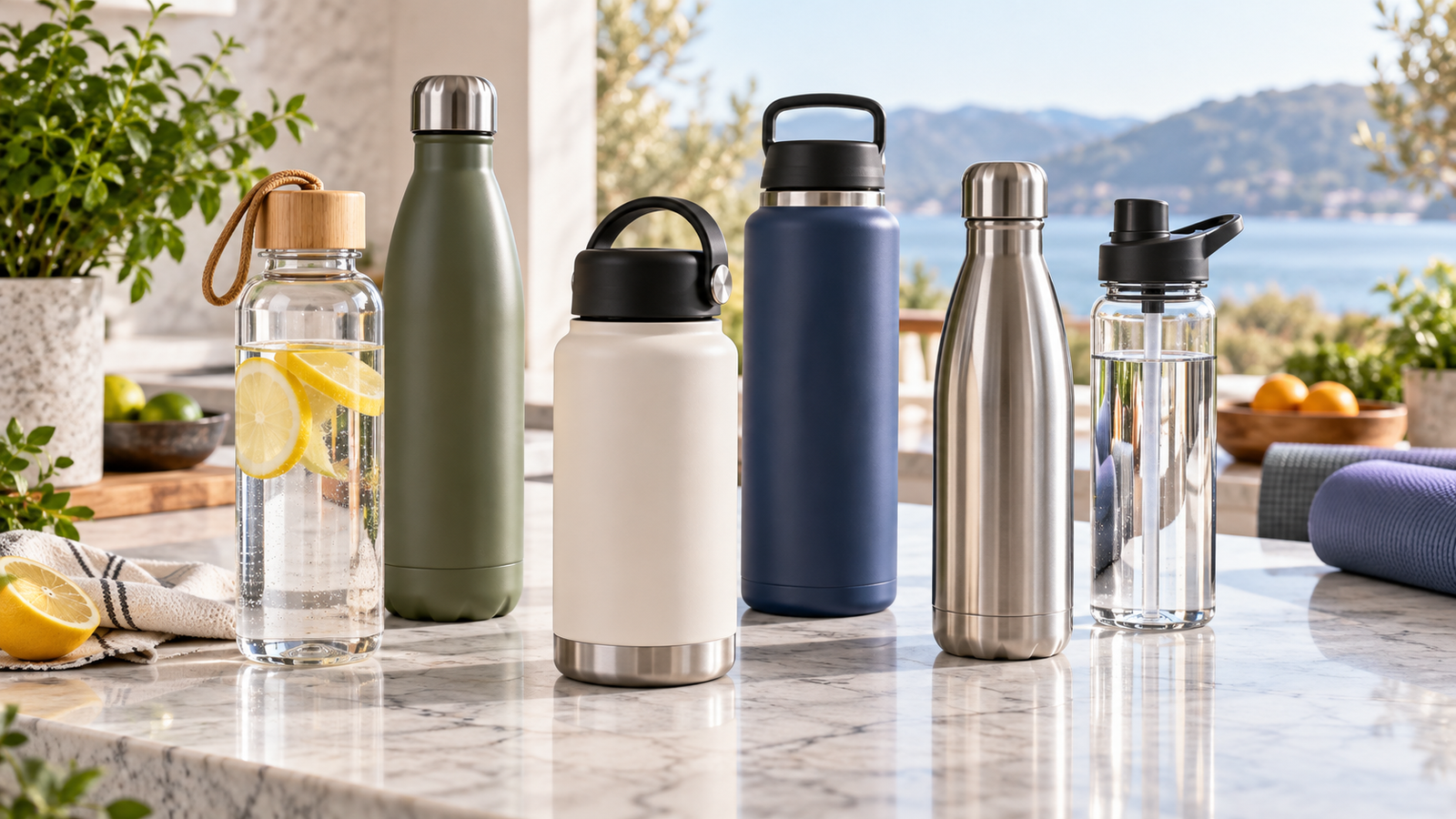
Plastic vs Stainless Steel vs Glass
Bottle material affects:
- weight
- durability
- insulation
- taste
- cleaning
- portability
There is no universally best material.
Plastic Water Bottles
Reusable plastic bottles are popular because they are:
- lightweight
- inexpensive
- easy to carry
- often transparent
They can work well for:
- office
- gym
- commuting
- school or college
Potential disadvantages include:
- scratches over time
- possible odour retention
- limited insulation
- lower resistance to high temperatures depending on material
Use bottles intended for food and beverage storage and follow their temperature and cleaning guidance.
Stainless Steel Water Bottles
Stainless-steel bottles are usually:
- more durable
- heavier
- less transparent
- available with insulation
They work well if you value:
- cold-water retention
- durability
- reduced condensation with insulated designs
The disadvantages are:
- higher weight
- usually higher price
- inability to see the water level
For everyday use, stainless steel is especially useful if temperature control matters.
Glass Water Bottles
Glass bottles offer a relatively neutral drinking surface and are easy to inspect for cleanliness.
Advantages:
- does not normally retain flavour easily
- easy to see the contents
- simple material
Disadvantages:
- heavier
- breakable
- less practical for exercise or travel
Many glass bottles include protective silicone sleeves.
They are often better suited to:
- desks
- home
- low-impact environments
rather than gyms or outdoor activities.
Which Material Should You Choose?
Choose plastic if you prioritise:
- low weight
- affordability
- portability
Choose stainless steel if you prioritise:
- durability
- insulation
- cold water
Choose glass if you primarily use the bottle:
- at home
- at a desk
- in places where breakage is unlikely
What Does BPA-Free Mean?
Many reusable plastic bottles are labelled BPA-free.
BPA stands for bisphenol A, a chemical historically used in some plastics and resins.
A BPA-free label indicates that BPA was not used in the relevant material.
However, BPA-free does not tell you everything about bottle quality.
You should still consider:
- whether the bottle is designed for drinking water
- manufacturer instructions
- temperature limits
- cleaning instructions
- overall build quality
Do not expose a plastic bottle to temperatures outside the manufacturer’s specified range.
Insulated vs Non-Insulated Bottles
Insulation is one of the biggest practical differences between bottles.
Non-Insulated Bottle
Advantages:
- lighter
- less expensive
- often larger internal capacity for the same external size
Best if you:
- drink water relatively quickly
- refill regularly
- do not care about temperature
Insulated Bottle
Usually uses double-wall construction.
Advantages:
- keeps cold drinks cold for longer
- reduces external condensation
- useful in hot weather
Disadvantages:
- heavier
- more expensive
- often bulkier
Choose insulation only if temperature retention matters to you.
Do You Need an Insulated Bottle?
Consider one if you:
- prefer cold water
- live in a hot climate
- leave the bottle in a warm room
- exercise outdoors
- spend long periods travelling
You probably do not need one if your bottle stays:
- in an air-conditioned office
- near a water dispenser
- at home
and you refill frequently.
Lid Design Matters More Than It Seems
The lid determines:
- how quickly you can drink
- how easy the bottle is to clean
- how likely it is to leak
Common styles include:
- screw cap
- flip-top lid
- straw lid
- sports spout
Screw-Cap Bottles
A simple screw cap is usually:
- reliable
- easy to clean
- secure
It works well if leak resistance is a high priority.
The disadvantage is that you normally need two hands to open it.
Flip-Top Bottles
Flip-top lids provide faster access.
They are useful for:
- gym
- desk use
- walking
Look for a secure locking mechanism.
A loose flip lid can open inside a bag.
Straw Bottles
Straw lids allow drinking without tilting the bottle significantly.
Advantages:
- convenient while working
- useful during workouts
- easy to sip frequently
Disadvantages:
- more parts to clean
- straw can retain residue
- more seals mean more possible leak points
If you choose a straw bottle, make sure it can be disassembled for cleaning.
Sports Spout
A sports spout allows faster drinking.
It can work well for:
- running
- gym
- cycling
- outdoor exercise
Check that the cap protects the drinking surface when the bottle is carried in a bag.
Leak Resistance Should Be a Priority
A reusable bottle may be stored beside:
- phone
- laptop
- clothing
- documents
- gym equipment
A leaking bottle can cause significant inconvenience.
Look for:
- strong screw threads
- secure locking lid
- intact silicone seals
- firm cap closure
Before putting a new bottle inside a bag, test it.
Fill it with water, close it properly and place it on its side over a safe surface.
Leak-Proof vs Leak-Resistant
These terms are often used loosely in product marketing.
Even a well-designed bottle can leak if:
- the lid is cross-threaded
- the seal is damaged
- the bottle is overfilled
- residue prevents proper closure
Regularly inspect the lid and gasket.
Wide-Mouth vs Narrow-Mouth Bottles
Wide Mouth
Advantages:
- easier to clean
- easier to add ice
- easier to fill
- easier to inspect
Disadvantages:
- water may flow too quickly
- less convenient while moving
Narrow Mouth
Advantages:
- controlled drinking
- less spilling
- comfortable for walking or commuting
Disadvantages:
- harder to clean internally
- harder to add ice
A medium-width opening often gives the best balance.
Bottle Opening and Cleaning
Easy cleaning is one of the most important features.
A bottle used every day should be easy to reach with:
- bottle brush
- sponge
- dishwasher, if approved
Complicated lids with:
- hidden valves
- multiple seals
- narrow straws
may require more maintenance.
Choose a design you are willing to clean properly.
Dishwasher-Safe Bottles
Dishwasher-safe construction can save time.
However, always check:
- whether the bottle body is dishwasher safe
- whether the lid is dishwasher safe
- whether top-rack placement is required
- whether insulated bottles need hand washing
Do not assume every component has the same cleaning instructions.
Why Water Bottles Need Regular Cleaning
Even when a bottle contains only water, it comes into contact with:
- your mouth
- saliva
- hands
- environmental dirt
Moisture can also remain inside the bottle.
Regular cleaning helps prevent:
- odour
- visible buildup
- microbial growth
Do not simply refill the same bottle indefinitely without washing it.
How to Clean a Reusable Water Bottle
A simple routine is:
- Empty remaining water.
- Wash with warm water and appropriate dish soap.
- Clean the lid separately.
- Clean the drinking spout.
- Wash removable straws or seals.
- Rinse thoroughly.
- Allow everything to dry completely.
Use a bottle brush if necessary.
Follow the manufacturer’s instructions for cleaning.
Let the Bottle Dry Completely
After washing, store the bottle:
- open
- upside down where appropriate
- with the lid removed
until dry.
Closing a damp bottle can contribute to:
- musty smell
- trapped moisture
How Often Should You Wash It?
A bottle used every day should be cleaned regularly.
More frequent cleaning is particularly important if you use it for:
- flavoured drinks
- electrolyte mixes
- juice
- protein drinks
If a bottle contains anything other than plain water, clean it promptly after use.
Bottle for Water vs Other Drinks
If you plan to carry only water, most bottle designs work.
If you use:
- electrolyte powder
- fruit-infused water
- sports drinks
look for:
- wide opening
- stain-resistant materials
- easy-to-clean lid
Do not assume every insulated bottle is suitable for every beverage.
Follow the manufacturer’s guidance.
Avoid Leaving Sugary Drinks in the Bottle
Sugary or flavoured drinks can leave residue.
If used:
- wash the bottle soon afterward
- clean the lid and seal thoroughly
A bottle that smells unpleasant despite washing may need deeper cleaning or replacement.
Can You Put Hot Water in a Reusable Bottle?
Only if the bottle is specifically designed for hot liquids.
Some:
- stainless-steel insulated bottles
- heat-rated bottles
may support hot beverages.
Many:
- plastic sports bottles
- straw bottles
are not designed for very hot liquids.
Using hot liquid in an unsuitable sealed container can create:
- burns
- pressure
- material damage
Check the manufacturer’s temperature instructions.
Be Careful With Straws and Hot Liquids
Drinking very hot liquid through a straw can increase burn risk because the liquid reaches the mouth quickly.
Use lids appropriate for the beverage temperature.
Bottle Weight Matters
Bottle weight becomes more noticeable once it is full.
For example, a large stainless-steel bottle plus 1 litre of water can be relatively heavy.
If you:
- walk long distances
- commute
- carry a laptop
- already have a heavy gym bag
choose a lighter bottle or smaller capacity.
Bottle Diameter
Check the width if you want it to fit:
- backpack side pocket
- gym bag holder
- car cup holder
- bicycle bottle cage
Large insulated bottles may not fit standard holders.
Dimensions can matter as much as capacity.
Carry Handle or Loop
A handle can improve portability.
Common designs include:
- flexible loop
- rigid handle
- lid-mounted carrying ring
Useful if you:
- walk to the gym
- carry the bottle separately
- frequently remove it from a bag
Check that the handle feels strong enough for a full bottle.
Bottle for Office Use
For office use, prioritise:
- 600–1000 ml capacity
- reliable leak resistance
- easy drinking lid
- stable base
- easy cleaning
If the bottle mainly stays on your desk, weight matters less.
A larger bottle may reduce the need for frequent refilling.
Bottle for Gym Use
For the gym, useful features include:
- easy one-handed opening
- 700 ml or greater capacity
- good grip
- secure lid
- wide enough opening for fast refilling
You may prefer a sports spout or straw.
Avoid fragile glass bottles in busy gym environments.
Bottle for Walking
For walking, prioritise:
- low weight
- easy carrying
- leak-resistant closure
A smaller plastic or lightweight stainless-steel bottle may be easier than a heavy 1.5-litre model.
Bottle for Running
Running bottles require more specialised consideration.
Useful features include:
- smaller capacity
- ergonomic grip
- soft flask or handheld design
- low weight
A standard large bottle is usually inconvenient for running.
For longer-distance running, hydration belts or vests may be more practical.
Bottle for Cycling
If using a bicycle cage, choose a bottle specifically sized and designed for it.
Important features include:
- squeezable body
- sports nozzle
- standard cage dimensions
Heavy glass or large insulated bottles may be unsuitable.
Bottle for School or College
Look for:
- secure lock
- easy cleaning
- moderate capacity
- low weight
- durable construction
A lid that accidentally opens inside a backpack can damage:
- books
- electronics
- notes
Leak resistance should be a major priority.
Bottle for Travel
For travel, consider:
- light weight
- secure lid
- compact dimensions
- easy refilling
- simple cleaning
When flying, airport security restrictions usually mean you will need to carry the bottle empty through security and fill it afterward where permitted.
Bottle for Hot Weather
In hot conditions, an insulated stainless-steel bottle can keep water cooler for longer.
If temperature does not matter, lightweight plastic can still be more convenient.
The best choice depends on whether you prioritise:
- cooler water
- lower carry weight
Bottle for Cold Weather
An insulated bottle can also help maintain temperature in cold conditions.
For hot drinks, make sure the model is specifically suitable for them.
Should a Bottle Have Measurement Markings?
Measurement markings can help you:
- see how much water remains
- prepare electrolyte drinks
- track approximate intake
They are useful, but not essential.
Do not become overly focused on exact numbers unless you have a specific reason to monitor fluid intake.
Time-Marker Bottles
Some bottles display reminders such as:
- morning
- afternoon
- evening
These can encourage regular drinking.
However, they should not be treated as personalised hydration prescriptions.
Drink according to:
- thirst
- activity
- environment
- individual health needs
unless a healthcare professional has given you specific fluid guidance.
How Much Water Do You Need?
There is no single fixed volume that is correct for everyone.
Fluid requirements vary.
You also obtain water from:
- food
- other beverages
Needs often increase with:
- exercise
- high temperatures
- sweating
Some medical conditions require fluid restriction rather than increased drinking.
If you have been advised to limit fluids because of a kidney, heart or other medical condition, follow your healthcare professional’s recommendations rather than generic hydration advice.
Can You Drink Too Much Water?
Yes.
Excessive water intake over a short period can disturb the body’s electrolyte balance and can be dangerous.
Do not force yourself to drink extreme amounts simply to meet an arbitrary bottle-count target.
For most healthy people, thirst and normal drinking habits provide useful guidance, with additional attention during exercise and heat.
Hydration During Exercise
During exercise, fluid needs depend on:
- workout duration
- temperature
- sweat rate
- intensity
For short, moderate sessions, water is often adequate.
Long, intense or very sweaty sessions may require additional consideration of electrolytes and nutrition.
There is no need to carry an enormous bottle for every workout.
Straw vs Chug Lid for Everyday Use
Straw Lid
Better if you:
- sip throughout the day
- drink while working
- prefer one-handed use
Chug Lid
Better if you:
- want faster drinking
- use the bottle during workouts
- dislike cleaning straws
Choose convenience versus simplicity.
Bottle Grip and Surface Texture
A bottle can become slippery from:
- sweat
- condensation
- wet hands
Look for:
- textured coating
- narrow centre section
- silicone grip
- matte finish
Double-wall insulated bottles often reduce condensation, which can also improve handling.
Protective Silicone Sleeve
Glass bottles often include silicone sleeves.
These can provide:
- extra grip
- minor impact protection
- reduced surface contact
They do not make glass unbreakable.
Odour and Taste
If a bottle starts affecting the taste of water:
- clean it thoroughly
- inspect the lid and seal
- allow it to dry completely
Persistent odour may indicate that material or seals have absorbed residue.
Replacement may be appropriate if the problem cannot be resolved.
Replacement Seals and Straws
Before buying a premium bottle, check whether replacement parts are available.
Common parts that may wear include:
- silicone gasket
- straw
- lid
- cap hinge
Being able to replace a small part can extend the life of the bottle.
When Should You Replace a Water Bottle?
Consider replacement if:
- plastic is deeply cracked or damaged
- bottle leaks despite correct closure
- lid no longer locks
- seals deteriorate
- persistent odour remains after proper cleaning
- interior cannot be cleaned effectively
- insulation fails and that feature matters to you
Minor cosmetic scratches do not necessarily require replacement.
Reusable Bottle vs Disposable Bottled Water
A reusable bottle offers:
- repeat use
- consistent personal drinking container
- less dependence on disposable bottles
However, hygiene still matters.
A reusable bottle is only practical if you are willing to:
- wash it
- dry it
- maintain its lid and seals
Common Water Bottle Buying Mistakes
Choosing the Largest Bottle
More capacity also means more weight.
Ignoring Lid Design
The lid is often more important than the bottle material.
Choosing a Difficult-to-Clean Straw System
If you will not clean it properly, choose a simpler lid.
Assuming Every Stainless-Steel Bottle Is Insulated
Some are single-wall.
Check construction.
Buying Glass for High-Impact Activities
Glass may not be practical for gyms or outdoor sports.
Ignoring Dimensions
Make sure the bottle fits your bag and holders.
Choosing Only by Appearance
A stylish bottle that leaks or is difficult to clean quickly becomes frustrating.
How to Choose a Reusable Water Bottle Step by Step
Step 1: Decide Where You Will Use It
Office, gym, travel, walking or home?
Step 2: Choose Capacity
Select enough water for your routine without creating unnecessary weight.
Step 3: Choose Material
Plastic for low weight, stainless steel for durability and insulation, glass for desk or home use.
Step 4: Choose Lid Style
Straw for frequent sipping, sports lid for exercise, screw cap for simplicity.
Step 5: Check Leak Resistance
Especially important if the bottle goes inside a bag.
Step 6: Check Cleaning
Make sure all parts can be reached easily.
Step 7: Check Dimensions
Confirm it fits your:
- bag pocket
- cup holder
- gym equipment
Step 8: Consider Insulation
Pay for it only if you care about temperature retention.
Water Bottle Features by Need
| Need | Feature to Prioritise |
|---|---|
| Office use | Medium-large capacity and stable base |
| Gym | Quick-access lid and secure grip |
| Commuting | Leak resistance and low weight |
| Cold water | Double-wall insulation |
| Easy cleaning | Wide mouth and simple lid |
| One-handed drinking | Straw or flip-top lid |
| Travel | Lightweight durable construction |
| School/college | Secure locking cap |
| Desk use | Glass or stainless steel |
| Outdoor activity | Durable lightweight bottle |
What Is a Good All-Purpose Water Bottle?
For many people, a versatile everyday bottle will have:
- approximately 700 ml to 1 L capacity
- secure leak-resistant lid
- easy-to-clean opening
- comfortable drinking design
- durable construction
- size that fits a normal bag
You may then choose:
- lightweight plastic for portability
- insulated stainless steel for colder water
depending on your priority.
How Much Should You Spend?
A reusable bottle does not need to be expensive.
A good basic bottle should provide:
- safe food-contact construction
- reliable lid
- suitable capacity
- easy cleaning
Spend more if you specifically want:
- stainless-steel insulation
- premium lid mechanisms
- stronger durability
- replacement parts
Do not pay extra only for decorative design if basic usability is poor.
Frequently Asked Questions
What size water bottle is best for everyday use?
For many adults, around 700 ml to 1 litre provides a useful balance between capacity and portability, but the best size depends on your routine.
Is stainless steel better than plastic?
Not universally. Stainless steel is durable and can provide insulation, while plastic is lighter and generally less expensive.
Is glass better for drinking water?
Glass provides a neutral surface and is easy to inspect, but it is heavier and can break.
Is BPA-free plastic safe?
BPA-free identifies one material characteristic. Choose a bottle designed for food and beverage use and follow manufacturer instructions for temperature and cleaning.
Are insulated water bottles worth it?
They are useful if you want water to stay cold for extended periods. If temperature does not matter, a lighter non-insulated bottle may be better.
How often should I wash my water bottle?
Clean reusable bottles regularly, and clean them promptly when used for anything other than plain water.
Is a straw bottle better?
It can make frequent sipping easier, but straws require more thorough cleaning.
Can I put hot water in my bottle?
Only if the manufacturer states that the bottle and lid are suitable for hot liquids.
Does a larger bottle make you drink more water?
It may make water more accessible, but bottle size alone does not determine hydration habits or individual fluid needs.
Final Takeaway
The best reusable water bottle is the one you will actually carry, use and clean consistently.
Choose based on:
- capacity
- material
- lid design
- leak resistance
- weight
- cleaning
- insulation needs
Choose plastic if portability and low weight matter most.
Choose stainless steel if durability and temperature retention are priorities.
Choose glass for home or desk use when breakage risk is low.
For most everyday users, a bottle in the 700 ml to 1 litre range provides a practical balance between carrying enough water and keeping the bottle manageable.
Do not choose capacity based on an arbitrary hydration target. Individual fluid needs vary, and drinking excessive amounts is not beneficial.
If you are comparing specific options, continue to our Top 5 Water Bottles in India guide, where we compare reusable bottles for everyday hydration, gym use, insulation, portability and easy cleaning.