Foot Massager Use and Aftercare: Session Length, Cleaning and Fit
Foot massagers are popular home wellness devices for people who enjoy a relaxing routine after work, exercise or long periods of standing.
Some devices use rolling massage heads that press against the soles. Others include air-compression chambers that gently squeeze the feet. Foot spas use water, bubbles or vibration, while certain models combine massage with adjustable warmth.
Although these products are often grouped together, they do not all work in the same way.
A dry electric foot massager has different operating and cleaning requirements from a water-filled foot spa. A device with firm kneading rollers may also feel very different from one that provides gentle vibration.
This makes foot massager use and cleaning an important topic for anyone considering regular use at home.
The most useful approach is to understand the particular device, check that it fits comfortably, follow its operating timer and maintain the components according to the manufacturer’s instructions.
There are also important limitations.
Foot massagers are generally consumer comfort products. They should not be assumed to treat neuropathy, circulatory disorders, chronic pain or other medical conditions.
People with reduced foot sensation, circulation problems, diabetes-related foot complications or certain other conditions may face additional risks from pressure, friction or heat.
This guide explains how to use different foot massager formats, check fit and pressure, understand session limits, clean liners and foot-spa basins, identify warning signs and store equipment safely between sessions.
Understanding the Device Type Before Turning It On
Before using a foot massager, identify which type of device you own.
Different formats apply different kinds of mechanical stimulation, and some contain electrical heating or water-related components.
Their maintenance requirements also differ.
Shiatsu-style foot massagers
Shiatsu-style devices commonly use rotating massage heads or rollers.
The internal components create a kneading sensation against areas of the sole.
Some machines allow users to adjust the intensity.
Others operate using preset programs.
The pressure can feel stronger in certain parts of the foot, depending on the roller arrangement and foot position.
A device marketed as shiatsu is not automatically suitable for everyone.
The pressure should remain comfortable, and you should not force your foot into a position that creates pain.
Air-compression foot massagers
Some foot massagers use chambers that inflate and deflate around the feet.
This creates a squeezing or compressing sensation.
For example, the Beurer FM 90 combines shiatsu-style massage with adjustable air compression.
However, this does not make a consumer air-compression foot massager equivalent to prescribed medical compression equipment.
Medical compression devices are designed for particular clinical purposes and require appropriate specifications and guidance.
Do not use a consumer foot massager to self-treat a suspected blood clot, serious swelling or a circulation disorder.
Vibration foot massagers
Vibration devices transmit mechanical vibrations through a footrest or contact surface.
Some have several intensity settings.
The sensation may be different from the localized pressure of kneading rollers.
However, vibration is not automatically gentler in every situation.
The actual experience depends on the device, contact position and individual sensitivity.
Begin with a manageable setting when the manufacturer permits adjustments.
Foot spas with water
A foot spa contains a basin designed to hold water.
Depending on the model, it may provide bubbles, vibration, massage rollers or temperature control.
Some products simply maintain water temperature.
Others include heating functions.
The Beurer FB 65, for example, combines a water-filled foot bath with bubble and vibration options.
Its cleaning procedure involves emptying and rinsing the basin while keeping electrical components protected from water.
A foot spa should never be treated like an ordinary plastic washing tub.
It contains electrical components and must be used according to its manual.
Heated foot massagers
Some dry foot massagers include optional warmth.
Others combine heat with massage.
Heating functions can affect comfort, but they also introduce burn risks.
A person with reduced sensation may not recognize excessive temperature or prolonged heat exposure.
Do not assume that a device’s maximum temperature is appropriate for every user.
Always follow the product’s safety restrictions.
Comparing the formats
| Device format | Main operating characteristic | Main maintenance consideration |
|---|---|---|
| Shiatsu foot massager | Rotating or kneading pressure | Cleaning contact surfaces and checking moving components |
| Air-compression foot massager | Inflating and deflating chambers | Maintaining approved liners and checking fit |
| Vibration foot massager | Mechanical vibration | Cleaning surfaces and inspecting the motor housing |
| Water-based foot spa | Water, bubbles or vibration | Draining, rinsing and drying approved components |
| Heated foot massager | Adjustable or preset warmth | Following heat precautions and device-specific cleaning instructions |
These categories may overlap.
A single device can include several functions.
For that reason, product-specific instructions matter more than the category name alone.
Checking Size, Pressure and Foot Placement
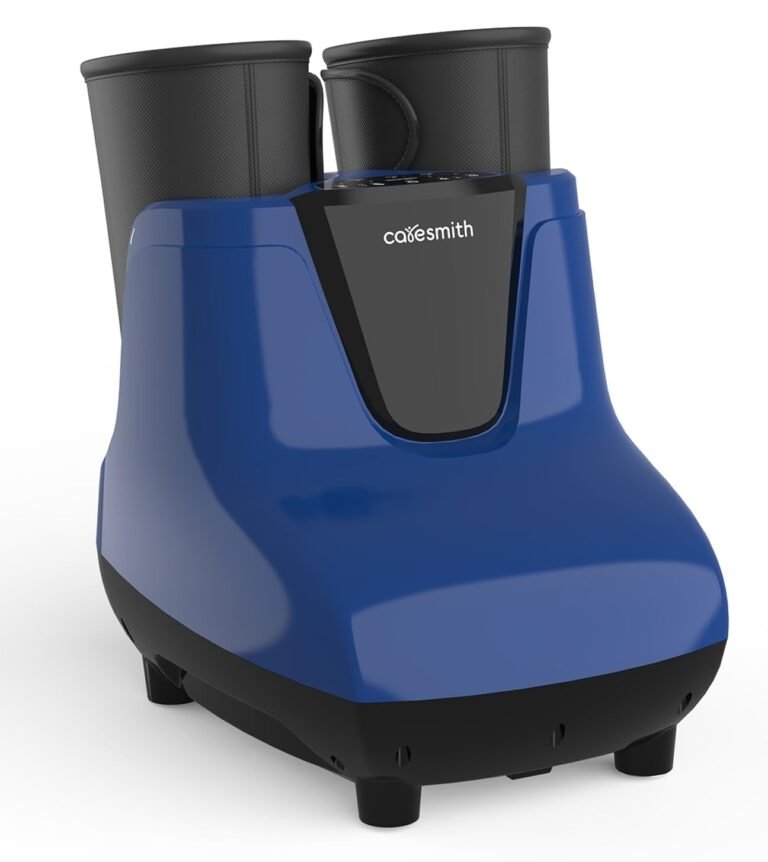
A comfortable fit is important because many electric foot massagers position the feet inside enclosed compartments.
If the opening is too narrow or the internal rollers contact the wrong area, the device may feel uncomfortable even at a low setting.
Check the manufacturer’s size guidance
Some foot massagers specify a maximum shoe size.
For example, the Beurer FM 90 is marketed for users up to approximately EU shoe size 46.
That limit applies to the particular model.
Other devices may have different dimensions or fitting restrictions.
Before purchasing, compare the stated foot-size guidance with your needs.
Do not assume that an enclosed foot massager is universally suitable because it is described as one-size-fits-all.
Test the fit before activating pressure
Place your feet in the device according to its instructions.
Check whether your toes have adequate room.
The feet should not need to be forced into the compartments.
If the sides or top of the device create painful pressure before the massage begins, it may be unsuitable.
Similarly, do not use an undersized device by bending the toes unnaturally.
Consider foot width and shape
Shoe size alone does not describe every aspect of foot shape.
Two people wearing the same shoe size may have different foot widths, instep heights or toe shapes.
A foot massager that fits one person comfortably may not suit another.
If the manufacturer provides internal dimensions or fitting guidance, review them.
Do not rely only on photographs showing how the product looks from the outside.
Start with a gentle intensity
If the manufacturer offers several intensity levels, begin with a lower setting.
This helps you understand how the device applies pressure.
Some massagers become more intense when air compression and kneading operate together.
Avoid immediately selecting the strongest combination.
A stronger sensation does not automatically mean a better wellness benefit.
Keep your feet positioned correctly
Follow the manufacturer’s placement instructions.
If the device is designed for seated use, remain seated.
Do not stand inside an enclosed electric massager or foot spa unless the manufacturer explicitly designed it for that purpose.
Both Beurer’s FM 90 foot massager and its FB 65 foot bath instruct users to operate the equipment while seated.
Standing can place loads on the device that it was not designed to support.
Do not force the foot against moving parts
Avoid deliberately pressing your feet into the rollers to intensify the massage beyond the intended operation.
Excessive pressure may cause discomfort or injury.
Allow the device to operate as designed.
If the massage feels weak, check the available approved settings rather than attempting to override the mechanism physically.
Session Timers and Starting at Gentler Settings
Foot massagers often include automatic shutoff timers.
These are important because prolonged exposure to repeated pressure, vibration or heat may become uncomfortable.
However, there is no single session duration that applies to every foot massager.
Follow the manufacturer’s timer
Different devices have different limits.
For example, the Beurer FM 90 provides automatic shutoff after approximately 15 minutes and instructs users not to exceed its 15-minute session limit.
The Beurer FB 65 foot bath offers a different timer arrangement.
Its timer can be set between 20 and 60 minutes according to its instructions.
These differences demonstrate why a general recommendation such as “all foot massagers should be used for 30 minutes” would be unreliable.
Use the limits provided for your exact product.
Is a longer massage more effective?
Not necessarily.
Longer use does not guarantee greater relaxation or better physical recovery.
Increasing the duration can also increase exposure to pressure, friction, vibration or heat.
If a device has a recommended session limit, do not repeatedly restart it to continue beyond that limit.
An automatic shutdown should not be treated as an inconvenience that must be bypassed.
Why the first session should be cautious
When using a device for the first time, you may not know how its pressure feels over an extended period.
A conservative approach is to select the lowest comfortable intensity and remain within the manufacturer’s recommended session duration.
Stop earlier if discomfort develops.
You do not have to finish the full timer simply because the machine is still operating.
Rest periods between sessions
Some devices specify cooling or rest periods.
These may protect the motor or help limit prolonged use.
Follow those instructions.
Do not assume that starting another session immediately after automatic shutdown is permitted.
If the manual does not explain repeated-session use, contact the manufacturer rather than improvising an unlimited routine.
Avoid falling asleep during operation
Do not use a foot massager while sleeping.
Some product manuals explicitly prohibit this.
Sleeping may prevent you from noticing discomfort, excessive heat or other changes during operation.
Use the equipment while awake and able to respond to the device.
Does daily use make sense?
The appropriate frequency depends on the product and individual circumstances.
Some people use comfort-oriented devices regularly.
However, daily use is not automatically necessary or beneficial.
If you develop persistent tenderness, irritation or discomfort, stop and reassess rather than increasing frequency.
A foot massager is optional wellness equipment, not a mandatory daily health treatment.
Understanding Pressure, Heat and Comfort
Many modern devices combine multiple functions.
For example, a foot massager may offer kneading, air compression and optional heat.
Combining these functions can make the sensation more intense.
However, a greater number of active features does not automatically improve the experience.
Start with one setting
If the product allows independent control, consider learning how each function feels before combining them.
For example, use a low-intensity massage setting first.
Then evaluate whether optional warmth is necessary.
This can make it easier to recognize which setting causes discomfort.
Pressure should not cause pain
A foot massager may create a noticeable squeezing or kneading sensation.
But intense pain, pinching or numbness should not be treated as evidence that the device is working effectively.
If an attachment causes pain, stop using it.
Do not attempt to become accustomed to painful mechanical pressure through repeated sessions.
Heat requires extra caution
Heating functions can cause burns when used incorrectly, particularly if sensation is reduced.
If you cannot reliably feel temperature or pressure in your feet, do not use a heated massager without appropriate medical advice.
Beurer’s product documentation specifically warns about heat-sensitive users.
Follow the manufacturer’s restrictions even if the appliance is marketed as relaxing or gentle.
Avoid using heat over damaged skin
Do not place a heated device over open wounds, burns, active skin inflammation or other affected areas contrary to manufacturer instructions.
Heat may worsen irritation or create additional injury risk.
Seek professional advice for unexplained skin changes rather than trying to manage them with massage.
Is more compression better?
No.
Higher compression may feel uncomfortable and can be inappropriate for some users.
Consumer air-compression systems should not be used to self-treat circulation disorders.
If your feet become unusually pale, painful, numb or discoloured during use, stop.
Seek medical assessment when symptoms warrant it.
Cleaning Removable Inserts and Fabric Liners
Many enclosed foot massagers have fabric liners that contact the feet.
These liners may absorb moisture or accumulate skin residue during repeated use.
Some products include removable, washable covers.
Others have fixed linings that require surface cleaning.
Identify whether the liner is removable
Check the owner’s manual.
The Beurer FM 90, for example, includes removable washable covers.
However, this design feature should not be assumed for every massager.
A liner that appears detachable may contain hidden fasteners or attachments.
Do not pull it out unless the manufacturer permits removal.
Follow the fabric-care instructions
If the liner is machine washable, follow its stated washing instructions.
If only handwashing is permitted, use the recommended method.
Pay attention to temperature limits, cleaning agents and drying requirements.
Do not assume that every removable liner can be washed at high temperatures.
Hot water or unsuitable detergents may affect the fabric or attachment components.
Dry the liner completely
After washing, allow the fabric to dry according to the manufacturer’s instructions.
Do not reinstall a damp liner when the device requires it to be dry.
Moisture can accumulate inside enclosed compartments.
A clean but damp liner is not necessarily ready for storage or reuse.
What about non-removable liners?
Some devices require wiping the internal fabric or contact surfaces using an approved method.
Avoid pouring water into a dry electric foot massager.
Do not spray cleaning solutions directly into electrical openings.
Use the cleaning approach specified for the product.
If the liner develops persistent odor, damage or other changes that approved cleaning cannot resolve, contact the manufacturer about replacement or service options.
Personal use and sharing
For household use, maintaining clean liners is sensible.
If several people use the same device, follow the manufacturer’s hygiene instructions.
Do not share foot-contact equipment when there is a known contagious skin condition, open wound or another relevant hygiene concern.
For commercial or multi-user settings, equipment may require a professional cleaning protocol that differs from ordinary personal use.
Cleaning and Drying Wet Foot-Spa Components
Water-filled foot spas require particular care because they combine water with electrical equipment.
Cleaning must protect both the surfaces that contact the feet and the device’s electrical components.
Unplug before cleaning
Switch off the device and disconnect it according to the manufacturer’s instructions.
Do not begin cleaning while the appliance is operating.
The Beurer FB 65 manual instructs users to switch off and unplug the foot bath before cleaning.
Follow the relevant electrical safety precautions for your model.
Drain water using the intended method
Some foot spas have a dedicated drainage spout.
Others have a designated side or pouring direction.
Use the procedure described in the manual.
Do not tip the appliance toward electrical controls or power connections.
Avoid spilling water onto the floor, where it could create a slipping hazard.
Rinse the basin
Where permitted, rinse the basin with clean water.
The amount of water and cleaning method depend on the device.
Do not submerge the entire electrical appliance unless explicitly designed and approved for that procedure.
A foot spa may be intended to hold water in its basin while still having electrical components that must remain dry.
Choose cleaning products carefully
The Beurer FB 65 manual permits a mild, non-foaming, non-abrasive cleaning product for its particular design.
However, this is not permission to use any household chemical on every foot spa.
Avoid adding bleach, solvents, strong fragrances or other cleaning agents unless the manufacturer authorizes them.
Cleaning-product incompatibility can damage surfaces or internal parts.
Removable rollers and attachments
Some foot spas include rollers, brushes or pedicure attachments that can be removed for cleaning.
Detach them only as instructed.
Do not force internal components apart.
Check whether each attachment can be washed separately.
After cleaning, allow everything to dry appropriately before reassembly.
Dry internal air passages only as instructed
Some foot-spa models include manufacturer-approved procedures for drying their bubble systems.
For example, Beurer’s FB 65 instructions describe operating the bubble function briefly without water to dry the air passages.
This procedure must not be generalized to other foot spas.
Some devices specifically prohibit operating without water.
Follow only the directions for your exact model.
Dry before storage
After completing the approved cleaning procedure, ensure the basin and relevant accessories are dry.
Store the appliance according to the manufacturer’s instructions.
Avoid leaving standing water in the basin after use.
Check the condition of the power cord and external surfaces before the next session.
Electrical Safety Around Water
A water-based foot spa creates hazards that do not apply to a purely manual foot roller.
Electricity and water require careful separation.
Keep electrical connections dry
Ensure plugs, adapters and sockets remain away from water and splashes.
Use the appropriate electrical supply.
Do not route the power cable through standing water or place it where someone may trip over it.
Check the manufacturer’s requirements for the outlet and power connection.
Do not fill the spa while plugged in unless instructed
For the Beurer FB 65, the manual directs the user to fill the basin before connecting it to power.
Follow the relevant sequence for your device.
Do not place an electrical foot spa inside a sink, bathtub or shower to fill it unless it is specifically designed for that use.
Never immerse the electrical unit
A foot spa is not automatically a waterproof appliance.
The fact that its basin holds water does not mean the entire unit can be submerged.
Do not immerse the housing or allow water to reach electrical components contrary to the instructions.
Stop if the appliance leaks
Water leaking from the wrong part of a foot spa may indicate damage.
Stop using the device.
Disconnect power safely.
Do not continue a session or attempt an improvised electrical repair.
Contact authorized service.
Keep children and pets away
Do not leave an operating foot spa unattended.
Children and pets should not play near its power cable, heated water or moving parts.
Some manuals include specific age and supervision requirements.
Follow those instructions and avoid unsupervised use.
Contraindications and Stop Signals in the Manual
Foot massagers are not suitable for every person or every medical situation.
The manufacturer’s contraindications are especially important because pressure and heat can create risks when circulation, sensation or skin integrity is impaired.
Diabetes and reduced foot sensation
Diabetes can sometimes cause nerve damage and reduced sensation in the feet.
A person may have difficulty recognizing excessive pressure, hot water, friction or skin injury.
Diabetes can also be associated with circulation problems and increased risk of foot ulcers.
The NHS advises people with diabetes-related foot risks to avoid prolonged soaking and direct heat, and some NHS services specifically discourage foot-spa use.
If you have diabetes, particularly neuropathy, circulation problems or a history of foot ulcers, obtain medical or podiatry advice before considering a foot massager or foot spa.
Do not assume that a low setting makes every device suitable.
A person who cannot reliably feel heat or pressure may not recognize harm promptly.
Poor circulation
Circulation problems can affect foot health.
Some manufacturers list particular vascular disorders among conditions requiring medical consultation or prohibiting use.
Do not use a foot massager to diagnose or treat poor circulation.
If you experience persistent coldness, colour changes, non-healing wounds or unexplained pain, seek medical assessment.
Suspected blood clots
A new swollen, painful or warm leg may require urgent medical evaluation.
Deep vein thrombosis can produce symptoms such as one-sided swelling, pain, tenderness and warmth.
Do not massage an area when a blood clot is suspected.
Seek prompt medical care.
If leg symptoms occur with chest pain, severe breathlessness, fainting or other emergency warning signs, seek immediate emergency assistance.
Open wounds or skin infections
Avoid using foot massagers over open wounds, ulcers, infected areas or significant skin irritation unless specifically cleared by an appropriate healthcare professional.
Mechanical pressure may worsen an existing injury.
A water-filled foot spa may also be unsuitable when the skin is broken.
Do not attempt to clean or treat a foot wound by soaking it in a consumer foot spa.
Swelling and unexplained pain
Unexplained foot or leg swelling should not automatically be attributed to ordinary fatigue.
Significant swelling, especially when it occurs suddenly or mainly on one side, may require medical evaluation.
Do not use pressure massage as a substitute for investigating the cause.
Recent injuries or surgery
After a fracture, sprain, operation or another significant injury, the affected tissues may require protection.
A foot massager may be unsuitable during recovery.
Follow the advice of your treating clinician.
Do not assume that massage accelerates healing.
Pregnancy and other medical circumstances
Certain device manuals list pregnancy or specific health conditions as situations requiring medical advice.
These restrictions vary by model.
If you are pregnant or have a condition identified in the manufacturer’s precautions, consult your healthcare professional before use.
Do not disregard a product-specific contraindication because another brand advertises broad suitability.
When to stop immediately
Stop using a foot massager if you experience:
- Painful or excessive pressure.
- Burning or uncomfortable heat.
- New numbness or tingling.
- Skin irritation, redness or blistering.
- Dizziness or feeling unwell.
- Unexpected device movement or malfunction.
- Electrical or mechanical warning signs.
Seek medical care when symptoms are persistent, severe or concerning.
Do not continue simply to complete the timer.
Why Foot Massage Is Not a Medical Treatment Substitute
Foot massagers are frequently marketed using terms such as recovery, therapy, circulation improvement and reflexology.
These terms may describe the manufacturer’s intended positioning, but they should not be interpreted as proof of treatment for a medical condition.
Relaxation and comfort
Some people enjoy the sensation of gentle foot massage after daily activity.
A product may provide subjective relaxation or temporary comfort.
However, individual experiences vary.
A pleasant sensation does not demonstrate that a device treats an underlying disease.
Exercise recovery claims
Recovery after exercise involves multiple processes, including muscle repair, energy restoration, sleep and training-load management.
A foot massager cannot replace appropriate rest, nutrition or rehabilitation when required.
Do not assume that stronger or longer massage produces better athletic recovery.
Circulation claims
Some manufacturers describe their devices as supporting circulation.
However, marketing language alone does not establish clinically meaningful benefits for circulation disorders.
Consumer foot massagers should not be used as replacements for medical treatment.
If circulation is a concern, seek professional evaluation.
Reflexology claims
Some foot massagers use reflexology terminology.
Reflexology systems may associate specific areas of the foot with other body regions.
However, claims that applying pressure to a particular foot area treats a specific internal organ or disease are not established by robust clinical evidence.
A consumer device should not be presented as treating medical conditions through foot pressure points.
Pain management
Foot pain has many possible causes.
These may include injury, mechanical strain, inflammation, nerve problems or vascular conditions.
A foot massager cannot identify the cause of pain.
Persistent or recurring pain deserves appropriate assessment rather than repeated attempts to suppress symptoms with massage.
How to Choose a Foot Massager With Maintenance in Mind
If you are evaluating a new device, practical maintenance and safety features deserve attention.
Do not choose solely according to the number of massage modes.
Check the fit
Review supported shoe sizes and internal dimensions.
If the product encloses the feet, ensure that it can accommodate your foot shape.
A device that does not fit comfortably is unlikely to become suitable merely because it has more intensity levels.
Look for manageable controls
Simple, clearly labelled controls can make the device easier to operate.
Consider whether you can independently adjust pressure, heat and duration.
A wide range of settings is not automatically necessary, but suitable adjustability can improve usability.
Review automatic shutoff
Check whether the device provides a timer.
More importantly, confirm the recommended maximum session duration.
Do not assume that a longer timer means the product is safer or more effective.
Consider cleaning access
Removable washable liners may be convenient.
However, check the actual cleaning instructions.
A product described as hygienic may still require regular maintenance.
Check available replacement parts
Certain products offer replacement covers or other accessories.
Confirm whether suitable components are available for the specific model.
Do not rely on an unrelated replacement liner.
Consider storage size
Some enclosed foot massagers are bulky.
A foot spa also requires space to empty, dry and store.
Measure the available storage area before purchasing.
Review the manufacturer’s support information
Prefer clear documentation that explains:
- Intended use.
- Fitting requirements.
- Intensity controls.
- Timer limits.
- Heat precautions.
- Medical contraindications.
- Cleaning methods.
- Electrical safety.
- Warranty and service arrangements.
A device with vague safety information should not automatically be considered preferable because of attractive marketing claims.
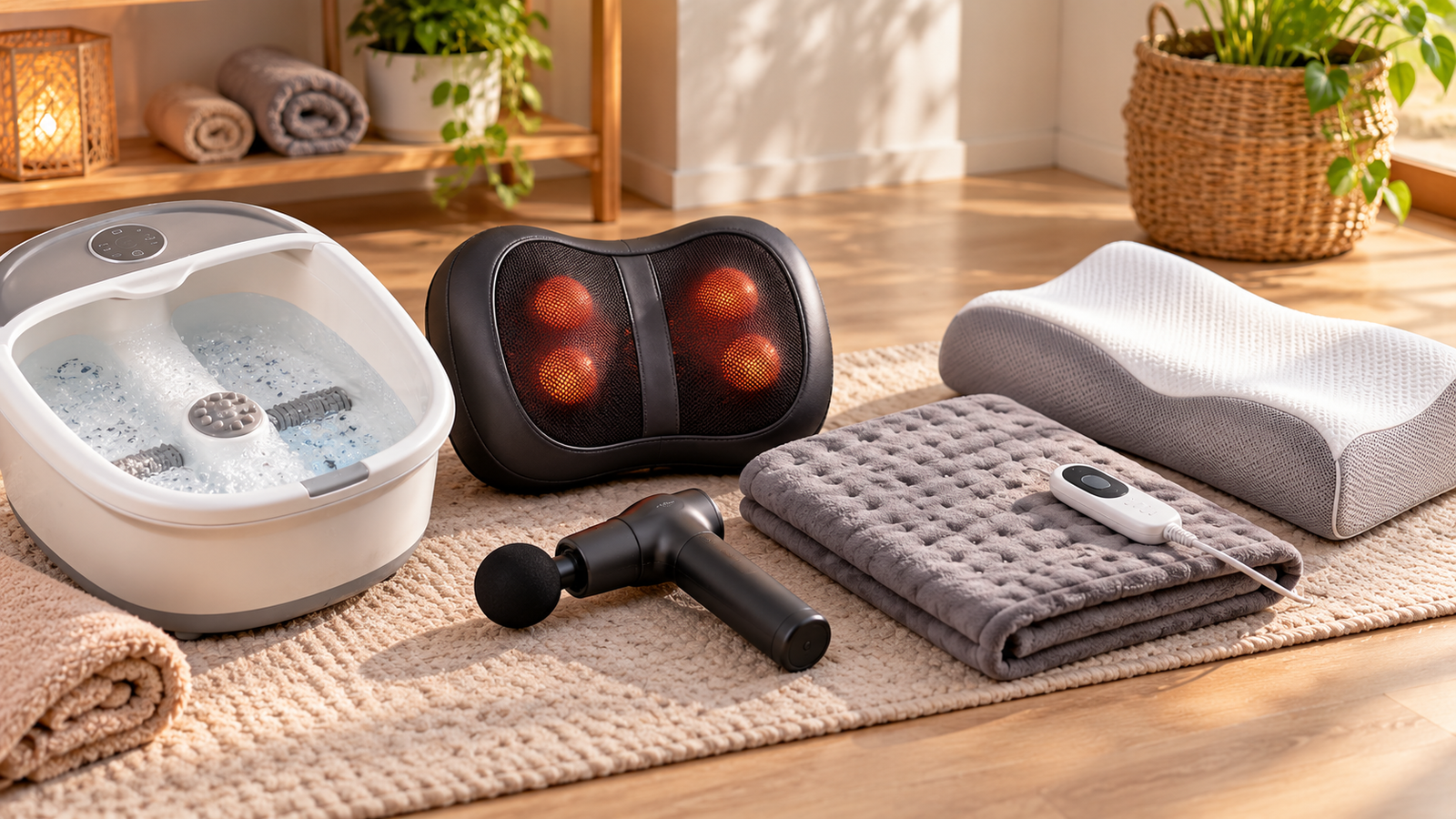
Foot Spa vs Shiatsu Massager vs Heat Pad vs Cervical Pillow
These wellness products serve different purposes.
They should not be treated as interchangeable forms of treatment.
A foot spa provides a water-based experience.
A shiatsu foot massager applies localized mechanical pressure.
A heat pad provides warmth to a specified area.
A cervical pillow is designed to support the head or neck during rest.
Their safety requirements differ.
| Product | Main purpose | Key safety consideration |
|---|---|---|
| Foot spa | Water-based foot-care or comfort routine | Water temperature, electrical safety and cleaning |
| Shiatsu foot massager | Mechanical kneading pressure | Foot fit, intensity and session limits |
| Heated foot massager | Massage with optional warmth | Heat sensitivity and burn precautions |
| Heat pad | Localized warmth | Safe temperature, application time and skin condition |
| Cervical pillow | Head and neck positioning during rest | Fit, comfort and individual needs |
None should be assumed to treat a medical condition without appropriate evidence.
For a product-focused comparison, read Physical Glow’s Foot Spa vs Shiatsu Massager vs Heat Pad vs Cervical Pillow: Recovery Roles.
That guide explains how different wellness formats serve different practical purposes.
This article focuses specifically on foot massager use, hygiene and aftercare.
A Simple Foot Massager Routine for Home Use
For someone who can safely use a consumer foot massager, a consistent routine can help prevent avoidable problems.
Step 1 — Read the manual. Confirm the intended use, contraindications, timer and cleaning requirements.
Step 2 — Inspect the device. Check the housing, cord, plug, liners and moving components for visible damage.
Step 3 — Choose a stable location. Place the device according to its instructions, with sufficient space and no electrical hazards.
Step 4 — Check your feet. Do not use the device over wounds, significant irritation or unexplained swelling.
Step 5 — Confirm the fit. Position your feet comfortably without forcing them into the machine.
Step 6 — Start gently. Select a low intensity when the device provides adjustable settings.
Step 7 — Follow the timer. Remain within the manufacturer’s session limit and stop earlier if necessary.
Step 8 — Monitor comfort. Do not ignore painful pressure, heat or abnormal sensations.
Step 9 — Switch off and disconnect. Follow the manufacturer’s shutdown instructions.
Step 10 — Clean and dry. Maintain removable liners or foot-spa components using approved methods.
Step 11 — Store correctly. Keep the equipment dry and protect electrical and mechanical parts.
This is a maintenance framework, not medical clearance or a prescription for daily use.
Common Foot Massager Use and Cleaning Mistakes
Mistake 1: Choosing the strongest setting immediately
High pressure is not automatically more beneficial.
Begin conservatively and remain within the intended operating range.
Mistake 2: Ignoring foot-size restrictions
An enclosed device may not fit all users.
Do not force oversized feet into the compartments.
Mistake 3: Restarting the timer repeatedly
Automatic shutdown is not necessarily an invitation to begin unlimited consecutive sessions.
Follow the manufacturer’s usage limits.
Mistake 4: Using heat despite reduced sensation
Reduced ability to feel temperature can increase burn risk.
Obtain professional advice and observe contraindications.
Mistake 5: Massaging unexplained swelling
New or one-sided swelling may require medical assessment.
Do not use massage to self-treat a possible vascular problem.
Mistake 6: Pouring water into a dry massager
An enclosed electric foot massager is not automatically designed for water cleaning.
Keep electrical components dry.
Mistake 7: Washing fixed liners as if they are removable
Not every fabric lining can be removed.
Follow product-specific cleaning instructions.
Mistake 8: Leaving water inside a foot spa
Drain and clean the basin according to its instructions.
Do not leave standing water in an electrical foot-care appliance after use.
Mistake 9: Using unsuitable cleaning chemicals
Strong chemicals may damage the device.
Use the manufacturer’s approved cleaning method.
Mistake 10: Storing damp components in a closed bag
Allow cleaned accessories to dry properly.
Avoid trapping moisture during long-term storage.
Mistake 11: Ignoring electrical damage
A damaged cord, plug or leaking foot spa requires attention.
Do not attempt improvised repairs or continue using malfunctioning equipment.
Mistake 12: Treating massage as medical treatment
Comfort-oriented products do not replace diagnosis or appropriate treatment for persistent pain, neuropathy or circulatory disorders.
Frequently Asked Questions
How long should I use a foot massager?
Follow the manufacturer’s recommended session duration.
For example, the Beurer FM 90 specifies a maximum of 15 minutes.
Other devices may have different limits.
There is no universal session length suitable for every foot massager.
Can I use a foot massager every day?
That depends on the product, your health and individual tolerance.
Daily use is not automatically necessary or suitable.
Follow manufacturer instructions and any relevant medical advice.
Stop if discomfort or irritation develops.
Should I use a foot massager on the highest setting?
Not automatically.
A stronger setting can increase pressure and may become uncomfortable.
Start with a manageable intensity and remain within the manufacturer’s guidance.
Is foot massage supposed to hurt?
No.
Noticeable pressure may occur, but painful compression, pinching or burning should not be ignored.
Stop the device if it becomes painful.
Do foot massagers help with circulation?
Some manufacturers market circulation-related benefits.
However, a consumer foot massager should not be treated as a medical treatment for circulation disorders.
Seek appropriate clinical guidance if circulation is a concern.
Can a foot massager treat neuropathy?
No consumer foot massager should be assumed to treat neuropathy.
Reduced sensation can also make pressure and heat more hazardous.
Obtain medical advice before considering use.
Can people with diabetes use foot massagers?
Diabetes may be associated with reduced foot sensation, circulation problems and higher risk of wounds.
Some foot massagers list diabetes among conditions requiring medical consultation.
People with diabetes should obtain advice from their healthcare professional, particularly when foot complications are present.
Foot-spa soaking and heating may be specifically discouraged in diabetes-related foot-care guidance.
Can I use a foot massager if my feet are swollen?
Do not use a massager to self-treat unexplained swelling.
New, painful, warm or one-sided swelling can be a sign of a condition requiring medical assessment.
Seek professional advice.
Is foot massage safe if I have a blood clot?
Do not massage an area with a suspected or known acute blood clot unless specifically directed by your treating clinician.
Seek prompt medical evaluation for symptoms of deep vein thrombosis.
Can I use a foot massager after surgery?
Only when appropriate under your recovery instructions.
Recent surgery, injury and other medical conditions may be listed as contraindications.
Consult your treating clinician before use.
Are heated foot massagers safe?
They may be suitable for some users when operated as directed.
However, heating functions create burn risks.
People with reduced temperature sensation or certain medical conditions require particular caution.
Can I use a foot massager while sleeping?
No.
Do not use massage devices while asleep.
You need to remain able to recognize discomfort, excessive pressure or heat.
Should I wear socks in a foot massager?
Follow the model’s instructions.
Some devices are designed for particular contact conditions.
Do not assume that socks are required or prohibited for every machine.
Clean personal socks may be appropriate where the manufacturer permits them.
Can I stand on a foot massager?
Not unless the manufacturer expressly designs it for standing use.
Many enclosed foot massagers and foot spas require seated operation.
Standing can create inappropriate mechanical loads or instability.
How do I clean a foot massager with fabric liners?
Check whether the liners are removable.
If so, clean them according to their care instructions and dry them fully before reinstallation.
For fixed linings, use the approved surface-cleaning method.
Can I wash an electric foot massager under a tap?
Not unless the manufacturer specifically permits that procedure.
Most dry electric foot massagers should not be exposed to running water in the same way as a water-filled basin.
Never immerse an electrical handle or housing without explicit approval.
How do I clean a foot spa after use?
Switch off and unplug the appliance.
Drain water using the prescribed method.
Rinse and clean the approved surfaces according to the manual.
Dry the components before storage.
Do not immerse the electrical unit.
Can I add essential oils or bath salts to my foot spa?
Only if the manufacturer’s instructions specifically permit them.
Some devices have restrictions because additives may affect internal components, seals or cleaning requirements.
Do not assume that products described as natural are automatically suitable.
Can I use a foot spa without water?
Only if the manufacturer explicitly allows that operating mode or a particular maintenance procedure.
Some devices prohibit dry operation.
A model-specific drying function should not be generalized to other products.
How should I store a foot massager?
Clean and dry it according to the manual.
Keep it in a suitable indoor storage location, away from excessive moisture, heat and physical damage.
Protect the cord and attachments.
How often should liners be washed?
Follow the manufacturer’s care guidance and consider frequency of use and visible soiling.
There is no universal washing schedule applicable to every foot massager liner.
What if the rollers make unusual noises?
Stop using the device and consult the manufacturer’s troubleshooting instructions.
Do not dismantle electrical or moving components without authorization.
When should I replace a foot massager?
Replacement or authorized repair may be needed if the device has electrical damage, compromised components, persistent malfunctions or parts that cannot be safely maintained.
Do not continue using faulty equipment.
Are foot spas and shiatsu foot massagers interchangeable?
No.
A foot spa uses water and may provide bubbles, vibration or temperature control.
A shiatsu massager uses mechanical kneading.
They have different cleaning and safety requirements.
Can a foot massager replace physiotherapy?
No.
A consumer foot massager is not a substitute for diagnosis, rehabilitation or treatment prescribed by a qualified professional.
If you have persistent pain, injury or mobility limitations, seek appropriate advice.
Final Takeaway
Foot massagers can be convenient comfort-oriented devices, but their safe use depends on understanding the specific product.
Dry shiatsu massagers, air-compression devices, vibrating platforms and water-filled foot spas all have different operating requirements.
Before use, check the fit, select an appropriate intensity, understand the timer and review the manufacturer’s contraindications.
Do not assume that stronger pressure, higher heat or longer sessions produce better results.
After use, clean removable liners and contact surfaces according to the manual.
For water-filled foot spas, drain and dry the approved components while protecting electrical parts.
Inspect the appliance between sessions and stop using it if damage or abnormal operation develops.
Most importantly, recognize that reduced sensation, diabetes-related foot problems, vascular conditions, unexplained swelling and skin injuries can make ordinary consumer massage inappropriate.
The best foot massager routine is not the longest or most intense one. It is a comfortable, properly maintained and manufacturer-approved routine that does not ignore individual safety limitations.
Physical Glow’s editorial principle: Wellness-device recommendations should distinguish relaxation-oriented products from medical treatment. Avoid unsupported claims about circulation, neuropathy or recovery, and prioritize manufacturer contraindications and professional guidance when appropriate.
References and Further Reading
- Beurer — FM 90 Foot Massager: Product Details and Instructions
- Beurer — FM 90 Foot Massager: Official User Manual
- Beurer — FB 65 Foot Bath: Official User Manual
- Beurer — Official Product Manual Library
- NHS — Diabetes Footcare Advice
- NHS — Diabetes and Your Feet: At Risk
- NHS — Footcare Advice for Diabetes
- MedlinePlus — Deep Vein Thrombosis
- MedlinePlus — Foot, Leg and Ankle Swelling