Ceramides, Humectants and Occlusives: Reading Moisturizer Labels
Choosing a moisturizer should be simple, yet skincare packaging can make it surprisingly confusing. One product promises deep hydration with hyaluronic acid, another highlights ceramides for barrier repair, and a third claims to lock in moisture for hours.
But what do these ingredients actually do?
The answer lies in understanding three important functions of moisturizing ingredients: attracting water, softening the skin and reducing moisture loss.
Ceramides, humectants, emollients and occlusives contribute to these functions in different ways. Understanding them can help you choose a moisturizer based on your skin’s needs rather than relying solely on marketing claims.
This guide explains how these ingredients work, how to read moisturizer labels and how to choose between gel, lotion and cream formulations.
1. Why Your Skin Needs Moisturizer
Your skin has a protective outer layer called the stratum corneum.
This outermost layer contains skin cells surrounded by a mixture of lipids, including ceramides, cholesterol and fatty acids.
Together, these components help maintain the skin barrier, which performs two important functions:
- Limits excessive water loss from the skin.
- Helps protect against environmental irritants.
When the skin barrier is disrupted, moisture can escape more easily. Your skin may feel tight, rough, flaky or uncomfortable.
Dry skin can develop for several reasons, including frequent washing, harsh cleansers, cold weather, low humidity and individual skin conditions.
A well-formulated moisturizer helps improve skin comfort by combining ingredients that hydrate, soften and reduce water loss.
Understanding the roles of those ingredients makes product labels much easier to interpret.
2. What Are Humectants in Skincare?
Humectants are ingredients that attract and help retain water.
They are commonly included in face serums, moisturizers, body lotions and hydrating gels.
Common humectants
| Ingredient | Main function |
|---|---|
| Glycerin | Attracts and helps retain water |
| Hyaluronic acid | Binds water and supports hydration |
| Sodium hyaluronate | A form of hyaluronic acid used in hydrating formulas |
| Panthenol | Provides humectant and skin-conditioning properties |
| Urea | Helps hydrate skin and, at higher concentrations, soften rough buildup |
Is hyaluronic acid better than glycerin?
Not necessarily.
Hyaluronic acid has become extremely popular in skincare marketing, but glycerin is also a well-established humectant used in many effective moisturizers.
Both can support hydration.
Their effectiveness depends on the complete formulation, concentration and other ingredients.
A moisturizer containing glycerin is not automatically inferior to a more expensive product highlighting hyaluronic acid.
Can humectants hydrate skin on their own?
Humectants help retain water, but some skin types also benefit from ingredients that reduce water loss.
For example, someone with dry, uncomfortable skin may find that a lightweight hyaluronic acid serum alone does not provide enough lasting comfort.
A moisturizer containing emollient and occlusive ingredients may be more suitable.
Practical takeaway: Look for a balanced formulation rather than assuming a high concentration of one humectant guarantees better hydration.
3. What Are Ceramides and Why Do They Matter?
Ceramides are naturally occurring lipids found in the skin’s outer protective barrier.
They help maintain the structure of the lipid layers between skin cells.
When these protective lipids are insufficient or the barrier becomes disrupted, skin can experience increased water loss and irritation.
Skincare products containing ceramides are formulated to support the skin barrier.
How to identify ceramides on labels
Ingredient lists may include names such as:
- Ceramide NP
- Ceramide AP
- Ceramide EOP
Different ceramide types have different molecular structures. However, consumers generally do not need to choose a moisturizer based on one specific ceramide name alone.
The complete formulation matters more.
Do ceramides repair damaged skin instantly?
No.
A moisturizer containing ceramides may support barrier function and improve dryness, but it should not be expected to repair persistent skin problems immediately.
Results depend on the product, the condition of your skin and consistent use.
If your skin is persistently inflamed, cracking or developing a rash, a moisturizer alone may not address the underlying problem.
Are ceramide moisturizers only for dry skin?
No.
Ceramide-containing moisturizers are available in lightweight lotions, gels and richer creams.
People with oily or combination skin may also use ceramide formulations, provided the texture is comfortable and appropriate for their needs.
4. What Are Occlusives in Moisturizers?
Occlusives help reduce transepidermal water loss, the process by which water moves through the skin and evaporates from its surface.
They accomplish this by forming a protective film.
Common occlusive ingredients
Petrolatum: A highly effective occlusive ingredient used in ointments and protective moisturizers.
Dimethicone: A silicone-based ingredient that helps reduce water loss while contributing to a smooth skin feel.
Mineral oil: An ingredient frequently used in moisturizing formulations to reduce moisture loss.
Lanolin: An emollient and occlusive ingredient that can help soften skin, although some individuals develop allergic reactions to it.
Are occlusives too heavy for oily skin?
Not always.
The concentration, combination of ingredients and final product texture determine how heavy or lightweight a moisturizer feels.
A formulation containing dimethicone, for example, may feel considerably lighter than a petrolatum-rich ointment.
People with oily or acne-prone skin can often find lightweight moisturizers that provide adequate barrier support without an unpleasant greasy finish.
5. Where Do Emollients Fit In?
Emollients help smooth and soften the skin.
They improve the feel of rough or dry areas by supporting a smoother skin surface.
Common examples include:
- Squalane
- Caprylic/capric triglyceride
- Shea butter
- Certain fatty alcohols
- Various plant-derived oils
Some ingredients perform more than one role.
For instance, certain oils can provide both emollient and occlusive effects.
This means skincare ingredients cannot always be divided into completely separate categories.
A good moisturizer frequently combines several functional ingredient types in one formula.
6. Gel vs Lotion vs Cream: Which Moisturizer Should You Choose?
Moisturizers are available in different textures because skin types, environments and personal preferences vary.
| Moisturizer format | Typical characteristics | Often considered for |
|---|---|---|
| Gel | Lightweight, frequently water-rich | Oily skin or preference for a light finish |
| Lotion | Fluid, spreadable texture | Everyday face and body moisturization |
| Cream | Often richer, with more emollient ingredients | Dry skin or areas needing additional comfort |
| Ointment | Typically highly occlusive | Very dry or rough areas |
These are general tendencies rather than strict rules.
Some modern gel creams contain ceramides and emollients, while certain creams are designed to feel surprisingly lightweight.
For oily skin
Consider a moisturizer with a comfortable lightweight texture.
Ingredients such as glycerin, hyaluronic acid and ceramides can still be useful.
Avoid choosing products solely because their packaging says “oil-free.”
For dry skin
A cream containing humectants, emollients and occlusives may provide more lasting comfort than a lightweight watery gel.
For combination skin
You may prefer a lighter moisturizer over the forehead and nose while using a richer product on drier cheeks.
For sensitive skin
Consider fragrance-free formulations with simple, well-tolerated ingredients.
Introduce products gradually and monitor for signs of irritation.
7. How to Read a Moisturizer Ingredient List
The front of a moisturizer package usually highlights selected ingredients.
The ingredient list provides a more complete picture.
Step 1: Identify the hydrating ingredients
Look for humectants such as glycerin, sodium hyaluronate, panthenol or urea.
Step 2: Identify skin-softening ingredients
Examples include squalane, fatty alcohols, triglycerides and certain oils.
Step 3: Look for ingredients that reduce moisture loss
Petrolatum, mineral oil and dimethicone are common examples.
Step 4: Check for ceramides and other barrier lipids
Ceramides, cholesterol and fatty acids may be included in formulations intended to support barrier function.
Step 5: Review potential irritants
If your skin is sensitive, pay attention to fragrance, essential oils and ingredients that have previously caused reactions.
Ingredient names alone cannot predict whether a complete product will irritate your skin.
Can ingredient order tell you which moisturizer is stronger?
Not reliably.
Cosmetic ingredients are generally listed in descending concentration order, subject to applicable labeling rules and exceptions.
However, ingredient order does not reveal the full formulation, the exact concentrations of every ingredient or the performance of the finished product.
For example, a moisturizer listing ceramides near the end is not automatically ineffective.
Similarly, a product featuring hyaluronic acid prominently on its packaging is not necessarily more hydrating than one that emphasizes glycerin.
8. The Best Way to Apply Moisturizer
Application technique can influence how comfortable your skin feels.
A straightforward routine is:
- Wash your face using a gentle cleanser.
- Pat your skin lightly rather than rubbing aggressively.
- Apply moisturizer while your skin is still slightly damp.
- Spread a suitable amount across your face without excessive friction.
- In the morning, finish with broad-spectrum sunscreen.
Applying moisturizer to slightly damp skin can help retain moisture after cleansing.
For dry areas, you may benefit from a richer formulation.
However, applying more moisturizer than needed is not automatically beneficial.
Aim for comfortable coverage without persistent heaviness or irritation.
9. Common Moisturizer Myths
Myth 1: More hyaluronic acid always means better hydration
Reality: Concentration alone does not determine hydration performance. The overall formulation matters.
Myth 2: Oily skin does not need moisturizer
Reality: Oily skin can still experience dehydration and barrier discomfort.
Myth 3: Ceramide moisturizers work immediately for everyone
Reality: Barrier-support products may improve comfort, but results vary and persistent skin conditions can require professional evaluation.
Myth 4: Expensive moisturizers are automatically better
Reality: Price does not reliably indicate a moisturizer’s effectiveness.
Myth 5: Thick creams always clog pores
Reality: Acne and irritation depend on individual susceptibility and the complete formulation, not simply thickness.
10. Frequently Asked Questions
Can I use hyaluronic acid and ceramides together?
Yes. Many moisturizers combine humectants such as hyaluronic acid with ceramides and other ingredients that support the skin barrier.
What is the difference between hydration and moisturization?
Hydration refers to water content, while moisturization involves maintaining skin comfort and supporting water retention through various ingredient functions. In cosmetics, these terms often overlap.
Is glycerin suitable for sensitive skin?
Glycerin is generally well tolerated and widely used in moisturizers. However, any complete skincare product can potentially trigger an individual reaction.
Should I apply a moisturizer after a hyaluronic acid serum?
Often, yes, particularly if your skin feels dry after using the serum alone. A moisturizer can provide additional emollient and occlusive benefits.
Can I use a ceramide moisturizer every day?
Many ceramide moisturizers are designed for daily application. Follow the manufacturer’s instructions and adjust usage according to your skin’s comfort.
How long does a moisturizer take to work?
A moisturizer may improve the feeling of dryness soon after application. Longer-term improvements in barrier comfort depend on the formulation, consistent use and underlying cause of dryness.
11. Final Takeaway
Choosing a moisturizer becomes easier once you understand its ingredients.
Humectants help retain water, emollients soften the skin, occlusives reduce moisture loss, and ceramides support the skin barrier.
Most effective moisturizers combine several of these functions rather than relying on a single highlighted ingredient.
Instead of choosing a product simply because it contains hyaluronic acid, ceramides or an expensive botanical extract, consider the complete formula, texture and your skin’s needs.
A well-tolerated, affordable moisturizer used consistently can be more valuable than a complicated collection of products that do not suit your skin.
References and Further Reading
- American Academy of Dermatology — How to Choose the Right Moisturizer
- American Academy of Dermatology — How to Test Skincare Products
- DermNet — Emollients and Moisturisers
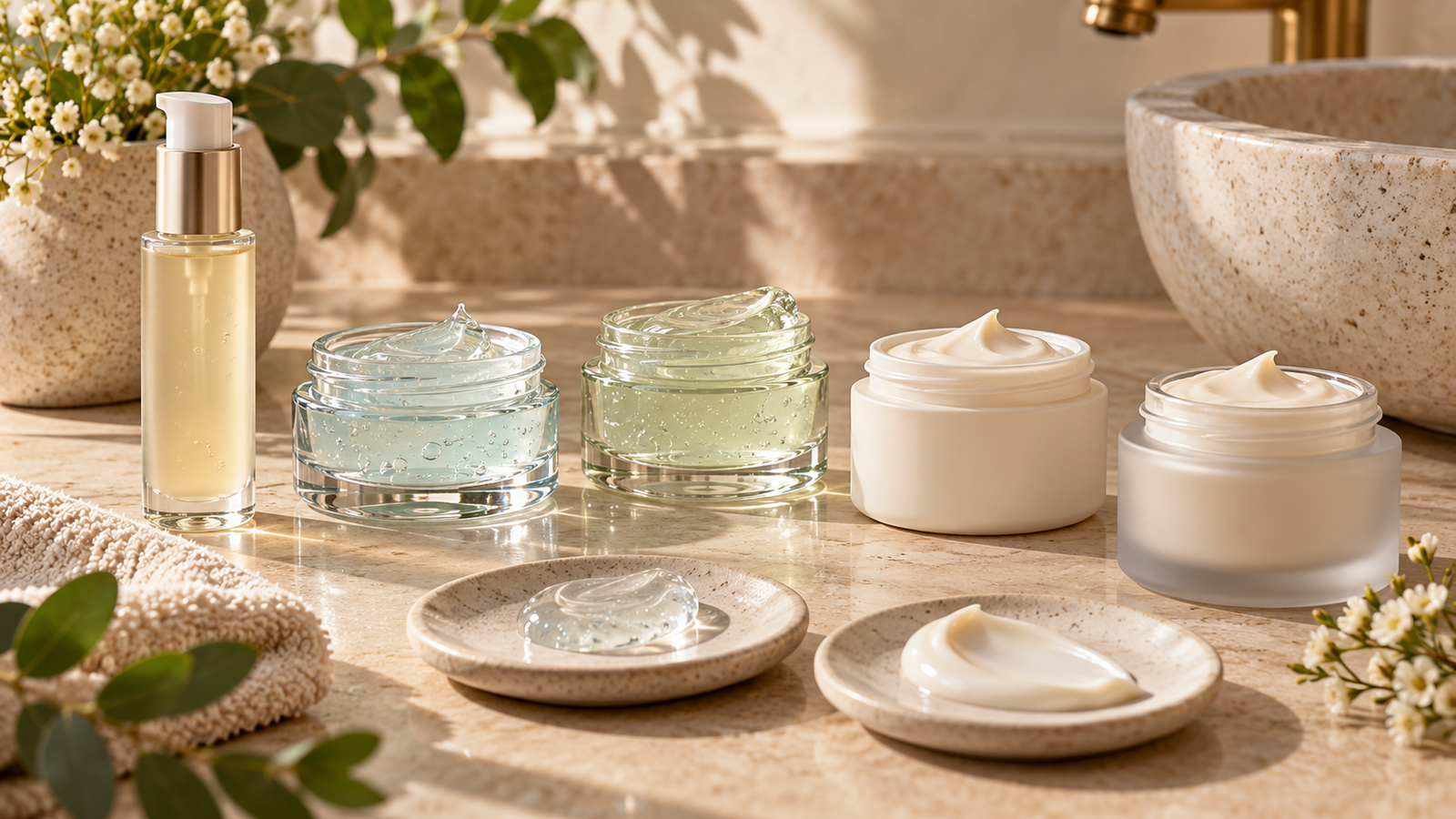
Editorial note: This article provides general skincare education and does not constitute personalized medical advice. The featured image illustrates moisturizing product formats; it does not represent independent testing or endorsement of specific products.