How Hydrocolloid Pimple Patches Work and When to Use Them
Hydrocolloid pimple patches are small adhesive spot treatments designed to cover individual blemishes. They are popular because they are simple to use, discreet and can help protect a spot from touching, picking and external friction.
Most hydrocolloid patches work by creating a moist, protected environment over a surface-level blemish while absorbing fluid from the area. Some products also include ingredients such as salicylic acid, tea tree or other actives, but the hydrocolloid layer itself is the defining feature of this category.
This guide explains how pimple patches work, which types of blemishes they are most suitable for, how to apply them correctly and when they are unlikely to help.
What Is Hydrocolloid?
Hydrocolloid is an absorbent material originally used in wound-care applications. In skincare, it is adapted into small adhesive patches designed to sit over an individual blemish.
The material can absorb moisture from the covered area and swell as it takes up fluid. That is why many pimple patches become cloudy or white after several hours of wear.
This visible change does not necessarily mean that the patch has “pulled out” an entire pimple. It simply shows that the material has absorbed moisture and fluid from the surface beneath it.
How Do Pimple Patches Work?
A hydrocolloid patch performs several practical functions at once:
- It covers the blemish and reduces direct touching.
- It can absorb fluid from a surface-level spot.
- It protects the area from friction and external contamination.
- It creates a moist environment that can support the surface healing process.
The main benefit is often protection and fluid management rather than aggressive acne treatment.
What Happens Under a Hydrocolloid Patch?
When the patch is placed over a suitable blemish, fluid from the spot can move into the absorbent hydrocolloid layer.
As the material absorbs moisture, it expands and becomes more opaque.
At the same time, the adhesive covering helps discourage picking or repeatedly touching the area.
This can be especially useful because squeezing and picking can increase irritation and may make the blemish take longer to settle.
Which Pimples Are Best Suited to Hydrocolloid Patches?
Hydrocolloid patches are generally most useful for blemishes that are close to the skin surface.
Whiteheads
Surface-level whiteheads are among the most suitable targets because there may already be fluid near the surface for the hydrocolloid layer to absorb.
Recently opened blemishes
A patch may also help protect a blemish that has opened on its own or has already released fluid.
The area should be clean before applying the patch.
Spots you tend to pick
Even when there is not much fluid to absorb, a patch can act as a physical reminder not to touch or squeeze the blemish.
Which Types of Acne Are Pimple Patches Less Useful For?
Deep cystic acne
Deep, painful bumps under the skin usually do not contain fluid close enough to the surface for a basic hydrocolloid patch to absorb.
A patch may cover the area, but it is unlikely to meaningfully address the deeper inflammation.
Closed comedones
Small clogged bumps without a visible surface opening usually provide very little fluid for hydrocolloid material to absorb.
Blackheads
Standard hydrocolloid patches are not designed to remove blackheads.
Blackheads form when material inside a pore is exposed to air and oxidises. A pimple patch does not work like a pore strip.
How to Apply a Pimple Patch Correctly
Application is simple, but adhesion and timing can make a significant difference.
- Cleanse the area gently.
- Pat the skin completely dry.
- Select a patch that fully covers the blemish.
- Apply it directly over the spot.
- Press gently for a few seconds so the edges adhere.
- Leave it in place for the period recommended by the manufacturer.
- Remove it gently rather than pulling aggressively.
The most important step is applying the patch to dry skin.
Oil, moisturizer or serum underneath can make the adhesive lift prematurely.
Should You Apply Skincare Under a Pimple Patch?
Usually, it is better to apply a hydrocolloid patch directly to clean, dry skin unless the product instructions say otherwise.
Moisturizer, facial oil or a thick treatment serum under the patch can reduce adhesion.
A practical routine is:
- Cleanse
- Dry the blemish area
- Apply the patch
- Apply the rest of your skincare around the patch
This helps keep the patch securely attached.
How Long Should You Leave a Pimple Patch On?
Wear time varies by product, but many hydrocolloid patches are designed to remain on for several hours or overnight.
Follow the instructions for the exact product you are using.
You may notice that the patch becomes cloudy or raised after absorbing fluid. That can be a practical sign that it is ready to be replaced.
Leaving the same patch on indefinitely is unnecessary.
Can You Wear a Pimple Patch Overnight?
Yes, many hydrocolloid patches are commonly used overnight.
Night use can be convenient because the patch stays undisturbed for several hours and there is less temptation to touch the spot.
Make sure the area is clean and dry before application so the patch stays in place.
Can You Wear Pimple Patches During the Day?
Yes.
Thin transparent patches can be relatively discreet and can also protect the blemish from accidental touching during the day.
However, sunscreen and makeup can make adhesion more difficult.
If you apply sunscreen around the patch, avoid saturating its edges with product.
Do Pimple Patches Actually Pull Out Pimples?
The phrase “pulling out a pimple” is an oversimplification.
Hydrocolloid material absorbs fluid that is already near the surface. It does not extract the entire contents of a pore from deep inside the skin.
The white material visible in a used patch can include absorbed fluid and moisture from the covered area.
This is different from physically extracting a clogged pore.
Why Do Pimple Patches Turn White?
The hydrocolloid material changes appearance as it absorbs moisture.
It often becomes white, cloudy or swollen.
This does not necessarily indicate infection or prove that the entire blemish has been removed.
It is primarily a sign that the patch has absorbed fluid.
Hydrocolloid Patches vs Salicylic Acid Patches
Not all pimple patches are identical.
A basic hydrocolloid patch focuses on coverage and fluid absorption.
Some patches add ingredients such as salicylic acid.
Salicylic acid is a beta-hydroxy acid commonly used in acne-prone skincare because it can help exfoliate within oily pores.
However, the amount and delivery of an active ingredient in a patch can vary significantly between products.
Do not assume that every patch labelled with salicylic acid will work like a leave-on salicylic acid serum or treatment.
What About Tea Tree Pimple Patches?
Some patches highlight tea tree oil or botanical extracts.
These ingredients may change the product’s positioning, but they also increase the possibility of irritation for some users.
If you have sensitive skin, a simpler hydrocolloid-only patch may be easier to evaluate.
Microneedle Patches vs Hydrocolloid Patches
Microneedle or microdart patches are a different product category.
They contain tiny dissolving projections designed to deliver ingredients into the upper layers of the skin.
These are often marketed for deeper or earlier-stage blemishes.
A standard hydrocolloid patch does not contain these projections and works mainly through surface coverage and absorption.
Can Pimple Patches Prevent Picking?
Yes, this is one of their most practical advantages.
A physical barrier makes it harder to squeeze, scratch or repeatedly touch a blemish.
This is useful because picking can increase inflammation, damage surrounding skin and contribute to post-blemish marks.
If you frequently touch spots without noticing, simply covering them can be worthwhile even when there is little fluid to absorb.
Can Pimple Patches Reduce Redness?
A hydrocolloid patch may make a blemish appear calmer after fluid has been absorbed and the area has been protected from further irritation.
However, standard patches are not a guaranteed anti-inflammatory treatment.
Deep redness or painful inflammation may require a different acne-care approach.
Do Pimple Patches Heal Acne Faster?
They may help certain surface-level blemishes settle more neatly by protecting the area and managing fluid.
That does not mean they treat the underlying causes of acne.
Recurring acne can involve excess sebum, blocked pores, inflammation, hormones and other factors that cannot be addressed by individual patches alone.
Can You Put a Patch on a Freshly Popped Pimple?
It is better not to intentionally pop pimples.
If a blemish has already opened, gently clean the area and avoid further squeezing.
A hydrocolloid patch can then provide a protective covering and absorb surface fluid.
If there is significant bleeding, severe swelling or signs of infection, a cosmetic patch is not an appropriate substitute for medical care.
Can You Use Pimple Patches Every Day?
Basic hydrocolloid patches can generally be used as needed on individual blemishes if your skin tolerates the adhesive.
Patches containing active ingredients may require more caution depending on what they contain.
If the skin becomes red, itchy or irritated around the adhesive area, discontinue use.
Can Pimple Patches Cause Irritation?
Yes.
Possible causes include:
- Sensitivity to adhesive
- Added fragrance
- Tea tree or botanical extracts
- Acids or other active ingredients
- Repeated application to the same area
If irritation extends beyond the original blemish, stop using the patch and allow the skin to recover.
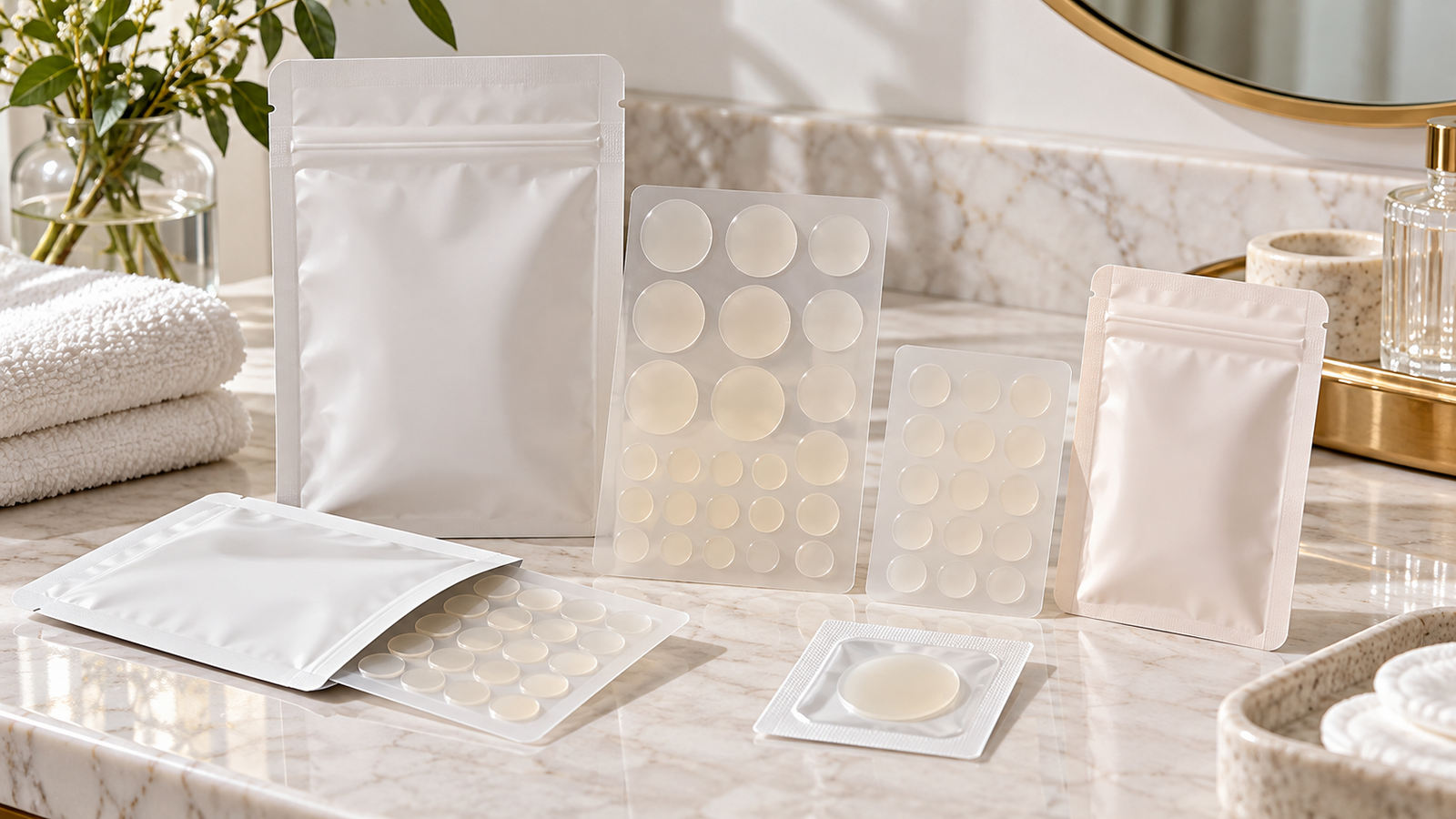
How to Choose the Right Patch Size
The patch should cover the entire visible blemish with enough adhesive area around it to maintain a seal.
A patch that is too small may lift easily or fail to cover the whole spot.
A very large patch is not necessarily harmful, but it may waste product and cover more healthy skin than necessary.
Multi-size packs can be useful if your blemishes vary considerably in size.
Does Patch Thickness Matter?
Thinner patches tend to be less noticeable during daytime wear.
Thicker hydrocolloid patches may feel more protective and may have more absorbent material, depending on the design.
Neither format is automatically superior.
Choose based on whether discretion, adhesion or overnight wear is your priority.
Pimple Patch vs Spot Treatment
| Feature | Hydrocolloid Patch | Leave-On Spot Treatment |
|---|---|---|
| Main role | Covering and fluid absorption | Delivery of active ingredients |
| Physical protection | Yes | No |
| Best for | Surface-level blemishes | Depends on the active ingredient |
| Picking prevention | Strong advantage | Limited |
| Use under makeup | Possible with thin patches | Usually easier but depends on texture |
Some routines use both approaches, but do not automatically layer a strong spot treatment underneath an adhesive patch. Occlusion can increase how intensely some ingredients interact with the skin.
Pimple Patches vs Acne Treatments
Pimple patches should be viewed as targeted accessories rather than complete acne treatments.
For recurring acne, ingredients commonly used in broader acne-care routines may include:
- Salicylic acid
- Benzoyl peroxide
- Retinoids
- Azelaic acid
Which treatment is appropriate depends on the type and severity of acne and individual tolerance.
Persistent, painful or scarring acne deserves professional evaluation rather than repeated patch use alone.
Common Pimple Patch Mistakes
Applying the patch over moisturizer
This can reduce adhesion and cause the patch to slide or lift.
Using it on deep under-skin bumps
Standard hydrocolloid patches have little to absorb when the inflammation is deep beneath an intact surface.
Expecting overnight acne treatment
A patch may improve the appearance of one surface-level spot, but it does not fix the underlying reason you are developing acne.
Removing the patch too aggressively
Peel it off gently. Repeatedly pulling adhesive from irritated skin can create additional redness.
Using patches to justify picking
Do not squeeze a blemish simply because you plan to cover it afterward.
When Should You Skip a Pimple Patch?
A patch may not be the right choice if:
- The blemish is deep and painful under intact skin
- The area is severely irritated
- You have reacted to adhesive patches before
- There is a large area of acne rather than one isolated spot
- You have signs of infection
In these situations, covering the problem repeatedly may delay more appropriate treatment.
How to Fit Pimple Patches Into a Skincare Routine
A simple evening routine could look like:
- Cleanse the face
- Dry the target blemish completely
- Apply the pimple patch
- Apply serum or treatment products to uncovered areas if needed
- Apply moisturizer around the patch
In the morning, remove the patch gently, cleanse if needed and continue with your normal daytime skincare and sunscreen.
What Should You Look for When Buying Pimple Patches?
Consider:
- Number of patches per pack
- Available patch sizes
- Patch thickness
- Whether the product is plain hydrocolloid or contains added actives
- Whether the edges are thin enough for daytime wear
- How well the packaging keeps unused patches clean
- Whether you need a small occasional-use pack or a larger quantity
For specific options, see our Top 5 Pimple Patches in India.
Frequently Asked Questions
Do pimple patches work?
They can be useful for surface-level blemishes where fluid can be absorbed and for protecting spots from touching or picking. They are much less useful for deep cystic acne.
What is the white stuff in a pimple patch?
The cloudy appearance is mainly the hydrocolloid material swelling after absorbing moisture and fluid from the covered area.
Can a pimple patch remove a blackhead?
Standard hydrocolloid patches are not designed to remove blackheads.
Should I pop a pimple before applying a patch?
No. Intentionally popping blemishes can damage the skin and increase irritation. Apply patches according to their instructions without deliberately squeezing the spot first.
Can I put salicylic acid under a hydrocolloid patch?
It is generally safer to avoid combining strong leave-on actives under an occlusive patch unless the product directions specifically support it, because occlusion can increase irritation.
Can I shower with a pimple patch on?
Some patches tolerate brief water exposure, but prolonged moisture can loosen the adhesive. Replace the patch if it starts lifting or becomes contaminated.
How many times can one pimple patch be used?
Hydrocolloid patches are single-use products. Once removed, discard the patch rather than attempting to reapply it.
Final Takeaway
Hydrocolloid pimple patches are simple tools for managing individual surface-level blemishes.
Their strongest benefits are fluid absorption, physical protection and helping prevent picking. They are most useful for whiteheads and spots that already have moisture near the surface.
They are much less effective for deep cystic acne, blackheads or widespread breakouts.
Apply them to clean, completely dry skin, choose a patch large enough to cover the blemish and let the adhesive barrier do its job without repeatedly lifting or squeezing the area.
Most importantly, treat pimple patches as one small part of an acne-care routine—not as a replacement for appropriate treatment when acne is persistent, painful or causing scars.
Physical Glow publishes educational beauty, fitness and wellness content. This article is for general information and is not a substitute for diagnosis or treatment from a qualified dermatologist or healthcare professional.