Top 5 Exercise Bikes in India: Best Picks for Home Cardio
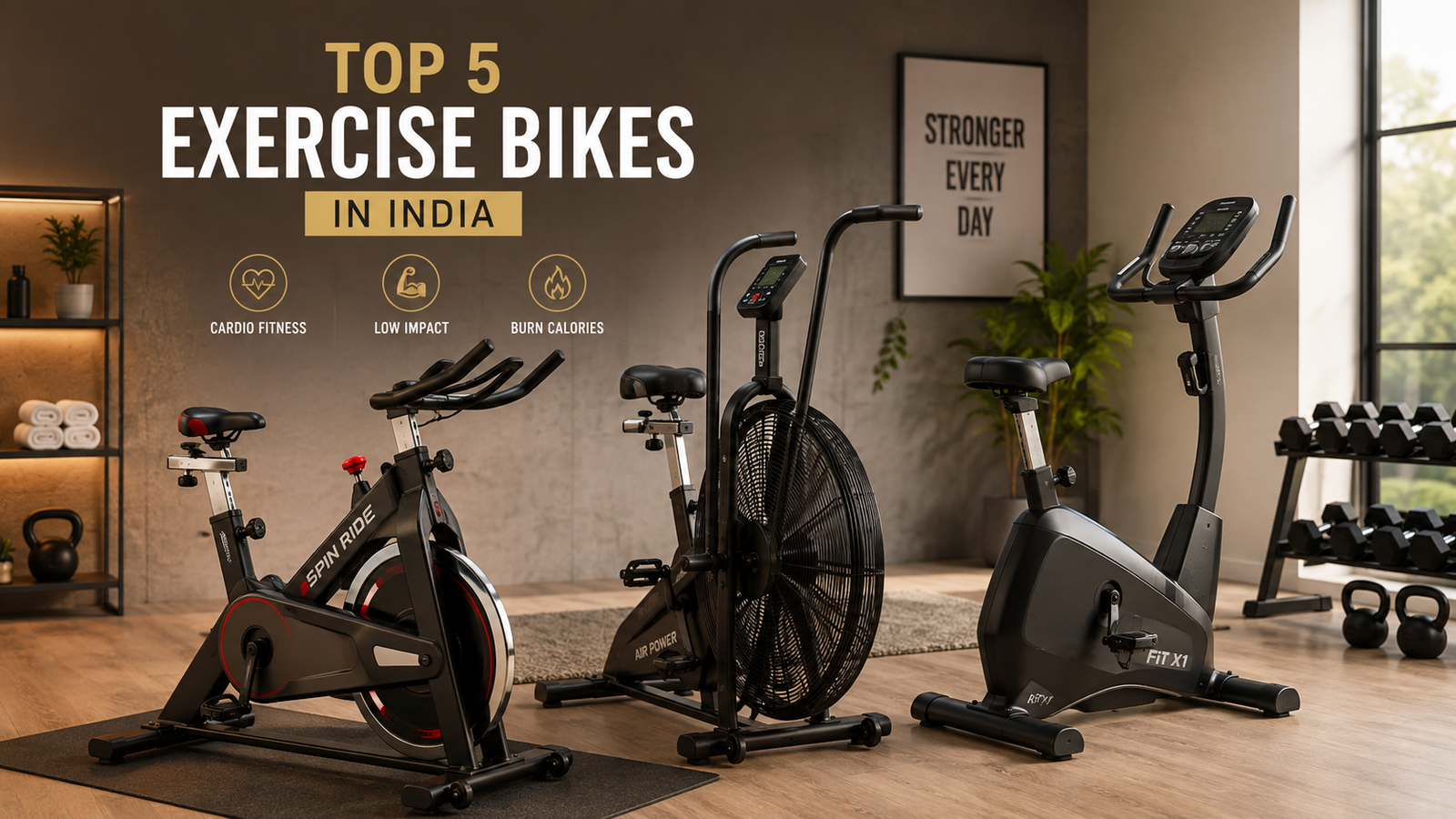
An exercise bike can provide convenient indoor cardio without the space demands of a treadmill or the weather dependence of outdoor cycling. But “exercise bike” covers several very different formats. A spin-style bike, an air bike and a conventional upright bike can all deliver useful workouts, yet the experience and training emphasis are not the same.
For this Physical Glow ranking, we compared five shortlisted exercise bikes across riding style, workout versatility, resistance approach, space requirements and suitability for different home-cardio goals. The shortlist intentionally includes multiple bike formats because the best choice depends on whether you want steady indoor cycling, harder interval work, full-body air-bike sessions or a more traditional upright riding position. We do not treat marketplace popularity or changing sale prices as proof that one model is better than another, and we do not claim hands-on testing where it has not been performed.
Affiliate disclosure: Physical Glow may earn a commission when you purchase through links on this page, at no additional cost to you. Our editorial ranking is independent of affiliate relationships.
Our Top 5 Exercise Bikes at a Glance
Here’s a quick comparison of our five picks, including the type of rider and home-cardio workout each option is best suited for.
[pg_commercial_ranks]
How We Chose These Exercise Bikes
We ranked these bikes around their intended training experience rather than assuming one design is universally better. A spin bike can be excellent for indoor cycling sessions, while an air bike may suit users who want harder intervals and upper-body involvement. An upright bike can appeal to people who prefer a familiar, straightforward cardio setup.
Riding style
Indoor cycling bikes generally encourage a more training-focused position and are often chosen for cadence-based or interval workouts. Upright bikes typically provide a more conventional seated exercise-bike experience. Air bikes add resistance through a fan system and may involve both the upper and lower body depending on the design.
Resistance and progression
A useful exercise bike should let you make workouts more demanding over time. Depending on the model, resistance may be adjusted mechanically, magnetically or through air resistance. The important point is that the resistance range should suit both easier sessions and more challenging efforts.
Adjustability
Seat height and riding position matter for comfort. Some bikes also offer handlebar adjustments. Before buying, check the current model’s adjustment range and make sure it is appropriate for the people who will use the bike.
Stability and supported user weight
A stable frame becomes especially important during harder efforts. Always stay within the manufacturer’s supported user-weight range and place the bike on a level surface with suitable clearance around moving parts.
Space and portability
Exercise bikes usually occupy less floor space than treadmills, but they still need a dedicated footprint while in use. Transport wheels can help with repositioning, but check the actual machine weight if you expect to move it frequently.
Spin Bike vs Air Bike vs Upright Bike
Choose a spin bike for cycling-focused workouts
A spin-style indoor cycle is the strongest fit when you want workouts built around cadence, resistance changes and a cycling-like training experience. It can work well for steady endurance sessions as well as harder intervals.
Choose an air bike for high-effort intervals
Air bikes are popular for workouts where effort rises quickly because fan resistance generally increases as you work harder. Designs with moving handles can also involve the upper body, making the session feel different from conventional cycling.
Choose an upright bike for straightforward home cardio
An upright bike can make sense when you want a familiar exercise-bike position for steady cardio without the more aggressive feel associated with some spin-style setups.
How to Choose the Right Exercise Bike
Start with your workout goal
If you want long indoor cycling sessions, prioritise a comfortable riding position and smooth resistance progression. If your goal is short, hard conditioning sessions, an air bike may be more appealing. If you want simple low-impact cardio, an upright format may be easier to integrate into a regular routine.
Check fit and adjustability
Your knee should not be excessively bent or fully locked at the bottom of the pedal stroke. Use the manufacturer’s setup guidance and adjust the seat before harder workouts. Poor bike fit can make even a good machine uncomfortable.
Consider the resistance mechanism
Different resistance systems feel different. Some are quieter, some offer a more direct mechanical feel and some respond automatically to increased effort. There is no universal best system; choose based on the workout experience you prefer.
Look at display information realistically
Basic consoles may show time, distance, speed or estimated calories. These can be useful for tracking a session, but calorie estimates should be treated as approximate rather than precise measurements of energy expenditure.
Is an Exercise Bike Good for Beginners?
Yes. Cycling is generally easy to scale because resistance and session duration can be adjusted gradually. A beginner can start with comfortable steady riding and increase duration or resistance over time.
As with any exercise program, sudden jumps in intensity or volume can create unnecessary fatigue. Build consistency first, then progress the workload.
Exercise Bike vs Treadmill
Both can provide effective indoor cardio, but the movement demands differ. Cycling is seated and generally lower impact than running, while a treadmill allows walking and running in a more natural weight-bearing pattern. Space, training preference, joint comfort and exercise goals can all influence the better choice.
Mistakes to Avoid When Buying an Exercise Bike
- Ignoring bike fit: seat adjustment is essential for comfort and control.
- Buying the wrong bike type: spin, air and upright bikes provide different training experiences.
- Focusing only on console features: stability, fit and resistance matter more than a long display-feature list.
- Ignoring supported user weight: always stay within the manufacturer’s limit.
- Underestimating floor space: leave room for safe mounting, dismounting and moving parts.
Frequently Asked Questions
Is an exercise bike good for weight loss?
Exercise bikes can contribute to a calorie-burning fitness routine, but body-weight change depends on overall energy balance, nutrition, activity and consistency. The bike is a tool, not a standalone weight-loss solution.
Is cycling low impact?
Stationary cycling is generally lower impact than running because your feet remain supported by the pedals and you are not repeatedly landing against the ground. Proper bike setup still matters for joint comfort.
How long should beginners use an exercise bike?
Start with a duration you can complete comfortably and consistently. Increase time or resistance gradually as fitness improves rather than beginning with long, exhausting sessions.
Which is better: a spin bike or an air bike?
Neither is universally better. A spin bike suits cycling-focused endurance and interval sessions, while an air bike can be attractive for harder conditioning workouts and, depending on the design, upper-body involvement.
Can I use an exercise bike every day?
Frequency depends on intensity, fitness level and recovery. Easy cycling can be used frequently by many people, but harder interval sessions require more recovery. Adjust training to your own capacity.
Do I need a mat under an exercise bike?
A suitable equipment mat can help protect flooring and may reduce movement or vibration, especially on hard surfaces. Make sure the mat is stable and appropriate for the bike’s footprint.
Final Verdict
The Fitkit Spin Bike is our Best Overall pick for this shortlist because a spin-style setup offers broad flexibility for indoor cycling, steady cardio and harder training sessions.
The PowerMax Air Bike is our preferred pick for air-bike conditioning, while the Reach AB 110 is another strong air-bike option for home cardio. The Cockatoo Upright Exercise Bike is the better fit for users who prefer a conventional upright riding style, and the Lifeline Air Bike rounds out the list as a straightforward starter option.
Choose the bike type before comparing smaller features. If you want cycling-style workouts, start with a spin bike. If you want demanding full-body conditioning, consider an air bike. If comfort and straightforward steady cardio are the priority, an upright bike may be the better match.