How to Build a Simple Daily Oral Care Routine
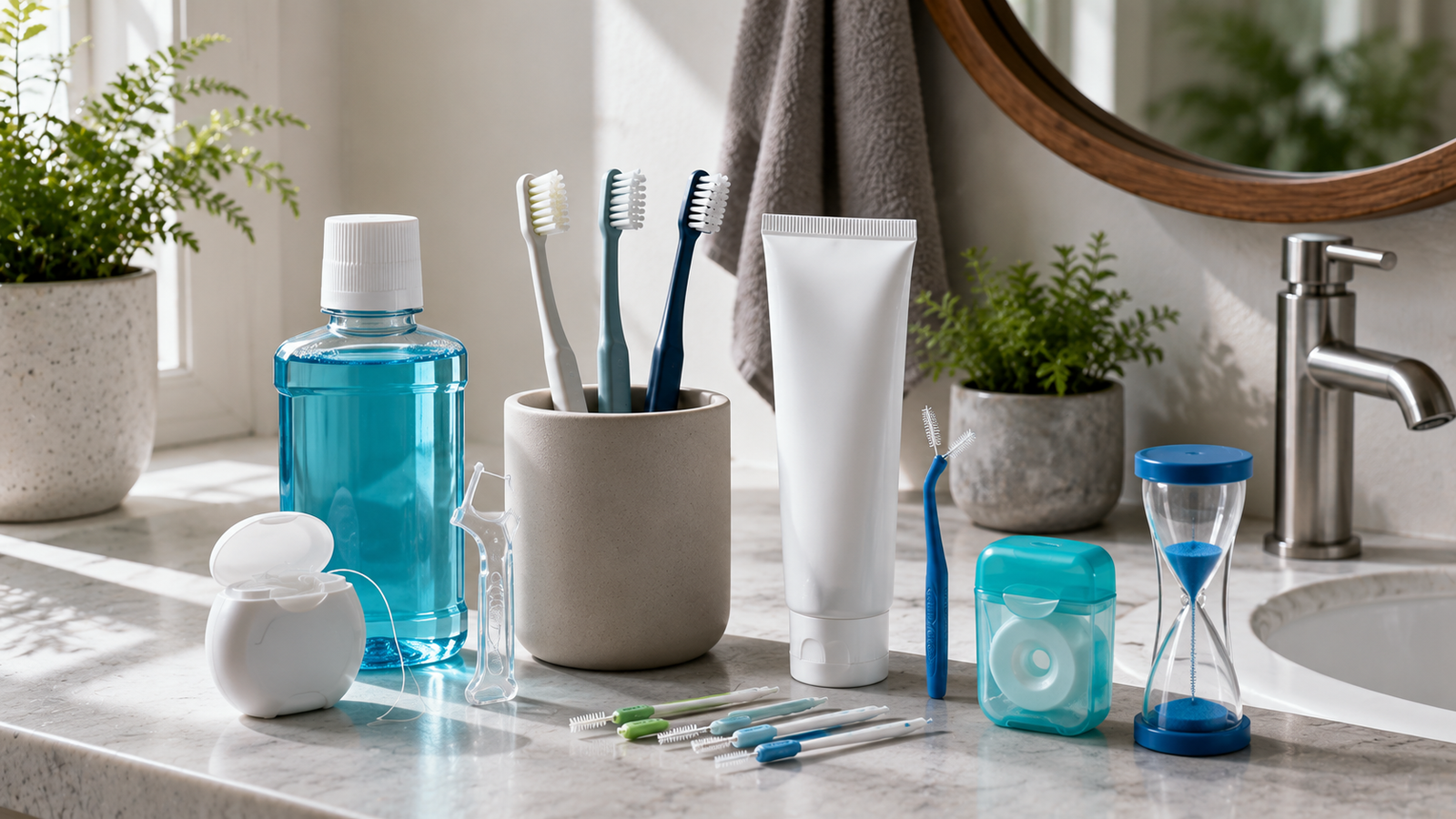
A good oral-care routine does not need a shelf full of specialized products.
For most people, the foundation is straightforward:
- brush effectively twice a day;
- use fluoride toothpaste;
- clean between the teeth regularly;
- keep the tongue and mouth comfortable;
- limit habits that increase tooth-decay risk;
- replace worn tools;
- get appropriate dental care when problems appear.
The useful question is not:
“How many oral-care products should I use?”
It is:
“Which few habits consistently remove plaque, protect my teeth and gums, and fit easily enough into my day that I will actually maintain them?”
An expensive electric toothbrush, premium mouthwash or complicated whitening routine cannot compensate for rushed brushing and consistently ignoring the spaces between the teeth.
This guide explains how to build a simple daily oral-care routine, choose the basic products that matter and avoid unnecessary complexity.
The Core Daily Oral Care Routine
For most adults, a practical routine can be built around four steps:
- Brush twice daily
- Clean between the teeth regularly
- Use fluoride toothpaste
- Maintain regular dental checks according to your individual needs
Everything else is secondary.
Mouthwash, tongue cleaners, water flossers and whitening products may be useful, but they should supplement rather than replace the basics.
Step 1: Brush Your Teeth Twice a Day
Brushing helps remove dental plaque from tooth surfaces.
Plaque is a sticky film containing bacteria that continually forms on teeth.
If plaque is not regularly removed, it can contribute to:
- tooth decay;
- gum inflammation;
- tartar buildup;
- bad breath.
A useful routine is generally:
once in the morning + once before bed
The nighttime brushing session is particularly important because it removes plaque and food residue accumulated during the day.
How Long Should You Brush?
A commonly recommended target is approximately two minutes.
That does not mean staring at a stopwatch is essential.
The goal is to give yourself enough time to clean:
- outer tooth surfaces;
- inner surfaces;
- chewing surfaces;
- the gumline.
If brushing lasts only 20 or 30 seconds, it is difficult to clean the mouth thoroughly.
Electric toothbrushes with built-in timers can help people who habitually rush.
Use a Gentle Brushing Technique
More force does not mean cleaner teeth.
Aggressive brushing can contribute to:
- gum irritation;
- gum recession;
- wear around the tooth surface;
- sensitivity.
Use controlled movements with light pressure.
Focus especially where plaque commonly accumulates:
- along the gumline;
- behind the lower front teeth;
- around back molars;
- around dental work.
If the toothbrush bristles become flattened very quickly, you may be pressing too hard.
What Type of Toothbrush Should You Choose?
The most important toothbrush is the one you can use properly and consistently.
Two broad options are:
- manual toothbrushes;
- powered/electric toothbrushes.
Both can be effective.
Manual Toothbrush
A manual toothbrush can provide excellent cleaning when used properly.
Look for:
- soft bristles;
- comfortable handle;
- head small enough to reach the back teeth.
You do not need a complicated arrangement of rubber strips and dozens of bristle patterns.
Comfort and access matter more.
Electric Toothbrush
Powered brushes can make technique easier for some people.
Useful features may include:
- two-minute timer;
- pressure sensor;
- replaceable brush heads;
- comfortable handle;
- reliable battery.
More expensive models may include:
- apps;
- multiple brushing modes;
- Bluetooth;
- detailed brushing maps.
These can be useful for some users but are not necessary for basic oral hygiene.
The most practically valuable features are usually timer and pressure feedback.
Soft, Medium or Hard Bristles?
Soft bristles are generally a sensible default for most people.
Harder brushing is not necessarily better.
A toothbrush should remove plaque without requiring aggressive pressure.
If your gums are sensitive or you have specific dental work, your dentist may recommend a particular brush type.
How Often Should You Replace a Toothbrush?
Replace a manual toothbrush or electric brush head when:
- bristles become frayed;
- bristles spread outward;
- the brush is visibly worn;
- the manufacturer’s replacement interval is reached.
A common practical interval is around every few months, but visible condition matters.
If your brush looks worn very quickly, reconsider your brushing pressure.
Do You Need to Replace a Toothbrush After Being Sick?
It is not always necessary to discard a toothbrush after every ordinary cold.
However, toothbrushes should not be shared, and they should be stored so they can dry properly between uses.
If your healthcare or dental professional gives specific instructions after an infection, follow those.
Step 2: Choose a Fluoride Toothpaste
For most people, fluoride toothpaste should form the basis of daily tooth cleaning.
Fluoride helps strengthen tooth enamel and reduce the risk of decay.
When comparing toothpastes, do not assume premium price means better cavity protection.
A straightforward fluoride toothpaste may provide the essential benefit you need.
How Much Toothpaste Should Adults Use?
Adults generally do not need to cover the entire toothbrush with a huge strip of toothpaste.
A modest amount is sufficient.
Using excessive toothpaste mainly creates:
- more foam;
- more product consumption.
It does not compensate for poor brushing.
Should You Rinse After Brushing?
After brushing with fluoride toothpaste, heavily rinsing the mouth with large amounts of water immediately afterwards can wash away some of the fluoride remaining around the teeth.
A common practical approach is:
spit out excess toothpaste rather than repeatedly rinsing the mouth
Follow any specific guidance provided by your dentist.
Whitening Toothpaste
Whitening toothpastes usually work primarily by helping remove or reduce surface staining.
They can be useful for stains associated with:
- tea;
- coffee;
- some foods;
- tobacco.
They do not necessarily change the underlying natural colour of the tooth dramatically.
Some whitening formulations can feel more abrasive or increase sensitivity in certain users.
If you experience discomfort, switch to a gentler product and seek dental advice if sensitivity persists.
Toothpaste for Sensitive Teeth
Sensitivity toothpastes can be useful if you experience short, sharp discomfort from:
- cold drinks;
- hot foods;
- sweet foods;
- brushing.
Ingredients vary by formula.
However, persistent sensitivity can also result from:
- cavities;
- cracked teeth;
- gum recession;
- enamel wear;
- other dental problems.
Do not simply keep changing toothpaste if sensitivity is:
- severe;
- localized to one tooth;
- persistent;
- getting worse.
Have it evaluated.
Herbal and “Natural” Toothpaste
Herbal ingredients may provide:
- flavour;
- freshness;
- product preference.
But do not assume that botanical positioning makes a toothpaste more effective at preventing decay.
Check whether the product provides the fluoride protection appropriate for your needs.
The basic preventive function matters more than the number of herbal ingredients.
Charcoal Toothpaste
Charcoal toothpastes are frequently promoted for whitening.
Be cautious with dramatic claims.
Some products may remove surface stains through abrasion, but aggressive or frequent abrasive use can be undesirable.
Charcoal should not be treated as a substitute for:
- fluoride;
- good brushing;
- professional dental care.
Step 3: Clean Between Your Teeth
Brushing alone does not thoroughly clean every surface.
The spaces between teeth can trap:
- plaque;
- food debris.
That is why interdental cleaning is an important part of a complete routine.
Options include:
- dental floss;
- interdental brushes;
- water flossers;
- specialized picks.
The best option depends partly on your teeth and dental work.
Traditional Dental Floss
Floss works well when contacts between teeth are relatively tight.
A basic method is:
- guide floss gently between the teeth;
- curve it around the side of one tooth;
- move gently below the gumline where appropriate;
- clean the adjacent tooth surface;
- move to a clean section.
Avoid forcefully snapping floss into the gums.
Floss Picks
Floss picks can be convenient for:
- travel;
- people who struggle with traditional floss;
- quick access.
They may not provide the same flexibility as a long piece of floss in every situation, but a tool you use consistently may be better than traditional floss left untouched in the drawer.
Interdental Brushes
Small interdental brushes can be particularly useful when spaces are large enough to accommodate them.
They may also help around:
- braces;
- bridges;
- certain dental restorations.
Correct sizing matters.
A brush should fit with gentle resistance rather than requiring force.
A dental professional can help determine an appropriate size.
Water Flossers
Water flossers use a pressurized stream of water.
They can be useful for people with:
- braces;
- bridges;
- implants;
- dexterity limitations;
- difficulty using traditional floss.
They may improve compliance simply because some people find them easier or more pleasant.
They still require:
- tank cleaning;
- nozzle maintenance;
- counter space.
A water flosser is not automatically necessary for everyone.
Which Interdental Method Is Best?
The best method is the one that effectively cleans the spaces between your teeth and that you will actually use.
A simple guide:
| Situation | Option to consider |
|---|---|
| Tight contacts | Dental floss |
| Larger gaps | Interdental brushes |
| Braces | Interdental brushes or appropriate water flosser |
| Bridges/implants | Specialized tools recommended by dental professional |
| Difficulty with string floss | Floss picks or water flosser |
You may use more than one type if different areas of the mouth require different tools.
When Should You Floss?
Whether interdental cleaning happens before or after brushing matters less than whether you do it consistently and effectively.
Many people prefer:
interdental cleaning → brushing
because loosened debris can then be cleared during brushing.
Choose a sequence you can maintain.
What If Your Gums Bleed When You Floss?
Occasional bleeding can occur when inflamed gums are first cleaned more thoroughly.
But persistent bleeding should not simply be ignored.
Possible reasons include:
- gum inflammation;
- incorrect technique;
- plaque buildup;
- periodontal disease.
If bleeding continues, arrange a dental assessment.
Stopping all interdental cleaning indefinitely can allow the underlying plaque problem to continue.
Step 4: Consider Tongue Cleaning
The tongue can collect:
- bacteria;
- food residue;
- dead cells.
Some people find tongue cleaning helpful for:
- mouth freshness;
- reducing tongue coating.
You can use:
- a toothbrush;
- dedicated tongue scraper.
Use gentle pressure.
Aggressive scraping can irritate the tongue.
Tongue cleaning is optional rather than a replacement for brushing and interdental care.
Do You Need Mouthwash?
Mouthwash is optional for many people.
It can be useful when there is a specific reason.
Depending on the formula, it may provide:
- fluoride;
- temporary breath freshening;
- antibacterial action;
- support for particular dental conditions.
But mouthwash should not be used as a shortcut around brushing.
A thirty-second rinse cannot mechanically clean plaque from teeth the way brushing and interdental cleaning can.
Fluoride Mouthwash
A fluoride mouth rinse may provide additional protection for some people.
It may be particularly useful when recommended because of elevated cavity risk.
If using one, follow directions regarding:
- timing;
- frequency;
- eating or drinking afterwards.
Some dental guidance recommends using fluoride mouthwash at a different time from brushing so it does not simply rinse away concentrated toothpaste fluoride.
Antiseptic Mouthwash
Antiseptic mouthwashes can reduce certain oral bacteria.
Some are intended for:
- temporary gum-care routines;
- specific dental situations.
Stronger medicated rinses should be used according to professional or label instructions.
Long-term use of certain products may cause:
- staining;
- altered taste;
- irritation.
Do not assume stronger mouthwash is better for everyday use.
Alcohol-Free Mouthwash
People who find alcohol-containing rinses uncomfortable may prefer alcohol-free formulas.
A burning sensation is not proof that a mouthwash is working better.
Comfort can improve consistency.
Mouthwash for Bad Breath
Mouthwash can temporarily improve breath, but persistent bad breath may have an underlying cause.
Possible contributors include:
- plaque;
- tongue coating;
- gum disease;
- tooth decay;
- dry mouth;
- smoking;
- certain foods;
- medical conditions.
If bad breath persists despite good hygiene, a dental evaluation is more useful than repeatedly buying stronger mouthwash.
Build the Morning Routine
A simple morning routine might be:
- Clean between teeth if that is your chosen time.
- Brush thoroughly with fluoride toothpaste.
- Clean tongue if desired.
- Spit out excess toothpaste.
- Use additional products only if you have a clear reason.
That can take only a few minutes.
Build the Night Routine
The nighttime routine deserves particular attention because the mouth will go several hours without normal eating, drinking and brushing.
A practical routine:
- Clean between teeth.
- Brush for approximately two minutes.
- Clean tongue if useful.
- Spit out toothpaste rather than aggressively rinsing.
- Avoid eating sugary snacks immediately afterwards.
The important part is making bedtime brushing non-negotiable.
What About Brushing After Meals?
You do not necessarily need to brush after every meal.
Twice-daily effective brushing is a strong foundation.
If you have consumed acidic foods or drinks, brushing immediately afterwards may not be ideal because the enamel surface can be temporarily softened.
Waiting for saliva to help normalize the mouth before brushing can be sensible.
You can rinse with plain water in the meantime.
Sugar Frequency Matters
Tooth-decay risk is influenced not only by how much sugar you eat, but also by how frequently teeth are exposed to fermentable carbohydrates.
Constant sipping or snacking throughout the day can repeatedly create acidic conditions in the mouth.
Practical habits include:
- keep sugary foods closer to meal times;
- avoid constantly sipping sweet beverages;
- choose water between meals more often.
You do not need to eliminate every sweet food to maintain oral health.
Frequency and overall habits matter.
Sugary Drinks and Oral Health
Common sugary drinks include:
- soft drinks;
- sweetened tea or coffee;
- energy drinks;
- sweetened juices;
- flavored beverages.
Frequent sipping keeps teeth repeatedly exposed.
Water is generally the simplest everyday drink from a dental perspective.
Acidic Drinks Matter Too
Even sugar-free acidic beverages can contribute to enamel erosion.
Examples can include:
- carbonated acidic drinks;
- citrus-based beverages;
- certain sports drinks.
Strategies include:
- limiting frequent exposure;
- drinking them with meals;
- avoiding swishing them around the mouth;
- drinking plain water afterwards.
Is Sparkling Water Bad for Teeth?
Plain sparkling water is usually much less concerning than sugary soft drinks, but carbonation makes it somewhat acidic.
Flavored varieties may contain additional acids.
If you drink large amounts throughout the day, check the ingredients and avoid treating flavored acidic drinks exactly like plain still water.
Coffee and Tea
Coffee and tea can contribute to external staining.
The dental implications depend on:
- whether sugar is added;
- how frequently you sip;
- accompanying habits.
If staining bothers you, professional cleaning or appropriate whitening options may be more effective than excessively abrasive toothpaste.
Dry Mouth
Saliva plays an important role in oral health.
Dry mouth can increase discomfort and may increase cavity risk.
Potential contributors include:
- dehydration;
- medications;
- mouth breathing;
- certain health conditions.
Practical measures may include:
- regular water intake;
- sugar-free gum where appropriate;
- addressing medication or health causes with professional guidance.
Persistent dry mouth deserves attention rather than simply masking it with mint products.
Sugar-Free Gum
Chewing sugar-free gum after meals can stimulate saliva.
This can be useful when brushing is not practical.
Products containing xylitol are commonly used.
Gum does not replace brushing or interdental cleaning.
It is an additional convenience tool.
Oral Care With Braces
Braces create additional areas where:
- plaque;
- food;
can accumulate.
Useful tools may include:
- orthodontic toothbrushes;
- interdental brushes;
- floss threaders;
- water flossers.
Follow the orthodontist’s cleaning instructions carefully.
Poor hygiene around braces can contribute to gum problems and visible enamel changes.
Oral Care With Dental Implants
Implants also require excellent plaque control.
Depending on the restoration, a dentist may recommend:
- specialized floss;
- interdental brushes;
- water flossing;
- specific cleaning techniques.
An implant cannot develop a normal cavity, but tissues around implants can still become inflamed.
Oral Care With Crowns and Bridges
Crowns still require cleaning around the margins.
Bridges may need specialized cleaning underneath the artificial tooth.
Tools can include:
- floss threaders;
- super floss;
- interdental brushes.
Ask your dentist to demonstrate the technique if unsure.
Dentures
Dentures need their own cleaning routine.
General principles may include:
- remove and clean regularly;
- follow denture-cleaner instructions;
- clean gums and remaining teeth;
- avoid using products that could damage the denture material.
Do not assume normal toothpaste is appropriate for every denture because some can be abrasive.
Oral Care for Sensitive Gums
If gums are uncomfortable, do not respond by brushing harder.
Instead consider:
- soft toothbrush;
- gentle technique;
- appropriate interdental cleaning.
Ongoing:
- swelling;
- bleeding;
- recession;
should be assessed professionally.
Gum Disease Can Be Quiet
Early gum disease may cause:
- bleeding during brushing;
- redness;
- swelling;
- bad breath.
More advanced disease may involve:
- gum recession;
- loose teeth;
- changes in bite.
Because pain is not always prominent, regular dental assessment is important.
Tooth Sensitivity
Brief sensitivity may occur when exposed dentine responds to:
- cold;
- heat;
- sweets.
Sensitivity toothpaste can help in some cases.
But seek dental advice if the pain:
- persists after the stimulus is gone;
- wakes you at night;
- occurs spontaneously;
- affects one particular tooth strongly.
Those patterns may indicate a problem that toothpaste cannot fix.
Tooth Whitening: Keep Expectations Realistic
Whitening products can help improve tooth colour in suitable cases.
Options include:
- whitening toothpaste;
- strips;
- gels;
- dentist-supervised whitening.
Whitening does not affect all materials equally.
For example:
- fillings;
- crowns;
- veneers;
do not whiten like natural tooth structure.
If you have extensive dental work, professional advice can help avoid uneven results.
Avoid DIY Whitening Methods
Be cautious with home methods involving:
- lemon;
- vinegar;
- abrasive powders;
- excessive baking soda;
- harsh scrubbing.
Acidic or abrasive methods can damage tooth surfaces and gums.
A whiter appearance is not worth damaging enamel.
Bad Breath: Start With the Basics
For everyday breath freshness:
- brush effectively;
- clean between teeth;
- clean the tongue;
- drink adequate water;
- avoid tobacco.
If bad breath remains persistent, consider a dental check.
Masking it with:
- strong mints;
- sprays;
- mouthwash;
does not address underlying gum or dental disease.
Smoking and Tobacco
Smoking and other tobacco use can affect:
- gum health;
- tooth staining;
- breath;
- healing after dental procedures;
- oral-cancer risk.
Stopping tobacco use provides substantial oral and general health benefits.
Dental professionals can also support tobacco-cessation efforts.
Vaping and Oral Health
Vaping should not be considered harmless to oral tissues simply because there is no tobacco smoke.
Potential effects may involve:
- dry mouth;
- gum irritation;
- exposure to aerosols and chemicals.
The safest approach for oral and overall health is avoiding unnecessary inhaled nicotine products.
Clean and Store Your Toothbrush Properly
After brushing:
- rinse the brush;
- remove excess water;
- store it upright if possible;
- allow it to air dry.
Avoid keeping a wet brush sealed continuously in an airtight cover.
A travel cap is useful for transport, but the brush should be allowed to dry when possible.
Do Not Share Toothbrushes
Toothbrushes are personal hygiene items.
Do not share them between:
- partners;
- family members;
- children.
This includes electric brush heads.
Keep Toothbrushes Separate
If several toothbrushes are stored together, avoid having the bristles constantly touch.
A simple holder with adequate spacing is sufficient.
You do not need elaborate toothbrush sanitizing devices for routine home use.
UV Toothbrush Sanitizers: Are They Necessary?
Most people do not need a UV toothbrush sanitizer.
Normal rinsing, drying and regular replacement are generally enough for ordinary use.
If a device adds expense and maintenance without changing your routine meaningfully, it may offer limited practical value.
Common Oral-Care Buying Mistakes
Buying the Most Expensive Toothbrush
Better brushing technique matters more than luxury features.
Choosing Hard Bristles for a “Deeper Clean”
Aggressive brushing may damage gums and tooth surfaces.
Ignoring Interdental Cleaning
A toothbrush cannot effectively reach every surface between teeth.
Using Mouthwash Instead of Brushing
Mouthwash is supplementary.
Constantly Changing Toothpaste
Most people need consistency more than novelty.
Buying Whitening Products When the Problem Is Tartar
Hardened tartar cannot simply be brushed or whitened away.
Professional cleaning may be necessary.
Brushing Harder When Gums Bleed
Persistent gum bleeding deserves assessment.
Using DIY Acids for Whitening
Acids can damage enamel.
How Much Should You Spend on Oral Care?
A good routine does not need to be expensive.
The basics are:
- reliable toothbrush;
- fluoride toothpaste;
- interdental cleaning tool.
Spend more when a feature solves a real problem.
For example:
An electric toothbrush may be worthwhile if the timer and pressure sensor improve your brushing.
A water flosser may be worthwhile if you have braces and struggle with string floss.
But buying premium products without changing your technique offers limited value.
Quick Oral Care Decision Guide
| Need | Practical option |
|---|---|
| Basic daily cleaning | Soft toothbrush + fluoride toothpaste |
| Brushing too quickly | Electric brush with timer |
| Brushing too hard | Pressure-sensor electric brush or gentler technique |
| Tight interdental spaces | Floss |
| Wider spaces | Interdental brushes |
| Braces | Interdental brushes/water flosser |
| Sensitive teeth | Sensitivity toothpaste + dental assessment if persistent |
| Dry mouth | Hydration + investigate cause |
| Breath concerns | Plaque/tongue cleaning + evaluation if persistent |
| Whitening | Evidence-based whitening rather than DIY acids |
A Simple Daily Oral Care Schedule
Morning
- Brush thoroughly with fluoride toothpaste.
- Clean tongue if desired.
- Use other prescribed or needed products.
During the Day
- Drink water regularly.
- Limit frequent sugary drinks/snacks.
- Sugar-free gum can be useful after meals when appropriate.
Evening
- Clean between teeth.
- Brush thoroughly with fluoride toothpaste.
- Spit out excess toothpaste.
- Avoid unnecessary snacking afterwards.
This covers most of the important daily work.
Before You Buy Another Oral-Care Product
Ask yourself:
- What problem am I trying to solve?
- Do I already have a product that does this?
- Does it contain fluoride if cavity prevention is the goal?
- Will this improve my technique or simply add another step?
- Can I use it consistently?
- Is my problem cosmetic or could it require dental treatment?
- Am I choosing a strong product because I assume stronger means better?
- Is the product appropriate for my dental work?
- Could a simpler product do the same job?
Frequently Asked Questions
How many times should I brush my teeth each day?
For most people, brushing thoroughly twice daily is a strong basic routine.
How long should I brush?
Approximately two minutes is a useful target for cleaning all tooth surfaces properly.
Is an electric toothbrush better than a manual toothbrush?
Both can work well. Electric toothbrushes may make timing and pressure control easier for some people.
Should I use a soft or hard toothbrush?
Soft bristles are generally a sensible choice for routine use.
Should I floss every day?
Regular interdental cleaning is important because brushing cannot adequately clean all spaces between teeth. The ideal frequency and method can be personalized with your dentist.
Is a water flosser better than floss?
Not universally. It can be especially convenient for braces, dental work or people who struggle with floss.
Do I need mouthwash?
Not necessarily. It can be useful for specific needs but does not replace brushing and interdental cleaning.
Should I rinse my mouth after brushing?
Avoiding vigorous rinsing can help leave more fluoride around the teeth after brushing. Spitting out excess toothpaste may be sufficient unless your dentist advises otherwise.
Why do my gums bleed when I brush or floss?
Gum inflammation is a common cause, although technique and other dental conditions can contribute. Persistent bleeding should be assessed by a dental professional.
Why are my teeth sensitive?
Possible causes include exposed dentine, gum recession, decay, cracks or enamel wear. Sensitivity toothpaste may help some cases, but persistent or severe sensitivity deserves evaluation.
Does whitening toothpaste actually whiten teeth?
It can help reduce some surface stains but usually cannot dramatically change the underlying colour of teeth.
Is charcoal toothpaste safe?
Benefits are often overstated, and some formulations may be abrasive. A conventional fluoride toothpaste is generally a more important foundation.
Should I brush immediately after drinking coffee or juice?
After acidic foods or drinks, it can be sensible to allow some time before brushing rather than brushing immediately.
Can mouthwash cure bad breath?
It may temporarily mask or reduce odour, but persistent bad breath may require improved plaque control or dental assessment.
How often should I see a dentist?
There is no single interval appropriate for everyone. The recommended schedule depends on your oral health and risk factors, so follow the interval advised by your dental professional.
The Physical Glow Takeaway
A strong oral-care routine is built around a few consistently performed basics rather than a large collection of products.
Brush thoroughly twice a day with fluoride toothpaste, use gentle pressure and clean the spaces between your teeth regularly with floss, interdental brushes or another suitable method. Add mouthwash, tongue cleaning, water flossers or specialized toothpastes only when they solve a clear need.
Choose products that improve your actual routine rather than those with the longest feature lists. A simple soft toothbrush used properly can outperform a premium brush used carelessly, and a basic fluoride toothpaste can provide more practical value than trendy formulas built mainly around cosmetic claims.
Pay attention to persistent gum bleeding, tooth pain, sensitivity, bad breath or changes in your mouth rather than trying to cover them indefinitely with stronger consumer products.
The best daily oral-care routine is the one that keeps effective plaque removal and fluoride protection simple enough to perform every morning and every night.