Heat Protectant, Hair Wax and Hairspray: What Does Each One Do?
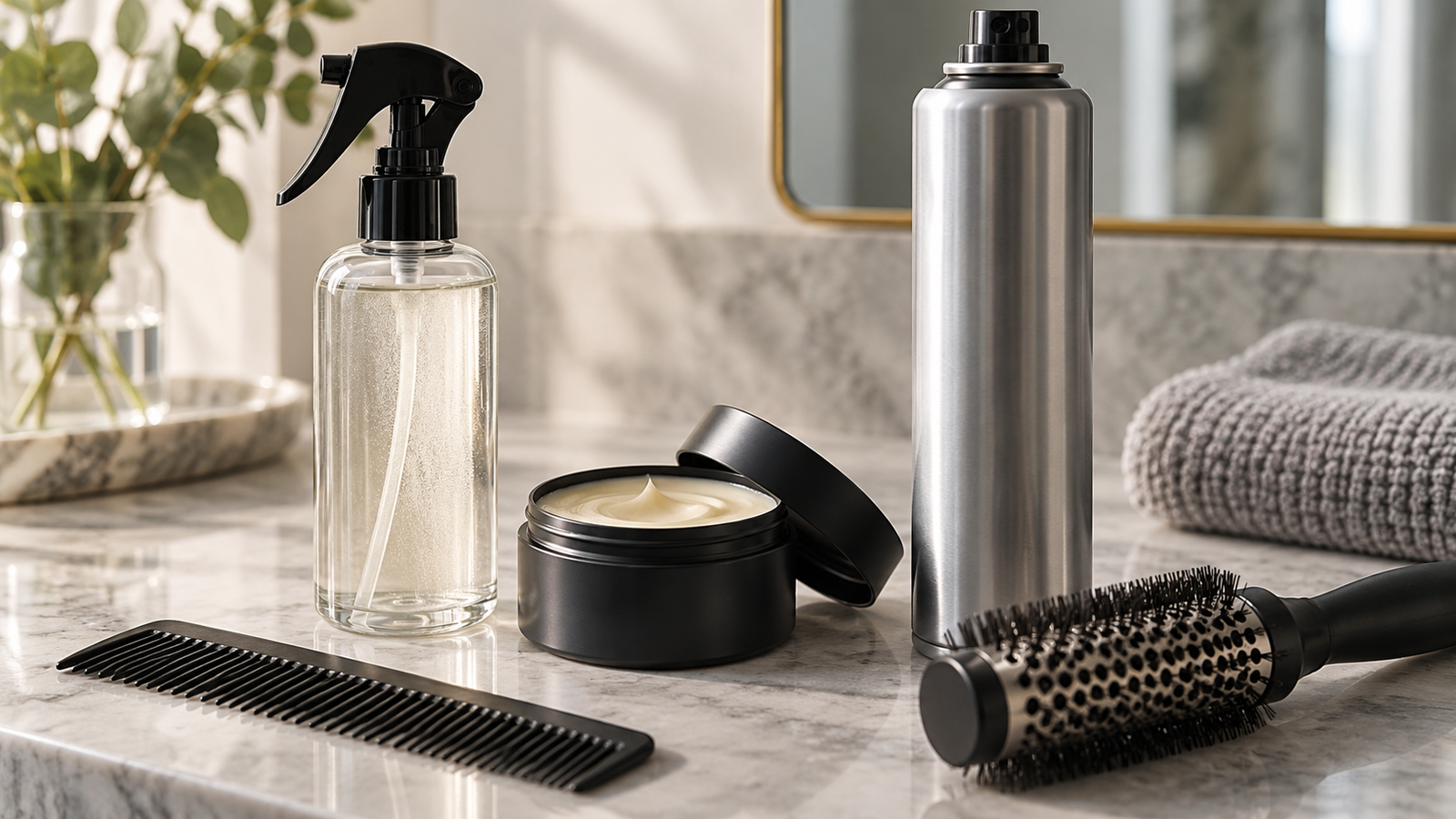
Heat protectant, hair wax and hairspray are all styling products, but they serve very different purposes.
A heat protectant is used before heat styling to help reduce thermal stress. Hair wax is used to shape, define and control the hairstyle. Hairspray is usually applied near the end of styling to help hold the finished look in place.
Using the wrong product for the wrong job can lead to poor results, unnecessary buildup or avoidable heat damage.
The simplest way to think about them is:
- Heat protectant = protection before heat styling
- Hair wax = texture, shape and control
- Hairspray = hold and finishing
This guide explains what each product does, when to use it and how to combine them correctly.
Why These Products Are Not Interchangeable
Styling products are often grouped together, but they solve different problems.
For example:
- Hair wax will not replace a heat protectant.
- Hairspray is not designed to protect hair from a straightener.
- Heat protectant will not provide the same hold as wax or hairspray.
Each product belongs to a different stage of the styling process.
A simple routine might look like:
- prepare the hair
- apply heat protectant
- use a dryer, straightener or curling tool if needed
- shape the style with wax if appropriate
- finish with hairspray
You may not need all three every time.
What Is Heat Protectant?
Heat protectant is a styling product designed to be applied before using hot tools.
It is commonly available as:
- spray
- mist
- cream
- serum
- leave-in treatment
Its role is to create a more controlled styling environment and help reduce damage associated with high temperatures.
Heat protectant does not make heat harmless.
It should be combined with sensible temperatures and proper tool technique.
When Should You Use Heat Protectant?
Use it before tools such as:
- hair dryer
- straightener
- curling iron
- hot brush
- heated styling tool
Follow the individual product instructions because some formulas are intended for:
- damp hair
- dry hair
- both damp and dry hair
Do not assume every heat protectant is used in exactly the same way.
What Does Heat Do to Hair?
Hair is made largely of keratin proteins and contains moisture within its structure.
Excessive heat can contribute to:
- dryness
- roughness
- brittleness
- split ends
- breakage
- reduced shine
- loss of smoothness
Repeated exposure to very high temperatures can increase these problems over time.
This is why protecting the hair and controlling temperature are both important.
How Heat Protectant Helps
A heat protectant may help by:
- coating the hair surface
- reducing direct thermal stress
- improving slip
- helping distribute heat more evenly
- reducing moisture loss
- making styling easier
Exact performance depends on the formulation.
The presence of the words “heat protection” does not mean unlimited heat can be used safely.
How to Apply Heat Protectant
A practical method is:
- Start with clean or properly prepared hair.
- Divide the hair into sections if necessary.
- Apply the product evenly.
- Focus on mid-lengths and ends.
- Avoid oversaturating the roots unless directed.
- Comb through if the product instructions allow.
- Allow the product to distribute or dry as required.
- Begin heat styling.
The goal is even coverage.
Spraying one small area heavily while missing the rest reduces the usefulness of the product.
How Much Heat Protectant Should You Use?
The amount depends on:
- hair length
- density
- product type
- spray pattern
- manufacturer directions
Too little may give uneven coverage.
Too much can make hair:
- sticky
- heavy
- greasy
- difficult to style
Start with the amount recommended by the manufacturer.
Heat Protectant for Fine Hair
Fine hair can become weighed down easily.
Look for:
- lightweight mist
- fine spray
- non-greasy formula
- minimal residue
Avoid applying a rich cream heavily near the roots unless the formula is specifically designed for fine hair.
Heat Protectant for Thick or Coarse Hair
Thicker or coarser hair may tolerate:
- creamier leave-ins
- richer sprays
- smoothing serums
The best texture depends on how heavy a product your hair can handle.
Heat Protectant for Curly Hair
Curly hair may already be prone to dryness.
If you use heat:
- apply protection evenly
- reduce unnecessary heat passes
- use suitable tool temperatures
- avoid repeatedly straightening the same section
Heat protectant can be useful, but reducing repeated heat exposure is equally important.
Does Heat Protectant Prevent All Damage?
No.
This is one of the biggest misconceptions.
Heat protectant can help reduce thermal stress, but it does not make extremely high temperatures risk-free.
Good heat-styling practice includes:
- using only as much heat as necessary
- reducing repeated passes
- avoiding prolonged contact
- maintaining healthy tool surfaces
- using heat protection
- giving hair breaks from intensive heat styling
What Is Hair Wax?
Hair wax is a styling product used to shape and control the hair.
It typically provides:
- texture
- definition
- separation
- hold
- control
Hair wax is usually thicker than creams or sprays.
It is commonly used for:
- short hairstyles
- textured styles
- spikes
- side-part styles
- controlled messy looks
- defining individual sections
What Does Hair Wax Do?
Hair wax helps manipulate the shape of the hair.
Depending on the formula, it can create:
- matte texture
- low shine
- stronger definition
- flexible hold
- structured styling
Unlike hairspray, wax is usually worked directly into the hair with the hands.
Matte Wax vs Shiny Wax
Matte Wax
Matte wax is designed to reduce visible shine.
It can create:
- textured finish
- more natural appearance
- dry-looking control
This works well for modern textured hairstyles.
Shiny Wax
Shinier formulas create:
- polished finish
- visible gloss
- slicker appearance
Choose based on the hairstyle you want.
How to Apply Hair Wax
A useful method:
- Start with a very small amount.
- Rub it between the palms or fingertips.
- Warm and distribute the product.
- Apply gradually through the hair.
- Shape the style.
- Add more only if required.
Using too much immediately can make the hair difficult to correct.
Should Hair Wax Be Used on Wet or Dry Hair?
This depends on the product.
Wax is commonly applied to:
- dry hair
- slightly damp hair
Dry application usually creates stronger texture and definition.
Damp application may produce a softer finish.
Always follow the product directions.
How Much Hair Wax Should You Use?
Start with less than you think.
Too much wax can make hair look:
- greasy
- flat
- sticky
- overloaded
You can always add more.
Removing excess wax usually requires washing the hair.
Hair Wax for Short Hair
Wax is particularly useful for short hairstyles because it can create:
- separation
- spikes
- texture
- controlled shape
Use fingertips for precise styling.
Hair Wax for Medium-Length Hair
For medium hair, wax can help:
- define ends
- control flyaways
- add texture
- shape selected sections
Use sparingly so the hair remains movable.
Hair Wax for Long Hair
Wax is generally less useful as an all-over product on long hair.
It may still help with:
- flyaways
- ends
- small textured sections
- polished styles
Do not apply a heavy amount across long hair unless the product is designed for that purpose.
What Is Hairspray?
Hairspray is a finishing product designed to help keep the hairstyle in place.
It is usually applied after most of the styling is complete.
Hairspray can provide:
- light hold
- medium hold
- strong hold
- humidity resistance
- flyaway control
Different formulas vary significantly in stiffness.
Light-Hold Hairspray
Light-hold spray is useful for:
- natural movement
- everyday styling
- soft waves
- flexible hairstyles
The hair remains more touchable.
Medium-Hold Hairspray
Medium hold provides more structure while usually maintaining some flexibility.
It works well for:
- blowouts
- curls
- event styling
- polished everyday looks
Strong-Hold Hairspray
Strong-hold hairspray is designed for styles that need greater structure.
It may be useful for:
- formal hairstyles
- updos
- high-humidity conditions
- long events
Too much strong-hold spray can make hair feel stiff.
How to Apply Hairspray Properly
A common technique:
- Finish styling the hair.
- Hold the can at a reasonable distance.
- Spray lightly across the hairstyle.
- Add more only where extra hold is necessary.
Do not concentrate a large amount onto one small area unless the style requires it.
A fine mist generally creates more even hold.
How Far Away Should You Hold Hairspray?
Follow the product directions.
In general, applying from some distance helps distribute the mist more evenly.
Holding it extremely close can create:
- wet spots
- stiffness
- concentrated residue
Can You Brush Hair After Hairspray?
Flexible hairsprays may allow brushing.
Strong-hold formulas may become flaky or lose structure if brushed aggressively.
If you want brushable hold, look for a formula specifically designed for flexibility.
Heat Protectant vs Hair Wax
These products serve completely different purposes.
| Heat Protectant | Hair Wax |
|---|---|
| Used before heat | Used for styling |
| Reduces thermal stress | Adds shape and texture |
| Usually spray, cream or serum | Usually thick paste or wax |
| Does not provide strong hold | Can provide moderate or strong control |
| Applied broadly | Often applied selectively |
Never use wax as a substitute for heat protectant.
Heat Protectant vs Hairspray
Heat protectant prepares hair for heat.
Hairspray finishes the hairstyle.
Some hairsprays may mention heat styling compatibility, but do not assume a standard hairspray provides heat protection.
Use a dedicated heat-protection product if heat protection is required.
Hair Wax vs Hairspray
Hair wax shapes the hairstyle.
Hairspray helps keep the final shape in place.
Wax is useful for:
- texture
- piece definition
- flexible control
Hairspray is useful for:
- finishing
- holding
- humidity resistance
- maintaining shape
They can be used together.
Can You Use Heat Protectant, Wax and Hairspray Together?
Yes, if the hairstyle requires all three.
A logical sequence is:
Step 1: Heat Protectant
Apply before heat styling.
Step 2: Heat Styling
Dry, straighten or curl the hair as needed.
Step 3: Hair Wax
Use a small amount to create texture or control.
Step 4: Hairspray
Finish with a light mist to hold the style.
Not every hairstyle requires every step.
Correct Styling Order
A common routine is:
- shampoo and condition
- towel-dry if styling damp hair
- apply leave-in products
- apply heat protectant
- dry or heat style
- add wax or styling product
- finish with hairspray
The exact routine depends on your hair and hairstyle.
Can You Apply Hair Wax Before Straightening?
Generally, avoid applying heavy wax before using a straightener unless the product explicitly states it is designed for heat-tool use.
Wax can:
- coat the hair
- create residue
- interfere with tool movement
Use heat protectant first.
Style the hair.
Then use wax for finishing.
Can You Apply Hairspray Before Curling?
Some professional styling techniques use specific products before heat styling, but standard hairspray should not automatically be sprayed heavily onto the hair before a curling iron.
If the product is designed for pre-heat styling, follow its directions.
Otherwise, use dedicated heat protectant first and hairspray afterward.
How to Avoid Product Buildup
Wax and hairspray can accumulate over time.
Signs of buildup may include:
- dull hair
- sticky feel
- reduced movement
- difficulty styling
- scalp residue
To reduce buildup:
- use small amounts
- wash hair thoroughly
- avoid continuously adding product without cleansing
- use clarifying shampoo occasionally if appropriate for your hair
Do not over-clarify, as frequent strong cleansing can dry the hair or scalp.
Hair Wax and the Scalp
Wax is mainly a styling product for the hair.
Avoid applying large amounts directly onto the scalp.
Heavy scalp application may contribute to:
- buildup
- greasy appearance
- difficult cleansing
Focus the product where it is needed for styling.
Hairspray and the Scalp
Hairspray should generally be misted over the hairstyle.
Avoid repeatedly saturating the scalp.
Good ventilation is also sensible when using aerosol styling products.
Heat Styling and Hair Damage
Heat-related damage is influenced by:
- temperature
- frequency
- number of passes
- hair condition
- moisture level
- tool quality
Using heat protectant is one part of damage reduction.
Other important habits include:
- reducing temperature
- avoiding repeated passes
- keeping tools clean
- not straightening soaking-wet hair unless the device is specifically designed for it
- allowing hair recovery time
Choosing the Right Heat Protectant
Consider:
- hair type
- styling tool
- damp vs dry application
- product weight
- maximum temperature claim when clearly provided
Fine hair often prefers a lighter mist.
Thick or coarse hair may prefer richer formulations.
Choosing the Right Hair Wax
Consider:
- hold level
- finish
- hair length
- desired texture
- washability
Choose a matte formula for natural texture.
Choose a glossier product for polished styles.
Choosing the Right Hairspray
Consider:
- hold strength
- flexibility
- humidity resistance
- finish
- hairstyle
For everyday movement, a light or medium hold is often enough.
For formal styling, stronger hold may be useful.
Common Hair-Styling Mistakes
Using Wax as Heat Protection
Wax does not replace heat protectant.
Using Too Much Wax
Start with a small amount.
Holding Hairspray Too Close
This can concentrate the product.
Using Maximum Heat Every Time
Higher temperature is not automatically better.
Repeated Heat Passes
Multiple passes can increase thermal stress.
Applying Product Only to One Area
Heat protectant should be distributed evenly.
Layering Too Much Product
More product can reduce movement and increase buildup.
Which Product Do You Need?
| Your goal | Product |
|---|---|
| Protect before straightening | Heat protectant |
| Protect before curling | Heat protectant |
| Reduce heat-styling stress | Heat protectant |
| Add texture | Hair wax |
| Create spikes | Hair wax |
| Shape short hair | Hair wax |
| Control selected sections | Hair wax |
| Hold finished curls | Hairspray |
| Maintain an updo | Hairspray |
| Reduce flyaways | Hairspray or small amount of wax |
| Strong event hold | Hairspray |
Do You Need All Three Products?
No.
For example:
Simple Straight Hair
You may only need:
- heat protectant
Textured Short Hairstyle
You may only need:
- hair wax
Heat-Styled Event Hair
You may use:
- heat protectant
- hairspray
Structured Short Style
You may use:
- wax
- hairspray
Choose products based on the hairstyle rather than building the longest possible routine.
Frequently Asked Questions
Does heat protectant stop all heat damage?
No. It can help reduce thermal stress, but sensible temperature and technique remain important.
Can hair wax protect against heat?
No. Standard hair wax is a styling product, not a substitute for dedicated heat protectant.
Should hairspray be used before or after styling?
It is generally a finishing product, although some specialised sprays are designed for other uses. Follow the product instructions.
Can I use wax and hairspray together?
Yes. Wax can shape the style and hairspray can help hold the finished result.
Does hair wax damage hair?
Hair wax used appropriately is primarily a styling product. Problems are more likely to come from excessive buildup, rough styling or inadequate cleansing.
Can I use hairspray every day?
It can be used according to the product directions, but regular cleansing and avoiding excessive buildup are important.
Should heat protectant be applied to wet or dry hair?
That depends on the formula. Some are designed for damp hair, some for dry hair and some for both.
Can too much heat protectant make hair greasy?
Yes. Excess product can make hair feel heavy, sticky or oily depending on the formula.
Final Takeaway
Heat protectant, hair wax and hairspray belong to different stages of the styling process.
Use heat protectant before hot tools to help reduce thermal stress.
Use hair wax when you want texture, shape, definition or controlled hold.
Use hairspray at the finishing stage when you want the completed hairstyle to stay in place.
If you use all three, the typical order is:
heat protectant → heat styling → hair wax → hairspray
Use only as much product as your hairstyle actually needs, keep heat settings sensible and remove styling buildup regularly.
If you are comparing specific styling products, continue to our Top 5 Hair Styling Products in India guide, where we compare heat-protection sprays, strong-hold hairspray and matte wax options for different styling routines.