Complexion Boosters Explained: What They Are and How to Use Them
Complexion boosters have become one of the less clearly defined categories in modern makeup.
Some look almost like foundation. Others resemble liquid highlighters. Some are marketed as primers, while others are intended to be worn alone for a sheer, luminous finish.
That makes choosing one more confusing than it needs to be.
The simplest way to think about a complexion booster is this:
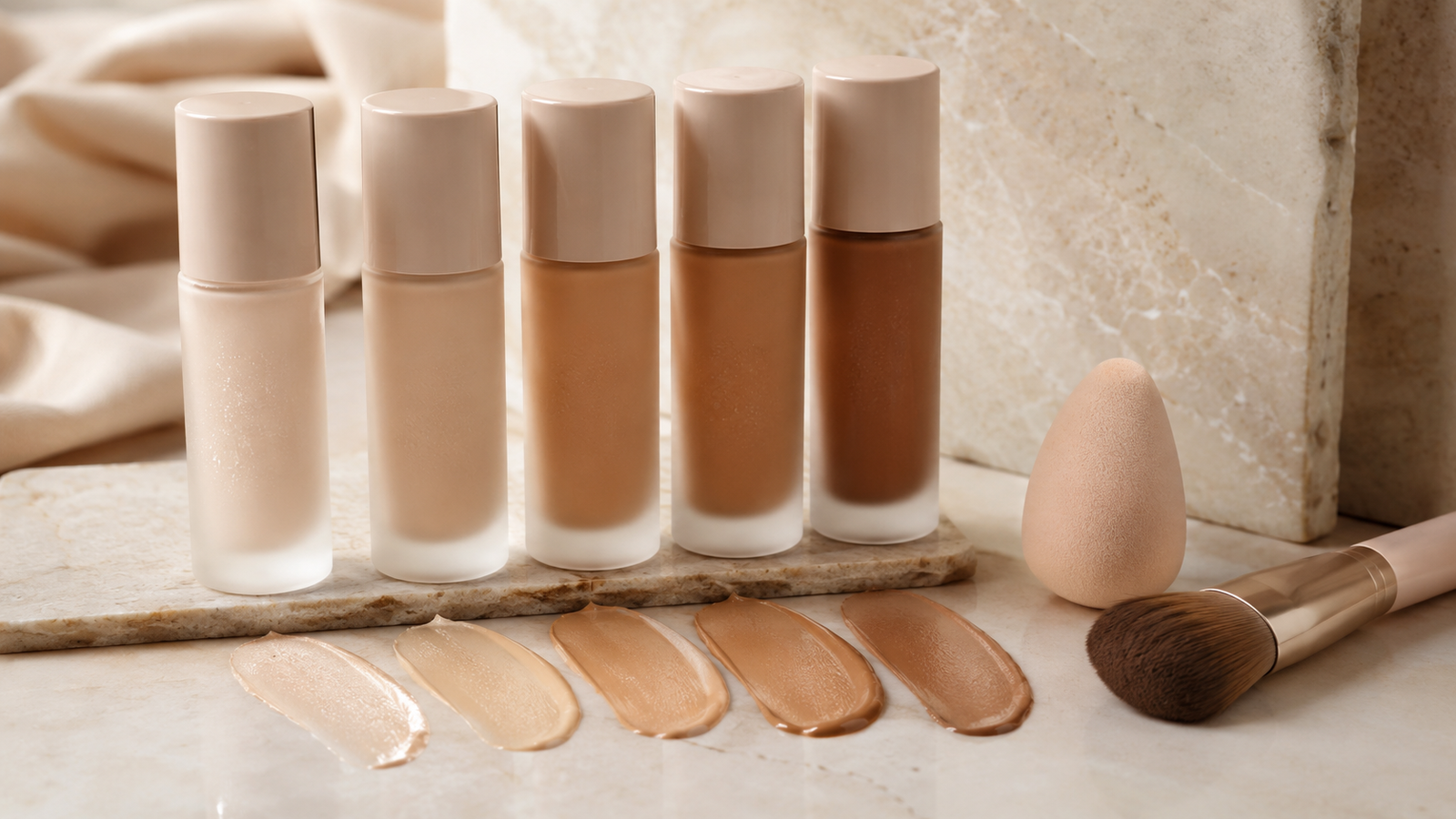
It is a makeup product designed primarily to enhance the overall appearance of the complexion—usually through luminosity, sheer tint or both—without necessarily providing the coverage of a traditional foundation.
Depending on the formula, it may be worn:
- alone;
- underneath foundation;
- mixed with foundation;
- over foundation;
- or only on selected areas of the face.
The important part is understanding what a specific complexion booster is designed to do before deciding where it belongs in your routine.
What Is a Complexion Booster?
“Complexion booster” is not one tightly standardised makeup category.
Brands may use the term for products that provide different combinations of:
- sheer colour;
- luminosity;
- light reflection;
- subtle complexion evening;
- hydration or emollience;
- smoothing;
- highlighting.
Some formulas provide enough tint to slightly even the appearance of skin.
Others offer very little colour and are primarily designed to make the skin look more radiant.
This is why the product name alone cannot tell you exactly what you are buying.
When comparing complexion boosters, look at:
coverage + finish + pigment + level of luminosity
rather than relying solely on terms such as “glow,” “filter” or “radiance.”
Complexion Booster vs Foundation
The biggest difference is usually coverage.
Foundation is primarily designed to even the complexion through pigment.
A complexion booster is usually more focused on finish and luminosity, often with significantly less coverage.
Foundation may provide:
- sheer to full coverage;
- stronger evening of skin tone;
- more concealment of redness or pigmentation;
- a defined matte, natural or radiant finish.
A complexion booster may provide:
- little or no coverage;
- a subtle tint;
- enhanced luminosity;
- a smoother-looking finish;
- a more radiant base beneath foundation.
There is overlap.
A very sheer foundation and a tinted complexion booster can sometimes produce similar results.
The useful question is not necessarily which label appears on the bottle.
Ask instead:
How much coverage does this provide, and what does it change about the appearance of my skin?
Complexion Booster vs Primer
Primer is generally designed to prepare the skin for makeup.
Depending on the formula, it may help with:
- smoothing;
- grip;
- oil control;
- hydration;
- blurring;
- radiance.
A complexion booster can sometimes perform a similar role, particularly when used beneath foundation.
But complexion boosters tend to place more emphasis on the visible appearance of the complexion itself.
For example, an illuminating complexion booster might make the skin visibly more radiant even when worn alone.
A traditional gripping primer may change how foundation adheres without adding much visible glow or colour.
Some products genuinely sit between both categories.
If a complexion booster works well beneath your foundation, you may not need a separate illuminating primer.
Complexion Booster vs Highlighter
Highlighter is usually applied selectively.
Common areas include:
- tops of the cheekbones;
- brow area;
- bridge of the nose;
- cupid’s bow;
- other high points of the face.
Complexion boosters are often more subtle and can be used over larger areas.
A useful way to think about the difference is:
Complexion booster→ overall radianceHighlighter→ targeted radiance
This is not an absolute rule.
A sufficiently luminous complexion booster can often be used as a subtle highlighter, while some liquid highlighters can be mixed into foundation.
The amount of reflective pigment usually determines how versatile the product is.
What Does a Complexion Booster Actually Do?
Depending on the formula, it may do one or several things.
Add luminosity
This is the most common purpose.
Light-reflecting ingredients can make the complexion appear fresher or more radiant.
The effect can range from barely noticeable to visibly glossy.
Add a small amount of tint
Some complexion boosters contain enough pigment to slightly even the appearance of the skin.
However, they generally should not be expected to conceal in the same way as medium- or full-coverage foundation.
Change the finish of foundation
Used underneath or mixed into foundation, a luminous complexion booster can make a matte or natural-finish base look more radiant.
Highlight selected areas
A small amount can sometimes be applied after foundation for a softer highlight.
Create a minimal-makeup complexion
Someone who does not want foundation may use a tinted complexion booster alone for a more polished appearance without much coverage.
Do Complexion Boosters Provide Coverage?
Some do, but usually not very much.
Think of coverage as a spectrum:
No pigment↓Illuminating primer↓Complexion booster↓Skin tint↓Foundation↓Higher-coverage foundation
Actual products can fall anywhere along this spectrum.
A tinted booster may soften the appearance of uneven tone but still leave:
- freckles;
- pigmentation;
- blemishes;
- redness;
clearly visible.
That is not necessarily a weakness.
For someone seeking a natural-looking complexion, low coverage may be exactly the point.
How to Choose a Complexion Booster
Start with the finish you want rather than the trend around the product.
If you want a natural glow
Choose a subtle formula with fine light reflection rather than obvious shimmer.
This is usually the most versatile option because it can work:
- alone;
- under foundation;
- mixed into foundation.
If you want noticeable radiance
A more reflective formula can create a stronger glow.
These products may work better when used selectively rather than across the entire face.
If you want some complexion evening
Look for a product with visible tint rather than a completely translucent illuminator.
Keep expectations realistic: a booster can make skin look more even without functioning like conventional foundation.
If you want to use it primarily under foundation
Consider texture and compatibility.
A complexion booster that feels very rich or slippery may behave differently underneath a long-wear foundation than a lightweight formula would.
Testing the combination matters.
Choosing the Right Shade
Shade selection depends on how pigmented the product is.
Sheer formulas
Very sheer complexion boosters may have flexible shades because relatively little pigment is deposited on the skin.
More tinted formulas
As coverage increases, accurate shade matching becomes more important.
Look for a shade that blends naturally into your complexion rather than creating:
- obvious orange tones;
- excessive pinkness;
- grey cast;
- visible depth mismatch.
Your undertone still matters, particularly when the product has noticeable colour.
Be Careful With Excessive Warmth
Some glow products contain warm golden or bronze pigments.
These can create an attractive effect on the right complexion, but they may also change the apparent colour of foundation when used underneath or mixed in.
A shade that is too warm can make the face look noticeably different from the neck.
Test the product in natural light when possible.
How to Use a Complexion Booster
There are several ways to use one, and each creates a different result.
Method 1: Wear It Alone
This is the simplest approach.
Apply a small amount to:
- the whole face;
- the centre of the face;
- or only areas where you want more radiance.
Then add concealer where you want more coverage.
A simple routine might be:
Skincare↓Sunscreen during the day↓Complexion booster↓Concealer where needed↓Blush↓Mascara↓Lip product
This can create a light, minimal-makeup look.
Method 2: Apply It Under Foundation
This can make foundation appear more luminous.
Apply a thin layer of complexion booster first and allow it to settle.
Then apply foundation normally.
The effect is usually more subtle because the foundation sits over the reflective product.
This method can work particularly well when you want glow without applying visible highlighter over the finished makeup.
Method 3: Mix It With Foundation
Mixing a small amount with foundation can alter the foundation’s finish.
This may:
- increase luminosity;
- reduce the visual heaviness of some formulas;
- slightly sheer out coverage depending on the products.
Start with a small amount.
Adding too much can significantly change the way the foundation sets, wears or adheres.
It is usually better to experiment gradually.
Method 4: Apply It Over Foundation
You can also use a complexion booster after foundation.
Apply it selectively to areas such as:
- cheekbones;
- upper cheeks;
- temples.
Use a small amount and blend gently so you do not disturb the foundation underneath.
This produces an effect closer to liquid highlighter.
Method 5: Use Different Techniques in Different Areas
You do not have to use the same technique over the whole face.
For example:
small amount under foundation+extra product on cheekbones
This provides both overall radiance and targeted highlighting.
Fingers, Sponge or Brush?
All can work.
Fingers
Useful for quick application and creamy or lightweight formulas.
The warmth of your fingers can help spread some products evenly.
Sponge
A damp makeup sponge can help diffuse highly luminous formulas and create a softer finish.
Brush
A brush can offer more precision, particularly when applying the product to selected areas.
The best tool depends on the formula and the level of intensity you want.
How Much Should You Apply?
Start with less than you think you need.
Luminosity can build quickly.
A small amount may look subtle indoors but significantly more reflective in daylight, photography or direct artificial lighting.
Begin with a thin layer.
Add more only after seeing the effect across the entire face.
Are Complexion Boosters Good for Oily Skin?
They can be.
Having oily skin does not mean you cannot wear luminous makeup.
The key is controlling where you add glow.
If your forehead, nose and chin become naturally shiny, you might prefer to apply the complexion booster mainly to:
- cheeks;
- temples;
- outer face.
Then use powder where you want less shine.
A targeted approach can maintain radiance without making the entire complexion appear equally reflective.
What About Dry Skin?
A luminous complexion booster may visually complement dry skin, but glow does not replace skincare.
If skin is visibly flaky, reflective makeup can sometimes make texture more noticeable rather than hiding it.
Prepare the skin first with a routine that leaves it comfortable and appropriately moisturised.
Then use the complexion product to create the finish you want.
Can Complexion Boosters Emphasise Texture?
Yes, depending on the formula.
Highly reflective particles can make some texture more visible because they catch light.
If this happens, try:
- using less product;
- choosing a subtler formula;
- applying it away from textured areas;
- keeping stronger glow on smoother high points of the face.
Products marketed as “glowy” can vary enormously in how reflective they actually look.
Do You Need Both a Complexion Booster and Highlighter?
Not necessarily.
If your complexion booster already provides enough radiance, another highlighter may add more shine than you want.
On the other hand, someone who prefers stronger makeup may use:
- complexion booster for overall radiance;
- highlighter for more intense focal points.
Neither approach is inherently better.
The finished look should determine whether you need both.
Do You Need Both Primer and a Complexion Booster?
Again, not necessarily.
If your complexion booster works well underneath foundation and gives you the finish you want, you may not need an additional illuminating primer.
A separate primer might still be useful if you need something different, such as:
- stronger oil control;
- smoothing;
- makeup grip.
Avoid adding steps simply because the products belong to different marketing categories.
Complexion Booster or Skin Tint?
Choose according to your priority.
Choose a complexion booster if:
- glow is the main goal;
- you want minimal coverage;
- you want something versatile enough to use beneath foundation;
- you want a product that can double as subtle highlighter.
Choose a skin tint if:
- evening the complexion is the main goal;
- you want more pigment;
- you want a lightweight foundation alternative.
Some products blur this distinction, so check the actual coverage and finish rather than the product name.
Common Complexion Booster Mistakes
Applying too much
One of the easiest ways to make luminous makeup look unnatural is simply using too much.
Build gradually.
Choosing a shade that is too warm or deep
Even sheer products can alter the overall complexion colour.
Applying strong glow everywhere
You may prefer strategic placement, especially if parts of your face naturally become shiny.
Expecting foundation-level coverage
A complexion booster is usually designed more around finish than concealment.
Layering every glow product together
Illuminating skincare, luminous sunscreen, glow primer, radiant foundation, complexion booster and highlighter can quickly become excessive.
Evaluate the finished result rather than assuming every radiance step needs to be included.
Using glow to compensate for dry skin
Reflective makeup cannot correct flaky or uncomfortable skin.
Skin preparation and makeup serve different purposes.
A Simple Complexion Booster Routine
For an easy everyday look:
Step 1: Prepare your skin
Use your normal skincare.
During the day, apply sunscreen appropriately before makeup.
Step 2: Apply a small amount of complexion booster
Focus on areas where you want radiance.
Step 3: Add coverage selectively
Use concealer or foundation only where you want additional evening.
Step 4: Add colour
Use blush or another complexion product according to your preference.
Step 5: Balance the finish
If certain areas look too shiny, apply a small amount of powder there.
This approach allows the glow to remain intentional rather than making the entire face equally reflective.
How to Know Whether You Actually Need One
You probably do not need a complexion booster simply because the category is popular.
Consider one if you regularly think:
- my foundation looks flatter than I would like;
- I want glow without obvious highlighter;
- I want less coverage than foundation;
- I want one product that can work several ways;
- I like luminous minimal makeup.
You may not need one if:
- you already use a radiant foundation you love;
- your primer creates enough luminosity;
- your highlighter already gives you the effect you want;
- you prefer a matte complexion.
Makeup categories should solve problems or create effects you actually want—not simply add more steps.
The Physical Glow Takeaway
Complexion boosters are best understood as flexible radiance products rather than replacements for every other complexion product.
Some offer sheer tint. Others behave more like illuminating primers or subtle liquid highlighters.
The most important questions are:
How much pigment does it contain? How luminous is it? And where do you want that luminosity in your routine?
Use it alone when you want minimal coverage, beneath foundation for subtle glow, mixed into foundation to modify the finish or selectively over makeup for highlighting.
And if your existing foundation or primer already gives you exactly the finish you want, you may not need a complexion booster at all.