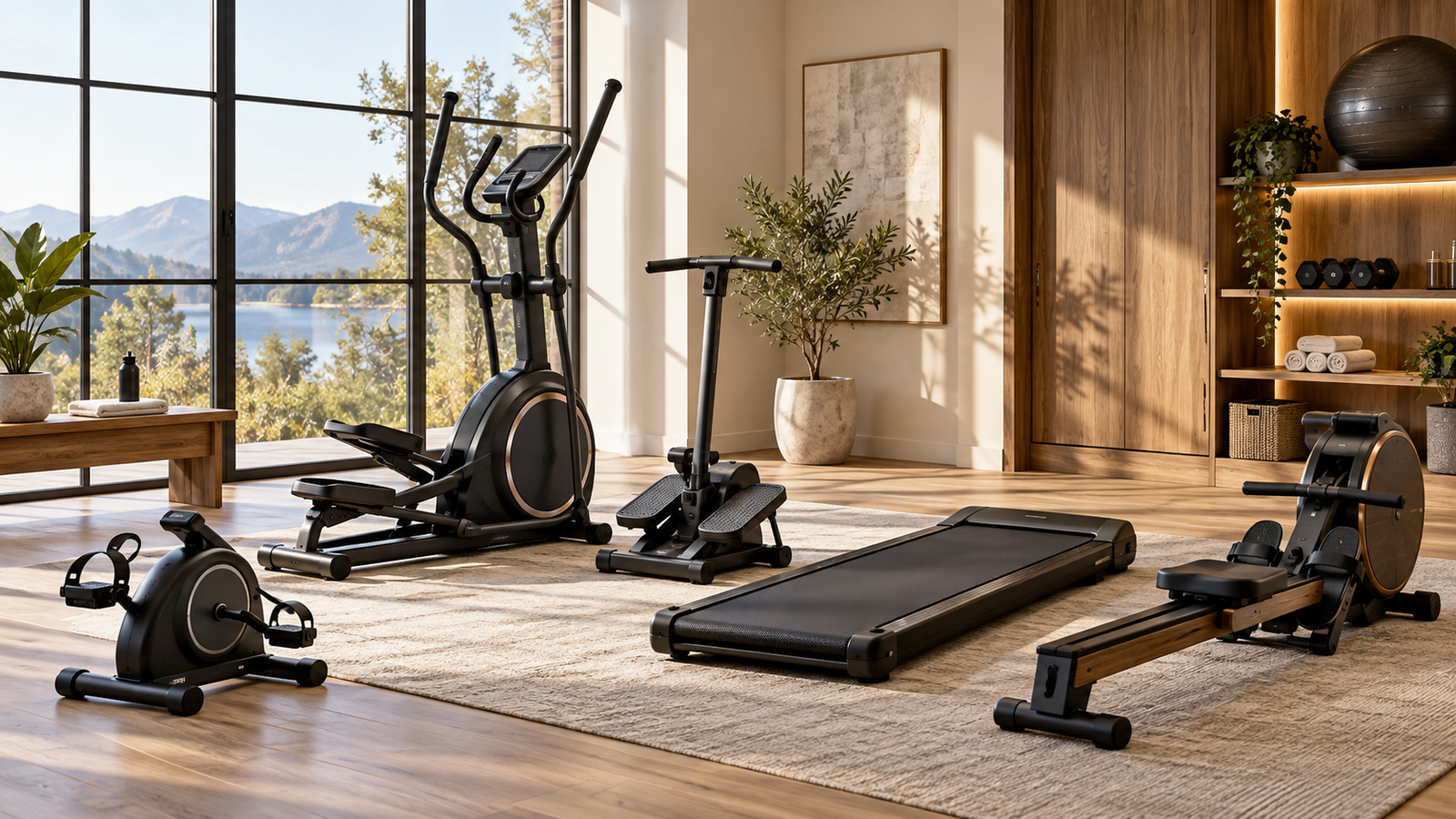
Apartment-Friendly Cardio: Noise, Floor Impact and Storage
Building a home cardio routine sounds simple until you live in an apartment.
A treadmill may fit inside your bedroom, but will your downstairs neighbours hear every footstep? A compact walking pad may slide under a bed, but is it genuinely quiet? And although an exercise bike takes up less space than some cardio machines, you still need enough room to mount, pedal and use it safely.
For apartment residents, choosing cardio equipment involves more than comparing motor power, maximum speed or fitness features.
You must consider noise, vibration, floor impact, available space, storage requirements and the type of exercise you actually want to perform.
These factors are particularly relevant in Indian apartments, where tiled floors, shared walls, relatively compact rooms and noise-sensitive residential environments can make certain workouts difficult.
The good news is that an effective home cardio routine does not require a large treadmill or a dedicated gym room.
This guide explains how to choose apartment-friendly cardio equipment, reduce avoidable noise and vibration, and set up a practical exercise space without sacrificing safety.
1. What Makes Cardio Equipment Apartment-Friendly?
A machine described as compact or suitable for home use is not necessarily ideal for an apartment.
Apartment-friendly equipment should meet several practical requirements.
Low Noise
The equipment should not produce excessive mechanical noise during normal operation.
This includes motor noise, moving parts, rattling and friction.
Low Floor Impact
Some cardio activities generate repeated impacts against the floor.
Running, jumping and high-impact movements can create vibrations that travel through the building structure.
Reasonable Space Requirements
Equipment should fit comfortably within the intended room while leaving enough clearance for safe entry, exit and movement.
Practical Storage
Foldable or compact equipment can make a difference when living space is limited.
However, a machine that folds is not necessarily easy to move or store.
Suitable Exercise Intensity
The machine should support your intended activity.
Someone wanting gentle daily walking has different equipment requirements from someone training for a running event.
Safe Construction
Stability, appropriate weight capacity, reliable electrical components and manufacturer-recommended operating clearances are more important than simply choosing the smallest machine.
The best apartment cardio setup balances all these factors.
2. Understanding Noise vs Vibration vs Floor Impact
Noise and vibration are related, but they are not identical.
This distinction is essential when comparing cardio equipment.
Airborne Noise
Airborne noise travels through the air.
Examples include:
- Treadmill motor sounds.
- Exercise bike drivetrain noise.
- Fan noise.
- Mechanical squeaking.
- Audible beeps and alerts.
Airborne noise may travel through doors, windows and walls.
Structure-Borne Vibration
Structure-borne vibration travels through physical surfaces such as floors, walls and building components.
For example, a treadmill can transfer vibrations into the floor through its frame and supports.
Even when the motor sounds relatively quiet inside your room, neighbours below may hear or feel vibrations.
Impact Noise
Impact noise results from physical contact and repeated force against a surface.
Examples include:
- Running footfalls.
- Jump rope landings.
- Jumping jacks.
- Burpees.
- Dropping equipment.
Impact noise is particularly important in multi-storey buildings.
A machine can be quiet in terms of motor noise while still transmitting significant vibration through the floor.
That is why advertised operating noise alone cannot determine apartment suitability.
3. Which Cardio Equipment Is Best for Apartments?
Different equipment categories have different space, vibration and noise characteristics.
| Equipment | Typical noise concern | Floor impact | Storage practicality | Exercise use |
|---|---|---|---|---|
| Walking pad | Motor, belt and footfalls | Low to moderate | Often compact | Walking |
| Motorized treadmill | Motor, belt and footfalls | Moderate to high during running | Varies | Walking and running |
| Magnetic exercise bike | Drivetrain and minor vibration | Generally low | Moderate | Seated cycling |
| Air-resistance bike | Fan noise | Generally low impact | Moderate | Cycling and intervals |
| Mini stepper | Repeated mechanical movement | Usually relatively low, depending on use | Often good | Short stepping sessions |
| Elliptical trainer | Mechanical movement and vibration | Generally low impact | Often limited | Full-body-style cardio |
| Jump rope | Rope strikes and repeated landings | High | Excellent | High-impact cardio |
These are broad comparisons.
Actual noise depends on the machine, user, floor construction, maintenance and exercise intensity.
An inexpensive poorly maintained exercise bike may be noisier than a well-designed walking pad, despite the general differences between equipment types.
4. Walking Pads: Are They Really Quiet Enough?

Walking pads are often marketed as quiet, compact alternatives to full-size treadmills.
They generally have shorter decks, lower profiles and lower maximum speeds than many conventional running treadmills.
They are commonly intended for walking rather than fast running.
Advantages of Walking Pads
- Often fit under a bed or suitable sofa.
- Can be convenient for indoor walking.
- Some models have transportation wheels.
- Typically require less dedicated floor space.
- May be suitable for low-intensity daily movement.
Noise Considerations
Walking pads still produce sound from:
- The motor.
- The moving belt.
- Footfalls.
- Internal rollers.
- Contact between the machine and the floor.
The most significant noise source may not be the motor.
A heavier or more forceful walking gait can increase floor vibration.
Storage Considerations
Before purchasing, check:
- Full length and width.
- Machine height.
- Weight.
- Whether it folds.
- Storage orientation permitted by the manufacturer.
- Space required to move it into storage.
- Clearance beneath furniture.
A walking pad advertised as compact may still be too tall to fit beneath a low bed.
Best For
Walking pads are often a practical option for apartment residents who primarily want walking-based cardio and have limited floor space.
They are less suitable for someone whose main goal is high-speed running.
5. Motorized Treadmills: Walking vs Running Noise

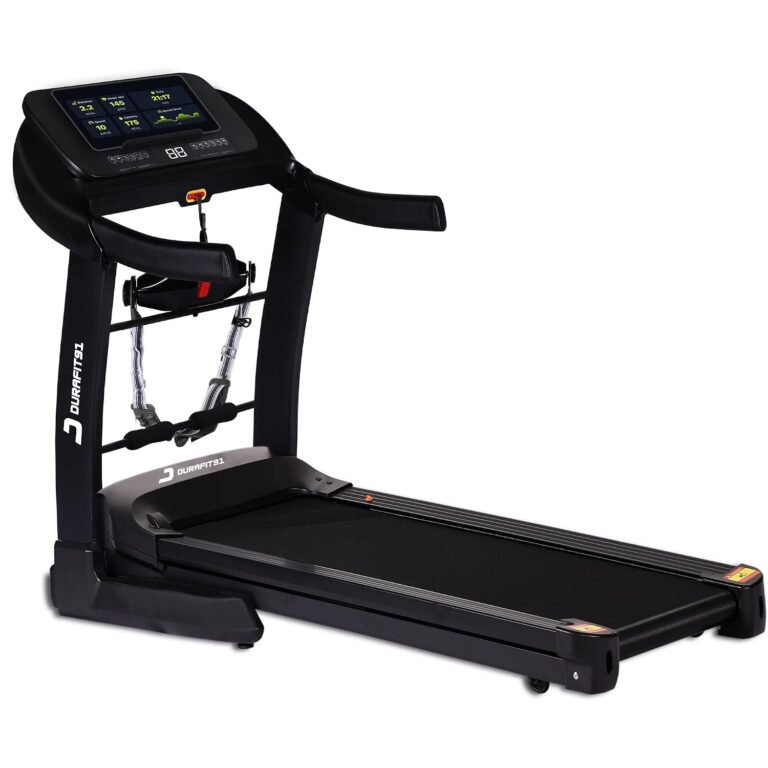
A full-size treadmill offers greater exercise versatility than most compact walking pads.
Depending on the model, it may support walking, jogging, running and incline training.
However, treadmills can create substantial vibration.
Walking on a Treadmill
Walking generally involves lower impact forces than running, although exact forces depend on gait, speed and user characteristics.
For many apartment residents, treadmill walking may be more practical than treadmill running.
Running on a Treadmill
Running involves repeated foot strikes.
These impacts can transfer through the treadmill deck and into the floor.
Even a well-cushioned treadmill does not necessarily eliminate vibration transmitted to neighbouring rooms.
Does Treadmill Cushioning Reduce Apartment Noise?
Cushioning systems are primarily designed to influence the interaction between the runner and treadmill deck.
They may also affect vibration transmission, but cushioning alone does not guarantee lower noise outside the room.
A product with a soft running surface is not automatically silent.
Before Buying a Treadmill
Evaluate:
- Actual running-deck dimensions.
- Motor suitability for intended use.
- Weight and stability.
- Maximum user weight.
- Safety key or emergency-stop system.
- Floor loading and placement.
- Manufacturer-recommended clearances.
- Maintenance requirements.
- Storage dimensions.
For apartments with sensitive downstairs neighbours, running on a treadmill may remain problematic even when using a floor mat.
6. Exercise Bikes: A Practical Low-Impact Option

Exercise bikes are often among the more apartment-friendly cardio options because cycling involves little repeated foot impact against the floor.
You remain seated or supported by the machine, depending on the bike and riding style.
However, the resistance system strongly influences operating noise.
Magnetic Resistance Bikes
Magnetic resistance systems typically use magnets to create resistance without friction pads constantly rubbing against the flywheel.
These systems can operate relatively quietly when properly designed and maintained.
For apartment use, a magnetic exercise bike is often worth considering.
Friction Resistance Bikes
Some exercise bikes use pads that press against a flywheel.
These may produce noticeable contact noise.
The sound level varies with design, adjustment and maintenance.
Air-Resistance Bikes
Air bikes use fan resistance.
They can provide demanding cardio workouts, but the fan creates audible airflow noise that often increases with exercise intensity.
They may be less appropriate for people prioritizing very quiet operation.
Exercise Bike Storage
Most upright bikes do not fold into a completely flat shape.
Even if the footprint is compact, the handlebars, frame and seat remain relatively tall.
Check both floor area and movement clearance.
Also ensure enough space to mount and dismount safely.
Best For
For many apartment residents, a well-built magnetic exercise bike offers a useful balance between low impact, manageable noise and cardiovascular training.
However, those who specifically want to improve running performance will still need training appropriate to that goal.
7. Mini Steppers: Small Equipment With Practical Limitations
Mini steppers are appealing because they occupy relatively little space.
Many can be moved into a cupboard or corner after use.
They typically use hydraulic or mechanical resistance to create a stepping movement.
Advantages
- Compact footprint.
- Often relatively easy to store.
- No large running deck.
- Suitable for short exercise sessions.
- Usually less repeated landing impact than jumping exercises.
Limitations
- Limited movement range.
- Some models become noisy as their mechanisms operate.
- Hydraulic units may heat up during use.
- Resistance and step characteristics vary.
- Balance demands may be unsuitable for some users.
- Not all models are designed for long continuous workouts.
What to Check
Review the product’s:
- Maximum user weight.
- Continuous-use limit.
- Stable base dimensions.
- Foot-pedal grip.
- Maintenance instructions.
- Recommended cooling periods, if applicable.
Do not assume that a smaller machine can safely be used continuously for any duration.
8. Ellipticals: Low Impact but Not Always Space-Saving

Elliptical machines guide the feet through a continuous movement.
Because the feet generally remain in contact with the pedals, they avoid the repeated landing pattern associated with running.
This can make them appealing for lower-impact cardio.
However, ellipticals introduce different challenges.
Floor Space
Many full-size ellipticals are long and relatively bulky.
Their moving handlebars may also require additional clearance.
Mechanical Noise
Ellipticals contain moving mechanisms that can create noise from bearings, resistance systems and joints.
Poor maintenance can increase squeaking or rattling.
Vibration
Although impact is generally lower than running, mechanical movement and shifting body weight can still transfer vibration into the floor.
Best For
Ellipticals may suit someone who wants low-impact cardio and has enough permanent space for the equipment.
They are less appealing when compact storage is the top priority.
9. Is Jump Rope Suitable for Apartment Cardio?
Jump rope is inexpensive, portable and effective for cardiovascular training.
However, it can be one of the least apartment-friendly activities from a noise perspective.
The problem is not equipment size.
It is repeated impact.
Each jump creates a landing force.
The rope may also strike the floor with every rotation.
Potential Problems
- Repeated impact noise.
- Vibration through the floor.
- Limited ceiling height.
- Insufficient surrounding space.
- Risk of striking furniture or light fixtures.
- Slipping on unsuitable flooring.
Even a soft exercise mat cannot guarantee that downstairs neighbours will not hear the landings.
What About Ropeless Jump Ropes?
Ropeless handles remove rope strikes against the floor, but jumping still creates landing impact.
Therefore, ropeless equipment does not necessarily solve the main noise problem.
Better Alternatives
If you need lower-impact cardio, consider:
- Stationary cycling.
- Comfortable indoor walking.
- Controlled low-impact marching.
- Suitable step movements without jumping.
There is no need to force a high-impact workout into a space that cannot safely accommodate it.
10. Can Exercise Mats Reduce Cardio Noise?
Floor mats can help with stability, floor protection and some aspects of vibration control.
However, effectiveness depends on mat material, thickness, density, equipment load and floor construction.
Thin Yoga Mats
Yoga mats are designed primarily for comfort and grip during floor exercises.
They are generally not engineered to isolate vibration from heavy cardio machines.
Rubber Equipment Mats
Dense rubber mats may help protect floors and reduce certain noises.
However, stiff mats can still transmit substantial structure-borne vibration.
Specialized Anti-Vibration Materials
Equipment isolation systems may use materials selected for particular load and vibration characteristics.
Their performance depends on correct design and installation.
A mat that is too stiff or too soft for the equipment may offer limited benefit.
Important Limitation
No ordinary floor mat should be assumed to soundproof treadmill running or repeated jumping in an apartment.
If noise transmission is a serious issue, changing the activity may be more effective than buying a thicker mat.
11. Why Tile, Concrete and Wooden Floors Feel Different
Many Indian apartments use tiled flooring over concrete structural slabs.
Other homes may have wooden or laminate flooring.
These different surfaces can influence equipment stability, perceived sound and vibration transmission.
Tiled Floors
Tile provides a hard surface.
Equipment may rattle if supports are uneven or the machine is not properly leveled.
A suitable manufacturer-approved mat may help protect the finish and improve stability.
Concrete Floors
Concrete slabs can be structurally rigid, but they can still transmit vibration.
A concrete floor does not guarantee that downstairs occupants will hear nothing.
Wooden or Floating Floors
Certain wooden floor constructions may flex or amplify some movements.
A poorly supported machine can produce additional rattling.
The Building Matters
Actual vibration transmission depends on structural design, connections, floor covering and surrounding rooms.
The same treadmill can sound different in two apartment buildings.
This is why equipment demonstrations in showrooms cannot fully predict noise inside your home.
12. Where Should You Place Cardio Equipment in an Apartment?
Equipment placement matters for safety and practicality.
A good location should have:
- A level, stable floor.
- Adequate ventilation.
- Manufacturer-recommended clearance.
- Suitable electrical access when required.
- Enough room for safe entry and exit.
- A location that does not block doors or emergency routes.
Near a Wall?
Placing equipment near a wall may improve space usage, but do not ignore clearance requirements.
Some machines need space behind or beside the user.
A running treadmill in particular needs an appropriate safety zone behind the deck.
In a Bedroom?
A bedroom may offer convenient storage space, but consider noise and ventilation.
Do not operate equipment where it can strike furniture or obstruct movement.
In a Living Room?
A living room may offer more usable space and ventilation.
However, moving heavy equipment across tiled floors can cause scratches or damage.
On a Balcony?
A balcony is not automatically a suitable gym space.
Potential concerns include:
- Weather exposure.
- Electrical safety.
- Floor loading.
- Uneven surfaces.
- Reduced movement clearance.
- Building restrictions.
Do not place heavy cardio equipment on a balcony without confirming that the location is appropriate for the load, equipment and operating conditions.
13. How Much Space Do You Actually Need?
A machine’s listed footprint does not represent all the space required for safe operation.
You also need room for:
- Mounting and dismounting.
- Full pedal movement.
- Handlebars.
- Folding mechanisms.
- Emergency exit.
- Ventilation.
- Access to electrical connections.
Example Equipment-Space Planning
| Equipment | Typical planning consideration |
|---|---|
| Walking pad | Deck footprint plus safe access and storage clearance |
| Full treadmill | Running deck, rear safety clearance and side clearance |
| Upright exercise bike | Pedal movement, handlebar clearance and mounting space |
| Mini stepper | Stable floor area and sufficient balance clearance |
| Elliptical | Full moving-handle and stride envelope |
| Jump rope | Clear floor and ceiling space for rope rotation |
These requirements vary substantially by model.
Do not rely on generic dimensions when determining whether a particular machine fits.
Use the manufacturer’s installed dimensions and safety-clearance instructions.
14. Measure Your Apartment Before Buying
A common purchasing mistake is measuring only the empty floor area.
For example, a machine may fit between a sofa and a wall but leave insufficient space to use it safely.
Apartment cardio space checklistMeasured the actual available floor dimensionsChecked manufacturer-required clearance around the equipmentVerified ceiling clearance and full movement rangeChecked storage height, width and orientationConfirmed floor stability and safe electrical accessChecked doorway and delivery-path dimensionsConsidered vibration, neighbours and building rules
Planning checks completed
0/7
Even a compact machine can become inconvenient when the storage process requires lifting it over furniture every day.
Consider whether the equipment can realistically be set up and stored consistently.
15. Foldable Equipment: What Should You Check?
Foldable cardio machines can be useful, but their designs differ.
Folding Treadmills
Some treadmills fold the running deck upward.
This can reduce floor space during storage but may create a tall object.
Check the locking mechanism and whether the machine can stand safely in its stored position.
Foldable Walking Pads
Certain models fold in half.
Others have folding handrails but a fixed running deck.
The term foldable does not necessarily mean the equipment becomes small enough for a cupboard.
Folding Exercise Bikes
Some compact bikes have folding frames.
Check stability, weight capacity and the range of seat adjustments.
A foldable bike that is uncomfortable or poorly suited to your body may not offer good long-term value.
Moving Equipment Safely
Heavy machines should not be dragged carelessly across tiles or laminate flooring.
Use manufacturer-provided transport wheels where appropriate.
Do not lift equipment beyond your ability.
16. How to Reduce Noise Without Buying New Equipment
Before replacing your machine, identify the likely source of noise.
Different problems require different solutions.
Mechanical Rattling
Check for loose components according to the maintenance instructions.
If the machine produces unusual mechanical sounds, stop and inspect it or arrange servicing.
Do not operate damaged equipment.
Belt Noise
For treadmills and walking pads, check the manufacturer’s belt-tension and lubrication guidance.
Incorrect adjustment or lubrication can damage the machine.
Uneven Floor Contact
Make sure the machine stands on a stable, level surface.
Uneven supports can cause movement and rattling.
High Exercise Intensity
Higher treadmill speeds and running often produce more footfall noise than gentle walking.
If appropriate for your exercise goals, using a lower-impact mode may help.
Vibration Transmission
Consider equipment placement and approved isolation accessories.
However, do not use thick, unstable padding that makes the machine rock.
Timing
Noise-sensitive workouts may be more disruptive late at night or early in the morning.
Follow building rules and consider neighbours when planning sessions.
17. How to Test Whether Your Workout Is Too Noisy
It is difficult to judge noise transmission accurately from inside the same room.
A workout that sounds acceptable to you may transmit noticeable vibration downstairs.
A practical approach is to test equipment under normal operating conditions.
Step 1: Identify the Activity
Test walking, running or cycling at the intensity you actually intend to use.
Step 2: Check for Rattling
Listen for abnormal sounds from the machine.
Step 3: Observe Floor Vibration
Check whether furniture or nearby objects visibly vibrate.
Visible vibration is a reason to investigate, although its absence does not prove that the equipment is inaudible elsewhere.
Step 4: Seek Feedback if Practical
If appropriate, ask someone in an adjacent room or a cooperative neighbour whether the exercise is disruptive.
Step 5: Adjust the Setup
Consider lower-impact exercise, equipment servicing, placement or suitable vibration isolation.
Smartphone sound-level applications may offer rough comparisons of airborne sound in the same location, but they cannot reliably measure structure-borne vibration or establish compliance with noise regulations without appropriate calibration and measurement methods.
18. Low-Impact Cardio Without Any Machine
You do not need a treadmill or exercise bike to perform cardiovascular activity at home.
Depending on your fitness level and available space, you can combine low-impact exercises.
Possible options include:
- Marching in place.
- Side steps.
- Step-touch movements.
- Controlled knee lifts.
- Low-impact dance movements.
- Walking around the home.
- Repeated sit-to-stand movements where appropriate.
The goal is to increase breathing and heart rate to an appropriate level while avoiding excessive impact.
Example 20-Minute Low-Impact Apartment Workout
| Time | Activity |
|---|---|
| 0–3 minutes | Easy walking or marching |
| 3–6 minutes | Brisk marching |
| 6–9 minutes | Side steps and controlled arm movements |
| 9–12 minutes | Brisk marching |
| 12–15 minutes | Comfortable sit-to-stand repetitions or low-impact stepping |
| 15–18 minutes | Brisk walking or marching |
| 18–20 minutes | Gradual cooldown |
Adjust the intensity to your ability.
Avoid movements that create pain, instability or excessive noise.
People with balance difficulties should select supported movements or seek individualized guidance.
19. How Much Apartment Cardio Is Enough?
The World Health Organization recommends that adults generally aim for:
- 150–300 minutes of moderate-intensity aerobic activity per week, or
- 75–150 minutes of vigorous-intensity aerobic activity per week, or
- An appropriate combination of both.
Adults are also advised to perform muscle-strengthening activities involving major muscle groups on at least two days each week.
These are general public-health recommendations.
You do not need to complete every minute on a cardio machine.
Walking outdoors, cycling, dancing and other activities can contribute.
For someone beginning from a low activity level, even smaller amounts of movement can be beneficial.
Gradually increasing activity is generally more sustainable than immediately attempting a demanding schedule.
20. Walking Pad vs Exercise Bike: Which Is Better for Apartment Living?
These two categories are particularly relevant for people with limited indoor space.
| Factor | Walking pad | Magnetic exercise bike |
|---|---|---|
| Main movement | Walking | Seated cycling |
| Floor impact | Repeated foot contact | Generally low |
| Storage | Often low-profile | Often taller |
| Motor noise | Present in motorized models | Generally low in well-built magnetic models |
| Vibration | Depends on gait and machine | Usually relatively limited |
| Space efficiency | Good when storage clearance is available | Good for a permanent exercise corner |
| Exercise specificity | Supports walking | Supports cycling |
| Main limitation | Footfall transmission | Seat comfort and bike fit |
Choose a Walking Pad If:
- You prefer walking.
- You want indoor step-based activity.
- You have suitable floor and storage space.
- You do not need high-speed running.
- You can manage footfall noise.
Choose an Exercise Bike If:
- Low-impact movement is a priority.
- You want seated cardio.
- You prefer less repeated impact against the floor.
- You have enough permanent floor space.
- You can find a model with a comfortable fit.
Neither option is universally better for cardiovascular fitness.
The best machine is one that supports consistent, appropriate exercise.
21. Common Apartment Cardio Buying Mistakes
Buying Based Only on Maximum Speed
A treadmill with a high advertised maximum speed may be unnecessary if you only plan to walk.
Evaluate the machine according to your actual use.
Ignoring Machine Weight
A heavy cardio machine can be difficult to move, even when advertised as portable.
Weight also matters for floor placement and safe handling.
Assuming Foldable Means Easy to Store
A foldable treadmill may still be large, heavy or difficult to maneuver.
Measure the folded dimensions.
Relying on Noise Claims Alone
Terms such as silent motor or ultra-quiet are marketing descriptions unless supported by meaningful test information.
Even a quiet motor does not eliminate impact noise.
Buying a Thin Mat for Heavy Running
A basic mat may protect flooring but cannot be assumed to eliminate structural vibration.
Ignoring Maintenance
Worn bearings, loose parts and poorly maintained belts can increase noise and reduce equipment reliability.
Choosing Equipment That Is Too Small
A compact machine is only useful if it allows safe, comfortable movement.
Deck length, pedal geometry and adjustability remain important.
Forgetting Storage Habits
If setting up the machine takes substantial effort, you may be less likely to use it consistently.
Practical convenience matters.
22. How to Choose the Best Equipment for Your Apartment
Begin with your intended exercise, then evaluate space and noise constraints.
Find your best starting categoryPrimary cardio goalWalkingRunningCyclingGeneral activity and short workoutsAvailable floor spaceVery limitedDedicated corner availableNeighbour noise sensitivityHighModerate
Suggested direction
A compact walking pad may be practical if its operating clearance, storage dimensions and vibration characteristics suit your apartment.
Because noise sensitivity is high, prioritize low-impact activity and verify real-world vibration transmission before purchasing.General equipment-selection guidance. Confirm manufacturer clearances, equipment limits and building suitability before purchase.
23. Where to Find Suitable Home Cardio Equipment
Physical Glow’s Top 5 Home Cardio Equipment in India buying guide compares different equipment types for home exercise.
When comparing products, look beyond advertised motor specifications or compact design.
Consider:
- Your preferred exercise.
- Floor impact.
- Operating noise.
- Machine stability.
- Dimensions during use and storage.
- Maintenance requirements.
- Weight limits.
- Safety features.
- Overall value.
A well-matched machine is generally a better purchase than the most feature-heavy product in a category.
Frequently Asked Questions
What is the quietest cardio machine for an apartment?
A well-built magnetic exercise bike is often among the quieter motor-free or low-noise options, particularly because cycling involves little repeated foot impact. Actual noise varies by machine and environment.
Are walking pads suitable for apartments?
They can be, especially for low-speed walking. However, they still produce motor noise, belt noise and footfall vibration.
Can downstairs neighbours hear a treadmill?
Yes. Footfall vibration and structural sound can travel through apartment floors, particularly during running.
Will a treadmill mat stop noise?
A suitable mat may reduce some vibration or rattling, but it cannot be assumed to eliminate structure-borne noise.
Is an exercise bike quieter than a treadmill?
Many magnetic exercise bikes are quieter in typical use than treadmills used for running. However, model quality, maintenance and the building environment affect results.
Can I jump rope in an apartment?
It depends on available space, floor construction and building rules. Repeated jumping can create substantial impact noise, making it unsuitable for some apartments.
Are mini steppers good for small rooms?
They can be space-efficient, but check stability, noise, weight limits and continuous-use restrictions.
Can I place a treadmill on a balcony?
Only if the location is structurally and operationally suitable, and the manufacturer permits the environmental conditions. Do not assume every balcony can safely support heavy exercise equipment.
How much space should I leave around a treadmill?
Use the manufacturer’s specified clearance requirements, particularly behind the running deck. The machine’s footprint alone is not enough.
Is walking indoors effective cardio?
Yes. Brisk walking can contribute to aerobic activity when performed at an appropriate intensity and duration.
Do I need expensive equipment for effective cardio?
No. Walking, low-impact bodyweight activity and other forms of movement can provide cardiovascular benefits without expensive equipment.
Should I prioritize storage or noise?
Both matter, but if vibration disturbs neighbours or violates building rules, storage convenience alone does not make the equipment suitable.
Final Verdict: Choose Cardio That Fits Your Apartment, Not Just Your Fitness Goal
Apartment cardio equipment should be selected according to more than exercise intensity or advertised features.
Noise, floor impact, vibration, operating clearance and practical storage all influence whether a machine will work well in your home.
Walking pads can offer convenient indoor walking, but they still create footfall noise.
Motorized treadmills provide more exercise options, yet running can transmit significant impact through apartment floors.
Magnetic exercise bikes are often a practical lower-impact alternative, while mini steppers and ellipticals may suit particular space and fitness requirements.
For very limited spaces, low-impact bodyweight cardio may be sufficient without purchasing a machine.
The best apartment cardio solution is one you can use safely, comfortably and consistently without creating unnecessary disruption.
Measure your room carefully, verify actual equipment dimensions, consider neighbours and building conditions, and choose a machine that matches how you genuinely plan to exercise.
Physical Glow Editorial Note: This article provides general fitness and equipment-selection information. Cardio equipment must be installed and operated according to manufacturer instructions. Building load capacity, electrical safety, floor conditions and individual exercise suitability should be assessed where relevant. Consult a qualified healthcare professional before beginning exercise if you have medical limitations.