Building a Compact Workout Carry Kit: Mats, Straps, Water and Storage
A workout does not require a large gym bag filled with expensive accessories.
For many people, a water bottle, comfortable footwear and a few activity-specific essentials are enough to support a practical exercise routine.
However, packing becomes more complicated when your routine includes different activities, such as strength training, yoga, running or outdoor fitness sessions.
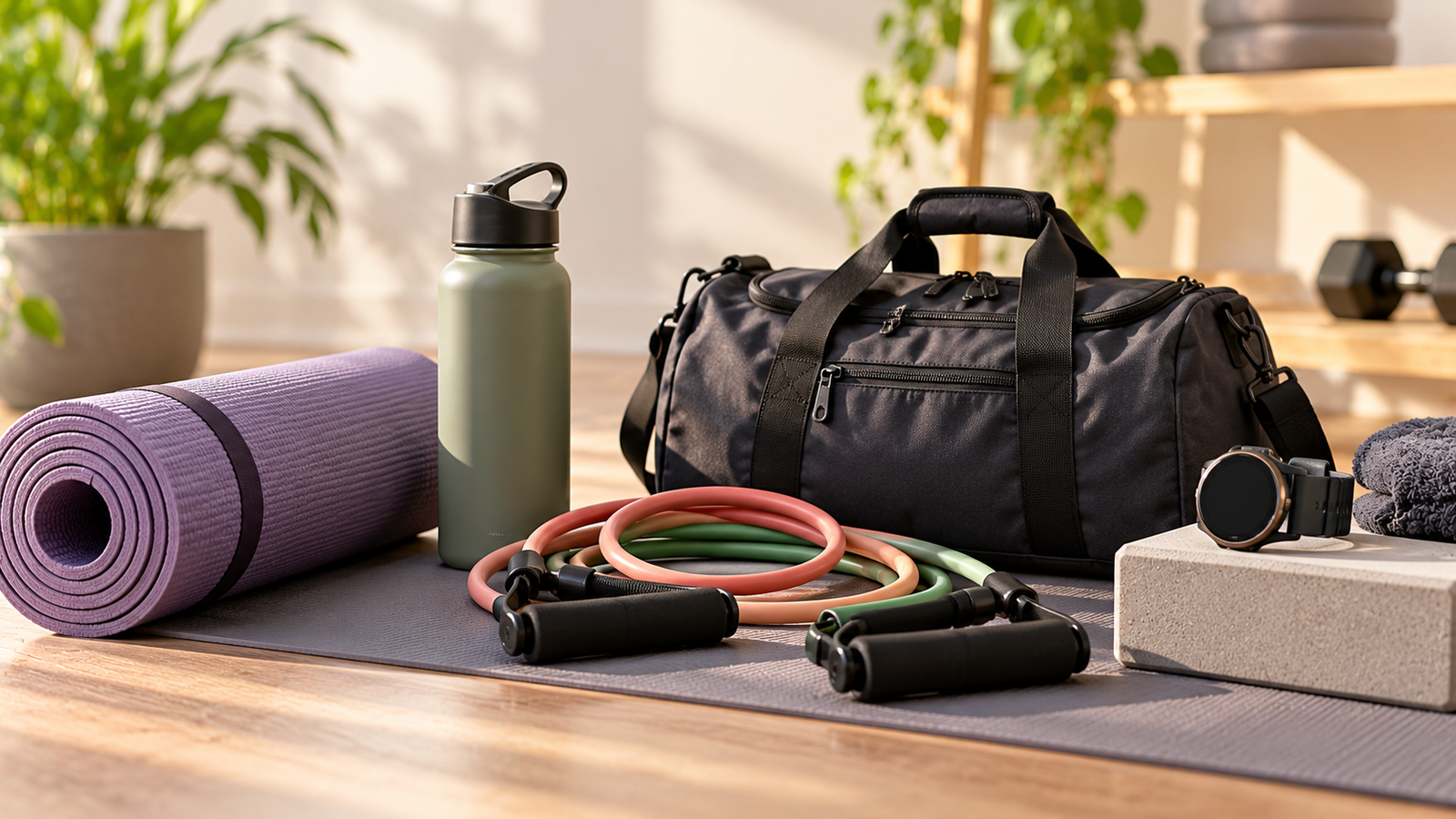
You may need a mat for floor exercises, resistance bands for strength training, a towel for sweat and a secure place for personal belongings.
Carrying everything you own is rarely the most convenient solution.
An overfilled gym bag can become heavy, disorganized and difficult to maintain. Damp towels may end up beside clean clothing, small accessories become difficult to find, and equipment that is not used still occupies valuable space.
A compact workout carry kit solves these problems by focusing on what you actually need for the planned session.
The goal is not to purchase every popular fitness accessory. It is to make exercise preparation simpler, keep equipment organized and reduce unnecessary packing.
This guide explains how to build a compact workout carry kit, choose suitable mats and resistance equipment, organize water and personal essentials, separate wet and dry items, and maintain your bag between sessions.
Start With the Session Instead of Buying Every Accessory
The most effective way to organize workout essentials is to begin with your activity rather than the products available to purchase.
Someone attending a yoga class has different equipment needs from someone visiting a gym for weight training.
A person going for a short outdoor walk may not need a mat, resistance bands or a gym bag at all.
Identify the type of workout
Before packing, ask yourself what the session involves.
For example:
- Will you be walking or running outdoors?
- Are you attending a fitness class?
- Will you perform floor exercises?
- Does your workout include resistance bands?
- Are you using a gym that already provides equipment?
- Will you need to change clothing afterward?
These questions help determine which items are genuinely useful.
Separate essentials from optional accessories
An essential item is something required for safe participation, personal needs or the planned activity.
An optional accessory may provide convenience without being necessary.
For example, a personal exercise mat may be useful for a yoga session.
However, if your class provides suitable mats and you are comfortable using them according to the facility’s hygiene arrangements, carrying another mat may be unnecessary.
Similarly, a smartwatch can record workout information, but it is not required to perform exercise.
The Centers for Disease Control and Prevention recognizes activities such as bodyweight exercises, resistance-band training and various aerobic activities as legitimate forms of physical activity.
Expensive equipment is not a prerequisite.
Check what the venue already provides
Before buying or packing accessories, review your gym or studio’s facilities.
Some locations provide exercise mats, resistance equipment, lockers and drinking water.
Others require participants to bring specific personal items.
Venue rules may also restrict certain equipment.
For example, a gym may have policies regarding personal resistance bands, outdoor footwear, towels or bags on the training floor.
Follow the facility’s requirements.
Avoid purchasing an accessory solely because it appears on a generic gym-bag checklist.
Consider your travel distance
The distance between home, work and your workout location affects what you need to carry.
If you exercise in your living room, you may not need a carry bag.
If you walk to a nearby fitness studio, a lightweight bag may be sufficient.
If you commute directly from work, you may need extra clothing, footwear and a place for used items.
A compact kit should reflect your actual routine rather than an idealized packing list.
What a Short Strength Session May Require
A basic strength-training session can involve bodyweight movements, free weights, resistance bands or a combination of equipment.
The necessary accessories depend on the exercises.
Bodyweight workouts
Bodyweight exercises use your own body as resistance.
Examples include appropriately selected squats, modified push-ups and other movements suited to individual ability.
A basic bodyweight session may require very little equipment.
A suitable exercise surface, comfortable clothing and access to water may be sufficient.
A mat can make some floor movements more comfortable, but it is not mandatory for every bodyweight exercise.
Resistance-band workouts
Resistance bands are portable and can provide external resistance for many strength exercises.
Depending on the workout, you might carry a loop band, a flat resistance band or a tube with handles.
However, these products are not interchangeable in every exercise.
The appropriate resistance, attachment method and movement depend on the equipment’s design.
Choose the specific band required by your plan rather than carrying several unused resistance levels.
Resistance tubes and handles
Resistance tubes may include detachable handles, clips or approved attachments.
If your workout uses them, pack the complete compatible system.
Before leaving, check that handles and connectors are present and undamaged.
Do not substitute random clips or household hardware for manufacturer-approved attachments.
A missing or damaged connector can create a safety problem, particularly when the tube is under tension.
A small workout towel
A clean towel may be useful for managing sweat and meeting venue requirements.
Select a size suitable for your needs.
A small personal towel is often easier to carry than a large bath towel.
If your facility requires a particular towel size or provides towels, adjust accordingly.
Is a smartwatch necessary?
No.
A smartwatch may help track workout duration, heart rate or rest intervals, but these functions are optional.
A simple timer or written exercise plan can serve many workout-tracking needs.
Wearable measurements also have limitations.
Do not assume that buying a smartwatch is necessary for effective strength training.
Example: A compact strength-session kit
| Item | Purpose | Priority |
|---|---|---|
| Suitable footwear | Appropriate support and traction for the activity | As required by the exercise and venue |
| Water bottle | Convenient access to drinking water | Useful when water is not otherwise accessible |
| Small towel | Personal sweat management | Depends on venue and preference |
| Resistance band | Provides resistance for planned exercises | Only if required |
| Mat | Provides a suitable surface for floor exercises | Optional or activity-dependent |
| Phone or timer | Tracks intervals or workout notes | Optional |
| Small pouch | Organizes keys and personal items | Optional |
The smallest useful kit is the one that supports your actual workout without creating unnecessary weight or clutter.
Choosing a Mat Without Carrying Unnecessary Bulk
Exercise mats vary in thickness, texture, length, width, weight and intended use.
Some are designed primarily for yoga.
Others are intended for general floor exercises or cushioning.
A compact kit should include a mat only when it is useful for the activity.
Yoga mats
Yoga mats are often designed to provide a relatively stable surface with grip during standing and floor postures.
Thickness and surface texture can influence the user’s experience.
However, a thicker mat is not always better.
Very soft cushioning may feel comfortable in some floor positions while making certain balance exercises less stable.
Choose according to the intended activity and personal comfort.
Exercise and fitness mats
Some general exercise mats provide additional cushioning for floor-based movements.
These may be useful for exercises involving repeated contact with the floor.
However, the amount of cushioning required varies.
A mat does not guarantee protection from inappropriate exercise technique or excessive joint loading.
If an exercise causes pain, changing the mat alone may not address the underlying issue.
Foldable versus roll-up mats
A roll-up mat can be convenient when carried using a suitable strap or sleeve.
However, long rolled mats may extend beyond a small backpack.
Foldable mats may fit more easily into certain bags, depending on their dimensions and thickness.
Neither design is automatically superior.
Consider how you travel and where the mat will be stored during the workout.
Check the size before purchasing
A mat’s packed dimensions can be as important as its dimensions when laid flat.
Before choosing one, check:
- Length and width when opened.
- Thickness.
- Weight.
- Rolled or folded dimensions.
- Carrying method.
- Manufacturer cleaning instructions.
Do not assume that a mat described as lightweight or travel-friendly will fit inside your existing bag.
Compare its actual dimensions with the space available.
Do you need a personal mat at the gym?
Not always.
Some studios provide shared mats and appropriate cleaning facilities.
Others expect participants to bring their own.
Personal preference and hygiene considerations may influence your decision.
If you use shared equipment, follow the venue’s cleaning procedures.
Avoid assuming that every shared mat is unsanitary or that a personal mat is automatically clean simply because it belongs to you.
Proper maintenance matters in both cases.
Mats and Resistance Gear: Clean and Dry Packing
Workout equipment frequently comes into contact with hands, clothing, floors and sometimes sweat.
Keeping it clean and dry helps maintain the equipment and prevents unnecessary moisture from accumulating in your bag.
Cleaning a workout mat
Follow the mat manufacturer’s care instructions.
Different materials may react differently to cleaning chemicals, soaking or excessive heat.
REI recommends checking the manufacturer’s directions, cleaning the mat appropriately and allowing it to dry completely before storage.
Do not assume that strong disinfectants, alcohol sprays or washing machines are suitable for every mat.
Some chemicals may damage the material or affect its surface properties.
Why drying matters
Packing a damp mat immediately after exercise may be necessary for a short journey.
However, leaving it tightly rolled inside a closed bag for an extended period is not good storage practice.
Moisture may contribute to unpleasant odors and conditions that encourage microbial growth.
When you return home, remove the mat and allow it to dry completely according to its instructions.
Do not leave it permanently sealed inside a carry sleeve while damp.
Cleaning resistance bands
Resistance bands require material-specific care.
Some manufacturers recommend mild soap and water for particular products.
For example, Performance Health provides cleaning, drying and storage instructions for its THERABAND CLX bands.
However, those instructions should not automatically be applied to every latex, fabric or composite resistance product.
Check the exact equipment’s care guidance.
Inspect bands before packing
Cleaning is also a useful opportunity to check for damage.
Look for:
- Cuts or punctures.
- Small tears.
- Fraying.
- Unusual deterioration.
- Damaged handles.
- Loose or compromised connectors.
Do not carry a damaged band with the intention of using it one more time.
Elastic equipment can break unexpectedly when stretched.
Discard or replace compromised equipment according to manufacturer instructions.
Keep bands away from sharp objects
Keys, metal accessories and other sharp items may damage certain elastic materials.
Avoid placing resistance bands loose in the same pocket as items that could cut or puncture them.
A separate soft pouch can help keep small accessories organized.
However, the pouch should not trap moisture around equipment that is still wet.
Dry the equipment before long-term storage.
Avoid excessive heat
Some elastic materials can deteriorate when exposed to prolonged heat or direct sunlight.
This consideration is relevant when workout bags are left in parked vehicles during hot weather.
Follow the manufacturer’s storage instructions.
Do not leave sensitive equipment in high-temperature environments unnecessarily.
Water, a Small Towel and Personal Essentials
Hydration is an important consideration during physical activity.
However, water requirements vary with exercise duration, intensity, environmental conditions and individual factors.
A practical workout kit should make appropriate hydration convenient without encouraging unnecessary overconsumption.
Choosing a suitable water bottle
A reusable bottle can make it easier to access drinking water while exercising.
Consider:
- Capacity.
- Leak resistance.
- Ease of opening.
- Cleaning access.
- Weight.
- Material suitability.
- Fit within your bag.
A larger bottle may reduce the need for refilling but also increases carrying weight.
A smaller bottle may be sufficient for a short session when drinking water is readily available.
There is no universal bottle size that suits every workout.
How much water should you carry?
The amount depends on the activity and conditions.
A short indoor workout in a cool environment may require less available fluid than a long outdoor activity in hot weather.
The American College of Sports Medicine emphasizes individualized hydration because sweat rates and electrolyte losses vary.
For ordinary recreational exercise, maintaining normal hydration and drinking appropriately are more useful goals than following a rigid amount copied from social media.
Avoid both inadequate hydration and excessive fluid intake.
People with medical conditions affecting fluid balance should follow individualized healthcare advice.
Are sports drinks necessary?
Not for every workout.
Plain water is generally a practical option for many short recreational exercise sessions.
During prolonged or demanding exercise, particularly in hot conditions, electrolyte and carbohydrate needs may differ.
However, an expensive sports drink is not a mandatory gym-bag item.
Choose according to the actual exercise demands, dietary needs and relevant professional guidance.
Keeping the bottle clean
Reusable bottles need regular cleaning.
Wash the bottle and any removable components according to the manufacturer’s instructions.
Pay attention to lids, drinking spouts, seals and areas that are difficult to reach.
Rinse thoroughly and allow the components to dry appropriately.
Do not use unsuitable cleaning chemicals or high-temperature methods on materials that are not designed for them.
A bottle that remains damp and closed for long periods may develop odor or visible buildup.
If the bottle cannot be adequately cleaned or its seals are damaged, consider replacement.
Choosing a workout towel
A compact towel can help manage sweat.
Look for a practical size and a material you find comfortable.
A highly absorbent towel may be convenient, but material claims alone do not determine hygiene.
Wash used towels according to their care labels.
Do not repeatedly store a sweat-soaked towel in a sealed gym bag between sessions.
Personal essentials
Depending on the venue and your needs, personal items may include:
- Keys and access card.
- Phone and identification.
- Necessary prescribed medication or medical supplies.
- Personal hygiene products.
- A change of clothing.
- Suitable personal-care items.
Carry necessary medication in accordance with its storage and handling instructions.
Do not leave temperature-sensitive medication in a hot workout bag.
Avoid adding items that serve no realistic purpose in your routine.
Keeping Cables and Electronics Separate
Phones, smartwatches, wireless earphones and other electronics may be part of your workout routine.
However, carrying electronics introduces additional packing considerations.
Moisture, impact and cable damage are more relevant than choosing the most fashionable organizer.
Use a dry compartment
If your bag has separate sections, keep electronics away from wet towels, leaking bottles and damp clothing.
A small protective pouch can help organize charging cables, earphones and accessories.
However, a pouch is not necessarily waterproof unless specifically designed and rated for that purpose.
Do not assume that a standard fabric compartment will protect electronics from a leaking bottle.
Check for leaking bottles
Before placing a filled bottle beside electronics, ensure the lid is properly secured.
If practical, store the bottle upright in a suitable external holder or separate section.
Do not rely on a tight zipper to prevent liquid damage.
A leak-resistant bottle reduces the risk but cannot guarantee that no leakage will occur.
Protect charging cables
Avoid sharply bending cables or placing heavy items on connectors.
Do not pack visibly damaged charging accessories.
Follow the electronic device manufacturer’s charging instructions.
A smartwatch or fitness tracker generally does not need its charger during every short workout.
If the device has sufficient battery for the planned activity, leaving the charger at home may reduce clutter.
Power banks and heat
Portable power banks can be useful during travel, but they are not essential for most short gym sessions.
Lithium-ion batteries should be handled and stored according to manufacturer guidance.
Avoid exposing power banks to excessive heat, physical damage or moisture.
Do not leave them in a hot vehicle.
Should you carry a smartwatch?
Only if it serves a useful purpose for you.
A smartwatch can help with timing, notifications or activity records.
However, a compact carry kit does not need to include every available tracking accessory.
If the device distracts you during exercise, adjust its notification settings or consider whether you need it for that particular session.
Choosing a Bag That Fits Your Actual Routine
A suitable workout bag does not have to be large or expensive.
The most useful design depends on what you carry, how far you travel and whether you need separate clothing or footwear compartments.
Small backpack
A lightweight backpack may be practical for commuting, walking or carrying a few exercise essentials.
It can distribute the load across both shoulders when correctly fitted.
However, a compact backpack may not accommodate a full-size rolled mat or a separate pair of bulky shoes.
Check dimensions before assuming everything will fit.
Compact duffel bag
A small duffel may provide easier access to clothing, towels and accessories.
Some designs include separate shoe or damp-item compartments.
This can be useful when you travel directly from the gym to work.
However, additional compartments are not automatically necessary if you carry very little.
Drawstring bag
A drawstring bag can be convenient for very light loads.
It may hold a towel, water bottle and small personal items.
However, some designs provide limited structure, protection and carrying comfort.
Avoid overloading a thin bag with heavy or sharp equipment.
Dedicated mat carrier
If your routine mainly involves yoga and you only carry a mat and a few personal items, a suitable mat strap or sleeve may be sufficient.
However, a mat carrier is not a substitute for a bag when you also need to transport clothing, electronics or other essentials.
What about a gym bag with many pockets?
Multiple pockets can improve organization when they serve clear purposes.
For example, separate areas for clean clothes, used shoes and personal items may be helpful.
But additional pockets do not guarantee a better packing experience.
A simple, well-sized bag may be easier to maintain than a complicated bag filled with compartments you rarely use.
Check the weight when packed
The weight of an empty bag tells only part of the story.
A large bottle of water, shoes, clothing and accessories can make the completed kit substantially heavier.
Pack the bag with your actual items before judging comfort.
If carrying it causes unnecessary strain, reduce the load or reconsider the design.
Separating Clean, Damp and Dirty Items
One of the most useful packing habits is separating items according to their condition.
Clean clothing, used towels, exercise shoes and personal electronics have different storage needs.
Keeping them together without organization can create inconvenience and hygiene problems.
Clean clothing compartment
Keep unused clothing in a clean, dry section.
If the bag lacks dedicated compartments, a lightweight organizing pouch may be useful.
Avoid placing clean clothing directly against dirty shoes or damp towels.
Used towel and clothing section
After exercise, place damp clothing and towels in an appropriate temporary compartment or washable pouch.
However, do not leave them sealed for long periods.
Remove them when you reach home and wash or dry them according to their care instructions.
A water-resistant pouch can help separate damp items during transport, but it should not become a permanent storage container for wet textiles.
Shoe storage
Shoes can carry dirt and moisture from floors and outdoor surfaces.
A separate shoe compartment or suitable bag may help keep them away from clean clothing.
Remove shoes after the journey and allow them to dry appropriately.
Do not store wet footwear indefinitely inside a closed gym bag.
Personal-care items
Keep items such as soap, sunscreen or moisturizer in properly closed containers.
Consider a small washable pouch to help contain accidental leakage.
Do not transfer cosmetic products into unlabelled containers if doing so would cause loss of expiry, ingredient or usage information.
Follow the manufacturer’s storage directions.
Electronics
Keep electronics in a dry, protected location separate from liquids and damp gear.
Do not assume that a standard bag’s internal fabric prevents water damage.
Example Compact Kits for Different Workout Sessions
A useful carry kit can be different for every activity.
The following examples show how the packing priorities may change.
| Activity | Core items to consider | Optional items |
|---|---|---|
| Short outdoor walk | Suitable footwear, water access, personal essentials | Watch, small towel |
| Gym strength session | Venue-required items, water, suitable clothing | Towel, personal bands, workout log |
| Yoga class | Suitable clothing, mat if required | Mat strap, towel, water bottle |
| Resistance-band workout | Appropriate inspected band, secure approved anchor if required | Mat, timer |
| Outdoor running | Suitable shoes, hydration appropriate to conditions, necessary safety items | Watch, cap, small carrying belt |
| Office-to-gym commute | Workout clothes, necessary shoes, personal essentials | Separate used-clothes pouch, compact towel |
These are planning examples rather than mandatory packing lists.
If a gym provides equipment, carrying your own may be unnecessary.
If a workout takes place at home, you may not need a bag at all.
The home workout kit
For a short home session, your essentials may remain in a dedicated drawer or shelf.
A mat and one or two appropriate resistance bands may be convenient, but even these are optional depending on the workout.
Use a small storage container rather than leaving equipment scattered on the floor.
Make sure bands are protected from sharp objects, sunlight and unsuitable temperatures.
The office-to-gym kit
Commuters may need clean workout clothing, a towel and footwear.
A separate section for used clothes becomes more important because the bag may remain packed for the journey home.
If a personal mat or resistance band is not required, leaving it behind reduces bulk.
The outdoor fitness kit
Outdoor workouts may require greater attention to heat, weather and hydration.
Consider the duration of the activity, availability of safe drinking water and conditions along the route.
Carry necessary personal items securely.
Avoid bringing heavy equipment that interferes with movement or creates a tripping hazard.
Resetting Your Carry Kit After Each Session
A compact kit stays practical only when it is maintained.
Leaving everything packed until the next workout may seem convenient, but it can allow damp items, dirty clothing and damaged accessories to go unnoticed.
A short reset routine helps prepare the kit for its next use.
Step 1: Empty damp items
As soon as practical after arriving home, remove used towels and workout clothing.
Wash or dry them according to their care labels.
Do not leave damp items sealed in the bag overnight or for several days.
Step 2: Clean equipment appropriately
Inspect your mat, resistance bands and accessories.
Clean items that require attention using the manufacturer’s approved method.
Do not use one strong disinfectant on every surface without checking compatibility.
The CDC recommends regular cleaning of frequently touched surfaces in community settings, including gyms, while noting that routine cleaning and disinfection have different purposes.
Step 3: Dry before storage
Allow mats, bottles, resistance equipment and other washable items to dry as directed.
Avoid immediately sealing damp equipment inside a poorly ventilated compartment.
This is particularly important when your bag remains in a warm environment.
Step 4: Inspect resistance equipment
Check for cuts, punctures, fraying or compromised connections.
Replace damaged elastic equipment rather than attempting temporary repairs.
Review any handles or anchor attachments used during the session.
Step 5: Clean and refill the water bottle
Empty remaining water when appropriate.
Wash the bottle and removable parts according to the manufacturer’s instructions.
Allow them to dry before storing or refilling.
Use safe drinking water.
Step 6: Check electronics and cables
Inspect charging accessories for visible damage.
Charge devices when needed according to their instructions.
Keep the charging area dry and away from combustible clutter.
You may not need to pack every charger again after the device has been charged.
Step 7: Repack only the next session’s essentials
Consider what your next workout involves.
If tomorrow is a walking day, you may not need a resistance band or exercise mat.
If you are attending yoga, the mat may become more important.
A flexible carry kit changes with the activity.
Common Workout Kit Packing Mistakes
A well-organized bag should reduce the effort needed to prepare for exercise.
Several common habits have the opposite effect.
Mistake 1: Buying accessories before defining the workout
An accessory may be useful for one exercise but unnecessary for another.
Plan your activity first.
Mistake 2: Carrying every resistance band available
Multiple bands add weight and clutter.
Bring only the appropriate inspected equipment required for the session.
Mistake 3: Packing damp mats permanently
Moisture can contribute to odor and poor storage conditions.
Clean and dry mats according to manufacturer guidance.
Mistake 4: Keeping used towels beside clean clothing
Separate damp or dirty items during transport and remove them promptly afterward.
Mistake 5: Storing keys with elastic bands
Sharp objects may damage resistance materials.
Use separate compartments when practical.
Mistake 6: Placing electronics next to leaking bottles
A conventional bag may not protect electronics from liquid.
Use suitable dry compartments and secure bottle closures.
Mistake 7: Choosing a bag based only on appearance
Actual dimensions, comfort and organization are more useful considerations than appearance alone.
Mistake 8: Never inspecting workout accessories
Bands, handles, straps and other equipment can deteriorate.
Inspect items before use and replace damaged components.
Mistake 9: Leaving the bag packed for days
A quick post-workout reset helps prevent forgotten clothing, damp equipment and missing essentials.
How to Avoid Spending Unnecessarily on Workout Accessories
A compact carry kit should support exercise without creating unnecessary purchasing pressure.
Before buying something new, consider whether you already own an item that performs the same function.
Reuse a suitable existing bag
If your current backpack comfortably holds the necessary equipment, purchasing a dedicated gym bag may not be worthwhile.
A new bag becomes more useful when the existing one genuinely lacks space, appropriate separation or carrying comfort.
Avoid purchasing multiple versions immediately
You do not need several mats, towels or bottle sizes before beginning a routine.
Start with items that meet your present needs.
As your workout habits become more consistent, you can identify limitations more clearly.
Prioritize equipment condition
A damaged resistance band is more concerning than an ordinary cosmetic mark on a gym bag.
Replacement priorities should reflect safe function and actual condition.
Do not continue using compromised exercise equipment merely to avoid purchasing a replacement.
Distinguish useful features from marketing claims
Labels such as premium, professional, performance or advanced do not establish that a product is appropriate for your routine.
Evaluate measurable characteristics, manufacturer instructions and practical fit.
For example, a bag’s dimensions are more informative than a vague claim that it holds everything.
Similarly, a mat’s thickness alone does not establish its grip, durability or suitability for every exercise.
Consider storage space at home
Buying more accessories also creates storage requirements.
If equipment is rarely used, takes up substantial room or repeatedly creates clutter, it may not belong in a compact setup.
A small, organized collection is often more convenient than a large assortment of unused products.
Choosing Between Mats, Resistance Gear, Bags and Fitness Trackers
These accessories perform different functions.
They should not be evaluated as though they are competing versions of the same product.
A mat provides an exercise surface.
Resistance equipment provides external loading.
A gym bag transports belongings.
A smartwatch tracks or displays activity information.
The correct choice depends on what is missing from your routine.
| Accessory | Main role | When it may be useful |
|---|---|---|
| Exercise mat | Provides a surface for floor-based activity | Yoga, mobility and selected floor exercises |
| Resistance tube or band | Adds external resistance | Planned resistance-training movements |
| Gym bag | Carries workout and personal items | Travel between home, work and exercise location |
| Water bottle | Provides convenient access to drinking water | Activities where drinking water needs to be carried |
| Fitness smartwatch | Records and displays selected workout data | Personal tracking, timing and activity monitoring |
No single accessory automatically replaces the others.
For a more detailed product-focused comparison, read Physical Glow’s Yoga Mat vs Resistance Tube vs Gym Bag vs Smartwatch: Starter Gear Roles.
That guide examines the different purposes of common fitness accessories.
This article focuses on selecting, organizing and maintaining the items you actually need to carry.
Frequently Asked Questions
What should I include in a compact workout carry kit?
Start with the requirements of your planned activity.
A suitable water bottle, small towel and necessary personal belongings may be enough for many sessions.
Add a mat, resistance band or other accessory only when the workout requires it.
Do beginners need a gym bag?
Not necessarily.
If you exercise at home or only need a few personal items, a dedicated gym bag may be unnecessary.
A suitable existing backpack can work well when it provides enough space and carrying comfort.
Should I carry my own yoga mat?
This depends on the venue, available equipment and personal preference.
Some studios provide mats.
Others require participants to bring their own.
If you carry a personal mat, clean and dry it according to the manufacturer’s instructions.
Can I keep a yoga mat rolled up inside my bag?
A dry mat can generally be stored according to its manufacturer’s instructions.
However, avoid leaving a damp mat tightly rolled in a closed bag for extended periods.
Allow it to dry completely before longer-term storage.
How should resistance bands be packed?
Inspect them for damage before use.
Keep them away from sharp objects, excessive heat and other conditions prohibited by the manufacturer.
Use a suitable pouch when helpful, and ensure the bands are dry before storage.
Can I store resistance bands with keys?
It is better to keep elastic resistance equipment away from sharp objects that could cut or puncture the material.
Separate compartments or a soft pouch may help.
How much water should I carry to the gym?
The appropriate amount depends on workout duration, intensity, environmental conditions and access to drinking water.
There is no universal bottle capacity or drinking volume suitable for everyone.
Avoid dehydration without forcing excessive fluid intake.
Are sports drinks necessary for short workouts?
Usually not for ordinary short recreational sessions.
Plain water is often a practical option.
Longer or more demanding exercise may create different hydration and electrolyte needs.
What size gym bag is best?
Choose based on what you actually carry.
Check the bag’s dimensions and layout against your clothing, shoes, bottle and any equipment.
A larger capacity is not automatically better if the bag becomes inconvenient to transport.
Is a backpack better than a duffel bag?
Neither is universally better.
A backpack may be convenient for commuting with a modest load.
A duffel may provide easier access to clothing or separate equipment compartments.
Choose according to your travel routine and carrying comfort.
Should I carry a smartwatch for every workout?
No.
A smartwatch may offer convenient tracking and timing features, but effective exercise does not require one.
Use it when the information supports your goals.
How should I store wet gym clothes after exercising?
Keep them separate from clean items during transport.
Remove them from the bag as soon as practical and wash or dry them according to the care labels.
Do not leave damp clothing sealed inside the bag for long periods.
How often should I clean my workout mat?
Follow the manufacturer’s cleaning instructions and consider how frequently the mat is used and whether it becomes visibly dirty or sweaty.
Shared equipment should be handled according to the facility’s cleaning procedures.
Can I wash resistance bands with detergent?
Cleaning requirements differ by material and manufacturer.
Some bands permit mild soap and water.
Others may have different instructions.
Avoid assuming that strong detergents or disinfectants are suitable for every elastic material.
Should workout shoes stay inside the bag?
Shoes may be carried in a suitable compartment for travel.
However, wet or dirty shoes should not remain sealed indefinitely.
Allow them to dry and follow the manufacturer’s cleaning instructions.
Is a separate electronics pouch necessary?
Not always.
A dedicated dry compartment may be enough.
The important consideration is keeping electronics and cables protected from moisture, impacts and leaking containers.
How can I make my gym bag lighter?
Remove items that are not needed for the planned workout.
Use a suitably sized bottle, avoid carrying duplicate accessories and take advantage of equipment supplied by the venue when appropriate.
When should resistance bands be replaced?
Replace bands that show tears, cuts, punctures or other damage identified by the manufacturer as unsafe.
Inspect handles, attachments and anchor components too.
Do not attempt to repair damaged elastic equipment with tape or glue.
Do I need expensive fitness accessories to exercise effectively?
No.
Many aerobic and muscle-strengthening activities can be performed with basic equipment or bodyweight.
The most useful accessories are those that support your chosen activity safely and consistently.
Final Takeaway
A compact workout carry kit should make exercise easier to prepare for, not create another complicated routine.
Start by identifying the requirements of the session.
Carry a suitable mat or resistance equipment only when it is useful, and avoid filling your bag with accessories that serve no clear purpose.
Keep water and personal essentials accessible.
Separate damp clothing and towels from clean items, protect electronics from moisture and store elastic equipment away from sharp objects or unsuitable heat.
After each session, empty the bag, clean and dry the relevant equipment, inspect accessories and repack for the next activity.
The best workout carry kit is not the one containing the most products. It is the smallest practical collection of clean, suitable and well-maintained essentials that supports your actual exercise routine.
Consistency, safe exercise technique and a manageable routine matter more than owning an extensive collection of fitness accessories.
Physical Glow’s editorial principle: Fitness accessory guidance should prioritize real activity needs, equipment suitability, hygiene, durability and manufacturer instructions. Avoid suggesting that every beginner requires specialized products or that accessories alone improve fitness outcomes.
References and Further Reading
- CDC — What Counts as Physical Activity for Adults
- CDC — Adding Physical Activity as an Adult
- American College of Sports Medicine — Exercise and Fluid Replacement
- REI Expert Advice — How to Clean Your Yoga Mat
- CDC — When and How to Clean and Disinfect a Facility
- Performance Health — THERABAND CLX Resistance Band With Loops: Care and Safety
- CDC — Hand Hygiene Frequently Asked Questions