Concealer Creasing Under the Eyes: Prep, Amount and Setting
Under-eye concealer can make dark circles appear less noticeable, brighten tired-looking areas and create a more even makeup finish. Yet one of the most common frustrations is discovering that a smooth application has settled into fine lines or natural folds just a few hours later.
This happens with expensive concealers, affordable formulas, full-coverage products and lightweight liquid textures alike.
The reason is simple: the skin beneath your eyes moves throughout the day, while makeup forms a layer on its surface.
Blinking, smiling, squinting and everyday facial expressions continually change the shape of this delicate area. When concealer is applied too heavily, layered over excessive skincare or combined with unsuitable setting products, those natural movements can make creasing more noticeable.
However, not every visible line represents a makeup mistake.
Some degree of settling is normal because under-eye skin has natural texture. The goal is not to eliminate every line but to create a comfortable, even-looking finish that wears as naturally as possible.
This guide explains how to prevent noticeable concealer creasing, how to prepare the under-eye area, where to place the product, when setting powder helps and how to troubleshoot common application problems.
Why Skin Movement Makes Some Concealer Creasing Normal
To understand why concealer settles into lines, it helps to consider how the under-eye area differs from other parts of the face.
The skin around the eyes is relatively thin and delicate. It moves frequently during facial expressions and may show fine lines, dryness or changes in texture more readily than some other facial areas.
Makeup cannot stop these natural movements.
When you smile, the skin beneath your eyes folds slightly. When your expression relaxes, some of the makeup that moved with the skin may remain concentrated in those folds.
This produces the appearance commonly described as concealer creasing.
Creasing versus cakiness
Although the terms are sometimes used together, they describe different appearance problems.
Creasing occurs when makeup settles into visible lines or folds.
Cakiness describes an uneven, heavy-looking buildup that may emphasize texture or appear powdery.
A concealer can crease without looking cakey. It can also look cakey even when relatively little product has collected in fine lines.
Understanding the difference helps you choose the right adjustment.
For example, more powder may temporarily reduce movement in a creamy formula but can also make a dry under-eye area look heavier.
Why more coverage is not always the answer
When concealer wears unevenly, it is tempting to add another layer.
However, each additional layer increases the amount of material resting on the skin.
If the original application is already collecting in folds, extra product may make those deposits more obvious.
Sometimes the more effective adjustment is to remove excess concealer, use a smaller amount and concentrate coverage only where it is needed.
Can any concealer be completely crease-proof?
No formula can guarantee a perfectly crease-free appearance for every person under every condition.
Different concealers have different textures, film-forming ingredients, pigments and setting characteristics.
Some may resist movement better in particular conditions, but results depend on skin preparation, application, facial movement and wear time.
A realistic expectation is less noticeable settling, not permanently smooth skin regardless of expression.
Skin Prep That Does Not Overload the Under-Eye Area
A smooth concealer application begins before the makeup itself.
Skin preparation can influence how easily concealer spreads, whether it clings to dry areas and how comfortably it sits on the skin.
However, the solution is not necessarily to apply several layers of rich skincare.
Start with clean skin
Before applying makeup, ensure the under-eye area is free from leftover cleanser, heavy makeup residue and other products that could interfere with application.
Use a gentle cleansing routine suitable for your skin.
Avoid aggressive scrubbing, rough towels or repeated rubbing around the eyes.
If you have sensitive skin, select products you already tolerate rather than experimenting with multiple new formulas immediately before applying makeup.
Apply moisturizer according to your skin’s needs
Dry skin may benefit from a suitable moisturizer before concealer.
A small amount of a lightweight, comfortable formula can help reduce the appearance of dryness and improve how makeup spreads.
However, applying a thick layer of moisturizer immediately before concealer may leave excess product on the surface.
This can make the makeup slide, separate or collect unevenly.
Use enough moisturizer to support skin comfort without leaving a heavy film.
There is no universal amount that works for everyone.
Allow your skincare to settle
Applying concealer immediately over a wet or slippery skincare layer can make blending more difficult.
After applying moisturizer or your morning skincare products, allow them to settle according to the product instructions before beginning makeup.
If the skin still feels excessively slippery, gently remove obvious excess product rather than rubbing the area aggressively.
The goal is a comfortable surface, not completely dry or tight skin.
What about eye creams?
Eye creams are not automatically required for good concealer application.
A suitable facial moisturizer may provide sufficient comfort for some people.
Others prefer an eye-area product because they find its texture easier to use.
An expensive eye cream does not guarantee that concealer will crease less.
Evaluate the product’s compatibility with your makeup and your skin’s needs.
Avoid unnecessary irritation
The American Academy of Dermatology notes that skincare and cosmetic products can cause contact dermatitis around the eyes.
If an eye-area product causes burning, itching, swelling or persistent redness, stop using it.
Do not try to conceal an irritated area by repeatedly applying more makeup.
If symptoms persist or worsen, consult a healthcare professional.
Using Smaller Amounts and Targeting Placement
One of the most useful ways to improve under-eye concealer is to rethink where the product is needed.
Dark circles, natural shadows and uneven pigmentation do not always extend evenly across the entire area beneath both eyes.
Applying a thick, continuous layer everywhere can create more opportunities for visible settling.
Identify the area requiring coverage
Look at your under-eye area in natural, comfortable lighting.
Notice whether the greatest contrast appears near the inner corner, beneath the central under-eye area or along a natural shadow.
These areas can differ between people.
Instead of automatically covering the entire under-eye region, begin with the areas where you want to reduce visible contrast.
Start with a small amount
Dispense a modest quantity of concealer.
For many liquid or cream formulas, starting with a small dot or thin placement is more practical than immediately applying a large triangular patch.
You can add a little more where needed.
It is often easier to build a controlled amount of coverage than to remove excess product after it has already been blended across the entire area.
Keep the heaviest coverage away from prominent folds
If you notice that concealer repeatedly settles into a particular natural line, consider reducing the amount placed directly over that line.
You may be able to concentrate more coverage slightly away from the fold while blending the edges gently.
This technique will not erase skin texture, but it can reduce the amount of product available to collect in it.
What about the traditional concealer triangle?
Applying concealer in a large triangle beneath the eyes is one approach used in certain makeup styles.
However, it is not mandatory for everyday coverage.
A wider application uses more product and may emphasize texture when heavily layered.
For a lighter everyday finish, strategic placement can be more practical.
Use the amount and shape that achieve your desired appearance without unnecessarily covering areas that do not need additional makeup.
How to Blend Without Moving Everything Underneath
Blending is important because it spreads concealer and softens visible application edges.
But blending can also disturb skincare or foundation underneath, especially when the products remain wet or are applied heavily.
The aim is to distribute the concealer gently without dragging the skin or repeatedly removing and reapplying the product.
Fingertips
Clean fingertips can be useful for applying a small amount of concealer precisely.
Use gentle tapping or pressing motions.
Avoid pulling the lower eyelid or stretching the skin to make the area temporarily appear smoother.
Excessive rubbing around the eyes can cause irritation.
Wash your hands before applying makeup, particularly when working close to the eyes.
Makeup sponges
A clean makeup sponge can help soften concealer edges and absorb some excess product.
This may be useful if you tend to apply more concealer than necessary.
However, a heavily saturated sponge can move the product around instead of creating an even finish.
Use controlled, gentle tapping rather than forceful rubbing.
Keep reusable sponges clean and allow them to dry appropriately.
Makeup brushes
A small concealer brush can help place and blend product in targeted areas.
Depending on its shape and density, a brush may offer more precise application than a larger sponge.
However, brush quality alone does not guarantee a better result.
A brush that leaves visible streaks or moves too much product may not suit the formula you are using.
Try adjusting pressure, technique and the amount of product before assuming that a different tool is always necessary.
Should you blend immediately?
This depends on the formula.
Some concealers spread most easily immediately after application.
Others may become less movable as their film-forming ingredients set.
There is no universal waiting period that improves every concealer.
Follow the manufacturer’s instructions and observe how your particular product behaves.
Avoid leaving a quick-setting formula untouched for so long that blending becomes difficult.
A useful final check
After blending, allow your face to relax naturally.
Look straight ahead, smile gently, and then return to a neutral expression.
If you notice an obvious concentration of concealer in a fold, lightly tap away the excess with a clean fingertip, brush or sponge.
This is often more useful than immediately adding another layer of concealer.
Powder and Setting Techniques: Understanding the Trade-Offs
Setting powder is commonly used to reduce shine, absorb some surface oil and alter how creamy makeup feels or moves.
It can help certain concealers wear more consistently.
However, setting powder is not automatically necessary for everyone, and using more powder does not guarantee less creasing.
Why powder sometimes helps
Some concealers remain slightly tacky after application.
A small amount of suitable powder can reduce that surface tackiness and make the finish feel more set.
This may reduce visible movement for certain formulas and skin types.
However, the results depend on the combination of concealer, skincare and powder.
Why too much powder can look worse
Powder adds material to the surface of the skin.
If the under-eye area is already dry or the concealer layer is thick, excessive powder may emphasize texture and produce a heavy-looking finish.
This can make fine lines more noticeable even if the concealer itself moves less.
The aim is balance.
A lightly set finish may look more natural than a heavily powdered one.
Loose versus pressed setting powder
Both loose and pressed powders can be used around the under-eye area when suitable for that purpose.
Loose powder is often applied with a brush or puff, allowing the user to control how much product is picked up.
Pressed powder can be convenient for travel and touch-ups.
Neither format is universally better at preventing creasing.
The result depends on the specific formulation, application amount and your skin.
How to set concealer gently
If you decide to use powder:
- Blend the concealer until the desired coverage is achieved.
- Check for product already collecting in natural folds.
- Gently remove or redistribute obvious excess.
- Pick up a small amount of suitable powder.
- Apply lightly to the area where setting is needed.
- Avoid repeatedly pressing large amounts into dry or prominent folds.
It is easier to add a little powder later than to remove a heavy, uneven layer after it has been applied.
Is baking necessary?
Baking is a makeup technique that involves leaving a generous amount of loose powder on the skin for a period before brushing away the excess.
It can create a particular cosmetic finish, especially in photography or full-coverage makeup.
However, it is not essential for everyday concealer use.
For dry or textured under-eye skin, heavy baking may make fine lines and dryness more noticeable.
A lighter application is often a more practical starting point.
Can setting spray replace powder?
Some setting sprays are designed to help makeup maintain its intended appearance.
Others primarily affect the cosmetic finish or provide a more hydrated-looking surface.
They do not all perform the same function.
A setting spray is not guaranteed to prevent creasing, and it should not be sprayed into the eyes.
Follow the product instructions and avoid applying products near the eye area unless they are intended for that use.
Matching Concealer Texture to Your Skin and Makeup Style
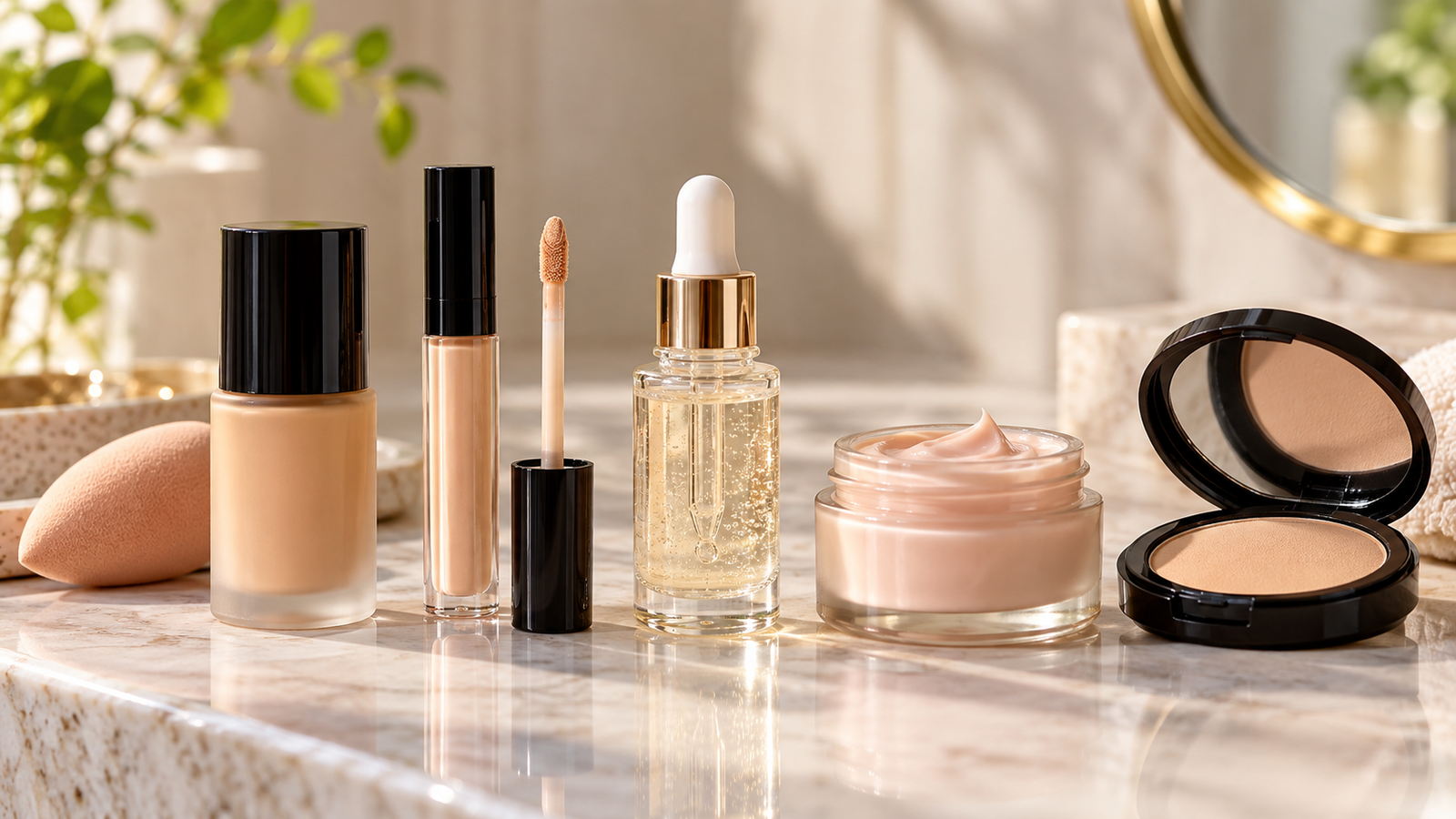
Concealers differ in how thickly they apply, how easily they spread, how much pigment they contain and how they set.
Understanding these differences can make choosing a suitable product easier.
| Concealer characteristic | Potential practical benefit | Possible trade-off |
|---|---|---|
| Lightweight liquid texture | Easier to spread in thin layers | May need targeted building for stronger coverage |
| Rich creamy texture | May feel comfortable on some dry areas | Excess product can collect in folds |
| Quick-setting formula | May reduce prolonged surface tackiness | Can become harder to blend if applied too slowly |
| Full-coverage formula | More coverage may be achieved with less product | Heavy application may emphasize texture |
| Hydrating or luminous finish | May give a softer-looking appearance | Some formulas may remain more movable |
These are general formulation considerations, not guaranteed outcomes for every product.
Two concealers with similar marketing descriptions can still perform differently because their ingredient combinations differ.
Should dry skin use a hydrating concealer?
A hydrating or comfortable formula may be worth considering if concealer repeatedly clings to dry areas.
However, the word hydrating on a label does not guarantee that the product will be suitable for your skin.
The overall formula, skincare preparation and amount applied also matter.
Are matte concealers better for oily skin?
Some people prefer matte or quick-setting concealers because they dislike a tacky finish.
However, under-eye skin may behave differently from the rest of the face.
Someone with an oily forehead can still have comparatively dry skin beneath the eyes.
Choose according to the area where the product will be used rather than assuming that one facial skin-type label applies everywhere.
Does full coverage mean more creasing?
Not necessarily.
A highly pigmented concealer may provide the desired appearance using only a small quantity.
A lightly pigmented formula may require more layering to achieve similar coverage.
The total amount applied and how the formula behaves are often more useful considerations than the coverage claim alone.
How Foundation, Concealer and Skincare Layers Interact
Under-eye creasing may become more noticeable when several products are layered without considering their combined texture.
For example, a routine might include serum, eye cream, sunscreen, foundation, concealer and setting powder.
Every product serves a potentially different role, but using more steps does not automatically improve the result.
Is foundation necessary beneath concealer?
No.
You can use concealer alone for targeted coverage.
If you prefer foundation, consider whether it is necessary to apply a full layer beneath the eyes before adding concealer.
Reducing overlapping product in an area that creases easily can help create a lighter finish.
Should serum go under concealer?
A suitable skincare serum may be part of your normal routine.
However, the product should be used according to its instructions and should not cause irritation or leave a layer that interferes with makeup.
Serums containing exfoliating acids or other potentially irritating ingredients should not be applied unusually close to the eyes simply to prepare for concealer.
A treatment serum does not replace concealer’s pigment-based coverage, and concealer does not provide the same function as a skincare treatment.
What about sunscreen?
If you apply concealer over sunscreen during the day, allow the sunscreen to settle according to its instructions.
Use gentle makeup application so that you do not unnecessarily disturb the sunscreen layer.
Do not deliberately underapply sunscreen to improve concealer wear.
Sun protection should remain a priority over obtaining a perfectly smooth cosmetic finish.
For more guidance on different makeup and skincare product roles, see Physical Glow’s comparison article Foundation vs Concealer vs Treatment Serum: Five Different Beauty Steps.
That comparison explains why these products should be chosen according to their functions rather than treated as interchangeable.
Troubleshooting Dryness, Settling and Irritation
If concealer repeatedly creases, changing several products simultaneously can make it difficult to understand the cause.
A more useful approach is to identify the main appearance problem and adjust one variable at a time.
Problem: Concealer settles into fine lines within minutes
Possible contributing factors include excess product, natural skin folds, or a formula that remains movable.
Try using a smaller amount and placing coverage only where it is needed.
After blending, check the area in a relaxed expression and gently remove any visible buildup before deciding whether to set it.
Problem: The under-eye area looks dry or flaky
Dry skin, unsuitable preparation or excessive powder may be contributing.
Consider whether your skincare routine provides enough comfort.
Reduce unnecessary layers of powder and avoid applying makeup repeatedly over visibly irritated or flaky skin.
If dryness persists despite appropriate skincare, consult a dermatologist.
Problem: Concealer separates over moisturizer
The skincare layer may be too heavy or may not have settled before makeup application.
Try adjusting the amount of moisturizer and allowing suitable settling time.
Do not assume that two products are incompatible based on ingredient labels alone; the finished formulations and application method influence the result.
Problem: Powder makes fine lines more obvious
Use less powder or try setting only the areas where the concealer moves most.
Make sure excess concealer has not already collected in folds before applying powder.
If your concealer sets comfortably without powder, you may not need an additional setting step.
Problem: Makeup looks smooth initially but creases later
Normal facial movement, skin oils, temperature, humidity and product wear can influence appearance over time.
This does not automatically mean you selected the wrong concealer.
Try small adjustments to placement, quantity or setting rather than assuming that a heavier application will last longer.
Problem: Concealer causes burning or itching
Stop using the product.
The skin around the eyes can be sensitive to ingredients in makeup, skincare, cleansing products and applicators.
If discomfort persists, swelling develops or the area becomes significantly irritated, seek professional medical advice.
Do not continue applying the product to test whether your skin will eventually tolerate it.
A Simple Under-Eye Concealer Routine for Everyday Makeup
For many people, a lighter routine is a practical place to start.
Step 1 — Prepare the skin. Cleanse gently and apply suitable moisturizer if needed. Avoid excess product around the lower eyelid.
Step 2 — Allow skincare to settle. Make sure the surface is comfortable rather than wet or excessively slippery.
Step 3 — Apply a small amount of concealer. Concentrate it on the areas where you want coverage, without automatically spreading a thick layer across the entire under-eye area.
Step 4 — Blend carefully. Use a clean fingertip, brush or sponge with gentle tapping motions.
Step 5 — Check natural folds. Relax your expression and remove visible product buildup before setting.
Step 6 — Add minimal powder if needed. Use only enough to achieve the desired finish rather than assuming a heavy layer is necessary.
Step 7 — Assess the result in normal light. Check the appearance while smiling and in a neutral expression, remembering that some natural texture is expected.
This routine is a starting framework, not a mandatory sequence for every formula or skin type.
Frequently Asked Questions
Why does my concealer crease even when I moisturize?
Moisturizing can support skin comfort, but it does not prevent natural under-eye movement.
Creasing may still occur because of the amount of concealer, product texture, placement or normal facial expressions.
Using more moisturizer is not necessarily the solution.
How do I prevent concealer creasing under my eyes?
To reduce noticeable creasing, start with suitable skin preparation, use a smaller amount of concealer, focus coverage where it is needed and blend gently.
Remove obvious buildup from folds before applying setting powder.
No technique can guarantee a completely crease-free appearance.
Is it better to apply concealer with fingers, a brush or a sponge?
All three can work.
Fingertips offer precise placement, brushes can provide targeted blending, and sponges can help soften edges.
The most useful tool is one that allows you to apply the desired amount without irritating the skin.
Keep application tools clean.
Should I set under-eye concealer with powder?
Not necessarily.
Powder can help some formulas feel more set, but it can also emphasize dryness or fine lines when used excessively.
Try a small amount and assess the appearance.
If your concealer wears comfortably without powder, setting may be optional.
Does baking stop concealer from creasing?
Baking may create a particular makeup finish, but it does not reliably eliminate natural under-eye creasing.
Heavy powder can also emphasize texture, especially on dry skin.
Should I use concealer before or after foundation?
Both approaches are used in makeup.
For targeted everyday coverage, applying foundation first and adding concealer only where needed may help reduce unnecessary layering.
However, concealer can also be used without foundation.
Choose the order that suits your products and desired finish.
Does a high-coverage concealer always crease more?
No.
A highly pigmented formula may achieve the desired coverage with a smaller amount of product.
Creasing depends on the complete formulation, application technique, skin condition and movement.
Can an eye cream prevent concealer creasing?
An eye cream may improve comfort or help manage dryness, but it cannot stop natural skin movement.
Applying too much cream may also make concealer slide or separate.
Use an appropriate quantity and allow the product to settle.
Why does my concealer look worse when I smile?
Smiling naturally changes the shape of the skin beneath the eyes.
That movement may cause makeup to gather in existing folds.
Some visible lines are normal, even when concealer has been applied carefully.
What if my under-eye skin is sensitive?
Choose products intended for the relevant area and follow the manufacturer’s directions.
Avoid excessive rubbing, keep tools clean and stop using any product that causes persistent irritation.
If sensitivity continues, seek advice from a dermatologist.
Final Takeaway
Under-eye concealer creasing is a common result of makeup interacting with natural skin texture and facial movement.
It is not always a sign that your concealer is poor quality or that your application technique is incorrect.
A lighter approach often makes the most sense.
Prepare the skin comfortably, apply concealer strategically, avoid unnecessarily heavy layering and use setting powder only when it improves the finish.
Most importantly, remember that natural under-eye lines do not need to disappear for makeup to look well applied.
The goal is comfortable coverage that fits your skin, routine and preferred appearance.
Physical Glow’s editorial principle: Makeup advice should focus on realistic results, product suitability and gentle techniques—not unsupported promises of completely wrinkle-free or permanently crease-proof skin.