Fitness Tracker vs Smartwatch: Which Should You Choose?
Fitness trackers and smartwatches overlap more than ever. Both can count steps, estimate activity, display heart-rate data and send phone notifications. The difference is usually one of priority.
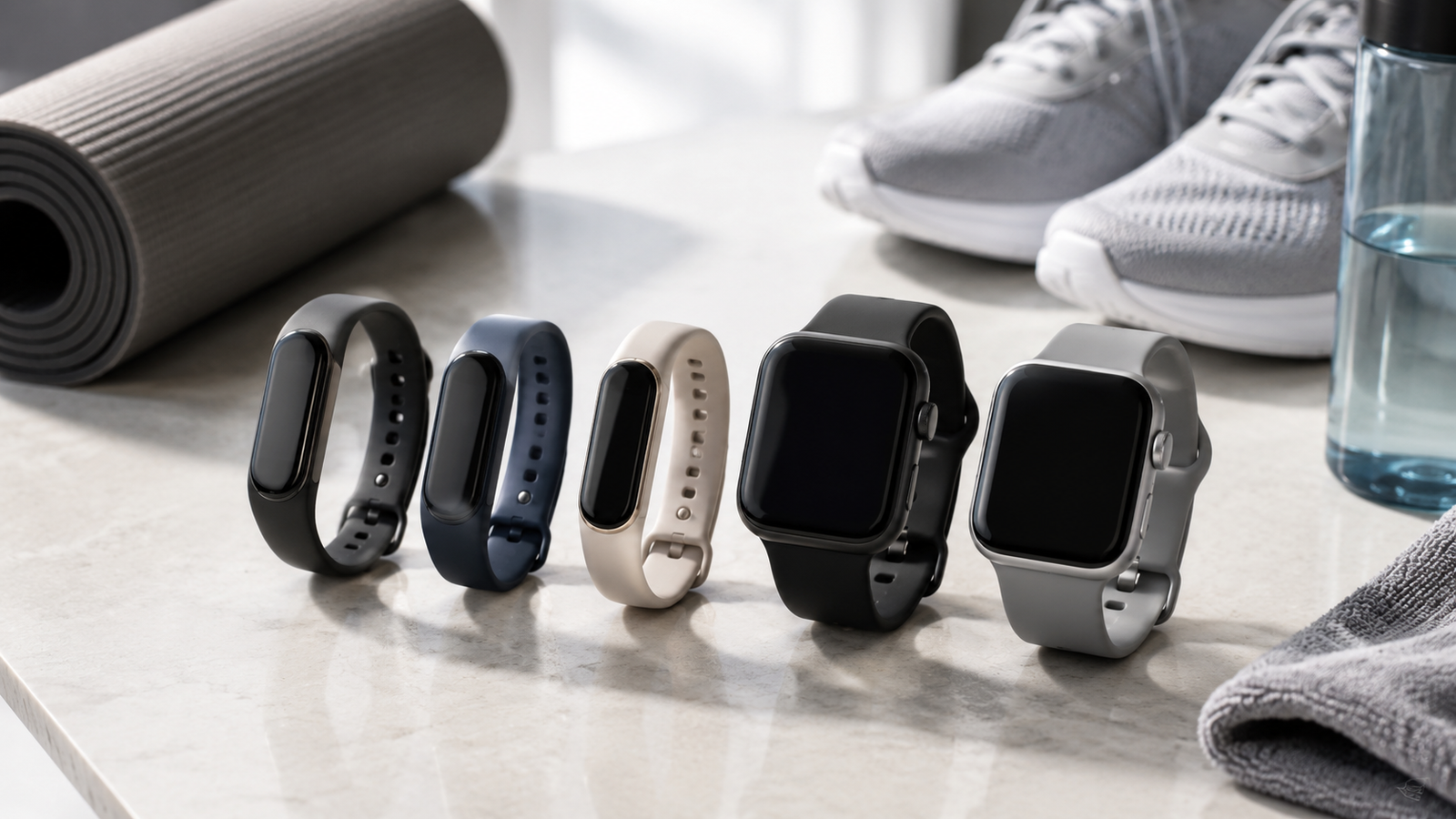
A fitness tracker is generally built around lightweight wear, activity tracking and battery efficiency. A smartwatch usually adds a larger display, richer apps and more phone-like functions. The right choice depends on whether you mainly want to track activity or whether you want a miniature connected device on your wrist.
Fitness Tracker vs Smartwatch at a Glance
| Factor | Fitness Tracker | Smartwatch |
|---|---|---|
| Design | Usually slim and light | Usually larger display |
| Battery | Often longer | Often shorter due to richer features |
| Activity tracking | Core focus | Core feature plus apps |
| Notifications | Usually basic | Usually more interactive |
| Apps | Limited | Broader app support on many models |
| Best for | Simple everyday tracking | Connected features plus fitness |
Choose a Fitness Tracker If You Want Simplicity
A slim tracker can be easier to wear continuously, including during sleep. That matters because wearable data becomes more useful when the device is actually on your wrist rather than charging on a table.
If your priorities are steps, workouts, basic heart-rate trends, sleep estimates and general activity reminders, a tracker may provide everything you need without the distraction of a larger smartwatch interface.
Choose a Smartwatch If You Want More Than Fitness
A smartwatch is usually the better choice when messaging, apps, calls, maps, music controls or other connected features matter alongside fitness tracking.
The larger screen can also make workout metrics easier to read during exercise. Some smartwatches provide more advanced GPS and training functions, although this varies by model and should never be assumed from the category name alone.
Battery Life Can Change the Experience
Battery life is one of the most practical differences. A wearable that needs frequent charging can create gaps in sleep or activity tracking. Slim trackers often prioritise longer endurance because they have smaller screens and fewer power-hungry functions.
Smartwatches may need more frequent charging, especially when GPS, always-on displays, cellular connections or continuous features are used heavily.
Built-In GPS vs Connected GPS
Some fitness trackers have built-in GPS, while others use the phone’s GPS. If you regularly run, walk or cycle outdoors without carrying your phone, built-in GPS may be worth prioritising.
If you normally carry your phone anyway, connected GPS can be sufficient and may help preserve battery life. Check the exact model rather than assuming all wearables in a product family behave the same way.
Health Metrics Need Context
Consumer wearables can estimate or track metrics such as heart rate, sleep, activity, blood-oxygen-related readings or other wellness data depending on the device. These features are useful for observing trends, but they are not automatically equivalent to clinical measurements.
Do not use a consumer wearable to diagnose a medical condition. Concerning symptoms or unexpected health readings should be discussed with an appropriate healthcare professional.
Comfort and Sleep Tracking
A smaller tracker can be easier to sleep in because it is lighter and less bulky. If overnight wear matters to you, wrist comfort may be more important than screen size.
Try to judge the entire package: case width, thickness, strap material, buckle and how the device sits on your wrist during exercise and sleep.
App Compatibility and Your Phone
Before buying, confirm that the wearable’s app works well with your phone and that the features you care about are supported on your operating system. Some watch functions can be limited when paired outside their preferred ecosystem.
Also check whether historical data, workout exports or integrations with services you already use matter to you.
When a Fitness Tracker Is Better Value
If you will ignore most smartwatch apps and mainly want activity data, paying for a larger smartwatch may not improve your experience. A well-matched tracker can offer better value because you are paying for the functions you will actually use.
When a Smartwatch Is Worth Paying More For
A smartwatch makes more sense when you want fitness tracking plus a meaningful set of daily connected functions. If you genuinely use calls, richer notifications, music controls, navigation or app integrations from the wrist, the additional capability can justify the cost and shorter battery life.
Common Buying Mistakes
- Buying for the longest health-feature list without checking accuracy limitations.
- Ignoring phone and app compatibility.
- Assuming every wearable has built-in GPS.
- Underestimating how often you are willing to charge the device.
- Choosing a large watch when you mainly want sleep and step tracking.
Final Verdict
Choose a fitness tracker if you want a lighter, simpler wearable focused on activity tracking and longer battery life. Choose a smartwatch if you want a larger display and genuinely useful connected features in addition to fitness data.
The best wearable is the one you will keep charged, wear consistently and actually use—not the one with the longest specification sheet.