Heating Pad Timers and Auto Shutoff: Safer Home Comfort Habits
Electric heating pads are popular home wellness accessories for providing warmth and temporary comfort. They are commonly used around the back, shoulders, neck and other areas where people experience muscle stiffness or discomfort.
Modern heating pads may include adjustable temperature settings, digital controllers, automatic timers and overheating protection.
These features make electric heating devices more convenient, but they can also create a false sense of security.
For example, a heating pad advertised with a two-hour automatic shutoff does not mean that using it continuously for two hours is safe for every person.
Likewise, a low-temperature setting does not eliminate the risk of skin burns.
Automatic shutoff is a useful safety feature, but it does not replace proper temperature selection, limited exposure, skin inspection and attentive use.
Burn injuries can occur when a heating pad remains against the same area for too long, particularly if the user falls asleep or has difficulty sensing heat.
Incorrect folding, damaged electrical components and unsuitable storage can introduce additional risks.
This guide explains how heating pad timers work, why automatic shutoff cannot prevent every burn, how to develop safer home comfort habits and what to check before buying or using an electric heating device.
1. How Does an Electric Heating Pad Work?
An electric heating pad contains electrical heating elements enclosed within a flexible covering.
When powered, electrical resistance in the heating elements converts electrical energy into heat.
The warmth is transferred through the pad’s material toward the intended contact area.
Many heating pads include a controller that allows the user to select different heat levels.
Some devices use sensors and electronic circuits to help regulate temperature.
Main components
A typical electric heating pad may include:
- Flexible fabric covering.
- Internal heating elements.
- Power cable.
- Temperature controller.
- Timer or automatic shutoff function.
- Temperature sensors, depending on design.
- Overheating protection, depending on design.
- Detachable controller on some models.
Not every heating pad has all these features.
A basic device with manual temperature adjustment may operate differently from a model with electronic temperature regulation and multiple safety sensors.
Why design matters
The temperature felt on the skin depends on more than the controller setting.
Factors can include:
- Heating element design.
- Temperature regulation.
- Fabric thickness.
- Body pressure against the pad.
- Duration of use.
- Ambient temperature.
- Whether the pad is folded or compressed.
A setting labeled low on one product is not necessarily equivalent to the low setting on another.
2. What Does Auto Shutoff Mean on a Heating Pad?
Automatic shutoff is a feature that turns off the heating function after a programmed period or when specified conditions are met.
However, products advertised as having auto shutoff may use different mechanisms.
Timer-based automatic shutoff
The device stops heating after a specified operating period.
For example, a hypothetical heating pad might offer a 30-minute, 60-minute or 120-minute timer.
These values are illustrative.
The actual timer duration depends on the model.
Overheating protection
Some devices contain safety mechanisms intended to respond when a temperature threshold or fault condition is detected.
This is not necessarily the same as a timer.
Temperature regulation
Some heating pads use thermostatic or electronic regulation to maintain heat around a selected setting.
A temperature-regulation system may cycle heating power on and off without shutting down the entire device.
Why the distinction matters
| Feature | What it does | What it does not guarantee |
|---|---|---|
| Adjustable heat setting | Changes intended heating intensity | A safe temperature for every user |
| Countdown timer | Ends heating after selected time | Prevention of burns before shutoff |
| Automatic shutoff | Stops heating under specified conditions | Detection of every unsafe situation |
| Temperature regulation | Controls heating output | Uniform temperature under every condition |
| Overheat protection | Responds to certain excessive-temperature conditions | Detection of every local hot spot |
| Manual power switch | Allows the user to stop heating | Automatic protection if the user falls asleep |
A heating pad can have several automatic safety features and still require careful supervision.
3. Why Auto Shutoff Does Not Eliminate Burn Risk
The most important limitation of automatic shutoff is that a burn can develop before the timer expires.
Heat injury depends on both temperature and exposure time.
A relatively mild temperature applied for a prolonged period can sometimes injure skin.
More intense heat can cause injury more quickly.
Example
Imagine a heating pad with a hypothetical two-hour shutoff timer.
The device is switched on and placed against the same area of skin.
If the user falls asleep or does not notice increasing discomfort, the skin may remain exposed to heat for a substantial period before the device turns off.
The presence of the timer does not mean the exposure was safe.
Real-world evidence
In March 2026, the US Food and Drug Administration reported a recall involving a heating pad that could overheat when folded.
The manufacturer’s reported problem involved concentrated heat in the folded area that the device did not reliably detect.
This illustrates a critical limitation: an automatic safety mechanism may not identify every hazardous heating condition.
What should users do?
- Follow the manufacturer’s stated session duration.
- Remain awake during use.
- Start with a low comfortable setting.
- Check the skin regularly.
- Avoid folding or compressing the device.
- Stop immediately if overheating or unusual discomfort occurs.
Do not rely on automatic shutoff as your only safety precaution.
4. Is a Two-Hour Heating Pad Timer Safe?
Not necessarily.
The timer indicates how long the device is designed to operate before its automatic shutoff activates.
It does not necessarily specify how long one area of skin should remain exposed.
A product may have a two-hour timer for convenience while still requiring shorter individual heat applications.
Timer duration vs skin exposure
These are different measurements.
Timer duration: How long the machine can remain switched on.
Application duration: How long heat should be applied to a particular body area.
The appropriate application duration depends on the manufacturer, heat level and individual circumstances.
What do healthcare sources recommend?
Cedars-Sinai describes approximately 10–30 minutes as a general heat-application range while emphasizing burn prevention.
Other clinical safety guidance recommends shorter intervals, commonly around 15–20 minutes.
These ranges are not universal prescriptions.
If your heating pad’s instructions require a shorter period, follow the manufacturer’s limit.
Practical approach
For an adult who can safely use heat and has normal skin sensation, a brief, low-temperature session is a reasonable starting approach.
Do not automatically keep the pad running until its timer expires.
5. How Long Should You Use a Heating Pad?
There is no one duration that is safe for every person and heating device.
The safest approach is to consider the following factors:
- Manufacturer’s maximum application duration.
- Heat setting.
- Skin sensitivity.
- Body area.
- Presence of discomfort or irritation.
- Medical conditions.
- Ability to sense heat normally.
Example of a cautious routine
- Read the device instructions.
- Check that heat therapy is appropriate for you.
- Begin with the lowest comfortable heat setting.
- Use the approved protective cover or barrier.
- Apply heat briefly while remaining awake.
- Check the skin frequently.
- Stop before the manufacturer’s maximum duration.
- Let the skin return to its normal temperature before considering another session.
A short session of approximately 10–20 minutes is commonly used in conservative home heat-therapy guidance, but the manufacturer’s and clinician’s instructions take priority.
Is longer application more effective?
Not necessarily.
Longer exposure can increase burn risk.
A prolonged session is not guaranteed to provide greater relief or faster recovery.
6. Low, Medium and High Heat Settings: Which Is Best?
Heating pads frequently offer several temperature levels.
Common labels include:
- Low.
- Medium.
- High.
Some models use numbered settings.
Others display a target temperature.
Low setting
A low setting generally produces less heating output than the device’s higher settings.
It is often a sensible starting point for users who are eligible to use heat therapy.
However, low heat can still cause injury during prolonged exposure.
Medium setting
A medium setting provides greater warmth.
It may feel more comfortable for some users, but the temperature must remain tolerable.
High setting
A high setting delivers stronger heat.
It may increase the risk of excessive temperature or discomfort, particularly if the pad is pressed firmly against the skin.
Comparison
| Setting | General characteristic | Safety consideration |
|---|---|---|
| Low | Gentle warmth | Still requires limited exposure |
| Medium | Greater heating | Monitor comfort and skin |
| High | Stronger heating | Greater caution about burns |
| Automatic temperature regulation | Adjusts heating output | Does not eliminate the need for monitoring |
Choose the lowest setting that provides comfortable warmth rather than assuming higher heat means better results.
7. Should You Place a Heating Pad Directly on Your Skin?
Follow the manufacturer’s instructions.
Many healthcare sources recommend a suitable protective layer between a heat source and the skin to reduce burn risk.
However, electrical heating pad manuals may include warnings against adding blankets, towels or other insulating materials around the device.
These instructions are not necessarily contradictory.
The important distinction
An approved heating pad cover is different from wrapping the entire device in thick insulating material.
Some products are designed to be used with their supplied fabric cover.
Others include an integrated contact layer.
Adding extra bedding or compressing the device under a towel can trap heat in ways the manufacturer did not intend.
Safer practice
Use the supplied cover or manufacturer-approved skin barrier.
Do not use an exposed heating element directly against the skin.
Do not place additional insulating layers over the heating pad unless the instructions explicitly permit them.
Avoid pressing the device tightly between your body and a mattress or heavy cushion.
8. Why You Should Not Sleep With a Heating Pad
Sleeping while using an electric heating pad can be dangerous.
When asleep, you may not notice discomfort or rising skin temperature.
You may also shift into a position that folds, compresses or traps heat around the device.
The Electrical Safety Foundation International recommends that heating pads and electric blankets not be used while sleeping.
Cedars-Sinai also warns that falling asleep with a heating pad can lead to severe burns.
Does auto shutoff make sleeping safe?
No.
A timer does not guarantee that the device cannot cause a burn before shutting off.
Can you use a heating pad before bed?
Some people use appropriate heat therapy while fully awake as part of an evening comfort routine.
If suitable for your health and permitted by the product instructions, finish the session and turn the device off before sleeping.
Remove and store it safely.
Do not leave the device switched on beneath bedding.
9. Why Folding an Electric Heating Pad Is Dangerous
A flexible heating pad may look like ordinary fabric, but its interior contains electrical heating components.
Folding or sharply bending the device during operation can concentrate heat or damage those components.
What can happen?
Possible problems include:
- Localized overheating.
- Damage to internal heating wires.
- Uneven heat distribution.
- Excessive pressure against the skin.
- Electrical faults.
- Fabric damage.
The FDA’s 2026 heating pad recall illustrates how folded sections can reach hazardous temperatures that are not necessarily detected by the device’s protection system.
What about wraparound heating pads?
Some heating pads are specifically designed to wrap around the neck, shoulders, knees or other body regions.
These should be used only in their approved configurations.
A purpose-designed wrap is not the same as folding a flat heating pad into an arbitrary shape.
Important rule
Never fold, crease, bunch, crush or sit on a heating pad unless the manufacturer explicitly permits the relevant configuration.
10. Heating Pads and Skin Burns: Early Warning Signs
Thermal injuries may develop gradually.
Users should not wait for severe pain before stopping.
Warning signs include
- Increasing redness.
- Burning or stinging.
- Unusual tenderness.
- Persistent warmth after removal.
- Skin discoloration.
- Blistering.
- Pain that worsens during use.
Some people may not feel significant pain even when skin injury is occurring.
This is particularly important for those with reduced sensation.
What should you do?
Turn off and remove the heating pad immediately.
Inspect the skin.
If you suspect a burn, follow appropriate burn first-aid guidance.
Do not continue using heat on the affected area.
Why frequent skin checks matter
The US Agency for Healthcare Research and Quality recommends monitoring skin condition and adjusting heat exposure based on tolerance.
Checking the skin helps identify early signs of irritation before continued exposure worsens the injury.
11. What Is Toasted Skin Syndrome?
Repeated exposure to low or moderate heat can cause a condition called erythema ab igne, sometimes called toasted skin syndrome.
It is associated with prolonged or repeated contact with heat sources such as:
- Heating pads.
- Hot water bottles.
- Heated car seats.
- Space heaters.
- Laptops resting against the skin.
What does it look like?
Cleveland Clinic describes a characteristic net-like or mottled pattern of skin discoloration.
It may initially appear reddish and can become darker with repeated exposure.
Does it require extremely high heat?
No.
The condition can develop from repeated heat exposure that is not hot enough to cause an immediate obvious burn.
This is why repeated long sessions on a low setting are not automatically harmless.
What should you do?
Stop exposing the affected area to the heat source.
Seek medical or dermatological assessment if the discoloration persists, changes or becomes concerning.
Do not continue heating the same skin area in an attempt to relieve discomfort.
12. Who Should Avoid Electric Heating Pads or Seek Medical Advice First?
Some medical conditions increase the risk of heat-related injury.
A person may be unable to sense high temperatures, may have fragile skin or may have impaired circulation.
Important precautions
| Condition or circumstance | Main concern | Recommended action |
|---|---|---|
| Diabetes with neuropathy | Reduced heat sensation | Avoid self-directed use on numb areas; seek medical advice |
| Poor circulation | Increased tissue-injury risk | Obtain professional guidance |
| Numbness or reduced sensation | Burns may go unnoticed | Do not apply heat without clinical direction |
| Open wounds | Potential injury and complications | Do not apply heat directly |
| Active skin infection | Heat may be inappropriate | Seek treatment advice |
| Recently injured, hot or swollen area | Possible worsening of swelling | Avoid heat unless advised |
| Fragile or damaged skin | Greater vulnerability | Obtain medical guidance |
| Infants and young children | Inability to identify overheating | Avoid ordinary adult heating pads |
| Significant difficulty moving | Unable to remove the device promptly | Do not use without appropriate clinical supervision |
| Pregnancy | Individual clinical considerations | Consult maternity care team |
| Medication patches | Heat may alter drug absorption | Avoid direct external heat over the patch |
| Impaired alertness | Reduced ability to notice danger | Do not use while drowsy, sedated or impaired |
This table is not exhaustive.
Follow product-specific contraindications.
Why diabetes deserves special attention
The CDC notes that nerve damage associated with diabetes can reduce normal sensation.
People may therefore fail to recognize excessive heat.
Published research describes serious burn injuries after heat exposure among people with diabetic neuropathy.
A person with reduced foot sensation should not use a heating pad on their feet or legs without appropriate medical direction.
13. Can You Use a Heating Pad During Pregnancy?
Some pregnant individuals use warmth for muscle discomfort.
However, the suitability of electric heating pads depends on the body area, temperature, duration and individual pregnancy circumstances.
General considerations
Avoid self-directed high-temperature exposure.
Do not assume that a pad marketed for back pain is automatically safe for abdominal use during pregnancy.
Check with your obstetrician or maternity care team before using an unfamiliar heat therapy device.
When medical assessment is more important
Do not rely on a heating pad to manage unexplained abdominal pain, bleeding, severe cramping or other concerning pregnancy symptoms.
These require appropriate medical evaluation.
A heating pad is a comfort accessory, not a substitute for maternity assessment.
14. Can You Use a Heating Pad With Pain-Relief Cream?
Be cautious.
Some topical medications produce warming or cooling sensations.
Others contain active ingredients whose safety instructions restrict the use of additional heat.
Applying an electric heating pad over a medicated cream or patch may increase skin irritation or affect drug absorption.
Medication patches
Heat can increase the absorption of certain medicines delivered through the skin.
For example, official prescribing information for fentanyl transdermal systems warns that direct external heat, including heating pads, can increase drug absorption and has been associated with fatal overdose.
What should you do?
Do not apply heat over a medicated patch.
For topical creams, gels or balms, check the product’s instructions and ask a pharmacist or clinician whether heat can be applied to that area.
Never assume that combining two products intended for pain relief is automatically safe.
15. Heat vs Cold: When Might Each Be Appropriate?
Heat and cold are used for different purposes.
Heat
Heat may help temporarily relieve certain types of muscle stiffness, discomfort and spasms.
It is often considered for established muscle tension or certain longer-standing musculoskeletal symptoms.
Cold
Cold may be used for selected recent injuries associated with swelling or inflammation.
The NHS recommends avoiding heat during the first couple of days after many sprains and strains because it may increase swelling.
However, management varies depending on the injury.
Practical comparison
| Situation | General consideration |
|---|---|
| Muscle stiffness without acute injury | Gentle heat may be appropriate |
| Recent swollen ankle sprain | Cold may be more appropriate initially |
| Hot, red or inflamed joint | Avoid adding heat without advice |
| Unexplained pain | Identify the cause before self-treatment |
| Open wound | Avoid direct heat |
| Numbness | Avoid unsupervised thermal treatment |
| Persistent severe pain | Medical assessment recommended |
Do not rely on either heat or cold to treat a significant injury without appropriate guidance.
16. Heating Pad vs Hot Water Bottle vs Microwave Heat Pack
These products all provide warmth but have different risks.
Electric heating pad
Uses electricity to generate controlled heat.
Some models offer temperature adjustment and timers.
Main concerns include electrical safety, prolonged exposure and improper positioning.
Hot water bottle
Contains heated water and releases warmth gradually.
Main concerns include scalding, leaks, water temperature and prolonged contact.
Microwave heat pack
Contains materials intended to retain heat after microwave warming.
Main concerns include overheating, uneven heating and inappropriate microwave timing.
Comparison
| Feature | Electric heating pad | Hot water bottle | Microwave heat pack |
|---|---|---|---|
| Heat source | Electrical element | Heated water | Microwave-heated filling |
| Adjustable during use | Often yes | No | No |
| Auto shutoff | On selected models | No | No |
| Electrical cord during use | Usually | No | No |
| Burn risk | Yes | Yes | Yes |
| Main additional risk | Electrical fault | Leakage or scald | Uneven overheating |
| Maintenance | Electrical and fabric care | Bottle inspection | Cover and filling inspection |
No heat source is risk-free.
The safest choice depends on intended use, individual health and correct operation.
17. Heating Pad vs Shiatsu Massage Cushion
Heating pads and massage cushions may both be marketed for home relaxation, but they work differently.
Heating pad
Applies thermal energy to a selected body area.
Shiatsu-style massage cushion
Uses mechanical movement such as rotating massage nodes or kneading mechanisms.
Some also contain heating elements.
Why this distinction matters
Mechanical massage can apply pressure that may be unsuitable for some injuries or medical conditions.
A heated massage cushion combines mechanical and thermal effects.
This can introduce additional precautions.
Should you use both together?
Do not stack a heating pad over a massage cushion or combine multiple heated devices unless the manufacturers explicitly approve the arrangement.
Unplanned combinations can increase pressure and trap heat.
A combined heat-and-massage product should be used according to its own instructions.
18. How to Check an Electric Heating Pad Before Every Use
A short equipment check can identify visible problems.
Inspect the fabric
Look for:
- Scorch marks.
- Tears.
- Unusual discoloration.
- Damaged seams.
- Exposed internal components.
Inspect the power cord
Look for:
- Cracks.
- Fraying.
- Loose connections.
- Bent or damaged plugs.
- Signs of overheating.
Inspect the controller
Check that:
- Buttons operate normally.
- The display works if fitted.
- Temperature settings can be changed.
- The timer functions as described.
- There are no visible signs of damage.
Inspect the pad’s shape
Make sure it is not sharply folded or crushed.
Check the surroundings
Keep the device away from water, excessive insulation and objects that could damage its cord.
Stop using the pad if:
- It produces a burning smell.
- The cord becomes unusually hot.
- The controller malfunctions.
- It heats unpredictably.
- Its automatic shutoff stops working.
- You notice sparking or electrical damage.
Do not attempt an improvised electrical repair.
19. Electrical Safety: Plugs, Sockets and Extension Cords
Electric heating pads draw power from a household electrical supply or another approved power source.
Electrical safety is therefore part of routine use.
Use the specified power supply
Check the voltage and power requirements.
Use only the adapter or power system approved for the device.
Avoid unsuitable extension cords
The Electrical Safety Foundation International advises against using electric heating appliances with extension cords or power strips because of overheating and fire concerns.
Use an appropriate wall outlet according to the manufacturer’s instructions.
Keep cords away from water
Do not operate an electric heating pad near a sink, bath or another location where the equipment could become wet.
Avoid trapped cords
Do not run the cable where it will be crushed by furniture or repeatedly bent.
Unplug after use
Switch off and disconnect the device according to the instructions.
Do not leave it unattended while operating.
If the device gets wet
Stop use and disconnect power only when it is safe to do so.
Do not resume operation until the manufacturer or an authorized service provider confirms that it is safe.
20. Can a Heating Pad Be Used While Sitting or Lying Down?
Body positioning affects both the pressure on the pad and the way heat is distributed.
Sitting
Some wrap-style heating pads are designed for use while seated.
However, avoid trapping a conventional flat heating pad between your full body weight and a firm chair.
Lying down
Many conventional heating pad manufacturers warn against lying directly on top of the pad.
Compression can damage internal components or concentrate heat.
If a model is intended for use while reclining, follow its approved arrangement.
Should the pad go underneath the body?
Not unless the product explicitly permits that placement.
Some safety guidance recommends placing the heating device on top of the body area rather than underneath it.
What about blankets?
Avoid covering the operating pad with heavy bedding unless specifically approved.
Additional insulation can contribute to overheating.
The product’s instructions should determine the permissible position.
21. Why Skin Inspection Matters During Heating Pad Use
Heat injury can occur even when a device appears to operate normally.
Checking the skin during use helps identify early changes.
Before starting
Examine the intended area for:
- Redness.
- Rash.
- Open wounds.
- Blisters.
- Existing burns.
- Unexplained discoloration.
Do not apply heat over an area where use is contraindicated.
During the session
Stop periodically to check the skin.
Do not continue if the area becomes uncomfortably hot or painful.
After the session
Remove the pad and inspect the area.
Temporary mild warmth or a slight color change may occur, but persistent redness, marked tenderness, blisters or unusual discoloration deserve attention.
What if the skin develops a net-like pattern?
Stop repeated heat exposure and seek medical assessment for possible erythema ab igne.
Do not continue heating the same region while the discoloration persists.
22. What Should You Do if a Heating Pad Causes a Burn?
If a heating pad causes a burn, stop exposure immediately.
Step 1: Remove the heat source
Turn off the device and remove it safely.
Ensure that any electrical danger has been addressed.
Step 2: Cool the burn
NHS and World Health Organization guidance recommends cooling thermal burns with cool running water.
A commonly recommended duration is approximately 20 minutes.
Do not use ice directly on the burn.
Step 3: Remove restrictive items
Remove nearby jewelry or clothing if it is not stuck to the skin.
Do not pull off material adhering to a burn.
Step 4: Protect the area
After cooling, cover the burn loosely with an appropriate clean, non-adherent covering if needed.
Do not apply butter, oil, toothpaste, turmeric or other home remedies.
Step 5: Seek medical care when appropriate
Get prompt medical assessment for:
- Blistering.
- Large or deep burns.
- Severe or persistent pain.
- Burns involving the face, hands, feet or genitals.
- Burns in young children.
- Burns in someone with diabetes or poor circulation.
- Signs of infection.
- Suspected electrical injury.
Seek emergency help for severe injuries.
In India, dial 112 for emergency assistance.
Do not reuse the heating pad until the cause of the injury has been identified.
23. Can You Wash an Electric Heating Pad?
Some modern heating pads have removable controllers and washable fabric components.
Others are not machine-washable.
The correct procedure depends on their construction.
Check the cleaning label
Look for instructions about:
- Removing the controller.
- Hand washing.
- Machine washing.
- Water temperature.
- Drying method.
- Reconnecting electrical components.
What should you avoid?
Unless the manufacturer specifically permits it, do not:
- Submerge the complete electrical assembly.
- Wash with the controller connected.
- Use bleach or harsh solvents.
- Twist or wring internal heating elements.
- Use a hot tumble dryer.
- Iron the pad.
- Reconnect power while the device is damp.
Removable covers
Some products have separate fabric covers that can be cleaned independently.
This is usually easier than cleaning an integrated heating pad.
Before reuse
Confirm that every component is completely dry and correctly reassembled according to the manual.
A washable label does not mean the pad can be safely operated while wet.
24. How to Store a Heating Pad Between Sessions
Proper storage reduces unnecessary stress on the fabric, wires and electrical connections.
Let the device cool
Turn it off, unplug it and allow it to cool before storage.
Avoid sharp folds
Do not fold the pad tightly unless the manufacturer specifically describes a safe folding method.
Some models should be stored flat or loosely rolled.
Protect the cable
Avoid wrapping the power cord tightly around the controller or pad.
Sharp bends can damage internal conductors over time.
Keep it dry
Choose a clean, dry storage area.
Avoid environments where moisture could reach electrical components.
Avoid heavy objects
Do not stack heavy boxes or fitness equipment on top of the pad.
Compression may damage internal heating elements.
Keep it away from children and pets
Store electrical heat devices where they cannot be activated accidentally or damaged by chewing, pulling or rough handling.
25. When Should You Replace an Electric Heating Pad?
There is no universal replacement interval that guarantees safety for all heating pads.
Their useful life depends on construction, frequency of use, storage and mechanical condition.
However, several warning signs indicate that a device should no longer be used.
Replace or professionally assess the device if:
- The cord is frayed.
- The plug is damaged.
- The controller behaves unpredictably.
- The pad develops localized hot spots.
- The fabric has scorch marks.
- Internal wires appear damaged.
- The heating element has become exposed.
- Automatic shutoff fails.
- The device gives off a burning smell.
- The manufacturer has recalled the model.
Do not repair damaged heating elements yourself
Using tape, glue or improvised wiring does not restore the original safety design.
If the product is not serviceable, replace it.
Check for product recalls
A heating pad may appear normal while still being subject to a safety recall.
Before buying or continuing to use a questionable model, check the manufacturer’s notices and relevant product-safety databases.
In 2026, US safety authorities announced recalls of several heating pad products because of overheating and burn risks.
A recall should be checked against the exact brand, model and affected production details.
26. What Features Matter When Buying an Electric Heating Pad?
A good heating pad should be selected based on suitability, safety features, clear instructions and reliable construction.
Important buying considerations
| Feature | Why it matters |
|---|---|
| Adjustable temperature | Allows more comfortable heat selection |
| Timer | Helps limit unattended heating duration |
| Automatic shutoff | Provides an additional shutdown mechanism |
| Overheating protection | May respond to specified abnormal conditions |
| Approved contact cover | Helps support intended use |
| Size and shape | Determines suitable body-area coverage |
| Flexible construction | Influences comfort and positioning |
| Clear controller | Easier adjustment and shutdown |
| Removable power connection | May simplify approved cleaning |
| Electrical safety certification | Provides evidence of testing to applicable requirements |
| Manufacturer instructions | Essential for safe use |
| Warranty and support | Useful when faults develop |
What about product certifications?
Look for applicable safety certification from credible testing or certification bodies.
For products sold in India, verify relevant electrical compliance claims rather than assuming a logo or seller statement proves certification.
A certification claim should be genuine and applicable to the exact product.
What about maximum heat?
The highest advertised temperature should not be the main reason to choose a heating pad.
Comfortable, controlled warmth and transparent safety information are more important.
27. Heating Pad vs Heated Knee Wrap vs Electric Eye Mask
Different heating accessories are designed for different body regions.
Standard rectangular heating pad
Usually provides broad coverage for approved areas such as the back or shoulders.
Wraparound heating pad
Designed to follow the shape of a specified body area.
It may include straps or fasteners.
Heated knee wrap
Designed for the knee region and may use a shaped heating area.
Heated eye mask
Designed specifically for the eye region.
Eye-area heating products require separate temperature, hygiene and medical precautions.
Comparison
| Device | Intended region | Important consideration |
|---|---|---|
| Rectangular heating pad | Approved general body areas | Avoid folds and compression |
| Shoulder or neck wrap | Neck and shoulder region | Correct fit and temperature |
| Knee heating wrap | Knee region | Avoid excessive pressure and unsuitable conditions |
| Electric eye mask | Eye region | Eye-specific safety and instructions |
| Heating blanket | Broader body coverage | Different operating and bedding requirements |
These products are not automatically interchangeable.
Never use an ordinary body heating pad over the eyes or face unless the manufacturer specifically approves that use.
28. Common Heating Pad Safety Mistakes
Mistake 1: Trusting auto shutoff completely
A timer cannot prevent every burn or overheating fault.
Mistake 2: Sleeping with the pad switched on
Sleep reduces your ability to detect discomfort or danger.
Mistake 3: Applying maximum heat immediately
Start with comfortable, controlled warmth.
Mistake 4: Leaving the pad on one area for a long time
Prolonged heat exposure increases burn risk.
Mistake 5: Folding the pad during use
Sharp folds can concentrate heat or damage internal components.
Mistake 6: Sitting on the heating element
Body weight may compress the device and create unsafe conditions.
Mistake 7: Adding heavy blankets over the device
Extra insulation can trap heat.
Mistake 8: Using heat on numb skin
Reduced sensation makes it difficult to recognize excessive temperature.
Mistake 9: Applying heat to a fresh swollen injury
Heat may be unsuitable in the early stages of certain injuries.
Mistake 10: Using heat over a medicated patch
Heat may alter drug absorption and increase risk.
Mistake 11: Ignoring a damaged cable
Frayed wires can create electrical and fire hazards.
Mistake 12: Washing the pad incorrectly
Electrical heating elements may be damaged by unsuitable cleaning.
Mistake 13: Reusing a recalled product
Stop using affected devices and follow official recall instructions.
Mistake 14: Treating persistent pain without assessment
A heating pad may temporarily improve comfort but cannot diagnose or treat the underlying cause of unexplained pain.
29. A Practical Heating Pad Safety Checklist
Use this checklist before every session.
Before use
- Confirm heat therapy is appropriate for your condition.
- Read the manufacturer’s usage instructions.
- Inspect the power cord and controller.
- Check the pad for damage or sharp folds.
- Confirm that the surface and skin are suitable.
- Use the approved contact cover.
- Choose a comfortable heat setting.
- Check the timer and shutoff controls.
- Stay awake and attentive.
During use
- Keep the pad in its approved position.
- Avoid sitting or lying directly on it unless explicitly permitted.
- Do not cover it with unauthorized insulating materials.
- Monitor skin comfort and appearance.
- Stop before exceeding the allowed application time.
- Stop immediately if you feel burning or significant discomfort.
After use
- Switch off the device.
- Disconnect power as directed.
- Inspect the skin.
- Allow the pad to cool.
- Clean it if necessary and permitted.
- Store it without damaging the heating elements or cord.
The checklist supports good habits but does not override medical or manufacturer-specific restrictions.
30. Frequently Asked Questions
Is auto shutoff necessary in a heating pad?
It is a useful safety feature, but no single feature guarantees safe use. Correct temperature, exposure duration, positioning and skin checks remain important.
Is a two-hour auto shutoff safe?
A two-hour timer does not mean continuous two-hour skin exposure is safe. Follow the manufacturer’s recommended application duration and stop sooner if needed.
Can a heating pad burn skin on the lowest setting?
Yes. Repeated or prolonged low-level heat can cause skin injury, including erythema ab igne.
Can I sleep with a heating pad that has auto shutoff?
No. General electrical safety guidance advises against sleeping while using electric heating pads, even if they have an automatic timer.
How long should I use a heating pad?
Many clinical sources describe short heat applications of approximately 10–30 minutes. Choose a duration within your manufacturer’s and clinician’s instructions, and avoid prolonged uninterrupted exposure.
Should a heating pad be placed directly on the skin?
Use the manufacturer-approved contact cover or barrier. Avoid direct contact with exposed heating elements, and do not wrap the device in unapproved insulating materials.
Can I lie on top of an electric heating pad?
Not unless the manufacturer explicitly permits that use. Many products warn against sitting, lying or placing heavy pressure on the pad.
Why should I avoid folding a heating pad?
Folding can concentrate heat or damage internal heating elements, potentially increasing fire and burn risks.
Is high heat better for muscle stiffness?
Not necessarily. Comfortable warmth may be sufficient, and higher heat increases the need for caution.
Can I use a heating pad every day?
The suitability of regular use depends on the medical reason, skin condition and manufacturer instructions. Repeated heat on the same area can cause skin discoloration or injury.
Are electric heating pads safe for people with diabetes?
People with diabetes, especially those with neuropathy or poor circulation, may be at increased risk of burns. Seek medical advice before using heat, and avoid unsupervised use on areas with reduced sensation.
Can I use a heating pad during pregnancy?
Ask your maternity care team before using an electric heating device, particularly for abdominal discomfort or if you have pregnancy-related symptoms.
Can a heating pad be used on a recent injury?
Heat may be inappropriate for newly injured, hot or swollen tissue. Follow clinical advice rather than assuming warmth is always beneficial.
Can I use a heating pad with pain-relief gel?
Check the medication’s warnings and ask a pharmacist or clinician. Certain topical products and transdermal patches should not be exposed to external heat.
Can an electric heating pad be washed?
Some models are washable after removing their controller. Others are not. Follow the exact manufacturer’s instructions.
How do I know if my heating pad is overheating?
Warning signs can include a burning smell, unusual localized heat, scorch marks, electrical faults or discomfort. Stop use immediately if these occur.
What is toasted skin syndrome?
It is a net-like pattern of skin discoloration associated with repeated or prolonged heat exposure. Stop using the heat source and seek medical advice for persistent changes.
Should I replace an old heating pad?
Replace a device that is damaged, malfunctions, has become unsafe or is affected by a recall. Follow manufacturer guidance regarding service life.
Is a heating pad better than a hot water bottle?
Neither is universally safer. Electric pads involve electrical and prolonged-heating risks, while hot water bottles can leak or scald. Proper use matters more than the category alone.
What should I do if a heating pad burns me?
Remove the heat source and cool the burn under cool running water for approximately 20 minutes. Do not apply ice or home remedies. Seek medical assessment for blistering, significant burns or other concerning features.
31. Final Takeaway
Electric heating pads can provide convenient warmth and temporary comfort, but they should never be treated as risk-free appliances.
A timer or automatic shutoff is an additional safety feature—not permission to sleep with the device, use maximum heat or leave it against the skin for extended periods.
The most useful safety habits are straightforward: select a comfortable setting, keep the device unfolded unless designed otherwise, use its approved cover, monitor your skin and finish the session within the recommended duration.
People with reduced sensation, poor circulation, diabetes-related neuropathy, significant skin problems or certain other medical conditions require particular caution.
Damaged cords, faulty controllers, unusual hot spots and recalled equipment should never be ignored.
When comparing heating pads, focus on appropriate safety features, clear manufacturer instructions, reliable construction and suitable body-area coverage rather than maximum temperature alone.
A well-designed heating pad used carefully can be a useful comfort accessory.
But the safest heating routine is one that prioritizes controlled warmth, limited exposure and attentive use over continuous heating.
References and Further Reading
- Cedars-Sinai — How to Use a Heating Pad to Ease Muscle Pain
- Electrical Safety Foundation International — Heating Pads and Electric Blankets Safety
- US FDA — Heating Pad Recall: Overheating and Automatic Shutoff Failure (2026)
- Cleveland Clinic — Toasted Skin Syndrome (Erythema Ab Igne)
- CDC — Diabetes and Nerve Damage
- NHS — Sprains and Strains
- NHS Inform — Burns and Scalds
- World Health Organization — Burns: First Aid and Prevention
- US Consumer Product Safety Commission — Heating Pad and Heated Blanket Recall (2026)
- HealthLink BC — Heat After an Injury
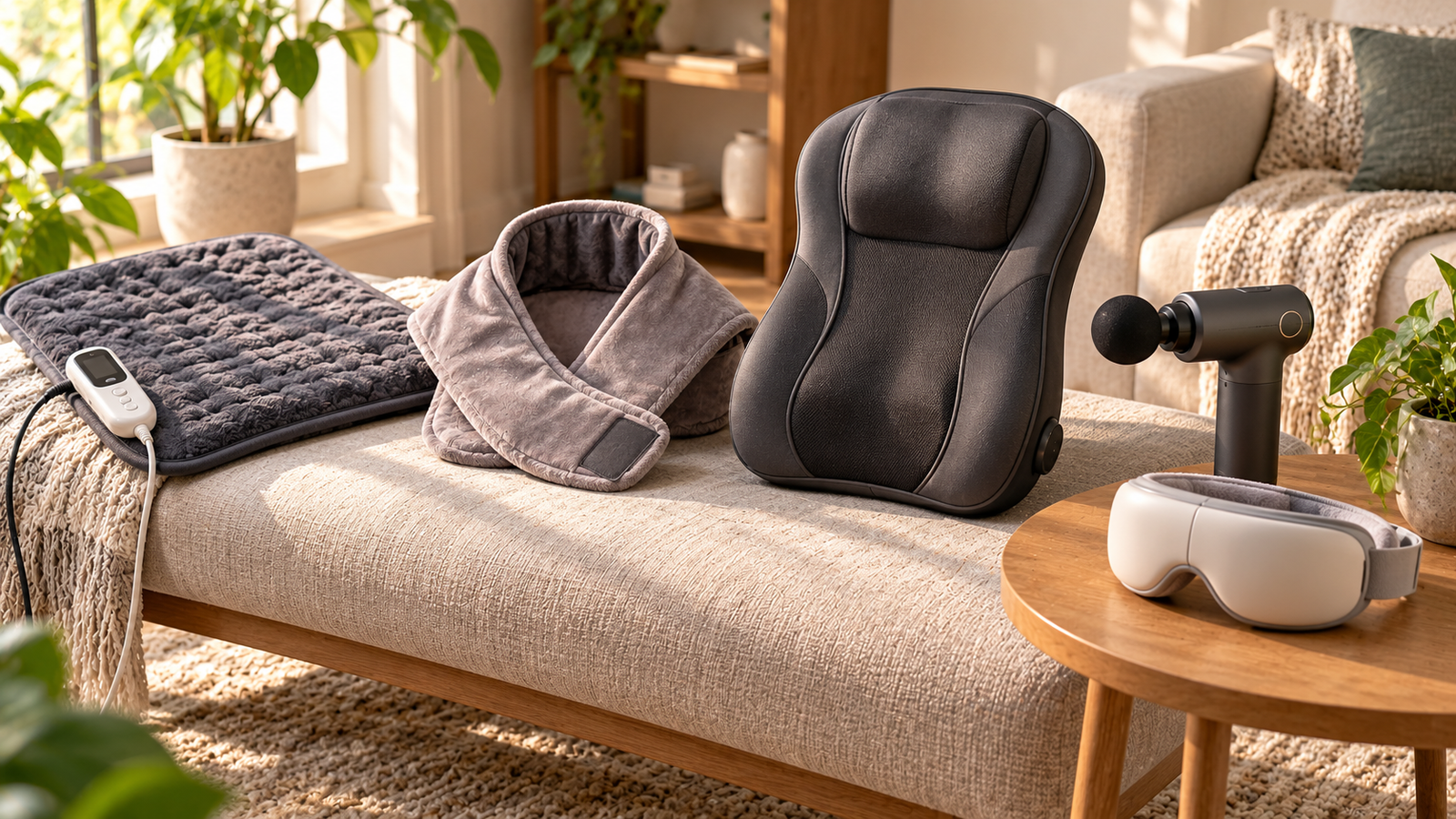
Medical and safety disclaimer: This article provides general home wellness and electrical-safety information. It does not replace medical advice, product-specific instructions or electrical safety requirements. Heating pad temperatures, timers, permitted usage positions and cleaning procedures vary by model. The featured image is illustrative and does not represent independently tested products or verified therapeutic outcomes. Seek qualified medical advice for persistent pain, skin injury, reduced sensation or conditions that may make heat exposure unsafe. Physical Glow may earn a commission from qualifying affiliate purchases at no additional cost to readers.