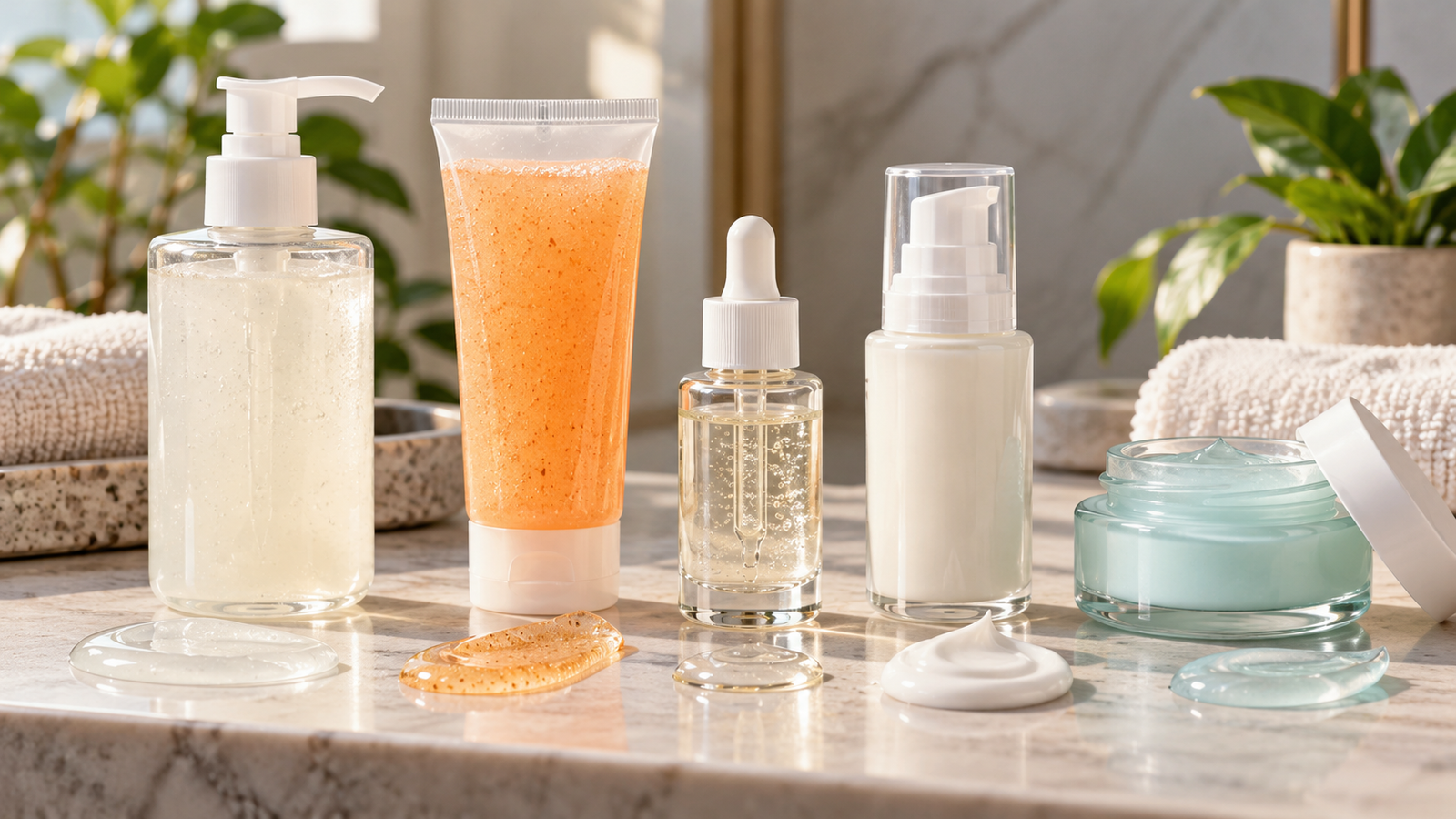
Face Wash That Leaves Skin Tight: Cleansing Time and Water Temperature
A freshly washed face should feel clean, but what happens when your skin feels unusually tight, stretched or uncomfortable immediately after cleansing?
Many people experience this sensation, particularly after using a foaming face wash, washing with hot water or cleansing repeatedly throughout the day.
Sometimes the tightness disappears after applying moisturizer. At other times, it is accompanied by flaking, redness, stinging or a persistent feeling of dryness.
It is tempting to assume that tightness means a cleanser has thoroughly removed dirt and oil. However, skin feeling tight after face wash does not necessarily mean it is cleaner or healthier.
Cleansing removes unwanted material from the skin, but it can also affect the skin’s surface lipids and moisture balance. The formula you use, the temperature of the water, how long you wash and how much friction you apply can all influence how your skin feels afterward.
The good news is that many cleansing-related comfort problems can be addressed with relatively simple changes.
This guide explains why face wash leaves skin tight, how water temperature and cleansing time affect comfort, how much cleanser is usually needed, and how to build a gentler routine without sacrificing basic cleanliness.
What the Tight-After-Washing Feeling Can Signal
A tight feeling after cleansing is a sensation, not a medical diagnosis.
It may occur when the skin temporarily loses moisture, when its surface becomes irritated, or when a particular cleanser is not well suited to the person’s skin.
To understand why this happens, it helps to consider the skin barrier.
Understanding the skin’s protective barrier
The outermost layer of the skin, known as the stratum corneum, helps limit excessive water loss and protects against environmental irritants.
Its structure includes skin cells surrounded by a mixture of lipids.
These lipids, including ceramides, cholesterol and fatty acids, contribute to the barrier’s function.
A healthy skin barrier does not prevent all water loss. Instead, it helps regulate moisture movement while maintaining a protective surface.
When the skin becomes dry or irritated, it may feel rough, tight, uncomfortable or unusually sensitive.
How cleansing can affect skin comfort
Face washes contain cleansing ingredients, commonly called surfactants, that help remove oils, dirt and other material from the skin.
Surfactants work partly by helping oily substances mix with water so they can be rinsed away.
This is useful because water alone may not effectively remove every type of oil-based residue.
However, cleansing is not perfectly selective.
Depending on the formula and the way it is used, a cleanser may also remove some of the skin’s natural surface lipids or contribute to temporary changes in skin comfort.
A stronger cleansing sensation does not automatically mean that a product is more effective for everyday use.
Is tightness always caused by a damaged skin barrier?
No.
Tightness may have several contributing factors, including dry environmental conditions, cleansing habits, skincare products or individual sensitivity.
A brief tight sensation does not establish that you have a specific skin condition or measurable barrier damage.
However, persistent discomfort, cracking, stinging or redness deserves attention.
If these symptoms continue despite gentle skincare adjustments, a dermatologist can help identify possible causes.
What should clean skin feel like?
There is no single sensation that every person must experience after washing.
For many people, comfortable cleansing means the skin feels free from unwanted residue without prolonged tightness, burning or irritation.
Your face does not need to feel squeaky or completely free of natural oils to be clean.
Comfort after washing is a useful observation, even though it is not a scientific test of how well a cleanser works.
Why Hot Water Can Make Skin Feel Uncomfortable
Water temperature is one of the easiest parts of a cleansing routine to adjust.
Some people prefer hot water because it feels refreshing or seems to remove oil more effectively.
Others believe cold water is necessary to close pores.
Neither approach is essential for ordinary facial cleansing.
Hot water and dry skin
Very hot water can aggravate dryness and discomfort, particularly in people who already have sensitive or dry skin.
The American Academy of Dermatology recommends warm rather than hot water when caring for dry skin.
Excessive heat may increase irritation and make an already uncomfortable cleansing routine feel worse.
You do not need to measure the exact water temperature with a thermometer.
The practical goal is to use water that feels comfortably lukewarm rather than noticeably hot.
Does hot water open pores?
Pores do not open and close like tiny doors in response to hot and cold water.
Their appearance can change for several reasons, including oil accumulation, skin texture and temporary changes in the surrounding skin.
Hot water is not necessary to open pores before cleansing.
Likewise, rinsing with ice-cold water does not permanently close them.
Focus on gentle cleansing rather than trying to manipulate pore size through extreme temperatures.
Is cold water better for the face?
Cool water may feel pleasant to some people, particularly in warm weather.
However, cold water is not automatically superior to lukewarm water for everyday cleansing.
The temperature should be comfortable and compatible with the cleanser’s directions.
A cleanser designed to rinse with water does not generally require extreme temperatures to work.
What about hard water?
Some households have hard water containing relatively high concentrations of minerals such as calcium and magnesium.
Hard water can influence how certain cleansing products lather and rinse.
Traditional soaps may react with these minerals differently from some synthetic detergent cleansers.
However, a tight feeling after washing does not prove that your home has hard water or that mineral content is the main cause.
If your skin feels uncomfortable, begin by reviewing the cleanser, water temperature and washing habits before investing in water-treatment equipment.
How Long Should You Wash Your Face?
People sometimes believe that the longer a cleanser stays on the skin, the more thoroughly it removes dirt and oil.
This is not a dependable rule.
Cleansing performance depends on the product’s formulation, the amount used, the material being removed and the application method.
Is there an ideal number of seconds?
There is no universally established contact time that guarantees the best outcome for every ordinary face wash.
Some people follow a 30-second routine. Others use a one-minute cleansing technique promoted on social media.
Neither duration should be treated as a requirement for all skin types and formulations.
For a regular rinse-off cleanser, the practical objective is to distribute it gently over the areas needing cleansing and rinse it away according to the manufacturer’s instructions.
If your skin becomes uncomfortable during prolonged washing, increasing contact time is unlikely to be a useful first adjustment.
Does washing longer remove more oil?
Longer or more vigorous washing may remove additional surface material, depending on the cleanser.
But removing more oil is not automatically beneficial.
The skin naturally produces sebum, which contributes to its surface environment.
People with oily skin may benefit from products designed to remove excess sebum, but they do not need to eliminate every trace of it.
Overly aggressive cleansing may increase dryness or irritation.
Is the same timing appropriate for exfoliating face washes?
Not necessarily.
Some cleansers contain active ingredients such as salicylic acid or alpha-hydroxy acids.
These products are not identical to ordinary gentle cleansers.
Their effects depend on ingredient concentration, formulation, frequency and instructions.
Do not assume that leaving an exfoliating face wash on the skin longer will improve its results.
Extended contact or repeated use may increase irritation in some individuals.
Follow the product directions and reduce unnecessary exposure if irritation occurs.
What about acne-treatment cleansers?
Certain acne cleansers contain ingredients such as benzoyl peroxide or salicylic acid.
These products may have specific application directions.
Use them as instructed rather than applying general timing advice from unrelated skincare products.
If a medicated cleanser causes substantial dryness, peeling or burning, consult your dermatologist or prescribing professional about an appropriate adjustment.
How Much Cleanser Is Usually Enough?
Using more cleanser does not necessarily produce better results.
A large amount may create more foam and make the cleansing process feel more intensive, but this does not prove that the extra product is required.
The appropriate amount varies by formula, concentration, packaging and the surface area being washed.
Start with the manufacturer’s directions
Some face washes are concentrated and require only a small quantity.
Others are low-foaming lotions or gels intended to be applied differently.
Follow the manufacturer’s instructions when available.
If no specific amount is stated, begin with a modest quantity that spreads across the areas you need to cleanse.
You can adjust based on how effectively the product removes unwanted residue and how your skin feels afterward.
More foam does not mean more cleanliness
The amount of lather a cleanser produces depends largely on its surfactants and formulation.
Some gentle cleansers produce little visible foam.
Others create substantial lather even when a small quantity is used.
Neither appearance reliably establishes that one product cleans better than another.
Foam can be part of a pleasant sensory experience, but it is not a direct measurement of cleansing effectiveness or skin-barrier compatibility.
Should you use extra cleanser on oily skin?
Oily skin may feel uncomfortable when excess sebum accumulates, particularly in humid weather.
However, applying unusually large amounts of face wash may not be the best way to manage that concern.
Instead, consider whether the product is suitable for your skin type and whether your washing frequency is appropriate.
People with oily or acne-prone skin can still experience dryness and irritation from aggressive cleansing.
A balanced routine aims to remove excess material while maintaining reasonable skin comfort.
Contact Time, Friction and Gentle Rinsing
The way you move your hands across your face can influence how the cleansing routine feels.
Applying a gentle cleanser with excessive rubbing may still cause irritation.
Use your fingertips
The American Academy of Dermatology recommends using fingertips rather than abrasive washing tools for routine facial cleansing.
Wet your face with lukewarm water, then spread the cleanser gently according to its directions.
Avoid using unnecessary pressure.
Your fingertips should move comfortably across the skin without pulling, scratching or creating noticeable friction.
Are cleansing brushes necessary?
Not for everyone.
Manual and electric cleansing brushes may provide a particular sensory experience, but they are not essential for basic facial hygiene.
People with sensitive, dry or irritated skin may find that additional mechanical exfoliation makes discomfort worse.
If your face already feels tight after washing, reducing friction is a reasonable step before adding another cleansing tool.
Avoid using brushes or rough cloths over broken or significantly irritated skin.
Why scrubbing harder can backfire
Scrubbing may temporarily create a sensation of thorough cleaning.
However, repeated mechanical friction can irritate the skin.
For acne-prone skin, the American Academy of Dermatology specifically advises against scrubbing because it may worsen irritation and breakouts.
The goal should be to remove unwanted material, not to polish the skin until it feels stripped.
Rinse according to the product instructions
After cleansing, rinse away the product as directed.
Pay attention to areas where cleanser may remain, including around the hairline, sides of the nose and jawline.
Leftover product can contribute to discomfort for some people.
However, repeatedly rinsing and rubbing long after the cleanser has been removed is unnecessary.
Use comfortably lukewarm water and gentle movements.
Pat rather than rub dry
Drying technique is another small but useful adjustment.
Instead of vigorously rubbing your face with a towel, gently pat away excess water using a clean, soft towel.
There is no need to make your skin completely dry before applying an ordinary moisturizer unless another product’s instructions require it.
Leaving the skin slightly damp can be helpful when moisturizing.
How Often Should You Wash Your Face?
Washing frequency matters because repeated cleansing can increase skin exposure to water, surfactants and friction.
For many adults, washing the face up to twice daily and after substantial sweating is a reasonable general framework.
The American Academy of Dermatology gives similar advice for acne-prone skin.
However, individual routines may need adjustment.
Morning cleansing
Some people prefer to use a gentle cleanser every morning.
Others with dry or sensitive skin may find that a simple lukewarm-water rinse is more comfortable at certain times.
There is no need to force an elaborate cleansing routine solely because a skincare schedule says that every step is mandatory.
However, follow any specific medical or product directions that apply to your skin condition.
Evening cleansing
Evening cleansing can be useful for removing daily accumulation of sweat, oil, dirt, makeup and sunscreen.
If you wear long-wearing cosmetics or substantial water-resistant sunscreen, the appropriate removal method may differ from a simple morning cleanse.
Use products suitable for the makeup or sunscreen being removed.
Do not assume that aggressive scrubbing is necessary to achieve a clean result.
After exercising
Sweating can leave the face feeling sticky or uncomfortable, especially during hot and humid weather.
Gentle cleansing after significant sweating may be useful.
The American Academy of Dermatology recommends washing after sweating as part of acne-friendly skincare.
However, if repeated full cleansing causes dryness, assess your total cleansing frequency, the formula being used and your skin’s response.
Avoid treating every small amount of perspiration as a reason for another prolonged face-washing session.
Washing four or five times daily
Some people repeatedly wash their face because they dislike oiliness.
Frequent washing may temporarily remove surface oil but can also increase dryness and irritation.
If you feel the need to wash your face many times daily, consider whether the cleanser is too aggressive or whether another skincare concern needs attention.
A dermatologist can help if persistent oiliness, acne or irritation is difficult to manage.
Choosing a Cleanser That Feels Comfortable After Rinsing
If your face consistently feels tight after cleansing, consider whether the product suits your skin.
Marketing descriptions can provide clues, but they are not guarantees.
Gentle and non-abrasive cleansers
A cleanser described as gentle is generally intended for relatively mild cleansing.
However, the finished formulation determines how it behaves.
A gentle-looking package does not establish that a product will suit every person.
Look at the ingredient information, intended use and your experience with the product.
Fragrance-free options
Fragrance may be acceptable for many people, but some individuals experience irritation or sensitivity to fragranced products.
The American Academy of Dermatology recommends fragrance-free skincare products for people managing dry, sensitive skin.
Be aware that unscented and fragrance-free do not always mean the same thing.
An unscented product may include ingredients intended to mask an odor.
If fragrance has previously caused irritation, a genuinely fragrance-free option may be more suitable.
Cream and lotion cleansers
Some cleansers have a milky, creamy or lotion-like texture.
These products may feel more comfortable for certain dry or sensitive skin types.
However, texture alone cannot guarantee mildness.
A cream cleanser may still contain ingredients unsuitable for an individual user.
Choose based on the finished product and its directions.
Gel and foaming cleansers
Gel and foaming products can be appropriate for many people, including those with oily skin.
Foaming does not automatically mean harsh.
Modern formulations may use surfactant systems designed to balance cleansing with skin comfort.
At the same time, a particular foaming formula may feel too drying for your skin.
If a product repeatedly leaves you uncomfortable, there is no need to keep using it simply because it is marketed for your skin type.
Exfoliating face washes
Cleansers containing exfoliating ingredients may serve an additional skincare function.
That function is different from basic daily cleansing.
If your face already feels tight or irritated, adding more exfoliation may worsen discomfort.
Follow product directions and avoid combining multiple potentially irritating products without considering your skin’s tolerance.
For a detailed comparison of product functions, read Physical Glow’s Gentle Cleanser vs AHA Face Wash vs Niacinamide Serum: Product Roles.
That guide explains why a rinse-off cleanser, exfoliating face wash and leave-on skincare serum should not be treated as interchangeable products.
Moisturizing After Cleansing Without Overcomplicating It
Moisturizing is an important part of managing dry or uncomfortable skin.
The purpose of a moisturizer is not to reverse every effect of an unsuitable cleanser.
Instead, it helps support hydration and limit excessive moisture loss.
Apply moisturizer while skin is slightly damp
The American Academy of Dermatology recommends applying moisturizer when skin is still damp to help manage dryness.
After washing, pat away excess water rather than rubbing the face completely dry.
Then apply a suitable moisturizer according to its instructions.
This is a practical habit for people who frequently experience dryness after cleansing.
Understanding moisturizer ingredients
Moisturizers commonly contain different categories of ingredients.
Humectants help attract or retain water within the skin’s outer layers. Examples include glycerin and hyaluronic acid.
Emollients help improve skin smoothness and softness.
Occlusive ingredients help reduce water loss by forming a protective layer on the skin.
Many moisturizing formulas combine these functions.
The ingredient categories can help you understand the product, but they do not guarantee a specific result from any one formula.
Should oily skin use moisturizer?
Yes, oily skin can still experience dryness or irritation.
Sebum production and skin hydration are not the same thing.
A person may have visible surface oil while also experiencing tightness after using an aggressive cleanser.
Choose a moisturizer appropriate for your preferences and skin condition.
A lightweight lotion or gel-cream may feel more comfortable for some people, while others prefer a richer cream.
What if moisturizer temporarily fixes the tightness?
If moisturizer relieves tightness, it may be helping address dryness or discomfort.
However, this does not establish why the tightness occurred.
If the sensation returns after every wash, it may be worth adjusting the cleanser or washing method instead of continually compensating with heavier moisturizing products.
Avoid unnecessary skincare layers
A cleanser, appropriate moisturizer and daytime sunscreen may be sufficient as a basic routine for many people.
Additional serums, exfoliants and treatment products should be chosen for specific purposes rather than added automatically.
When your skin feels uncomfortable, simplifying the routine may make it easier to identify whether one product is contributing to irritation.
Why Hot, Humid Weather Does Not Eliminate the Risk of Dryness
In India, skincare routines often change according to the season.
During hot weather, people may wash their faces more frequently to remove sweat and oil.
During cooler or drier periods, they may use richer moisturizers.
These adjustments can be reasonable, but the underlying principles of gentle cleansing remain important.
Summer cleansing
Sweat and surface oil can create a strong desire to wash repeatedly.
However, excessive cleansing may contribute to tightness even during humid weather.
If your face feels greasy several times daily, consider whether you need a gentler washing routine rather than simply using more cleanser each time.
Air-conditioned environments
Air-conditioned indoor environments may be relatively dry.
Some people experience greater skin dryness when spending long periods in such conditions.
If your skin becomes uncomfortable, review both cleansing habits and moisturizing.
Avoid assuming that the weather outdoors accurately reflects the conditions your skin experiences indoors.
Winter and dry weather
Cooler weather and low humidity may make dry skin more noticeable.
Very hot showers can also feel appealing during winter, but they may aggravate dryness.
Use comfortably warm water rather than excessively hot water.
If needed, adjust your moisturizer to a formula that provides more comfort.
Does hard water require a special face wash?
Not necessarily.
Water composition can influence cleanser behaviour, particularly with certain soap-based formulas.
However, a particular cleanser’s performance depends on its full formulation.
If you suspect water-related discomfort, make one change at a time rather than immediately buying filters, special cleansers and several additional skincare products.
A Simple Face-Washing Routine for Skin That Feels Tight
If you experience tightness after washing, the following routine offers a practical starting point.
Step 1: Choose a gentle cleanser. Select a non-abrasive product suitable for your skin. If you are sensitive to fragrances, consider a fragrance-free option.
Step 2: Use lukewarm water. Avoid very hot water and extreme temperature changes.
Step 3: Begin with a modest quantity. Use enough cleanser to cover the areas requiring cleansing, following the product’s instructions.
Step 4: Apply with fingertips. Spread the cleanser gently without vigorous scrubbing or rough cleansing tools.
Step 5: Do not prolong washing unnecessarily. Cleanse according to the formula’s directions rather than following a universal one-minute rule.
Step 6: Rinse gently. Remove the cleanser with comfortably lukewarm water.
Step 7: Pat the face dry. Use a clean, soft towel and avoid unnecessary rubbing.
Step 8: Apply moisturizer. If your skin is dry or uncomfortable, apply a suitable moisturizer while the skin remains slightly damp.
For daytime routines, finish with suitable broad-spectrum sun protection when appropriate.
Try this approach consistently and assess whether the tightness improves.
If symptoms persist, worsen or involve a rash, burning or significant irritation, professional advice is appropriate.
Persistent Tightness, Redness or Burning: When to Seek Advice
Not all skin discomfort can be explained by using too much cleanser.
A persistent tight sensation may occur alongside a range of skin concerns.
For example, some individuals have naturally dry skin, while others experience irritation from skincare products or environmental factors.
Inflammatory skin conditions and contact reactions may also cause dryness, redness, itching or burning.
These conditions cannot be distinguished reliably from a brief description of tightness alone.
Warning signs that deserve attention
Consider consulting a dermatologist if you experience:
- Tightness or discomfort that persists despite a gentle routine.
- Repeated burning or stinging after skincare application.
- Significant redness, swelling or itching.
- Cracking, bleeding or painful areas of skin.
- A recurring rash after using particular products.
- Symptoms that worsen or interfere with ordinary activities.
Stop using a product that appears to be causing significant irritation.
If you experience severe swelling, breathing difficulty or another acute allergic-type reaction, seek urgent medical care.
Do not repeatedly apply an irritating cleanser in the hope that your skin will eventually adapt.
Why self-diagnosis can be misleading
Dryness, eczema, contact dermatitis and other skin conditions may share some symptoms.
The treatment approach can differ depending on the underlying cause.
A dermatologist can evaluate the skin and recommend an appropriate routine or medical treatment when necessary.
Simple cleansing changes are helpful for many people, but they are not a substitute for treating an underlying condition.
Frequently Asked Questions
Why does my face feel tight after washing?
A tight feeling may occur because of dryness, irritation, the cleanser’s formulation, water temperature or repeated washing.
It does not automatically mean that your skin is cleaner or that a specific skin condition is present.
If the sensation persists, review your routine and seek professional advice when needed.
Is tight skin after face wash a sign of cleanliness?
No.
Tightness is not a reliable measure of cleansing effectiveness.
A suitable cleanser should remove unwanted residue without requiring the skin to feel excessively dry or uncomfortable.
Is hot water bad for washing the face?
Very hot water may aggravate dryness and irritation, particularly in sensitive skin.
Dermatologists generally recommend lukewarm water for gentle facial cleansing.
How long should I leave face wash on my skin?
Follow the manufacturer’s directions.
There is no universal cleansing duration suitable for every formula.
Products containing active treatment ingredients may require different instructions from ordinary gentle cleansers.
Should I wash my face for one full minute?
Not necessarily.
The one-minute method is not a universal dermatological requirement.
Gentle application, suitable cleanser choice and proper rinsing are more useful considerations than forcing an exact duration for every product.
Does more foam mean a cleanser works better?
No.
Foam depends on the cleanser’s surfactant system and other formulation characteristics.
A low-foaming cleanser can still remove unwanted material effectively.
Why does my oily skin feel tight after cleansing?
Oily skin can still become dry or irritated.
Visible sebum and skin hydration are different characteristics.
A harsh cleanser, frequent washing or unsuitable skincare routine may contribute to discomfort.
Can I use moisturizer immediately after washing my face?
Yes, in most ordinary skincare routines.
Applying a suitable moisturizer while the skin is slightly damp can help manage dryness.
Follow any specific directions for medicated products or other treatments in your routine.
Should I wash my face three or four times a day in summer?
Repeated cleansing is not automatically beneficial.
For many people, cleansing up to twice daily and after substantial sweating is a reasonable general approach.
Excessive washing may contribute to irritation, so adjust your routine according to skin comfort and professional guidance where appropriate.
Can hard water cause tightness after face washing?
Water hardness can affect how certain cleansing products behave, but tightness alone does not identify hard water as the cause.
The cleanser, temperature, frequency and skin condition may also contribute.
Should I stop using salicylic acid face wash if my skin feels tight?
If a product repeatedly causes significant dryness or irritation, reassess its use.
Follow the product instructions, and seek advice from a dermatologist if you are using it for acne treatment or symptoms persist.
Do not continue excessive use simply because an ingredient is popular for oily skin.
Is a cream cleanser always gentler than a foaming cleanser?
No.
Texture alone does not determine mildness.
A well-formulated foaming cleanser may be comfortable for some people, while another formula may feel too drying.
Evaluate the finished product and how your skin responds.
Final Takeaway
If your face wash leaves skin tight, the answer is not necessarily to wash harder, use more cleanser or add several new skincare products.
Begin with the fundamentals.
Choose an appropriate gentle cleanser, use comfortably lukewarm water, avoid excessive washing time and friction, and moisturize when needed.
Remember that cleansing should remove unwanted material while maintaining reasonable skin comfort.
Tightness is not proof of a better cleanse, and excessive dryness is not a necessary part of effective skincare.
If discomfort continues despite adjusting your routine, consult a dermatologist rather than repeatedly experimenting with stronger products.
A consistent, gentle cleansing routine is often more useful than an elaborate routine built around the sensation of squeaky-clean skin.
Physical Glow’s editorial principle: Assess face washes according to their formulation, intended use and skin compatibility—not foam volume, exaggerated cleansing claims or the belief that stronger sensations always indicate better results.
References and Further Reading
- American Academy of Dermatology — Face Washing 101
- American Academy of Dermatology — Dermatologists’ Top Tips for Relieving Dry Skin
- American Academy of Dermatology — Acne: Tips for Managing
- National Eczema Association — Moisturizing and Eczema
- National Eczema Association — Ways to Relieve Itch from Eczema