Sleeping with Earbuds: Alarms, Side-Sleeping and Ear Comfort
Listening to music, white noise, rain sounds or an audiobook can make bedtime more comfortable, especially when your surroundings are noisy.
For people living near busy roads, sharing a bedroom or working irregular hours, earbuds may seem like a convenient way to block distractions and create a calmer sleeping environment.
However, earbuds that feel comfortable for a short listening session may become uncomfortable when worn for several hours.
Side-sleeping can press an earbud against the outer ear. Prolonged use may trap moisture, irritate the ear canal or increase the likelihood of problems when earbuds are not cleaned properly. Depending on your audio settings, wearing earbuds can also make important sounds, including alarms, harder to notice.
Sleeping with earbuds is not automatically unsafe, but comfort, listening volume, hygiene and your ability to hear essential alerts all deserve attention.
There is also a difference between ordinary wireless earbuds and devices specifically designed for sleeping. Their size, fit, features and limitations may affect how suitable they are for overnight use.
This Physical Glow guide explains the practical risks of sleeping with earbuds, how to reduce ear pressure, set up reliable alarms, manage overnight audio and decide when a speaker or another sleep accessory may be a better option.
1. Is It Safe to Sleep With Earbuds?
Some people can wear earbuds comfortably for limited periods, but overnight use introduces considerations that may not arise during ordinary daytime listening.
The main concerns include:
- Prolonged pressure on the outer ear.
- Irritation inside the ear canal.
- Moisture accumulation.
- Hygiene and ear infection risk.
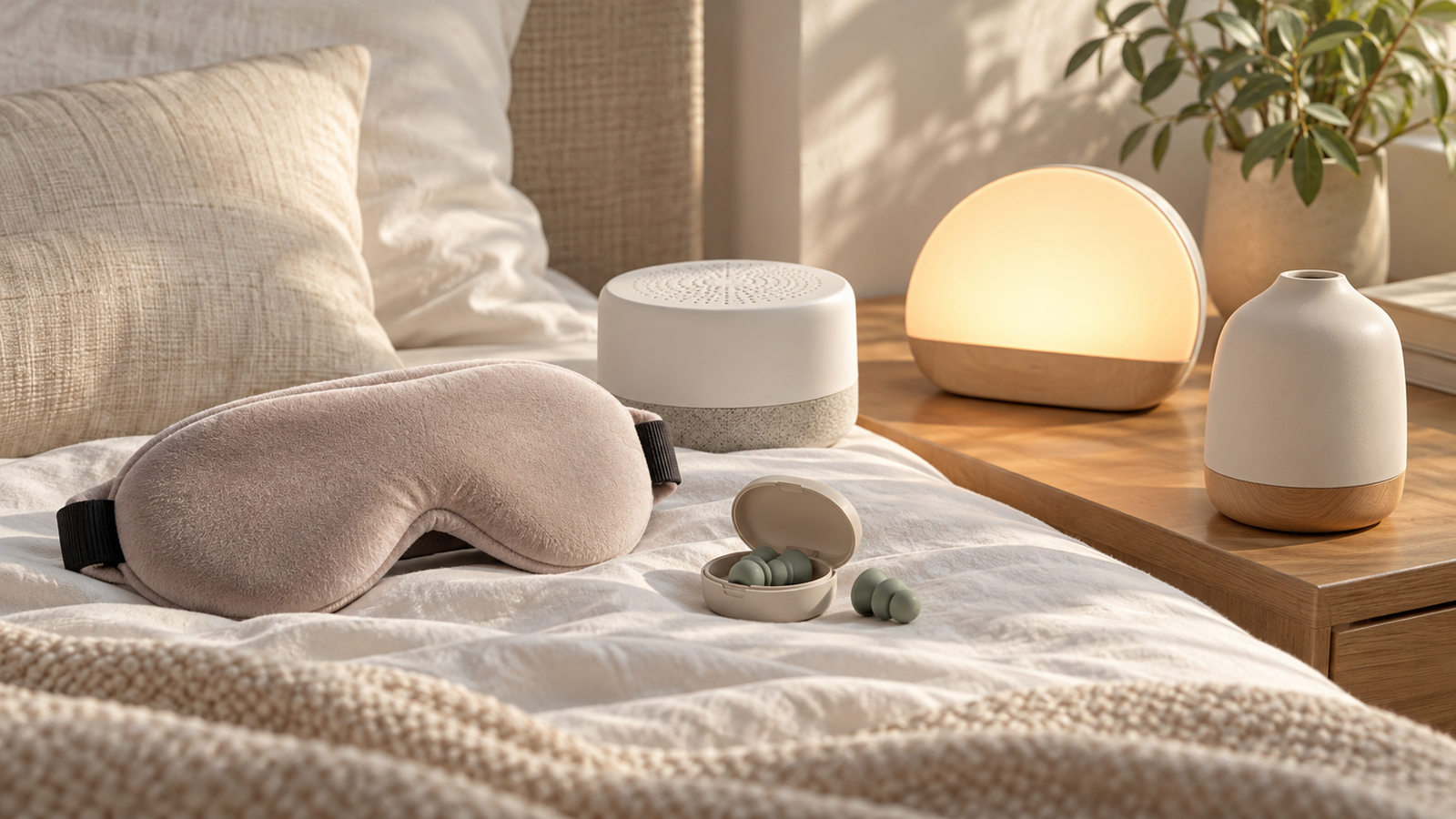
- Excessive audio volume.
- Reduced awareness of alarms or environmental sounds.
- Device-related discomfort or damage.
The degree of risk depends on the individual, earbud design, listening habits and duration of use.
There is no universal maximum number of hours that guarantees safe overnight earbud use.
What About Sleep-Specific Earbuds?
Products designed for sleeping may have smaller housings or softer contact surfaces.
These features can reduce pressure for some users, but they do not eliminate potential problems involving the ear canal, sound exposure or hygiene.
A sleep-focused product should still be evaluated for individual fit and comfort.
2. Why Earbuds Can Become Uncomfortable During Sleep
The outer ear contains cartilage covered by skin and soft tissue.
When an earbud sits inside or against the ear, it applies pressure to particular areas.
During sleep, your head may remain against a pillow for extended periods.
For side-sleepers, the pillow can push the earbud more firmly against the outer ear.
Common Pressure Locations
The exact location depends on the earbud’s design and your anatomy.
Discomfort may occur around:
- The entrance to the ear canal.
- The concha, the bowl-shaped area of the outer ear.
- The tragus, the small cartilage projection near the ear canal.
- The outer rim of the ear.
- Areas where an earbud housing presses against the pillow.
Why Pressure Matters
Continuous pressure can cause tenderness or irritation.
If a device repeatedly causes pain in the same location, the fit may be unsuitable for sleeping.
Do not assume that prolonged wear will make a painful earbud safe or comfortable.
3. Side-Sleeping With Earbuds: What Changes?
Side-sleepers face a particular challenge because the ear closest to the pillow bears some of the head’s pressure.
An earbud that protrudes significantly from the ear can create a concentrated pressure point.
Why Low-Profile Designs May Help
A low-profile earbud may sit closer to the outer ear, reducing direct contact with the pillow.
However, a smaller design is not automatically comfortable.
An earbud can still press against sensitive cartilage or fit poorly inside the canal.
What About Soft Silicone Tips?
Soft tips may improve comfort and grip for some users.
But tip size matters.
A tip that is too large may create excessive pressure, while one that is too small may become unstable.
Can You Sleep With One Earbud?
Some people prefer using one earbud in the ear facing away from the pillow.
This may reduce pressure on the pillow-side ear.
However, it does not eliminate sound-exposure, hygiene or alarm-awareness considerations.
Does Pillow Type Matter?
A pillow that places less direct pressure on the ear may improve comfort.
Some users prefer pillows with ear cutouts or pressure-relieving designs.
Nevertheless, a pillow should not be used to compensate for earbuds that repeatedly cause pain.
4. Earbud Designs and Their Overnight Trade-Offs
Different audio devices interact with the ears in different ways.
| Device type | Potential advantage | Main consideration |
|---|---|---|
| Standard in-ear wireless earbuds | Convenient and familiar | May protrude and press against the ear |
| Low-profile sleep earbuds | Designed to reduce bulk | Still requires suitable fit and hygiene |
| Wired earbuds | No earbud battery to recharge | Cable may tangle or create a snagging hazard |
| Soft sleep headband speakers | Avoids inserting a tip into the ear canal | Headband pressure, heat and fit |
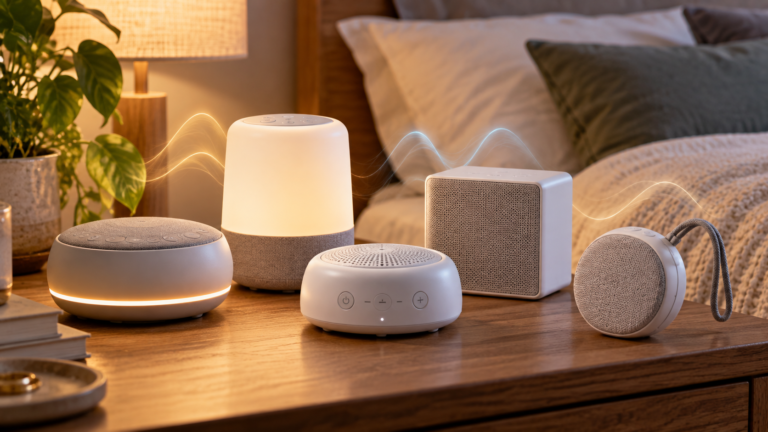
| Pillow speaker | Keeps the device outside the ear | Sound may disturb others |
| Bedside speaker | No direct ear contact | Less private and may affect roommates |
Are Wired Earbuds Better for Sleeping?
Not necessarily.
A wired earbud removes the need for an internal rechargeable battery, but cables can become uncomfortable or tangled during sleep.
Cable positioning also matters for people who move frequently.
Are Sleep Headbands Safer?
A soft headband can avoid direct insertion into the ear canal.
However, it may still press on the outer ear, become warm or shift during the night.
No design guarantees irritation-free use.
5. Can Sleeping With Earbuds Cause Ear Infections?
Earbud use may contribute to conditions that irritate the ear canal, particularly when devices are worn for prolonged periods or cleaned inadequately.
The ear canal has a protective skin barrier and a natural environment that helps maintain ear health.
Repeated friction, trapped moisture or damage to the skin can interfere with that environment.
Possible Contributing Factors
- Dirty ear tips.
- Prolonged moisture exposure.
- Repeated rubbing.
- Existing skin irritation.
- Sharing earbuds.
- Wearing earbuds while the ears are wet.
Signs of a Possible Ear Problem
Symptoms that deserve attention include:
- Ear pain.
- Persistent itching.
- Redness or swelling.
- Fluid or discharge.
- A feeling of fullness.
- Reduced hearing.
- Tenderness when touching the outer ear.
These symptoms can have different causes.
Do not assume they are simply the result of sleeping in an awkward position.
What Should You Do?
Stop wearing earbuds in the affected ear and seek medical advice if symptoms persist or are concerning.
Discharge, significant pain, swelling or hearing changes require prompt assessment.
6. Earwax and Overnight Earbud Use
Earwax, also called cerumen, is a normal substance produced in the ear canal.
It helps protect the skin and contributes to the ear’s natural cleaning process.
Some people may experience wax accumulation or impaction.
In-ear devices can potentially affect how earwax moves or create a sensation of blockage.
However, wearing earbuds does not automatically mean you will develop an earwax problem.
Possible Symptoms of Wax Impaction
- Reduced hearing.
- A blocked sensation.
- Ear discomfort.
- Ringing in the ears.
- Difficulty hearing certain sounds.
These symptoms are not specific to wax and may have other causes.
Should You Clean Deep Inside the Ear?
No.
Avoid inserting cotton swabs, hairpins or other objects into the ear canal.
These can push wax farther inward or cause injury.
If you suspect impacted earwax, seek appropriate advice rather than attempting aggressive removal.
7. Overnight Listening Volume and Hearing Health
Volume is an important consideration when wearing earbuds for several hours.
The risk of noise-related hearing damage depends on both sound level and exposure duration.
A sound level that may be tolerable briefly is not necessarily appropriate for extended listening.
Why Long Listening Sessions Matter
Exposure accumulates over time.
Continuous audio playing throughout the night may produce many hours of sound exposure.
The actual risk depends on the sound level reaching the ear, which can vary with device design, earbud fit and volume setting.
Is 50% Volume Always Safe?
No.
A percentage of maximum volume does not translate into one universal sound-pressure level across all devices.
Different earbuds and phones can produce different outputs at the same displayed percentage.
Practical Listening Habits
Use the lowest volume that is comfortably audible.
Avoid increasing the volume to overpower loud environmental noise.
Use a sleep timer when possible.
Take breaks from in-ear listening.
If your phone or audio device provides reliable exposure information or volume limits, consider using those features.
What About White Noise?
White noise is not automatically harmless at any volume.
A sound used to mask background noise should remain at a comfortable, appropriately low level.
8. Should Audio Play All Night?
Some people prefer continuous background audio, while others only need sound during the initial period of falling asleep.
Leaving audio playing continuously is not always necessary.
Falling-Asleep Audio
A short playback period may be sufficient if the main goal is to make the transition to sleep more comfortable.
Continuous Background Sound
Some users prefer uninterrupted noise masking.
However, continuous playback increases total listening exposure when delivered directly through earbuds.
Sleep Timers
Many audio applications provide automatic playback-stop options.
For example, you may choose to stop audio after a set period.
There is no medically established timer duration that is ideal for everyone.
The appropriate setting depends on your needs, listening volume and how easily you fall asleep.
Does Sleeping With Audio Improve Sleep Quality?
The evidence varies by sound type, individual and sleep environment.
Some people find calming audio helpful, while others may experience disrupted sleep.
Do not assume that continuous audio is necessary for healthy sleep.
9. Can Earbuds Prevent You From Hearing Your Alarm?
Yes.
In-ear earbuds can reduce awareness of external sounds through passive sound isolation, active noise cancellation or audio masking.
An alarm may be difficult to hear if it is quiet, routed through the earbuds or competing with ongoing playback.
Alarm Routing Matters
Phones and earbuds do not all handle alarms the same way.
Depending on the operating system, application and device settings, an alarm may play:
- Through the phone speaker.
- Through connected headphones.
- Through both outputs.
- Through another connected device.
Do not assume the alarm will automatically use the phone speaker.
Test Your Actual Setup
Before relying on earbuds overnight, verify how your alarm behaves with the specific phone, earbuds and app you intend to use.
Keep a Backup Alarm
If waking at a particular time is important, consider a separate alarm that does not depend on the earbuds remaining connected or charged.
Check Volume and Notification Settings
Review silent modes, Do Not Disturb settings and the alarm application’s behaviour.
Some alarm functions bypass ordinary notification restrictions, but this varies.
10. Active Noise Cancellation vs Passive Isolation During Sleep
Noise-cancelling earbuds can reduce certain external sounds.
However, passive isolation and active noise cancellation work differently.
Passive Noise Isolation
The physical earbud and tip reduce some sound entering the ear canal.
The amount of isolation depends on fit and design.
Active Noise Cancellation
Active noise cancellation uses microphones and processing to reduce selected external sound components.
It often performs particularly well with relatively steady low-frequency noise.
Important Limitation
Active noise cancellation does not eliminate every sound.
Sudden or high-frequency events may remain audible, but you should never depend on them being heard reliably.
What About Emergency Alerts?
If you need to hear a child, caregiver alert, smoke alarm or other safety-critical signal, choose a sleep setup that preserves reliable awareness.
Do not rely solely on the assumption that an emergency sound will penetrate noise cancellation or earbud isolation.
11. Are Earbuds Suitable for People Who Need to Hear a Baby or Caregiver?
Situations involving caregiving require special consideration.
A parent or caregiver may need to hear:
- A baby crying.
- A medical alert.
- Someone calling for help.
- A monitoring device.
- Movement or unusual sounds in the household.
Earbuds that isolate sound can interfere with awareness.
What Is the Safer Approach?
Use a monitoring and alert setup appropriate to the caregiving responsibility.
If an audio accessory could make a critical alert difficult to hear, avoid relying on it during that period.
Can Transparency Mode Solve This?
Transparency or ambient-sound modes may help external sounds remain audible.
However, performance varies and does not establish reliable detection of every alarm or urgent signal.
These modes should not be treated as certified safety-alert systems.
12. Battery Life and Overnight Earbud Reliability
Wireless earbuds have limited battery capacity.
A device that lasts several hours during daytime use may not remain powered throughout an entire night.
What Happens When the Battery Runs Out?
Playback may stop.
The device may disconnect from the phone.
Some earbuds emit a low-battery alert.
Others may switch off without a noticeable warning.
Why This Matters for Alarms
If your alarm depends on an earbud connection, a dead battery could affect how you hear it.
Test your setup rather than assuming reliable overnight operation.
Is Sleeping While the Earbuds Charge a Good Idea?
Do not improvise a charging arrangement involving earbuds worn in the ears.
Follow the manufacturer’s charging instructions.
Most true wireless earbuds are designed to charge in their case rather than while being worn.
Watch for Battery Damage
Stop using a device that becomes abnormally hot, swells, leaks or shows signs of battery damage.
Do not place damaged rechargeable devices against the skin.
13. How to Clean Earbuds Used for Sleeping
Earbuds used for extended periods can accumulate earwax, skin oils and moisture.
A consistent cleaning routine helps maintain hygiene and may preserve device functionality.
Before Cleaning
Disconnect the earbuds or turn them off as appropriate.
Review the manufacturer’s instructions.
Clean the Ear Tips
Some removable silicone tips can be cleaned separately.
Others have different care requirements.
Do not assume every tip is washable.
Clean the Main Housing
Use only manufacturer-approved materials and techniques.
Avoid allowing liquid to enter openings or charging contacts.
Dry Completely
Do not reinstall wet tips or place damp earbuds into a charging case unless the instructions specifically permit it.
Avoid Sharing Earbuds
Sharing in-ear devices can transfer earwax and microorganisms.
Individual use is preferable.
Replace Damaged Tips
A torn, hardened or poorly fitting ear tip may cause irritation or reduce stability.
Use compatible replacements.
14. Why Your Ears May Hurt More in the Morning
Morning ear discomfort can arise from prolonged pressure, friction or an unsuitable sleeping position.
However, the exact cause is not always obvious.
Localized Outer-Ear Tenderness
If discomfort occurs where the earbud presses against the pillow, pressure may be contributing.
Pain Inside the Ear Canal
This may indicate irritation, inflammation, wax-related problems or another condition.
Pain With Discharge or Hearing Changes
These symptoms require prompt medical assessment.
What Should You Try?
Stop wearing the earbuds until the discomfort has resolved or been assessed.
Do not immediately replace them with a tighter or deeper-fitting model.
If the problem repeatedly returns, consider a different audio method that avoids direct contact with the affected area.
15. Choosing Between Earbuds, Sleep Masks and White-Noise Machines
Different sleep accessories address different needs.
| Sleep accessory | Primary use | Main consideration |
|---|---|---|
| Sleep earbuds | Private audio playback | Ear pressure and sound exposure |
| Sleep headband speakers | Audio without conventional in-ear buds | Headband comfort and heat |
| White-noise machine | Room-based background sound | May disturb another person |
| Bedside speaker | Music or guided audio | Less private |
| Sleep mask | Reduces light exposure | Does not address noise |
| Foam earplugs | Passive noise reduction | Fit, hygiene and alarm awareness |
When Earbuds May Be Useful
They may suit someone who wants private audio for a limited period and can use them comfortably.
When a White-Noise Machine May Be Better
A room-based sound source avoids inserting an audio device into the ear.
This may be particularly appealing to someone who experiences pressure discomfort.
However, volume still matters, especially around children.
When a Sleep Mask Helps
A sleep mask primarily addresses light rather than sound.
It may complement other environmental changes but does not replace noise management.
16. Practical Sleep Setup for Side-Sleepers
If you regularly sleep on your side, prioritize eliminating pressure points.
Consider the Earbud Profile
A bulky housing may press into the outer ear.
A lower-profile design may be worth considering, provided the fit remains comfortable.
Examine the Pillow Contact
Notice whether the pillow directly pushes the device against your ear.
Avoid Forcing the Fit
An earbud should not need to be jammed deeply into the ear to remain secure.
Test Comfort Before Sleeping
Try the earbuds while lying in your usual position for a short period.
If pressure builds quickly, do not assume eight hours of use will be comfortable.
Reassess in the Morning
If you wake with soreness, redness or numbness, discontinue overnight use and review alternatives.
17. An Interactive Overnight Audio Safety Checklist
Use this checklist before deciding whether your sleep-audio arrangement suits your needs.
{@body const checks=[“My earbuds do not cause pain or pressure while lying down.”,”I use a low, comfortable listening volume.”,”I have considered a sleep timer instead of continuous playback.”,”My earbuds and ear tips are clean and dry.”,”I have no current ear pain, discharge or infection symptoms.”,”I tested where my phone alarm plays when the earbuds are connected.”,”I have a separate reliable alarm when waking on time is critical.”,”I can hear essential household or safety alerts, or I use an appropriate alternative setup.”,”My earbuds show no signs of battery or physical damage.”,”I will stop overnight use if irritation or hearing symptoms develop.”]}
{@body const [done,setDone]=DIL.useState([])}
<box border radius=”lg” padding={3} gap={3}>
<row align=”center” justify=”between”>
Overnight earbud safety check
<text weight=”medium” color=”secondary” tabularNums>{done.length}/{checks.length}</text>
</row>
{#each checks as item,i}
<checkbox key={i} checked={done.includes(i)} onChange={v=>setDone(s=>v?[…s,i].filter(j=>j!==i))} lineThrough={false}>{item}</checkbox>
{/each}
<divider color=”subtle”/>
{#if done.length===checks.length}
<row align=”start” gap={2}>
<icon name=”check-circle” color=”success”/>
<text size=”sm”>Basic considerations reviewed. Continue monitoring comfort and follow the device’s instructions.</text>
</row>
{}
<text color=”secondary” size=”sm”>Review the unchecked items before relying on earbuds overnight, particularly alarm reliability and ear discomfort.</text>
{/if}
<button block variant=”outline” color=”secondary” onClick={()=>setDone([])}>
<icon name=”rotate-ccw” inline/> Reset checklist
</button>
<caption>This checklist cannot certify medical safety, hearing protection or emergency-alert reliability.</caption> </box>
18. How to Choose Earbuds Specifically for Sleeping
If you are purchasing an audio device mainly for bedtime, evaluate it differently from ordinary workout earbuds.
Low-Profile Housing
A smaller profile may reduce pillow pressure.
However, shape is as important as size.
Comfortable Ear Tips
Look for an appropriate fit without excessive canal pressure.
Battery Capacity
Check realistic playback endurance under your intended audio settings.
Sleep Timer or Automatic Playback Control
A timer may help avoid unnecessary all-night listening.
Alarm Compatibility
Understand how alarms behave with the device and phone.
Hygiene
Removable, replaceable tips and clear cleaning instructions can make maintenance easier.
Physical Controls
Buttons or touch surfaces should not repeatedly activate unintentionally against the pillow.
Return Policy
Individual ear anatomy varies significantly.
A generous and clearly stated return policy can be useful when assessing fit.
19. Common Mistakes When Sleeping With Earbuds
Mistake 1: Using Bulky Earbuds Despite Side-Sleeping Pain
Repeated pressure can cause irritation.
Mistake 2: Increasing Volume to Mask Loud Noise
Higher sound exposure is not a harmless substitute for managing environmental noise.
Mistake 3: Assuming Noise Cancellation Is a Safety Feature
Noise cancellation can reduce awareness of important external sounds.
Mistake 4: Relying on an Untested Earbud Alarm
Alarm routing varies between devices and apps.
Mistake 5: Wearing Dirty Ear Tips
Poor hygiene may contribute to irritation or infection risk.
Mistake 6: Sleeping With Earbuds After Ear Pain Develops
Persistent discomfort should prompt stopping use and reassessment.
Mistake 7: Pushing Earbuds Deeply Into the Canal
Excessive insertion may cause irritation or injury.
Mistake 8: Leaving Loud Audio Playing All Night
Duration and volume both influence sound exposure.
Mistake 9: Ignoring Battery Problems
Overheating, swelling or physical damage warrants discontinuing use.
Mistake 10: Believing Sleep-Specific Branding Guarantees Comfort
No earbud design fits every ear.
20. Frequently Asked Questions
Is sleeping with wireless earbuds safe?
Some people tolerate overnight use, but potential concerns include ear pressure, irritation, hygiene, volume and reduced awareness of important sounds.
Can sleeping with earbuds damage your ears?
Prolonged pressure or friction can cause irritation, and excessive sound exposure may harm hearing.
Are sleep earbuds safer than regular earbuds?
Sleep-focused designs may reduce pressure for some users, but they do not eliminate all risks.
Can I sleep on my side with earbuds?
Some low-profile earbuds may be comfortable, but stop using them if pillow pressure causes pain.
Why do my ears hurt after sleeping with earbuds?
Possible causes include pressure, friction, poor fit or an underlying ear condition.
Can earbuds cause ear infections?
Prolonged use, moisture and inadequate hygiene may contribute to irritation and conditions associated with infection.
Do earbuds cause earwax buildup?
In-ear devices may affect earwax movement for some users, but wax buildup has multiple causes.
Can I use only one earbud while sleeping?
You can, but consider listening volume, comfort and alarm awareness.
Is active noise cancellation safe during sleep?
Its suitability depends on your environment and need to hear important sounds. Do not rely on emergency alerts being audible through noise cancellation.
Will my phone alarm ring if earbuds are connected?
It depends on the device, operating system and application. Test the actual setup before relying on it.
Can earbuds stop me from hearing a smoke alarm?
Yes, isolation, noise cancellation and masking audio can reduce awareness. Use a sleep setup that preserves reliable safety-alert detection.
Should I play white noise through earbuds all night?
Continuous playback is not necessary for everyone. Consider lower volume and a sleep timer.
Is 50% volume safe for sleeping?
Volume percentages are not standardized across devices and cannot guarantee safe sound exposure.
Are wired earbuds suitable for sleeping?
They avoid earbud batteries but introduce cables that may tangle or become uncomfortable.
Are sleep headbands better for side-sleepers?
They may reduce in-ear pressure, though speaker placement and headband comfort still matter.
Can earbuds cause tinnitus?
Excessive sound exposure can contribute to tinnitus and hearing problems. Persistent ringing requires appropriate assessment.
Should I clean sleep earbuds every day?
Follow manufacturer guidance and clean them regularly, especially when exposed to earwax or moisture.
Can I share sleep earbuds with another person?
Sharing in-ear tips is not recommended because of hygiene concerns.
Is a white-noise machine better than earbuds?
It may be preferable when avoiding ear contact is important, but the best choice depends on privacy, volume and household needs.
When should I see a doctor about earbud discomfort?
Seek assessment for persistent ear pain, discharge, swelling, hearing changes, dizziness or recurring irritation.
21. Final Verdict: Prioritize Ear Comfort and Reliable Alarms
Sleeping with earbuds can be convenient, especially when you want private access to calming audio in a noisy environment.
However, an earbud that feels comfortable during a short listening session may not remain comfortable throughout the night.
Side-sleeping can create additional pressure.
Prolonged in-ear use also requires attention to hygiene, sound exposure and symptoms of irritation.
Choose a comfortable design, keep listening volume low and consider limiting playback with a sleep timer.
Test your alarm routing before relying on the setup overnight.
If hearing emergency or caregiving alerts is important, prioritize a solution that preserves reliable awareness of those sounds.
For people who repeatedly experience ear discomfort, a bedside speaker, pillow speaker or suitable sleep headband may be a more practical alternative.
The best sleep-audio setup is one that supports rest without causing ear pain, excessive sound exposure or missed essential alerts.
Editorial References and Further Reading
- World Health Organization (WHO). Deafness and Hearing Loss: Safe Listening. https://www.who.int/health-topics/hearing-loss
- National Institute on Deafness and Other Communication Disorders (NIDCD). Noise-Induced Hearing Loss. https://www.nidcd.nih.gov/health/noise-induced-hearing-loss
- National Health Service (NHS). Ear Infections. https://www.nhs.uk/conditions/ear-infections/
- American Academy of Sleep Medicine (AASM). Sleep health education and resources. https://sleepeducation.org/
- Centers for Disease Control and Prevention (CDC). Hearing Loss Prevention. https://www.cdc.gov/hearing-loss/
Physical Glow Editorial Note: This article provides general sleep-accessory and hearing-health education. It does not replace professional assessment of ear pain, hearing changes, tinnitus or sleep disorders. Safe listening depends on actual sound exposure, not simply the volume percentage shown by a device. Follow manufacturer instructions and do not rely on earbuds to deliver or preserve awareness of safety-critical alarms.