Foam Rolling Before vs After Workouts: A Practical Routine
Foam rolling has become a familiar part of warm-ups, gym sessions and post-workout recovery routines. From runners and strength-training enthusiasts to people who spend long hours sitting at a desk, many use foam rollers to reduce feelings of muscle tightness and improve movement comfort.
However, one question continues to create confusion: Should you foam roll before a workout, after a workout or both?
Some people believe foam rolling before exercise will weaken their muscles. Others assume that rolling after training removes lactic acid, prevents soreness or accelerates muscle repair.
The reality is more nuanced.
Research suggests that foam rolling can produce modest short-term improvements in range of motion and may help reduce perceived muscle soreness after exercise. However, the benefits depend on the technique, duration and individual response, and several popular recovery claims remain insufficiently supported.
More importantly, foam rolling before a workout serves a somewhat different purpose from foam rolling afterward.
This guide explains the differences, when each approach makes sense, how to build a practical routine and which mistakes to avoid.
1. What Is Foam Rolling?
Foam rolling is a form of self-administered soft-tissue pressure, commonly described as self-myofascial release.
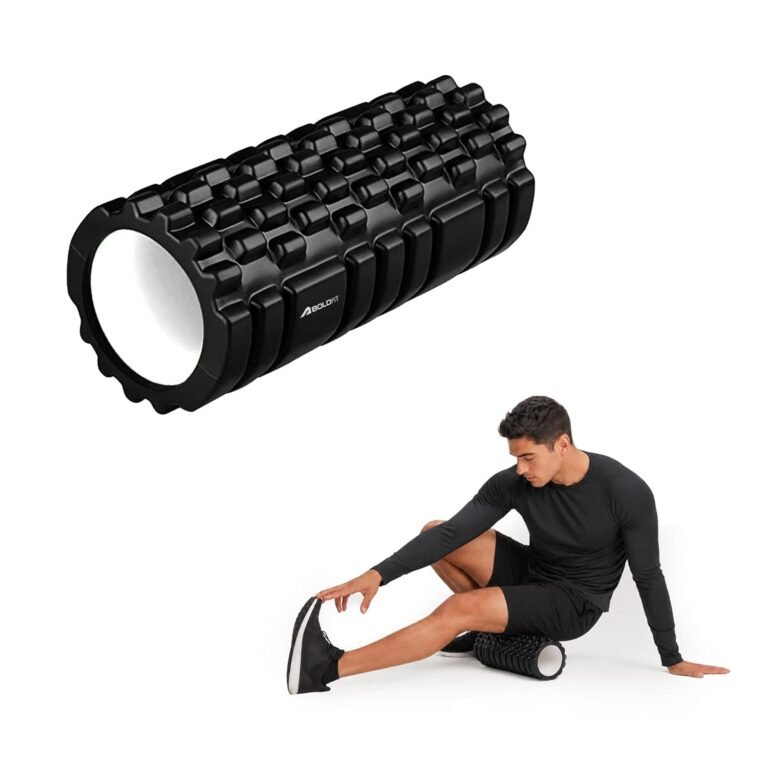
It involves placing a cylindrical foam roller beneath a muscle group and using body weight to apply controlled pressure while moving across the area.
Commonly targeted muscles include:
- Quadriceps.
- Hamstrings.
- Calves.
- Glutes.
- Upper-back muscles.
- Latissimus dorsi and surrounding upper-body muscles.
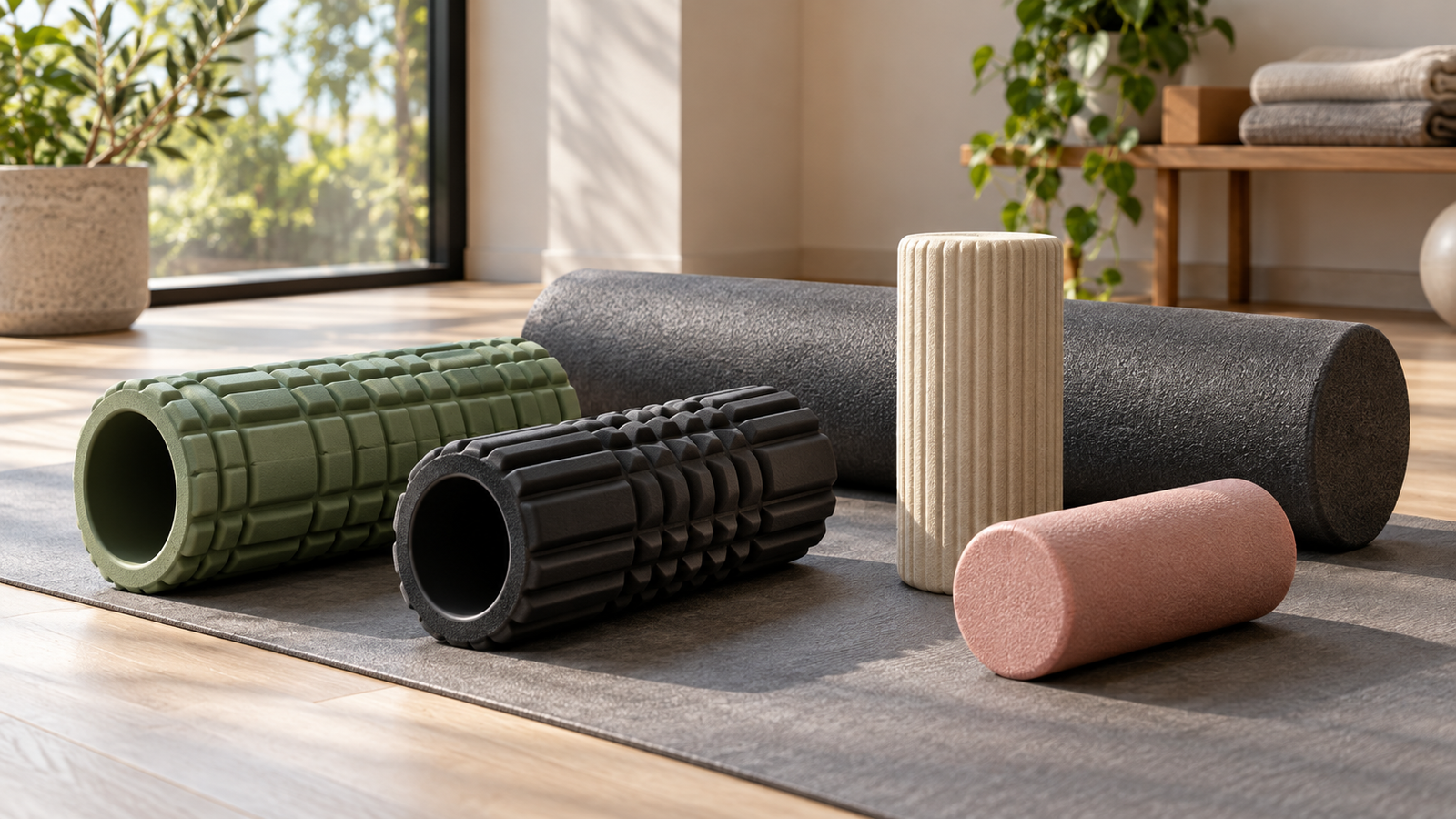
Foam rollers vary in firmness, surface texture, length and diameter.
Some are smooth and relatively soft, while others are firm or have raised patterns.
Despite the term myofascial release, foam rolling should not be assumed to physically break apart adhesions or permanently remodel fascia.
Its benefits may involve several interacting mechanisms, including changes in stretch tolerance, sensory perception and nervous-system responses to pressure.
Foam rolling is best understood as a movement and comfort tool, not a method for physically breaking down muscle knots.
2. What Does Scientific Research Say About Foam Rolling?
Foam rolling has been investigated for several potential benefits.
These include improvements in flexibility, reductions in muscle soreness, changes in perceived recovery and effects on physical performance.
The evidence is not equally strong for every claim.
Short-Term Range-of-Motion Improvements
Research suggests that foam rolling can modestly improve joint range of motion in the short term.
For example, rolling the quadriceps or calf muscles may temporarily make certain movements feel less restricted.
These improvements do not necessarily mean that muscle tissue has permanently lengthened.
Changes in stretch tolerance and other mechanisms may contribute.
Effects on Strength and Performance
Unlike prolonged static stretching in some circumstances, brief foam rolling generally does not appear to substantially impair strength or explosive performance.
However, it should not be treated as a guaranteed performance enhancer.
Foam rolling may help someone feel more comfortable moving through a useful range of motion, but that does not automatically translate into faster sprinting, heavier lifting or better athletic results.
Post-Exercise Soreness
Some studies report modest reductions in perceived delayed-onset muscle soreness following foam rolling.
This can be useful for people who feel uncomfortable after demanding workouts.
However, reduced soreness is not the same as proven faster muscle repair.
Injury Prevention
There is insufficient evidence to conclude that foam rolling alone prevents sports injuries.
A suitable warm-up, progressive training, adequate recovery and appropriate exercise technique remain more important components of injury-risk management.
3. Foam Rolling Before vs After Workouts: The Main Difference
The most useful distinction is the purpose of the session.
Before exercise, foam rolling is generally intended to improve movement comfort and temporarily increase range of motion.
After exercise, it is more commonly used to reduce perceived tightness, promote relaxation or manage soreness.
| Factor | Before workout | After workout |
|---|---|---|
| Primary purpose | Movement preparation | Comfort and recovery routine |
| Common benefit | Short-term mobility improvement | Possible modest soreness relief |
| Intensity | Light to moderate | Comfortable, controlled pressure |
| Duration | Usually brief | Can be slightly longer if comfortable |
| Follow with | Dynamic warm-up and exercise-specific preparation | Recovery, hydration and normal post-workout activities |
| Main mistake | Replacing the entire warm-up | Assuming rolling repairs damaged muscle |
Neither timing is universally superior.
The most appropriate choice depends on what you want foam rolling to accomplish.
4. Should You Foam Roll Before a Workout?
Foam rolling before exercise may be useful if certain muscles feel stiff or if restricted movement makes your warm-up uncomfortable.
For example, someone preparing for squats might briefly roll their quadriceps and calves before moving into dynamic mobility exercises.
A runner might use brief calf and quadriceps rolling before beginning a gradual running warm-up.
The key is to keep the process purposeful.
Potential Benefits Before Exercise
Improved movement comfort
Foam rolling may temporarily reduce the sensation of tightness in certain muscles.
Better short-term range of motion
Some people experience small improvements in mobility after rolling.
Greater awareness of restricted areas
A brief session can help you identify where movement feels uncomfortable, although it cannot diagnose injuries or tissue abnormalities.
What Foam Rolling Cannot Replace
Foam rolling does not adequately replace:
- Gradually increasing your heart rate.
- Dynamic movement preparation.
- Exercise-specific practice.
- Lighter warm-up sets before heavy lifting.
- Sport-specific coordination drills.
A foam roller can supplement a warm-up, but it should not become the entire warm-up.
5. A Practical Pre-Workout Foam Rolling Routine
For many healthy exercisers, a short routine lasting approximately three to five minutes can be a reasonable starting point.
You do not need to roll every muscle group.
Focus on areas relevant to the exercise you are about to perform.
Example: Lower-body workout preparation
| Muscle group | Suggested time |
| Quadriceps | 30–45 seconds per side |
| Calves | 20–30 seconds per side |
| Glutes | 30 seconds per side |
Illustrative durations, not clinically established optimal doses. Use only comfortable pressure and skip painful or injured areas.
Step 1: Start With Gentle Pressure
Position the roller beneath the target muscle.
Support part of your body weight with your hands or opposite leg.
Avoid dropping your full body weight onto the roller.
Step 2: Move Slowly
Roll gently along the fleshy portion of the muscle.
There is no need to move rapidly or create substantial discomfort.
Step 3: Stay Away From Sensitive Structures
Avoid direct pressure over joints, bony prominences and areas of known injury.
Do not roll directly over the neck or lower-back spine.
Step 4: Transition Into Dynamic Movement
After rolling, use movements related to your planned workout.
For example:
- Bodyweight squats.
- Leg swings.
- Walking lunges.
- Ankle mobility exercises.
- Light sets of your first resistance-training movement.
This combination provides more complete preparation than foam rolling alone.
6. Should You Foam Roll After a Workout?
Foam rolling after exercise is commonly used as part of a recovery routine.
Following challenging strength training, running or other exercise, muscles may feel fatigued or temporarily tight.
Gentle rolling may improve the sensation of comfort.
Some people also find the practice relaxing.
However, it is important to distinguish between feeling better and recovering faster at a physiological level.
What Post-Workout Rolling May Help With
- Reducing perceived muscle tightness.
- Modestly reducing muscle soreness.
- Providing a comfortable transition from training to rest.
- Maintaining a sense of movement flexibility.
What It Has Not Been Proven to Do Reliably
Foam rolling should not be expected to:
- Flush significant quantities of lactic acid from muscles.
- Eliminate all delayed-onset muscle soreness.
- Repair microscopic muscle damage.
- Prevent every post-workout ache.
- Replace sleep, nutrition or training recovery.
A foam roller is an optional recovery tool—not a substitute for the fundamentals of recovery.
7. A Practical Post-Workout Foam Rolling Routine
A post-workout routine can focus on the muscle groups that received the most training.
For example, after a lower-body strength session, you may choose to roll the quadriceps, glutes and calves.
Example: Five-minute post-workout routine
| Target area | Suggested duration |
| Quadriceps | 45 seconds per side |
| Calves | 30 seconds per side |
| Glutes | 45 seconds per side |
| Upper back, if appropriate | 30 seconds |
This is a practical example rather than a medically prescribed routine. Reduce pressure, shorten duration or skip an area if it causes discomfort.
Step 1: Allow Your Breathing to Settle
After demanding exercise, first transition gradually toward a resting state.
You do not need to begin foam rolling immediately.
Step 2: Choose Two or Three Muscle Groups
Select areas that feel comfortable to roll.
Avoid automatically rolling your entire body after every workout.
Step 3: Use Moderate, Tolerable Pressure
The sensation can be noticeable, but it should not involve sharp or severe pain.
Step 4: Move With Control
Avoid bouncing or aggressively grinding the roller into the tissue.
Step 5: Stop When Finished
A longer session does not guarantee greater benefits.
Once the muscles feel comfortable and the planned session is complete, there is no need to continue.
8. Is Foam Rolling Better Before or After Strength Training?
Strength training involves different demands depending on the exercises performed.
For example, squats, deadlifts, presses and rows require suitable mobility, coordination and muscular control.
Before Strength Training
Foam rolling may be useful if tightness makes movement preparation uncomfortable.
For example, brief quadriceps or calf rolling may be followed by bodyweight squats and progressively heavier warm-up sets.
However, foam rolling does not prepare the nervous system for heavy lifting as effectively as exercise-specific warm-up sets.
After Strength Training
Gentle rolling may help reduce the sensation of tightness following a workout.
Some people enjoy rolling after lower-body sessions involving squats or lunges.
But it is not necessary to roll every muscle group that was trained.
Practical Recommendation
For strength training, prioritize:
- General movement preparation.
- Dynamic mobility when needed.
- Exercise-specific warm-up sets.
- Progressive resistance training.
Use foam rolling before or afterward when it provides a clear benefit to comfort or movement.
9. Is Foam Rolling Useful Before Running?
Runners frequently use foam rollers for their calves, quadriceps and gluteal muscles.
Brief rolling before a run may make certain movements feel more comfortable.
However, foam rolling alone does not adequately prepare the cardiovascular and musculoskeletal systems for running.
A practical warm-up might include:
- A few minutes of walking or easy jogging.
- Gentle dynamic leg movements.
- Gradual increases in running pace.
Foam rolling can be included before this sequence when desired.
For someone preparing for a fast training session, such as intervals or hill repetitions, progressive running preparation remains particularly important.
10. Is Foam Rolling Useful After Running?
After running, people sometimes experience tightness in the calves, thighs or glutes.
Gentle foam rolling may provide some relief.
However, not all post-running discomfort is ordinary muscle soreness.
Sharp pain, localized swelling, tenderness over a bone or pain that changes your walking pattern may indicate an issue requiring assessment.
Do not use aggressive rolling to force an injured area to feel better.
After a run, normal recovery priorities still include:
- Appropriate hydration.
- Nutrition suitable for your training.
- Adequate sleep.
- Managing overall training load.
- Allowing recovery between demanding sessions.
Foam rolling can supplement these habits, but it cannot replace them.
11. Does Foam Rolling Remove Lactic Acid?
One of the most common claims about foam rolling is that it removes lactic acid from muscles.
This explanation is misleading.
During intense exercise, lactate production and utilization change as part of normal energy metabolism.
Lactate is not simply a harmful waste product.
It can be used as an energy source by different tissues.
Furthermore, lactate levels generally return toward baseline relatively quickly after exercise compared with the delayed muscle soreness that often appears a day or more later.
Delayed-onset muscle soreness, commonly called DOMS, is not caused by lactic acid remaining trapped in muscles for several days.
Therefore, foam rolling should not be described as necessary for flushing lactic acid out of the body.
Its potential effects on soreness involve other mechanisms.
12. Can Foam Rolling Prevent Delayed-Onset Muscle Soreness?
DOMS often develops after unfamiliar or demanding exercise, particularly workouts involving substantial eccentric muscle loading.
It may appear several hours after exercise, commonly becoming more noticeable over the following one to three days.
Foam rolling may modestly reduce perceived soreness in some circumstances.
However, the evidence does not support treating it as a guaranteed prevention method.
For example, someone beginning a new squat program may still experience muscle soreness even after rolling.
This does not mean foam rolling failed or that the workout caused damage requiring treatment.
A more useful strategy is to progress training demands gradually rather than introducing excessive volume or intensity suddenly.
13. How Much Pressure Should You Apply?
The correct pressure is not necessarily the strongest pressure you can tolerate.
Some people assume that foam rolling must be extremely painful to work.
This is not supported by good evidence.
Severe pressure can increase discomfort and may aggravate sensitive tissues.
A Practical Pressure Guide
Self-reported pressure scalePerceived discomfort, 0–10
3/10
Light pressure. Often a sensible starting intensity, particularly when learning the technique.
This is a subjective comfort guide, not a clinically validated pressure prescription.
A useful practical principle is to remain within a comfortable range where you can breathe normally and control the movement.
If you find yourself holding your breath, bracing intensely or trying to escape the pressure, reduce it.
14. Should You Roll Fast or Slow?
Slow, controlled movements are generally more practical than aggressive, rapid rolling.
Moving too quickly can make it difficult to manage pressure and identify uncomfortable areas.
However, extremely slow rolling is not automatically more effective.
A reasonable starting approach is to move gradually along the intended muscle region while maintaining control.
Avoid bouncing repeatedly on one sensitive point.
What About Holding the Roller on a Tender Spot?
Some people pause briefly over a tense-feeling area.
This may be comfortable when the pressure is gentle.
However, there is no need to force prolonged pressure into an intensely painful spot.
Do not attempt to crush or break down a supposed knot.
If a focal area is persistently painful, swollen or unusually sensitive, avoid rolling it and consider professional assessment.
15. Where Should You Avoid Foam Rolling?
Foam rolling is not appropriate for every body region.
Some locations contain superficial nerves, blood vessels, bones or other structures that should not receive substantial direct pressure.
Areas Requiring Particular Caution
- Front and sides of the neck.
- Lower-back spine.
- Directly over the spine’s bony projections.
- Kneecaps and other exposed joints.
- Areas with bruising or significant swelling.
- Recent injuries.
- Open wounds or inflamed skin.
- Areas with altered sensation or unexplained pain.
Rolling directly over the lower-back spine is particularly unnecessary.
The lumbar region does not provide the same broad muscle surface as the thighs or calves, and the technique can place unwanted pressure on sensitive structures.
For lower-back discomfort, appropriate movement assessment and treatment may be more useful than rolling directly across the spine.
Medical Conditions That Require Advice
Seek appropriate medical guidance before foam rolling if you have relevant conditions such as:
- Suspected or confirmed deep vein thrombosis.
- Significant vascular disease.
- Fragile bones or severe osteoporosis.
- Bleeding disorders or substantial bruising risk.
- Recent surgery.
- Acute muscle or tendon injury.
- Significant sensory impairment.
Do not roll over a limb with suspected blood clot symptoms.
New, unexplained one-sided leg swelling or pain requires prompt medical assessment, especially if accompanied by warmth or redness. Chest pain or breathlessness with such symptoms requires emergency care.
16. Foam Rolling the IT Band: Why Technique Matters
Many runners and gym-goers roll directly along the outside of the thigh, believing that they are stretching the iliotibial band, or IT band.
The IT band is a strong connective-tissue structure along the lateral thigh.
It is not easily lengthened by a few minutes of foam rolling.
Applying intense pressure directly along it may also be uncomfortable.
If the outside of the thigh feels tight, a more comfortable approach may involve gently addressing nearby muscle groups, including appropriate portions of the quadriceps and glutes.
However, this should not be treated as a guaranteed solution for IT band-related pain.
Persistent outer-knee or lateral-thigh pain should be assessed rather than repeatedly subjected to aggressive rolling.
17. Smooth vs Textured Foam Rollers: Does Surface Design Matter?
Foam rollers come in several designs.

Smooth foam roller
Provides a continuous pressure surface and can be easier for beginners to control.

Textured foam roller
Raised patterns alter the local pressure sensation, but do not guarantee better recovery outcomes.
Smooth Rollers
Smooth rollers distribute pressure across a relatively even surface.
They are often practical for beginners and people who prefer gentler, predictable contact.
Textured Rollers
Textured rollers have ridges or raised sections.
These may create more concentrated sensations.
However, greater perceived pressure does not necessarily mean better tissue recovery or faster mobility improvements.
Soft vs Firm Rollers
Softer rollers may be more comfortable for beginners.
Firmer rollers can create more concentrated pressure under similar body positioning.
The most appropriate choice is one that allows controlled use without excessive pain.
18. How to Build a Routine Based on Your Workout
A foam rolling routine does not need to be identical every day.
Instead, match it to the muscles used and your main objective.
| Workout type | Before training | After training |
|---|---|---|
| Lower-body strength | Brief calves, quads or glutes if useful | Gentle rolling of comfortable muscle areas |
| Upper-body strength | Brief upper-back or lat rolling if useful | Optional upper-back or surrounding muscle rolling |
| Running | Optional brief lower-body rolling | Optional gentle calves, quads and glutes |
| Yoga or mobility session | Optional rolling for movement comfort | Usually unnecessary unless desired |
| Rest day | Not required | Optional gentle rolling for comfort |
The time spent rolling should not crowd out more important workout components.
For example, a twenty-minute foam rolling routine is not automatically more beneficial than five minutes of targeted work.
If you have limited time, prioritize your actual warm-up or training.
19. Foam Rolling vs Stretching: Do You Need Both?
Foam rolling and stretching can both influence the sensation of stiffness and range of motion.
However, they are different activities.
Foam Rolling
Applies external pressure while you move over a roller.
Its benefits may include short-term mobility improvements and relief of perceived tightness.
Static Stretching
Involves holding a muscle or joint position to create a stretching sensation.
Consistent stretching can improve range of motion over time.
Dynamic Stretching
Uses controlled movement through an active range of motion.
It is particularly useful as part of exercise preparation.
Which Should You Choose?
The answer depends on your goals.
For pre-workout preparation, dynamic movements are generally a more direct way to prepare for exercise-specific demands.
Foam rolling can be added if it improves comfort or mobility.
For long-term flexibility, a structured mobility and stretching program may be more useful than relying on occasional foam rolling alone.
20. Can Foam Rolling Help With Desk-Related Tightness?
People who sit for prolonged periods sometimes experience feelings of stiffness in the hips, thighs or upper back.
Foam rolling may provide temporary comfort.
For example, gently rolling the upper-back muscles or glutes may feel pleasant after a long workday.
However, it does not correct all causes of musculoskeletal discomfort.
More direct strategies can include:
- Changing sitting positions regularly.
- Taking movement breaks.
- Walking.
- Performing appropriate mobility exercises.
- Maintaining general strength and physical activity.
If sitting-related discomfort is persistent or associated with numbness, weakness or radiating pain, obtain appropriate clinical assessment.
Foam rolling should not be used to mask concerning symptoms.
21. Common Foam Rolling Mistakes
Rolling Every Muscle Before Every Workout
More is not automatically better.
Target the muscles relevant to your session.
Using Excessive Pressure
Strong pain is not required.
Reduce pressure if the technique becomes uncomfortable.
Moving Too Quickly
Rapid rolling can reduce control and make pressure harder to manage.
Rolling Directly Over Joints
Foam rollers are generally intended for suitable soft-tissue areas, not exposed bony structures.
Replacing the Warm-Up
Foam rolling does not replace gradual cardiovascular preparation, dynamic movement or exercise-specific warm-up sets.
Assuming Soreness Means the Roller Is Working
Pain is not a reliable indicator of effectiveness.
Expecting Instant Injury Recovery
Foam rolling may improve comfort but cannot substitute for appropriate injury evaluation and management.
Ignoring Product Firmness
A firm textured roller may feel unnecessarily aggressive for a beginner.
Choose equipment that suits your tolerance and purpose.
22. How to Choose a Foam Roller for Your Routine
Before purchasing a foam roller, consider your experience level, preferred exercises and storage space.
| Buying factor | Why it matters |
|---|---|
| Firmness | Influences perceived pressure |
| Surface texture | Affects the sensation of contact |
| Length | Determines convenience for different muscle groups |
| Diameter | Influences positioning and leverage |
| Material durability | Affects long-term shape retention |
| Portability | Matters for gym bags and travel |
| Price | Should reflect practical use rather than marketing claims |
For Beginners
A medium-density or softer smooth roller may provide an accessible starting point.
For General Gym Use
A durable medium-firm roller can support a variety of commonly targeted muscle groups.
For Travel
A shorter roller may be easier to carry, although it may be less convenient for broad upper-back work.
For Experienced Users
Firmer or textured models may be preferred by some people, but they are not automatically more effective.
Avoid purchasing the most aggressive roller simply because it looks more professional.
For product comparisons, read Physical Glow’s Top 5 Foam Rollers in India guide, which compares roller designs for different recovery and mobility needs.
23. A Seven-Day Foam Rolling Example
Foam rolling does not need to follow a rigid daily schedule.
Here is an example of how someone training several times per week might incorporate it.
| Day | Workout | Foam rolling approach |
|---|---|---|
| Monday | Lower-body strength | Brief pre-workout rolling if helpful |
| Tuesday | Walking or light activity | Optional; not necessary |
| Wednesday | Upper-body strength | Brief upper-back rolling if comfortable |
| Thursday | Recovery day | Optional gentle session |
| Friday | Full-body workout | Targeted pre-workout rolling |
| Saturday | Running or recreational sport | Optional rolling before or after |
| Sunday | Rest | No rolling required |
This is only an example.
The best routine is one that provides a noticeable benefit without consuming unnecessary time or causing discomfort.
Frequently Asked Questions
Is it better to foam roll before or after a workout?
Both can be useful for different reasons. Before training, foam rolling may temporarily improve range of motion and movement comfort. After training, it may help reduce perceived muscle soreness.
Should I foam roll before lifting weights?
You can, particularly when a specific muscle group feels stiff. However, it should supplement—not replace—dynamic preparation and exercise-specific warm-up sets.
Does foam rolling reduce muscle soreness?
Research suggests modest reductions in perceived soreness in some circumstances, but results vary and foam rolling does not guarantee recovery without discomfort.
How long should I foam roll before a workout?
A few minutes of targeted rolling may be sufficient. There is no universal duration that works best for everyone.
Can I foam roll every day?
Some healthy people tolerate gentle daily foam rolling. However, daily rolling is not necessary, and sensitive or injured areas should not be repeatedly pressured.
Should foam rolling hurt?
It may produce a noticeable pressure sensation, but severe or sharp pain is not necessary and should be avoided.
Does foam rolling improve flexibility?
It can temporarily improve range of motion. Longer-term flexibility improvements depend on the overall training program and repeated practice.
Can foam rolling replace stretching?
Not completely. Foam rolling and stretching may overlap in some benefits, but they involve different methods and can serve different purposes.
Does foam rolling prevent injuries?
There is insufficient evidence to conclude that foam rolling alone reliably prevents injuries.
Is a textured roller better than a smooth roller?
Not necessarily. Textured rollers create different pressure sensations, but greater intensity does not guarantee better results.
Can I foam roll my lower back?
Direct rolling over the lumbar spine is generally best avoided. If you have persistent lower-back pain, seek guidance on appropriate exercises and treatment.
Does foam rolling flush lactic acid?
There is no good basis for describing foam rolling as necessary to flush trapped lactic acid. Lactate is part of normal energy metabolism and is not the cause of delayed-onset muscle soreness.
Final Verdict: Use Foam Rolling for the Right Purpose
Foam rolling can be a practical addition to a fitness routine, but its value depends on how and why you use it.
Before a workout, brief targeted rolling may help improve movement comfort and short-term range of motion.
After a workout, gentle rolling may reduce perceived tightness or modestly improve soreness.
Neither method replaces proper warm-ups, sensible training progression, adequate sleep, nutrition or recovery.
For most people, the best strategy is to use foam rolling selectively rather than automatically rolling the entire body before and after every session.
Start with comfortable pressure, focus on relevant muscle groups, avoid sensitive or injured areas and use the time that provides a useful benefit.
A foam roller should support your training—not become another complicated requirement.
Physical Glow Editorial Note: This article provides general fitness education and is not a substitute for medical assessment, physiotherapy or individualized exercise guidance. People with injuries, vascular conditions, significant pain or other health concerns should seek appropriate professional advice before using foam rolling techniques.