Ankle Weights: When They Help, When to Skip Them and How to Use Them
Ankle weights look simple, but adding resistance at the end of the leg changes how certain movements feel much more than the same amount of weight held close to the torso.
That can make ankle weights useful for controlled exercises such as leg raises, hip abduction and selected lower-body drills. It can also make them a poor choice for activities where the extra load changes your natural gait or places unnecessary stress on the joints.
This guide explains when ankle weights can be useful, when they are better avoided, how to choose a practical starting load and how to use them without turning a small accessory into a much larger training problem.
What Are Ankle Weights?
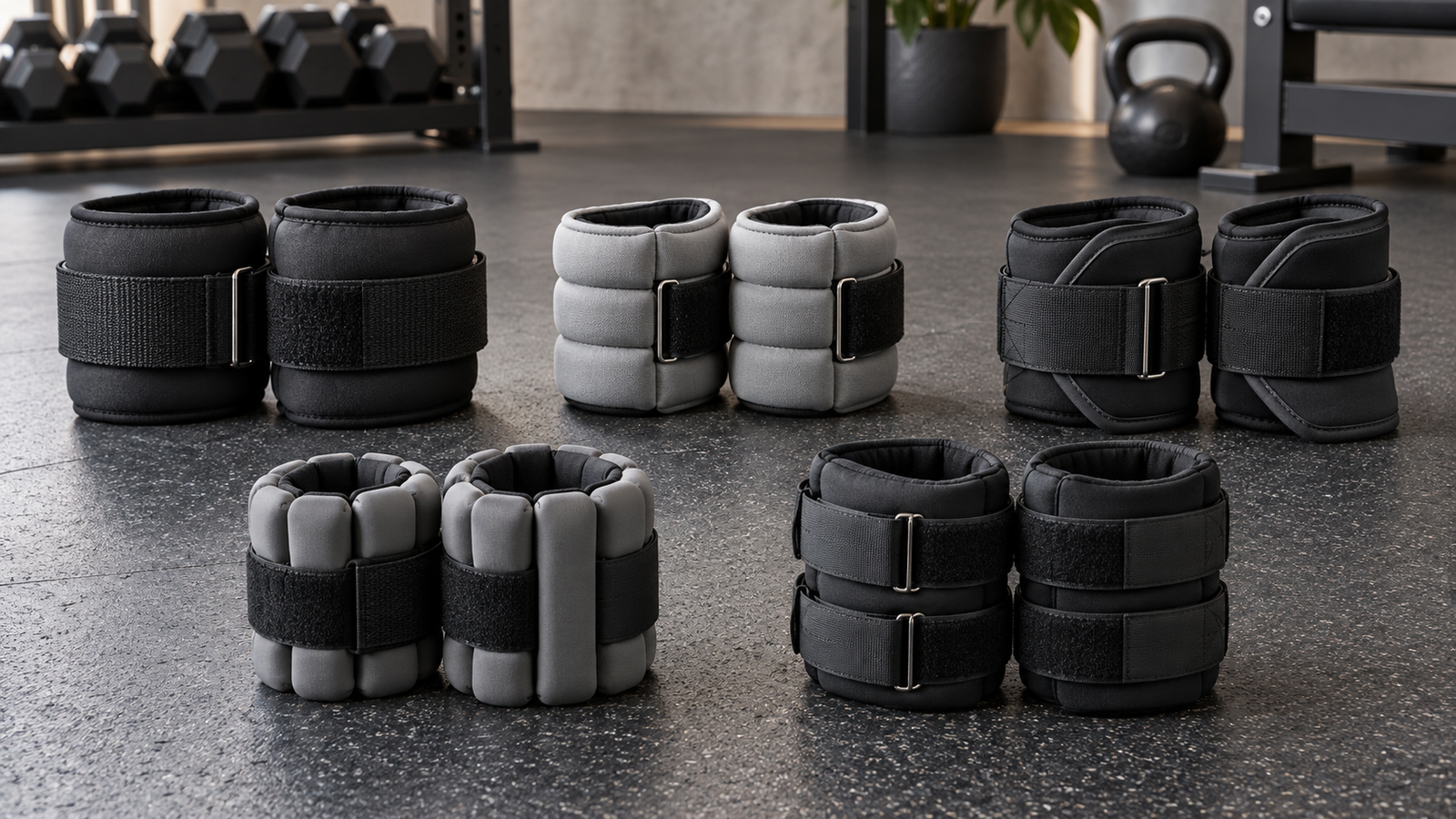
Ankle weights are small wearable resistance cuffs secured around the lower legs, usually just above the ankles.
Depending on the product, they may use:
- Fixed internal weight
- Removable weighted inserts
- Sand-filled compartments
- Metal weight bars
- Hook-and-loop fastening straps
Some products are also designed to fit around the wrists.
Why Ankle Weights Feel Harder Than Their Weight Suggests
A 1 kg ankle weight does not feel the same as holding a 1 kg dumbbell close to your chest.
The reason is leverage.
Because the weight sits farther from the hip and knee joints, the muscles must work harder to move the leg through space.
This is why relatively small ankle weights can noticeably increase the difficulty of leg raises and similar movements.
What Exercises Are Ankle Weights Best For?
Ankle weights are most useful during slow, controlled exercises where you can maintain stable technique.
Examples include:
- Side-lying leg raises
- Standing hip abduction
- Standing hip extension
- Seated knee extensions
- Donkey kicks
- Fire hydrants
- Controlled straight-leg raises
The key word is controlled.
The weights should make the movement more demanding without causing swinging or jerking.
When Should You Avoid Ankle Weights?
They are less suitable when the added load changes movement mechanics significantly.
Use caution or skip them during:
- Running
- Fast walking
- Jumping
- High-impact cardio
- Quick direction changes
- Exercises where the weight causes uncontrolled swinging
Extra weight at the ankle can amplify forces at the knee and hip, particularly during repetitive impact.
Are Ankle Weights Good for Walking?
They can make walking feel harder, but that does not automatically make them a good choice.
Adding weight at the ankle may alter:
- Stride length
- Leg swing
- Knee mechanics
- Hip movement
If your goal is simply to make walking more challenging, increasing pace, incline or duration may be a more natural option.
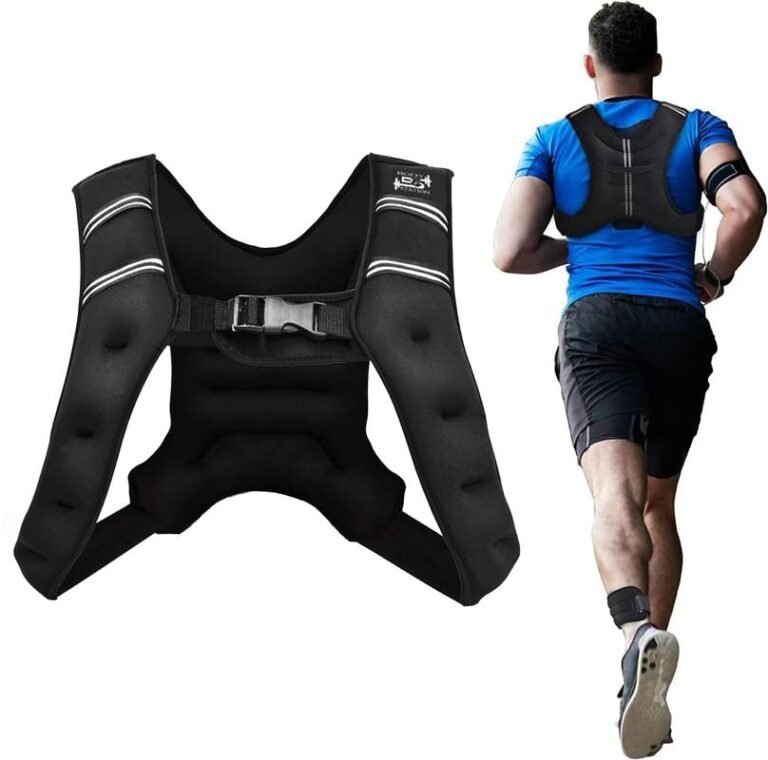
A weighted vest can also keep resistance closer to the body’s centre instead of loading the end of the leg.
Ankle Weights vs Weighted Vest for Walking
| Feature | Ankle Weights | Weighted Vest |
|---|---|---|
| Weight position | Far from the body’s centre | Close to the torso |
| Effect on leg swing | Can be noticeable | Usually less direct |
| Best use | Controlled leg exercises | Walking and bodyweight training |
| Load needed | Small loads can feel significant | Larger total loads are common |
If walking is your main goal, see our guide to How to Choose Weighted Vest Weight for Walking and Calisthenics.
How Heavy Should Ankle Weights Be?
Start lighter than you think you need.
Because the weight is positioned at the end of the leg, even 0.5 kg per side can meaningfully increase the difficulty of a controlled exercise.
A practical starting approach is:
- Choose a light pair.
- Perform the exercise slowly.
- Check whether you can maintain the same range of motion.
- Increase load only if the movement remains controlled.
0.5kg vs 1kg Ankle Weights
A 0.5 kg cuff can be useful for beginners or exercises where a long lever makes the movement difficult.
A 1 kg cuff creates roughly twice the external load at the ankle and may feel substantially harder.
The better choice depends on:
- Your current strength
- The exercise
- Repetition range
- Joint comfort
Do not assume 1 kg is automatically the better value because it is heavier.
Should You Buy Adjustable Ankle Weights?
Adjustable models are useful if you want to progress gradually.
They may allow you to:
- Use a lighter load for smaller muscle groups
- Increase weight over time
- Use different loads for different exercises
The main disadvantage is extra bulk from removable inserts and pockets.
How Tight Should Ankle Weights Be?
They should fit securely enough that they do not slide during movement.
They should not be so tight that they cause:
- Numbness
- Tingling
- Restricted circulation
- Pinching
- Skin irritation
The cuff should sit firmly around the ankle or lower leg without cutting into the skin.
Where Should Ankle Weights Sit?
Most ankle weights are worn just above the ankle joint.
Avoid positioning them directly over a prominent bone where the cuff repeatedly rubs.
Follow the manufacturer’s instructions because cuff width and fastening design differ.
Should Ankle Weights Move During Exercise?
No.
A small amount of fabric movement is normal, but the cuff should not bounce or rotate substantially.
If it does:
- Tighten the strap if safe.
- Reposition the cuff.
- Check whether the product is too large.
- Reduce the movement speed.
How to Use Ankle Weights for Leg Raises
A simple progression is:
- Perform the exercise without weight.
- Add a light ankle weight.
- Keep the leg straight or in the intended position.
- Lift slowly.
- Pause briefly if appropriate.
- Lower under control.
Avoid swinging the leg to create momentum.
Side-Lying Leg Raises With Ankle Weights
Side-lying leg raises primarily challenge the muscles around the hip.
When adding ankle weight:
- Keep the torso stable.
- Avoid rolling backward.
- Lift only as high as you can control.
- Lower slowly.
More height is not automatically better.
Standing Hip Abduction With Ankle Weights
This movement can be performed while holding a stable support.
Keep the torso upright and move the leg outward without leaning dramatically to the opposite side.
If you need to swing the leg, the weight is likely too heavy.
Hip Extension With Ankle Weights
For standing or quadruped hip-extension exercises:
- Keep the lower back controlled.
- Move from the hip rather than arching excessively.
- Use slow repetitions.
The goal is muscular resistance, not the largest possible leg movement.
Seated Knee Extensions With Ankle Weights
Sitting on a stable chair, the lower leg can be straightened against the resistance of the ankle weight.
Move slowly and stop if the exercise causes knee pain.
If you have an existing knee condition, professional guidance may be appropriate before adding external load.
Can Ankle Weights Build Muscle?
They can add resistance to certain exercises, which can contribute to strength and muscular endurance when the load is challenging enough.
However, ankle weights have practical limits.
For substantial lower-body strength progression, equipment such as:
- Dumbbells
- Resistance bands
- Weight machines
- Barbells
may eventually provide more scalable loading.
Are Ankle Weights Good for Glutes?
They can make some hip-extension and hip-abduction exercises more challenging.
That can increase muscular effort in glute-focused movements.
But ankle weights are not necessary for building glute strength.
Squats, lunges, hip thrusts and other progressively loaded exercises may provide more room for long-term progression.
Do Ankle Weights Tone Legs?
“Toning” is not a separate biological process.
Visible muscle definition depends mainly on muscle development and overall body-fat levels.
Ankle weights can add resistance to leg exercises, but they do not specifically remove fat from the legs.
Can Ankle Weights Burn More Calories?
Adding resistance can increase the effort required for a movement.
However, the increase in energy expenditure is not a reason to use ankle weights during activities where they negatively affect technique.
Exercise quality and sustainability matter more than trying to maximise calorie burn from every movement.
Can You Wear Ankle Weights Around the House?
There is usually no need to wear them continuously during everyday activities.
They are better used for specific exercises where movement can be controlled.
Walking around for hours with weight attached to the ankles can unnecessarily alter normal movement.
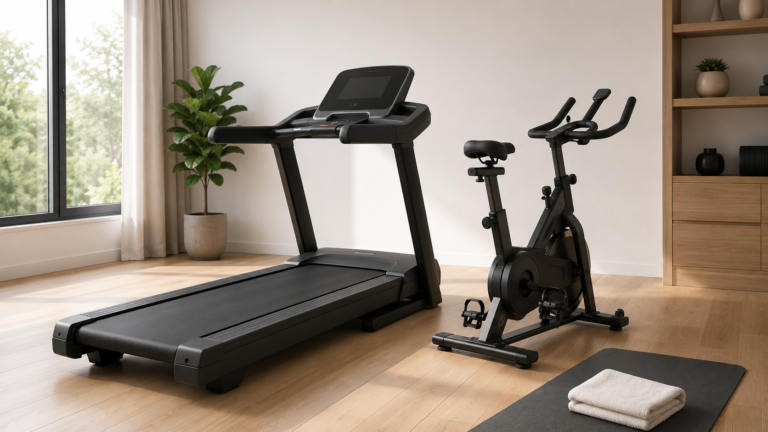
Can You Wear Ankle Weights on a Treadmill?
They are generally not the first choice for treadmill walking because of the potential to change gait mechanics.
If you want to increase treadmill difficulty, consider:
- Increasing incline
- Increasing pace
- Extending duration
These options preserve a more natural leg swing.
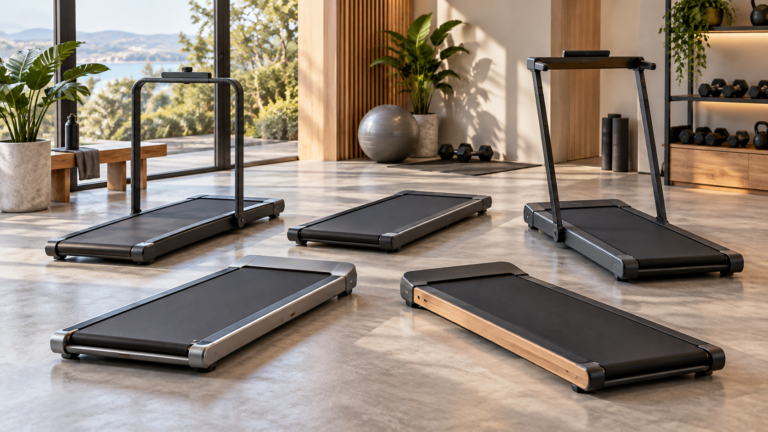
Can You Use Ankle Weights on a Walking Pad?
The same caution applies.
A walking pad is designed around normal walking mechanics.
Adding load at the ankle can make the stride less natural, especially when working at a desk or walking for long periods.
If you use a walking pad, focus on stable footwear, posture and speed rather than automatically adding ankle weights.
Can Ankle Weights Be Used on the Wrists?
Some products are specifically designed for both ankle and wrist use.
If so, follow the product’s fit instructions.
Do not assume every ankle cuff will fit safely around the wrist.
Wrist Weights vs Dumbbells
Wrist weights leave the hands free, while dumbbells require active grip.
However, wrist weights remain attached throughout the movement and can change leverage around the shoulder and elbow.
Use small loads and avoid uncontrolled arm swinging.
Are Ankle Weights Good for Beginners?
They can be, provided the starting weight is light and the exercise is already familiar.
A beginner should first learn the movement without external resistance.
Once the exercise is stable, a small ankle weight can provide progression.
Who Should Be Cautious With Ankle Weights?
Extra caution is appropriate if you have:
- Knee pain
- Hip pain
- Ankle instability
- Recent lower-limb injury
- Balance problems
- Joint-replacement history
Seek appropriate professional advice if you are unsure whether external loading is suitable.
Signs Your Ankle Weights Are Too Heavy
Reduce the load if you notice:
- Swinging to complete repetitions
- Reduced range of motion
- Loss of balance
- Joint pain
- Hip hiking
- Torso leaning
- Inability to lower the leg slowly
Muscular effort is expected. Poor movement control is not the goal.
How Many Repetitions Should You Do?
There is no single repetition count that fits every exercise or user.
Choose a load that allows you to perform your intended repetitions with controlled form.
If you can complete a very high number of repetitions easily, you may need a more challenging progression.
If you cannot perform several controlled repetitions, the weight may be too heavy.
How to Progress Ankle-Weight Exercises
You can progress by:
- Adding repetitions
- Slowing the lowering phase
- Increasing range of motion where appropriate
- Adding a small amount of weight
Change one variable at a time so you can evaluate whether technique remains consistent.
Common Ankle-Weight Mistakes
Using them for every exercise
Ankle weights are useful for selected movements, not universal resistance tools.
Walking or running with too much load
This can alter normal gait mechanics.
Choosing weight by ego
Because the load sits far from the hip, even small weights can be challenging.
Fast swinging repetitions
Momentum reduces muscular control and increases unnecessary joint stress.
Ignoring discomfort
Sharp or persistent joint pain is a reason to stop, not something to push through.
Wearing the cuff too loose
A moving weight can rub the skin and disrupt technique.
How to Choose Ankle Weights
Look at:
- Weight per cuff
- Total set weight
- Fixed or adjustable design
- Cuff width
- Closure system
- Padding
- Material
- Whether the pair is intended for ankle and wrist use
Check weight per side carefully
A listing marked “2 kg” may mean two 1 kg cuffs rather than 2 kg per ankle.
Always confirm the exact configuration.
For specific current options, see our Top 5 Ankle Weights in India.
Frequently Asked Questions
Are ankle weights good for walking?
They increase resistance but can also change gait mechanics. For general walking, increasing pace or incline may be a simpler option.
Is 1 kg per ankle too much?
It depends on the exercise and your strength. One kilogram per side can be significant during long-lever movements, so beginners may prefer a lighter starting load.
Can I use ankle weights every day?
There is usually no need to train the same weighted movements every day. Allow recovery and pay attention to joint and muscle discomfort.
Do ankle weights make your legs stronger?
They can increase resistance during selected lower-body exercises and contribute to strength or muscular-endurance training when used progressively.
Can ankle weights help with glute exercises?
Yes. They can make controlled hip-extension and hip-abduction movements more demanding.
Should I wear ankle weights while running?
They are generally not the preferred way to increase running difficulty because the weight can change leg swing and increase joint loading.
Are adjustable ankle weights better?
They are more versatile because you can start lighter and increase resistance gradually, although removable inserts can make the cuffs bulkier.
Final Takeaway
Ankle weights are most useful when they add modest resistance to slow, controlled leg exercises.
They are less useful when the extra load causes you to swing the limb, change your gait or sacrifice joint control.
Start light, secure the cuffs properly and judge the weight by your movement quality rather than by how heavy the number looks.
For walking and general conditioning, speed, incline or a torso-loaded weighted vest may often be more practical than attaching resistance to the ankles.
If you are comparing specific products, see our Top 5 Ankle Weights in India guide for the 0.5 kg and 1 kg pairs currently shortlisted by Physical Glow.
The best ankle weight is not the heaviest pair you can wear. It is the load that makes the target exercise harder while still allowing smooth, controlled movement.
Physical Glow publishes educational beauty, fitness and wellness content. This article is for general informational purposes and is not a substitute for individual medical, physiotherapy or exercise-programming advice.