How to Choose Weighted Vest Weight for Walking and Calisthenics
A weighted vest can make walking, push-ups, pull-ups, squats and other bodyweight exercises more demanding without requiring you to hold dumbbells or kettlebells. The challenge is choosing enough weight to create useful resistance without adding so much load that your movement quality, posture or comfort starts to deteriorate.
The heaviest vest is not automatically the best choice. A load that feels reasonable during a short standing test can become far more demanding after several minutes of walking, stair climbing or repeated bodyweight exercises.
This guide explains how to choose weighted vest weight, how walking and calisthenics place different demands on the body, what to look for in fit and adjustability, and when a lighter vest is the more practical option.
What Is a Weighted Vest?
A weighted vest is a wearable resistance tool designed to distribute additional load around the torso.
Depending on the design, the weight may be:
- Fixed inside the vest
- Distributed through removable weight pockets
- Adjustable in small increments
- Concentrated mainly at the front and back
The main advantage is that your hands remain free while you move.
This makes weighted vests useful for activities such as:
- Walking
- Step-ups
- Squats
- Lunges
- Push-ups
- Pull-ups
- Dips
- Calisthenics circuits
How Heavy Should a Weighted Vest Be?
There is no single correct vest weight for everyone.
The appropriate load depends on:
- Your body weight
- Your training experience
- The exercise being performed
- How long you plan to wear the vest
- Your current strength and conditioning
- Any joint, back or balance concerns
A conservative starting point is generally more useful than choosing a heavy vest immediately.
The goal is to add resistance while keeping your normal movement controlled.
Weighted Vest Weight: Practical Starting Approach
| Training Situation | Practical Approach |
|---|---|
| New to weighted training | Start light and learn how your posture and joints respond |
| Walking | Use enough load to increase effort without noticeably changing gait |
| Push-ups and squats | Moderate load may be manageable because the movements are controlled |
| Pull-ups and dips | Even small amounts can significantly increase difficulty |
| Long conditioning sessions | Lighter load is usually easier to sustain with good form |
Why You Should Start Lighter Than You Think
A vest adds load to nearly every step and repetition.
Five or ten kilograms does not sound extreme when compared with a barbell, but carrying that weight continuously around the torso is different from lifting it for a few repetitions.
A vest that is too heavy may cause you to:
- Lean forward
- Shorten your stride
- Move more slowly than intended
- Lose control during push-ups or pull-ups
- Feel excessive pressure on the shoulders
- Compensate through the lower back
If the vest noticeably changes your basic movement pattern, the load may be too high for that activity.
Weighted Vest for Walking
Walking is one of the simplest ways to use a weighted vest, but it still requires restraint.
The goal is to increase the effort of normal walking without turning every step into an awkward loaded movement.
A good walking load should allow you to:
- Maintain an upright posture
- Keep your normal stride
- Walk without joint pain
- Breathe comfortably
- Remove the vest easily when needed
Start with short walks
Do not begin with a long weighted walk simply because you can comfortably stand in the vest.
Start with a shorter session and assess how your shoulders, feet, knees, hips and lower back feel afterward.
You can then gradually increase duration before increasing load.
Weighted Walking vs Carrying Dumbbells
A vest distributes load around the torso and keeps the hands free.
Carrying dumbbells or other weights adds grip demand and places the load at the sides of the body.
Neither approach is inherently better, but they create different training demands.
A vest is often more convenient when the goal is simply to make walking or bodyweight movement more demanding.
Can You Run in a Weighted Vest?
Running with a weighted vest increases impact and loading compared with walking.
That does not automatically make it a better workout.
If your goal is general conditioning, brisk weighted walking may provide a more controlled way to add resistance.
Running with external load is better treated as an advanced option rather than a default use of a vest.
Weighted Vest for Push-Ups
Push-ups are one of the easiest calisthenics exercises to progress with a weighted vest.
The vest increases the resistance without requiring balance of an external weight plate on the back.
Before adding load, make sure you can perform your normal push-up repetitions with consistent form.
Watch for:
- Hips sagging
- Excessive arching through the lower back
- Shoulders collapsing forward
- Reduced range of motion
If adding the vest causes these changes immediately, reduce the load.
Weighted Vest for Pull-Ups
Pull-ups respond strongly to even modest increases in body weight.
A vest can therefore make them much harder very quickly.
Do not assume that the same load you use for walking or squats will be appropriate for pull-ups.
Start with a small amount of added resistance and maintain:
- A controlled start
- Full-body stability
- Consistent range of motion
- A controlled descent
If you are still building basic pull-up strength, additional load may not be necessary yet.
Weighted Vest for Dips
Dips are another exercise where external load can increase difficulty substantially.
The vest should remain stable against the torso so it does not shift while you lower and press upward.
If shoulder position becomes uncomfortable or range of motion becomes uncontrolled, reduce the added weight.
Weighted Vest for Squats
A weighted vest can make bodyweight squats more challenging while keeping the hands free.
This is useful for home training when you do not have access to heavier free weights.
Focus on maintaining:
- Stable feet
- Controlled knee tracking
- Natural torso position
- Consistent depth
Adding more weight is not useful if squat quality decreases significantly.
Weighted Vest for Lunges and Step-Ups
Unilateral movements such as lunges and step-ups can feel significantly harder with added torso load.
Balance becomes more important.
Start lighter than you would for bilateral squats and use a stable surface for step-ups.
Avoid rushing through repetitions simply because the vest makes the exercise feel more intense.
Weighted Vest for Calisthenics
A vest can be a practical progression tool once bodyweight exercises have become relatively easy.
It is particularly useful when you want to increase resistance without changing the basic movement pattern.
Common applications include:
- Push-ups
- Pull-ups
- Dips
- Squats
- Split squats
- Step-ups
- Walking lunges
The load does not have to be the same for every exercise.
Fixed vs Adjustable Weighted Vests
Fixed-weight vest
A fixed vest contains a set amount of weight that cannot easily be changed.
Advantages include:
- Simple construction
- Less setup
- No removable weights to manage
The disadvantage is that the same load must be used for every activity.
Adjustable weighted vest
An adjustable vest uses removable weight blocks, bags or plates.
This lets you make the vest lighter for one exercise and heavier for another.
That flexibility is particularly useful if one vest will be used for both walking and strength training.
Why Small Weight Increments Matter
Progressive resistance does not require large jumps.
Adding a small amount of weight while maintaining good form is usually more useful than immediately jumping from a very light vest to a heavy one.
Small increments let you identify the point where the vest becomes challenging without overwhelming the movement.
10kg vs 15kg Weighted Vest
A 15 kg maximum-capacity vest gives you more room to increase load, but that does not mean you need to use all 15 kg.
An adjustable 15 kg vest can still be useful at lighter loads if individual weights can be removed.
A fixed 15 kg vest is a much bigger commitment.
For many users, adjustability is more valuable than the highest possible number on the product listing.
Does Vest Fit Matter?
Yes.
A poorly fitted vest can bounce, shift or place uncomfortable pressure on the shoulders.
A good fit should feel secure without restricting normal breathing.
Check:
- Shoulder strap comfort
- Torso adjustment
- Front-to-back weight balance
- Whether the vest moves during exercise
- Whether it restricts arm movement
Should a Weighted Vest Be Tight?
It should be secure, but not excessively tight.
You should be able to breathe deeply and move the shoulders normally.
If tightening the straps is the only way to stop the vest bouncing, the design or size may not suit your body shape.
Weight Distribution Matters
A vest with balanced front and rear loading generally feels different from carrying most of the weight on one side of the torso.
Unevenly loading removable pockets can also change posture.
If the manufacturer provides a specific loading pattern, follow it.
When possible, distribute removable weights symmetrically.
Neoprene vs Nylon Weighted Vests
Neoprene
Neoprene-style vests can feel soft and close to the body.
They may also retain more heat and sweat during long sessions.
Nylon
Nylon designs may feel more structured and can work well for removable-weight systems.
The actual comfort depends on padding, seams and strap design rather than fabric name alone.
Breathability and Heat
A weighted vest adds another layer over the torso.
That can increase heat buildup during:
- Outdoor walking
- Summer training
- Long conditioning sessions
Take weather and training environment into account rather than judging the vest only by its load capacity.
Can You Wear a Weighted Vest for Long Periods?
There is usually little reason to wear a training vest continuously throughout the day.
Longer exposure means more time under external load, which may increase discomfort and fatigue.
Use it for planned training sessions rather than treating extra weight as something that needs to be worn constantly.
Weighted Vest and Posture
A vest should not force you to lean forward or arch the lower back excessively.
Pay attention to posture during walking and exercise.
If you cannot maintain your normal position, reduce the load or shorten the session.
Weighted Vest and Knee Stress
Additional body load increases the forces your legs must manage during movement.
This matters particularly during:
- Running
- Jumping
- Stair climbing
- Deep lunges
If you have existing knee pain or other joint problems, adding external load without appropriate guidance may not be sensible.
Weighted Vest and Back Comfort
A well-fitted vest spreads weight around the torso, but it still increases the load being carried.
Stop and reassess if you develop:
- Sharp back pain
- Numbness
- Radiating discomfort
- Persistent pain after training
A vest should make an exercise harder, not painful.
Who Should Be Cautious With Weighted Vests?
Extra caution is appropriate if you have:
- Existing back problems
- Knee or hip pain
- Balance difficulties
- Cardiovascular limitations
- Recent injuries
- Conditions that affect bone or joint health
Professional advice may be appropriate before adding substantial external load.
Can Beginners Use Weighted Vests?
Yes, but beginners generally do not need heavy loads.
First build familiarity with the underlying movement.
For example:
- Become comfortable with regular walking before weighted walking.
- Learn consistent push-ups before weighted push-ups.
- Build reliable pull-ups before adding resistance.
The vest should progress an exercise you already control rather than compensate for missing fundamentals.
How to Progress Weighted Vest Training
You can progress in several ways without immediately increasing weight.
Increase repetitions
Perform more controlled reps with the same load.
Increase duration
For walking, extend the session gradually.
Improve range of motion
Use better depth and control rather than chasing load.
Increase weight
Add a small amount only after the current load feels controlled.
Changing one variable at a time makes progress easier to evaluate.
Sample Beginner Weighted Vest Progression
A simple progression might look like this:
- Perform the exercise without added weight.
- Add a light vest for short sessions.
- Maintain the same load until movement feels natural.
- Increase duration or repetitions gradually.
- Add a small amount of weight when appropriate.
There is no need to rush toward the maximum capacity of the vest.
Weighted Vest vs Backpack
A loaded backpack can also add resistance, but the load is generally concentrated behind the body.
A vest distributes weight more closely around the torso and is usually more stable during calisthenics.
| Feature | Weighted Vest | Loaded Backpack |
|---|---|---|
| Weight position | Front and back of torso | Mainly behind torso |
| Hands free | Yes | Yes |
| Stability during push-ups | Usually better | Can shift |
| Adjustability | Depends on design | Easy to add/remove objects |
| Purpose-built for exercise | Yes | Usually no |
Weighted Vest vs Ankle Weights
A weighted vest keeps extra load close to the body’s centre.
Ankle weights place resistance farther from the centre of mass and can change the mechanics of leg movement more noticeably.
They are different tools rather than interchangeable ways to add the same resistance.
Can a Weighted Vest Build Muscle?
A vest can make bodyweight exercises more demanding and therefore contribute to progressive resistance training.
Whether it meaningfully supports muscle growth depends on factors such as:
- Exercise selection
- Training effort
- Progression
- Total training volume
- Nutrition
- Recovery
The vest itself is simply a method of adding load.
Can Weighted Walking Improve Fitness?
Adding a moderate load can increase the effort required for a walk.
However, a harder session is not always necessary.
Speed, distance and incline can also increase walking intensity without adding external weight.
A vest is one training option rather than an essential fitness tool.
Should You Use a Vest or Increase Walking Speed?
That depends on your goal.
If your main aim is cardiovascular fitness, increasing walking pace or incline may be simpler.
If you specifically want to practise carrying external load or add resistance while keeping your hands free, a vest may be useful.
Weighted Vest for Home Workouts
A vest can be especially useful when home equipment is limited.
It can progress exercises such as:
- Push-ups
- Squats
- Split squats
- Step-ups
- Pull-ups
- Dips
without requiring a full barbell setup.
How to Put On a Heavy Weighted Vest Safely
Heavier vests can be awkward to lift from the floor.
If possible:
- Place the vest on a stable elevated surface.
- Position yourself close to it.
- Put it on without twisting sharply.
- Secure the straps before moving.
Avoid casually swinging a heavy vest onto the shoulders.
Check the Vest Before Every Session
Inspect:
- Straps
- Buckles
- Stitching
- Weight pockets
- Fasteners
Removable weights should be fully secured before exercise.
Common Weighted Vest Mistakes
Starting too heavy
This is the most common error.
Using the same load for every exercise
Walking, squats and pull-ups create very different demands.
Training through pain
Additional resistance should create effort, not sharp pain.
Ignoring vest movement
A bouncing vest can disrupt exercise technique.
Adding weight before mastering the exercise
Progressing poor form simply makes poor form heavier.
Focusing only on maximum capacity
A vest rated for 15 kg is not automatically more useful than a 10 kg model if you never need the extra load.
How to Choose a Weighted Vest
Before buying, consider:
- Fixed or adjustable weight
- Maximum load
- Smallest available load
- Weight increments
- Vest size and torso fit
- Shoulder padding
- Strap adjustment
- Material
- Ventilation
- Whether the weight is balanced front to back
For specific current options, see our Top 5 Weighted Vests in India.
Frequently Asked Questions
How heavy should my first weighted vest be?
Start conservatively. The best first load is one that makes your activity harder without noticeably changing your posture, gait or exercise technique.
Is a 10 kg weighted vest good for beginners?
Ten kilograms may be excessive for some beginners and manageable for others depending on body size, exercise and training experience. An adjustable vest is useful because you do not need to use its full capacity.
Is a 15 kg weighted vest too heavy?
As a maximum capacity it can be useful for experienced users, particularly if the weight is adjustable. Wearing the full 15 kg is not necessary simply because the vest supports it.
Can I walk every day with a weighted vest?
Daily weighted walking is not automatically necessary or appropriate. Training frequency should account for load, duration, recovery and any joint or back discomfort.
Should I wear a weighted vest for push-ups?
It can be a useful progression once regular push-ups are controlled and relatively easy. Start with modest additional weight.
Can I do pull-ups with a weighted vest?
Yes. A vest keeps the load close to the torso and leaves the legs free, but even small increases in body weight can make pull-ups substantially harder.
Is an adjustable weighted vest better?
It is generally more versatile because you can use different loads for walking, squats, push-ups and pull-ups rather than being locked into one fixed weight.
Final Takeaway
The best weighted vest is not the one with the highest maximum load. It is the one that lets you add resistance while maintaining natural, controlled movement.
Start lighter than your maximum capability, particularly for walking and longer conditioning sessions. Increase load gradually only after the current weight feels stable.
For calisthenics, remember that each exercise responds differently to extra body weight. A load that feels moderate during squats may make pull-ups dramatically harder.
Fit matters too. The vest should stay close to the torso, distribute weight evenly and allow normal breathing and shoulder movement.
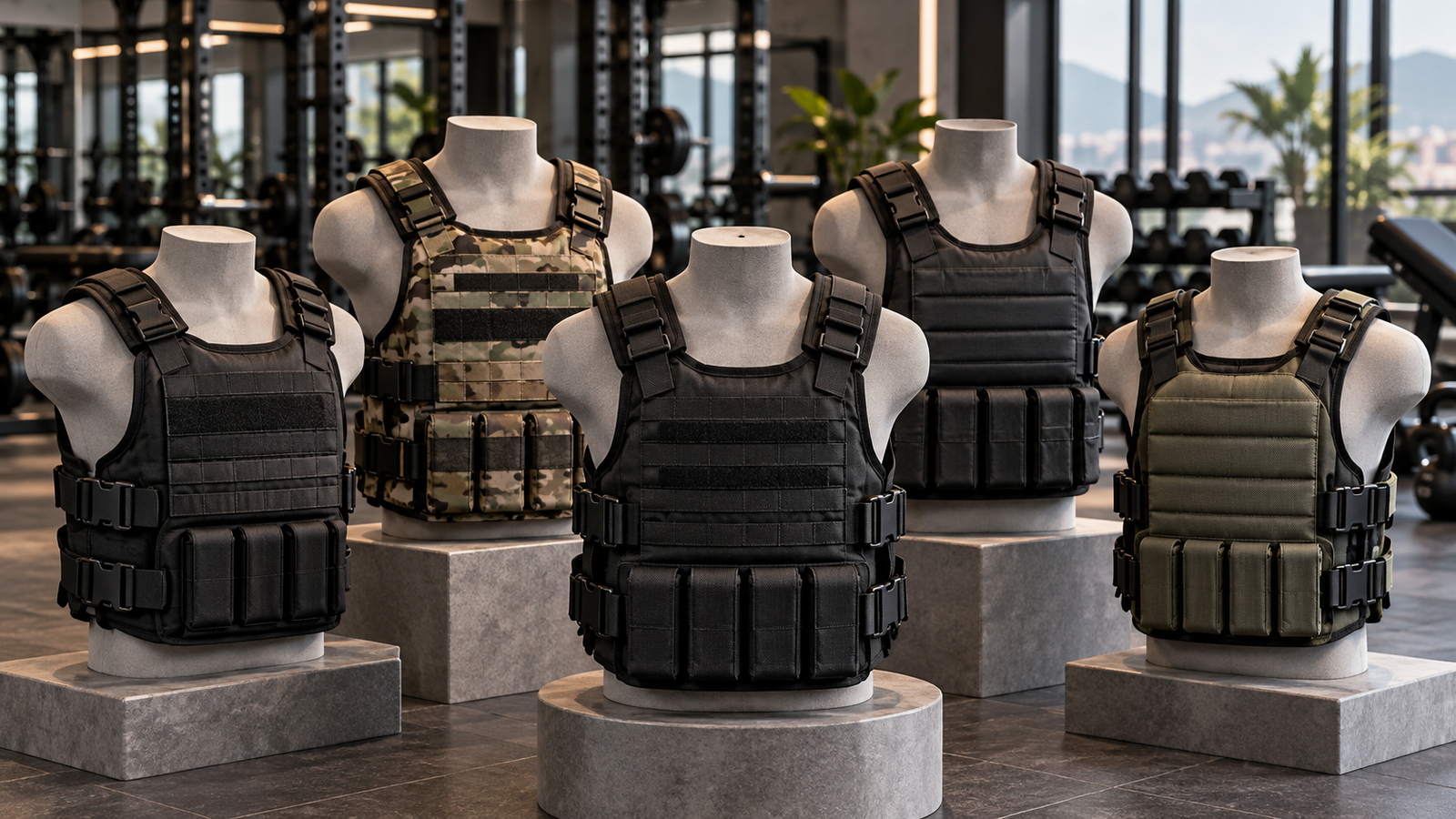
If you are comparing specific products, use our Top 5 Weighted Vests in India guide to compare the 10 kg, 15 kg, neoprene, nylon and adjustable options currently shortlisted by Physical Glow.
The goal is simple: add enough resistance to make the movement meaningfully harder, but not so much that load becomes more important than technique.
Physical Glow publishes educational beauty, fitness and wellness content. This article is for general informational purposes and is not a substitute for individual medical, physiotherapy or exercise-programming advice.